


Choosing the right brain games can feel overwhelming with countless apps promising to sharpen your mind. Mobile gamers and families want games that deliver real cognitive benefits while staying fun and engaging. This guide explores the main types of brain games available today, from memory builders to vocabulary enhancers, and explains how each type supports different mental skills. You’ll discover practical criteria for selecting games that match your goals, whether you’re building vocabulary, improving focus, or enjoying quality time with family through social play.
Table of Contents
- Key takeaways
- How to evaluate brain games: criteria for selection
- Five popular types of brain games to try
- Comparing brain game mechanics and cognitive benefits
- Choosing the right brain games for families and casual players
- Enhance brain training with Lexiloot games
- FAQ
Key Takeaways
| Point | Details |
|---|---|
| Adaptive difficulty | Brain games that adjust based on your performance keep you challenged at the edge of your abilities to promote growth. |
| Spaced repetition | Using spaced repetition helps reinforce vocabulary and skills by revisiting concepts at strategic intervals. |
| Short sessions | Brief focused play periods of ten to fifteen minutes maintain peak attention and prevent mental fatigue. |
| Transfer and rotation | Pair games with real world tasks and rotate categories to encourage both close and broad cognitive transfer. |
How to evaluate brain games: criteria for selection
Selecting brain games that balance entertainment and skill building requires understanding what makes certain games effective. The best games adapt to your performance level, gradually increasing difficulty to keep you challenged without frustration. Adaptive difficulty ensures you’re always working at the edge of your abilities, promoting growth rather than boredom or overwhelm.
Spaced repetition is another crucial feature to seek out. Games using this technique reintroduce concepts at strategic intervals, strengthening long-term retention of vocabulary and skills. This approach mirrors proven brain training definitions used in educational settings. Session length matters too. Short, focused play periods of 10 to 15 minutes work better than marathon sessions because your brain maintains peak attention.
Consider the type of cognitive transfer each game offers. Near-transfer effects improve skills closely related to the game itself, like faster word recognition from word puzzles. Far-transfer effects apply to broader real-world abilities, though these are harder to achieve and require combining games with practical activities. Practical guides recommend rotating categories and starting with 5-min sessions to build habits and prevent mental fatigue.
When evaluating options, ask yourself these questions:
- Does the game adjust difficulty based on my performance?
- Will I enjoy playing this regularly, not just once?
- Does it target skills I actually want to improve?
- Can family members of different ages play together?
Pro Tip: Start with just 5 minutes daily, rotating between different game categories each week. This variety prevents your brain from adapting too quickly to one pattern, maintaining the cognitive challenge that drives improvement.
Five popular types of brain games to try
Brain games fall into distinct categories, each targeting specific mental abilities. Understanding these types helps you build a balanced routine that exercises different cognitive muscles. Spatial-reasoning games like Tetris challenge your ability to manipulate objects mentally and predict movements. These games boost visual processing speed and improve your capacity to navigate physical spaces, making them valuable for anyone from students to professionals.
Working-memory games such as Dual N-Back push you to hold and manipulate information temporarily. You might track sequences of sounds and positions simultaneously, strengthening attention span and multitasking abilities. These games feel challenging at first but produce noticeable improvements in focus with regular practice. Language and verbal games including Wordscapes directly enhance vocabulary and word formation skills. They combine pattern recognition with linguistic knowledge, making them perfect for families wanting educational entertainment.

Strategy and planning games like Chess develop problem-solving and forward-thinking abilities. You learn to anticipate consequences, weigh options, and adapt tactics based on changing conditions. These skills transfer remarkably well to real-world decision making in work and personal life. Math and logic puzzle games sharpen calculation speed and logical reasoning. They train your brain to spot patterns, apply rules consistently, and solve problems systematically.
Main types of brain games include spatial-reasoning, working-memory, language, strategy, and math categories, each with mobile versions accessible anytime. The beauty of modern brain gaming lies in variety. You can explore types of word games one day and switch to spatial challenges the next, keeping your routine fresh and comprehensive.
Comparing brain game mechanics and cognitive benefits
Different game mechanics produce varying cognitive outcomes, and understanding these relationships helps you choose games aligned with your goals. Adaptive progression systems analyze your performance and adjust challenge levels automatically, keeping you in the optimal learning zone. Spaced repetition mechanics reintroduce vocabulary or concepts at calculated intervals, proven to boost long-term retention significantly. Tile-matching games combine visual processing with decision speed, training your brain to recognize patterns quickly.
| Game mechanic | Example games | Primary cognitive skills |
|---|---|---|
| Adaptive progression | Lumosity, Peak | Sustained attention, working memory |
| Spaced repetition | Anki-based apps, Memrise | Long-term retention, vocabulary |
| Tile matching | Candy Crush, Bejeweled | Pattern recognition, processing speed |
| Category sorting | Lexiloot, Set | Logical reasoning, categorization |
| Timed word formation | Wordscapes, Boggle | Vocabulary recall, time management |
Scientific research reveals both promise and limitations. Brain training shows moderate benefits with significant gains in auditory memory and attention, particularly when users engage consistently over weeks. However, experts note limited far-transfer and recommend combining brain games with real-world activities to achieve broader cognitive improvements. The games work best as one component of a mentally active lifestyle, not a magic solution.
“Brain games provide measurable improvements in specific cognitive tasks, but the greatest benefits emerge when players apply learned skills to everyday challenges like reading, conversation, and problem-solving at work or school.”
The mechanics matter less than consistency. Playing 15 minutes daily with varied game types beats sporadic hour-long sessions. Your brain responds to regular stimulation, building neural pathways through repetition and challenge. Combining mechanics creates synergy too. A game blending vocabulary building with timed challenges exercises multiple skills simultaneously, much like casual brain gaming benefits from integrated approaches.
Pro Tip: Pair brain games with related real-world activities. After playing word games, read an article and note new vocabulary. Following spatial games, try rearranging furniture or planning a route without GPS. This bridges the gap between game skills and practical abilities.
Choosing the right brain games for families and casual players
Families and casual mobile gamers need brain games that fit busy schedules while delivering genuine educational value. Starting with language and word games makes sense for vocabulary building, as these directly expand your word knowledge while entertaining. Games like category challenges combine learning with social interaction, perfect for family game nights or quick sessions between activities.
Balancing game types prevents cognitive stagnation. Rotate between spatial puzzles on Monday, memory games Tuesday, and word challenges Wednesday. This variety exercises different brain regions and maintains engagement better than playing one type exclusively. Social features transform solo brain training into shared experiences. Multiplayer modes, leaderboards, and friend challenges add motivation and accountability, especially for kids who thrive on friendly competition.
Short daily sessions align perfectly with casual gaming lifestyles. Consistent short daily play leads to cognitive gains after weeks, with most users noticing improvements in 4 to 6 weeks of regular 10 to 15 minute sessions. This timeframe feels achievable rather than overwhelming, building sustainable habits.
Consider these selection tips for family-friendly brain games:
- Choose games with adjustable difficulty so all ages can participate
- Prioritize apps with educational tracking to monitor vocabulary growth
- Select games offering both solo and multiplayer modes for flexibility
- Look for ad-free or one-time purchase options to avoid interruptions
- Verify games align with your specific goals like vocabulary or math skills
Tracking progress keeps motivation high. Many quality brain games provide statistics showing improvement over time, celebrating milestones like vocabulary expansion or faster completion times. Share these wins with family members to build collective enthusiasm. Games designed for categories games for kids often include features that make learning visible and rewarding, turning abstract cognitive gains into concrete achievements everyone can appreciate.
Enhance brain training with Lexiloot games
Lexiloot brings together the best elements of brain gaming in one platform designed specifically for families and mobile gamers seeking vocabulary growth and cognitive development. Our categories game for kids and classrooms combines educational rigor with engaging gameplay, making learning feel like entertainment rather than work. You’ll find diverse game modes from casual word puzzles to competitive multiplayer battles, all built around vocabulary expansion and mental skill building.
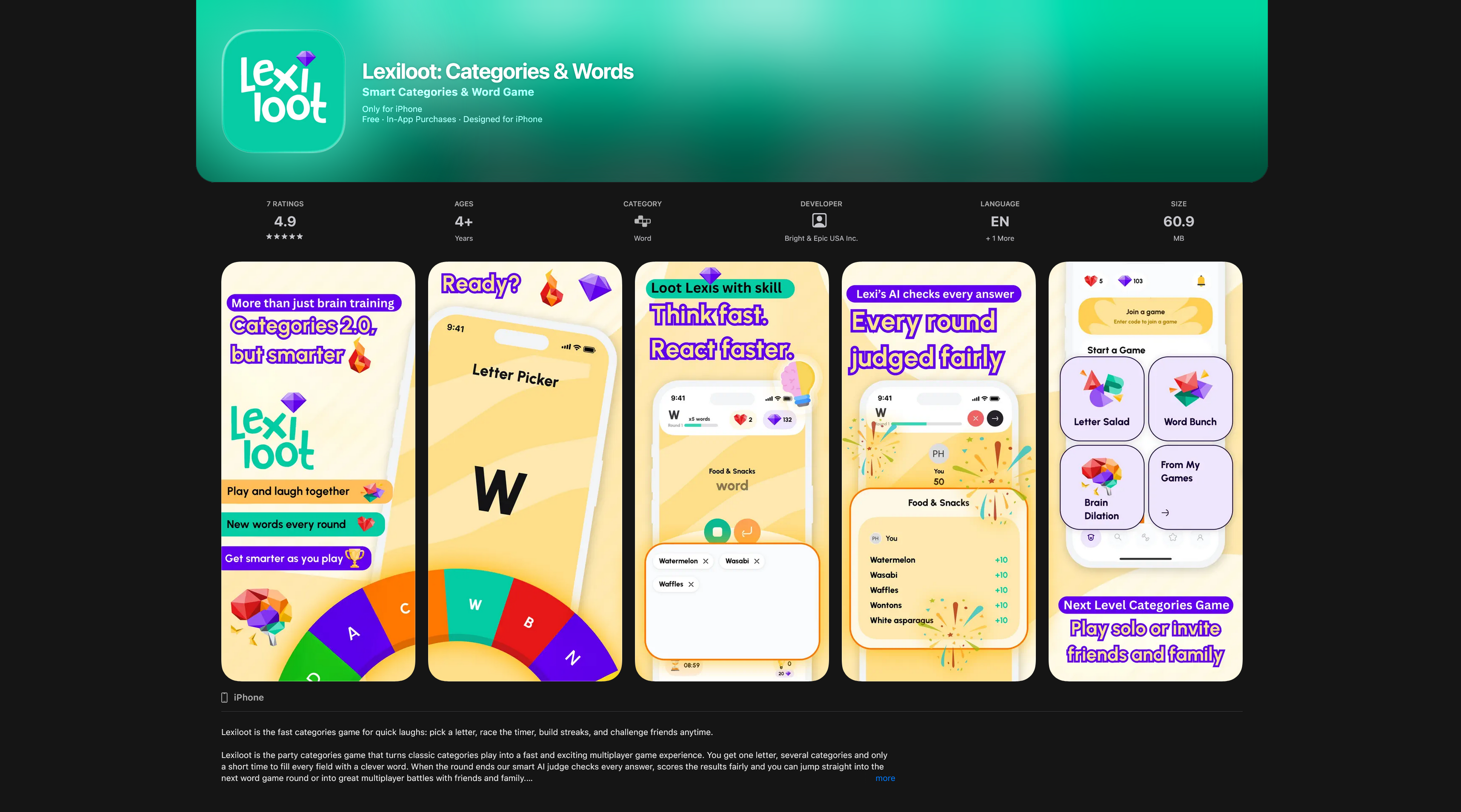
The app features adaptive difficulty that grows with your abilities, ensuring continuous challenge without frustration. Social gaming elements let you invite friends, compete on leaderboards, and host family tournaments that make brain training a shared activity. Our category challenge mobile gamer guide explains how these features work together to maximize both fun and learning outcomes. Premium upgrades offer ad-free play and advanced training modes through a simple pay-once model, no subscriptions required. Explore proven word game strategies boost brainpower to accelerate your cognitive gains while enjoying quality time with family.
FAQ
What types of brain games help improve memory?
Memory games like Dual N-Back and certain spatial puzzles improve working memory by challenging you to hold and manipulate information temporarily. These games use repetition and progressive difficulty to strengthen neural pathways associated with recall and attention. Combining memory games with other categories like language or strategy produces better overall results than focusing on memory alone. Research suggests pairing game practice with real-world memory tasks like learning names or remembering shopping lists enhances brain training terms effectiveness.
Are word games effective for vocabulary building?
Word games challenge you to form words quickly under time pressure, which enhances both vocabulary recall and acquisition of new terms. Types of word games vary from anagrams to category-based challenges, each targeting slightly different linguistic skills. Research supports moderate vocabulary gains with consistent play, especially when you look up unfamiliar words encountered during gameplay. The social and competitive elements in multiplayer word games boost motivation, leading to more frequent practice and faster improvement.
How long should I play brain games daily for benefits?
Experts suggest playing brain games 10 to 15 minutes daily to see noticeable cognitive benefits within about a month. Consistent short daily play leads to cognitive gains after weeks of regular practice, typically 4 to 6 weeks for measurable improvements. Short, consistent sessions work better than sporadic long ones because your brain maintains peak attention and avoids fatigue. Breaking sessions into two 10-minute periods morning and evening can amplify benefits by spacing practice throughout the day.
Can families play brain games together effectively?
Families absolutely can play brain games together, and social play often increases engagement and learning outcomes for all ages. Games with adjustable difficulty levels let children and adults compete fairly while exercising appropriate cognitive challenges. Multiplayer modes and team challenges transform individual brain training into quality family time that builds relationships alongside skills. Discussing strategies and celebrating improvements together reinforces learning and creates positive associations with mental exercise.
Do brain games really transfer to real-world skills?
Brain games produce near-transfer effects reliably, improving skills closely related to the game mechanics like faster word recognition or better spatial visualization. Far-transfer to broader real-world abilities occurs less consistently and requires intentional application of learned skills to everyday tasks. Combining brain games with related practical activities bridges this gap effectively, such as using expanded vocabulary in conversation or applying problem-solving strategies at work. The key is viewing brain games as one tool within a mentally active lifestyle rather than a standalone solution.

