


TL;DR:
- Daily challenges activate neuroplasticity, build emotional resilience, and sharpen cognitive flexibility through purposeful friction. Embracing manageable discomfort fosters growth by strengthening neural pathways, clarifying priorities, and enhancing mental agility. Incorporating small, consistent struggles into daily routines promotes lasting self-improvement without burnout or overwhelm.
Daily challenges are defined as manageable, purposeful obstacles that activate neuroplasticity, build emotional resilience, and sharpen cognitive flexibility over time. Most people treat difficulty as something to minimize. The science says the opposite is true. Researchers like Dr. Mithu Storoni have shown that controlled, everyday friction is not a sign that something is wrong. It is the mechanism through which your brain and emotional systems grow stronger. Adults who engage in continuous learning of new skills show 40% faster skill acquisition than those who stick to familiar, repetitive tasks. That number tells you everything about why comfort is a ceiling, not a reward.
What is the role of daily challenges in personal growth?
Daily challenges are purposeful obstacles or tasks that sit just outside your current comfort zone. They are not catastrophic events or crises. They are the slightly harder conversation, the unfamiliar skill, the route that takes more effort. Psychologists use the term “desirable difficulties” to describe tasks that feel harder in the moment but produce deeper, more durable learning. This is the recognized framework behind why struggle produces growth.
These challenges trigger neuroplasticity, the brain’s ability to reorganize and form new neural connections. When you encounter something novel or complex, your brain cannot rely on existing shortcuts. It builds new pathways instead. This process strengthens cognitive systems involved in memory, reasoning, and emotional regulation.
The key distinction is between avoiding challenges and embracing purposeful discomfort. Avoidance keeps your existing neural patterns intact. Purposeful discomfort forces adaptation. Research confirms that effortful cognitive activities strengthen neural pathways far more effectively than low-effort or repetitive tasks. The brain, like a muscle, responds to resistance.
Here is what makes a daily challenge genuinely useful:
- It is slightly beyond your current skill level, not overwhelming
- It involves novelty, meaning your brain cannot run on autopilot
- It requires active engagement rather than passive consumption
- It produces a sense of accomplishment when completed
Pro Tip: Start with one small challenge per day in a domain you want to grow. Learning five new vocabulary words, solving a logic puzzle, or having one honest conversation counts. Consistency matters more than intensity.
How do daily challenges enhance cognitive functions?
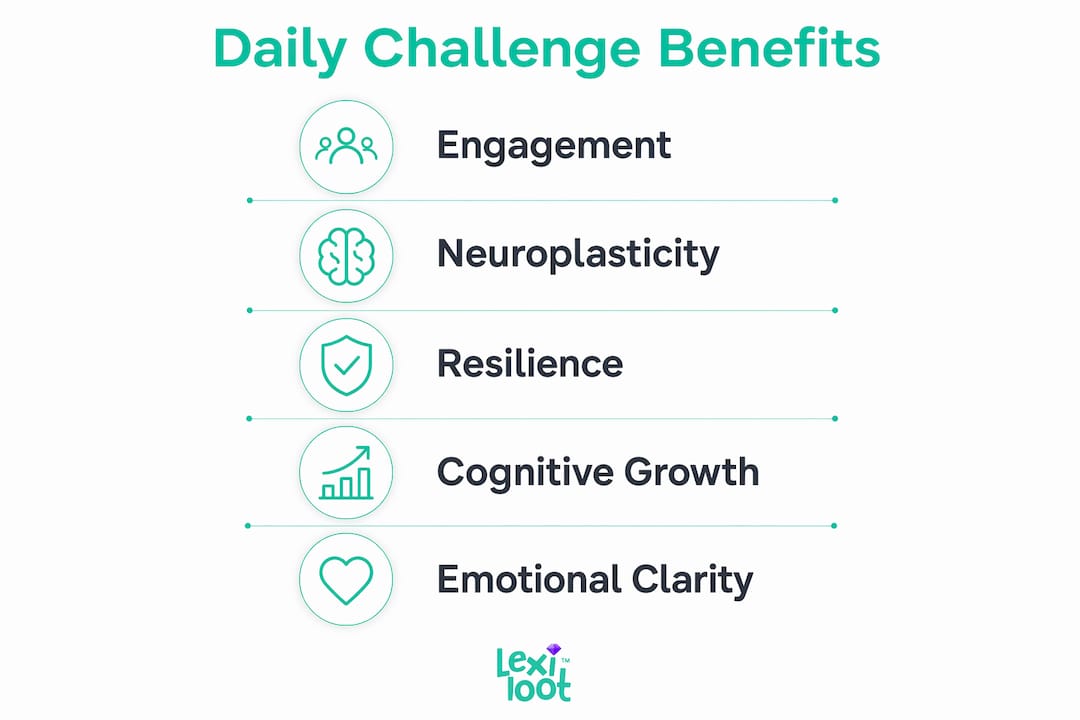
The cognitive benefits of everyday obstacles are grounded in neuroscience, not motivation culture. A 2022 study published in Nature Communications found that novel, complex challenges enhance functional brain connectivity related to creative and executive functioning. This means the brain regions responsible for planning, problem-solving, and flexible thinking become better connected when you regularly push into unfamiliar territory.
Processing speed, cognitive flexibility, and working memory all improve through consistent challenge. Cognitive flexibility is your ability to shift between tasks, perspectives, or strategies without getting stuck. It is one of the strongest predictors of academic and professional success. Daily challenges in personal growth are not just about feeling more capable. They physically reshape how your brain operates.
The contrast between effective and ineffective mental exercise matters here:
| Type of activity | Cognitive impact |
|---|---|
| Repetitive, familiar tasks | Maintains existing pathways, minimal new growth |
| Novel, complex challenges | Builds new neural connections, improves executive function |
| Passive consumption (scrolling, TV) | Low engagement, limited cognitive benefit |
| Active problem-solving (puzzles, new skills) | High engagement, measurable gains in processing speed |
The table above reflects a pattern confirmed by learning researchers: difficulty is the signal that growth is happening. When a task feels easy, your brain is coasting. When it feels hard but manageable, your brain is building.
Vocabulary and category thinking are particularly strong cognitive training tools. When you practice challenge-based learning, you force your brain to retrieve, sort, and connect information rather than simply recognize it. Retrieval practice is one of the most well-supported methods in cognitive science for building lasting knowledge.
What emotional and resilience benefits do daily challenges provide?
Resilience is not a personality trait you either have or lack. It is a skill built through repeated exposure to manageable stress. Psychologists call this stress inoculation theory. The idea is that controlled challenges train resilience by teaching the brain to recover quickly from difficulty without becoming overwhelmed. Each time you face and move through a challenge, your stress response becomes more calibrated.

Dr. Storoni’s concept of “friction-maxxing” takes this further. It argues that modern life has removed too much natural friction through automation, convenience, and optimization. The result is agency decay: a gradual erosion of your sense of competence and self-determination. Removing everyday friction reduces a person’s sense of well-being, even when life appears easier on the surface. This is a counterintuitive finding with real implications for how you design your daily routine.
Here is how to build emotional resilience through daily struggles, starting with the most accessible entry points:
- Physical friction: Take the stairs, walk instead of driving short distances, or exercise without music. These small choices preserve physical agency and train tolerance for discomfort.
- Cognitive friction: Learn something genuinely new each week, whether a language, a skill, or a complex topic. The benefits of everyday obstacles in language learning extend directly to cognitive flexibility and memory.
- Social friction: Have the difficult conversation you have been postponing. Disagreement and honest communication build emotional tolerance and interpersonal confidence.
- Delayed gratification: Wait before acting on impulse purchases, comfort eating, or distraction. This trains the prefrontal cortex, the brain region responsible for self-regulation.
Small, deliberate daily stresses also train the brain’s dopamine circuits involved in reward and regulation. This helps you stay engaged and present rather than constantly seeking the next easy hit of stimulation.
Pro Tip: After completing a challenge, take 60 seconds to name what you learned or how you adapted. This reflection step reinforces the neural pathways built during the challenge and accelerates long-term growth.
How do daily challenges reveal and clarify personal priorities?
One underappreciated benefit of overcoming daily struggles is what they reveal about your actual values and relationships. Challenges act as a filter. They expose what is noise and what is genuinely important in your life. When things are easy, almost everything feels equally worth your time. When things get hard, priorities become clear fast.
Daily challenges help reveal true priorities by exposing which relationships, goals, and commitments hold up under pressure. The people who show up when you are struggling are different from those who appear only when things are comfortable. Problems sort your social world with a precision that calm periods never can.
This perspective shift, from fearing problems to learning from them, is one of the most practical mindset changes available to you. Consider what challenges clarify:
- Which goals you are genuinely committed to versus which ones sounded appealing in theory
- Which relationships are reciprocal and which are transactional
- Where your actual strengths lie, as opposed to where you assumed they were
- What drains your energy versus what restores it, even when both feel hard
People who adopt a growth mindset see challenges as opportunities for becoming rather than painful tests. This reframe is not naive optimism. It is a documented psychological shift that changes how your brain processes stress and encodes experience. Post-traumatic growth research confirms that difficulty, when processed with reflection, produces lasting positive change in identity and capability.
Practical ways to incorporate daily challenges for self-improvement
Integrating meaningful challenges into your routine does not require dramatic life changes. The most effective approach is what researchers call purposeful discomfort: choosing the slightly harder option consistently across cognitive, physical, and social domains.
Here is a practical framework for getting started:
- Identify one growth domain. Choose cognitive, physical, emotional, or social. Start with one area rather than overhauling everything at once.
- Set a challenge slightly above your current level. The goal is productive struggle, not failure. If you are learning vocabulary, target words just beyond your current range, not advanced academic terminology from day one.
- Treat it as a low-stakes experiment. Approaching challenges as experiments triggers curiosity over fear, shifting your stress response from harmful to growth-oriented. You are testing what works, not proving your worth.
- Build in recovery. Challenge without rest leads to burnout, not growth. Alternate hard days with lighter ones. Sleep, social connection, and play are not the opposite of growth. They are part of the cycle.
- Track small wins. Noticing progress, even minor progress, reinforces motivation and helps your brain recognize that effort produces results.
The comparison below shows how two approaches to the same goal produce very different outcomes:
| Approach | Method | Outcome |
|---|---|---|
| Passive learning | Re-reading notes, watching tutorials | Surface familiarity, low retention |
| Active challenge | Testing recall, teaching others, solving new problems | Deep encoding, transferable skill |
Peer challenges in games add a social dimension that amplifies these effects. Competing or collaborating with others introduces unpredictability, which is one of the strongest drivers of cognitive engagement.
Pro Tip: Use the “hard way” rule once a day. Do one routine task without the shortcut. Calculate the tip mentally, write the grocery list from memory, or spell the word before looking it up. Doing tasks the hard way periodically preserves your sense of competence and agency.
Key takeaways
Daily challenges build resilience, cognitive strength, and emotional clarity by providing the purposeful friction your brain and body need to grow and adapt.
| Point | Details |
|---|---|
| Challenges trigger neuroplasticity | Novel, complex tasks build new neural pathways more effectively than repetitive activities. |
| Stress inoculation builds resilience | Controlled daily friction trains your brain to recover from difficulty without becoming overwhelmed. |
| Challenges clarify priorities | Difficulty filters out noise and reveals which goals, values, and relationships are genuinely important. |
| Purposeful discomfort drives growth | Choosing the slightly harder option consistently across domains produces lasting cognitive and emotional gains. |
| Recovery is part of the cycle | Balancing challenge with rest prevents burnout and allows the brain to consolidate new learning. |
Why I think we have daily challenges completely backward
Most people I talk to treat daily challenges as evidence that something has gone wrong. A hard conversation means the relationship is broken. A difficult task means they are not good enough. A frustrating day means life is unfair. That framing is the real problem, not the challenges themselves.
What I have found, both personally and in watching how people grow, is that the individuals who make the most consistent progress are not the ones who avoid friction. They are the ones who have stopped treating friction as a threat. They approach a hard vocabulary set the same way they approach a tough workout: with the expectation that discomfort is the point, not a side effect.
The research on burnout is telling here. Burnout most often occurs when challenges are viewed as punishments rather than experiments. The same workload, the same difficulty level, produces completely different outcomes depending on the mental frame you bring to it. Curiosity is protective. Fear is corrosive.
My honest encouragement is this: you do not need to seek out suffering. You need to stop engineering it out of your day. Let the stairs be stairs. Let the hard conversation happen. Let the unfamiliar word stay unfamiliar long enough for you to work it out. That small, consistent friction is not the obstacle to your growth. It is the mechanism.
— Philipp
Build your daily challenge habit with Lexiloot
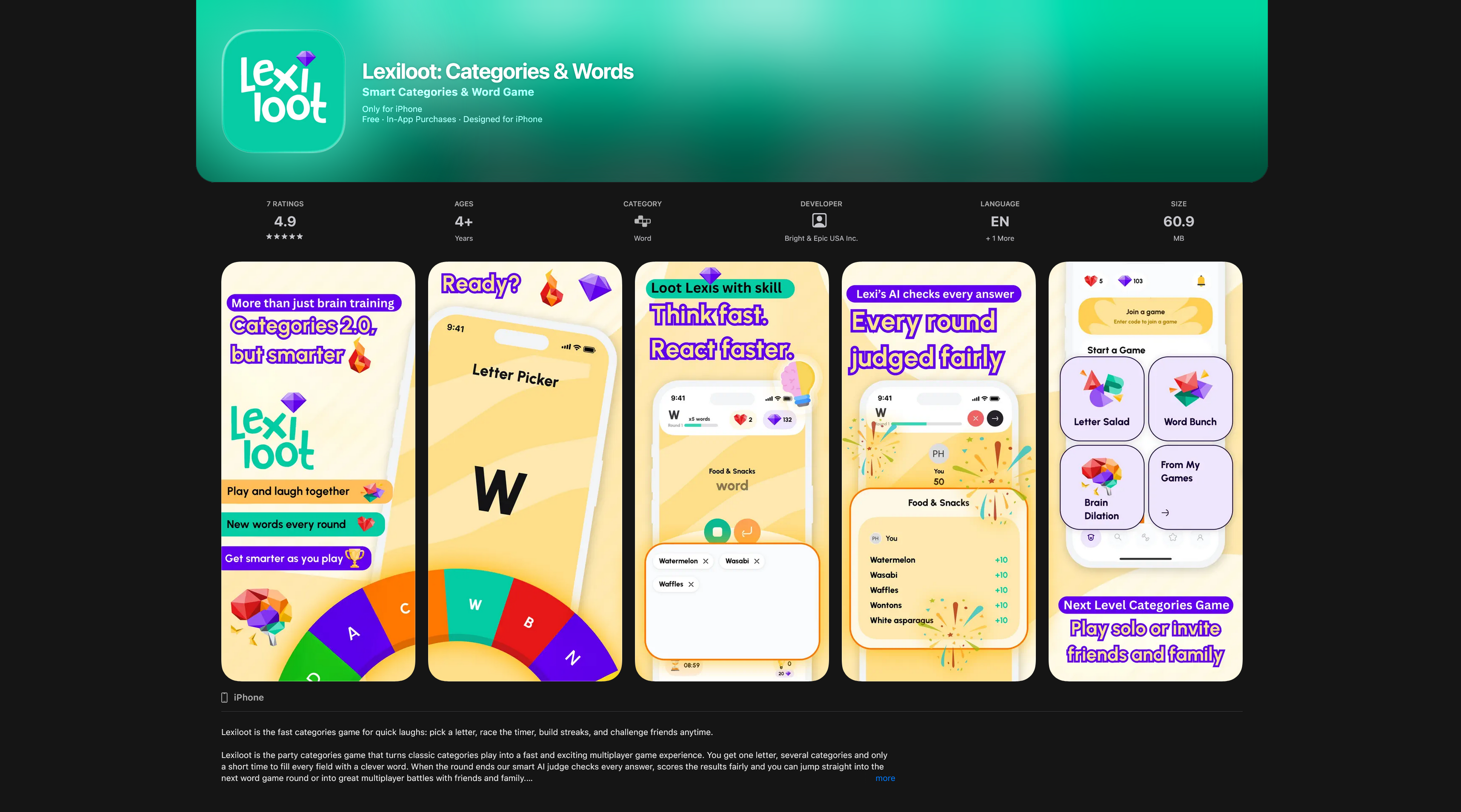
Lexiloot is an iOS categories game designed to make cognitive challenges genuinely enjoyable. Every game mode, from word puzzles to category battles, is built around the same principle that drives personal growth: purposeful, engaging difficulty that keeps your brain building new connections. Whether you are expanding your vocabulary, sharpening category thinking, or competing with friends on the leaderboard, Lexiloot delivers the kind of daily mental friction that produces real cognitive gains. If you want a practical, fun way to use mobile games for vocabulary learning that actually sticks, Lexiloot is built for exactly that.
FAQ
What is the role of daily challenges in personal growth?
Daily challenges provide purposeful friction that activates neuroplasticity, builds emotional resilience, and sharpens cognitive flexibility. They are the primary mechanism through which the brain forms new pathways and individuals develop lasting skills.
How do daily challenges build resilience?
Stress inoculation theory explains that repeated exposure to controlled, manageable challenges trains the brain to recover from difficulty more efficiently over time. Each challenge completed recalibrates your stress response and strengthens emotional tolerance.
Can daily challenges improve cognitive skills?
Adults who engage in continuous learning of novel, complex tasks show 40% faster skill acquisition than those performing familiar, repetitive activities. Cognitive flexibility, processing speed, and executive function all improve through consistent challenge.
What happens when you remove daily challenges from your life?
Removing everyday friction causes agency decay, a gradual reduction in your sense of competence and well-being. Research shows that frictionless living can harm mental health even when life appears objectively easier.
How do you start incorporating daily challenges without burning out?
Start with one small challenge per domain, treat each as a low-stakes experiment rather than a test, and build in deliberate recovery time. Balancing challenge with rest allows the brain to consolidate new learning and prevents the stress from becoming counterproductive.

