


Kindergartners who played word games in one study jumped from a mean vocabulary score of 8 to 13 in just a few weeks, a gain so large it registered a Cohen’s d of 2.29, which researchers consider exceptional. That single finding challenges a deeply held belief: that structured, traditional study always beats interactive play. Many parents and educators still see word games as a reward after real learning is done. This article flips that idea. We will show you what the research actually says, which game mechanics drive the biggest gains, and how you can put word games to work at home or in the classroom starting today.
Table of Contents
- Why word games matter in learning
- What research reveals: Evidence and outcomes
- How word games work: Mechanics and best practices
- Nuances: Limitations and expert perspectives
- Practical tips: Choosing and using word games for all ages
- Take learning further with innovative word games
- Frequently asked questions
Key Takeaways
| Point | Details |
|---|---|
| Games boost vocabulary | Word games consistently improve vocabulary acquisition and retention in learners of all ages. |
| Science supports short sessions | Just 10-15 minutes of game-based learning daily can drive measurable literacy gains, especially after phonics foundations. |
| Mix methods and monitor | Combining digital and traditional games, adapted by age, optimizes cognitive and motivational benefits. |
| Limitations matter | Expert advice warns against excessive play or using games as a substitute for structured instruction. |
| Practical integration is key | Careful game selection, curriculum alignment, and ongoing teacher or parent oversight produce the best results. |
Why word games matter in learning
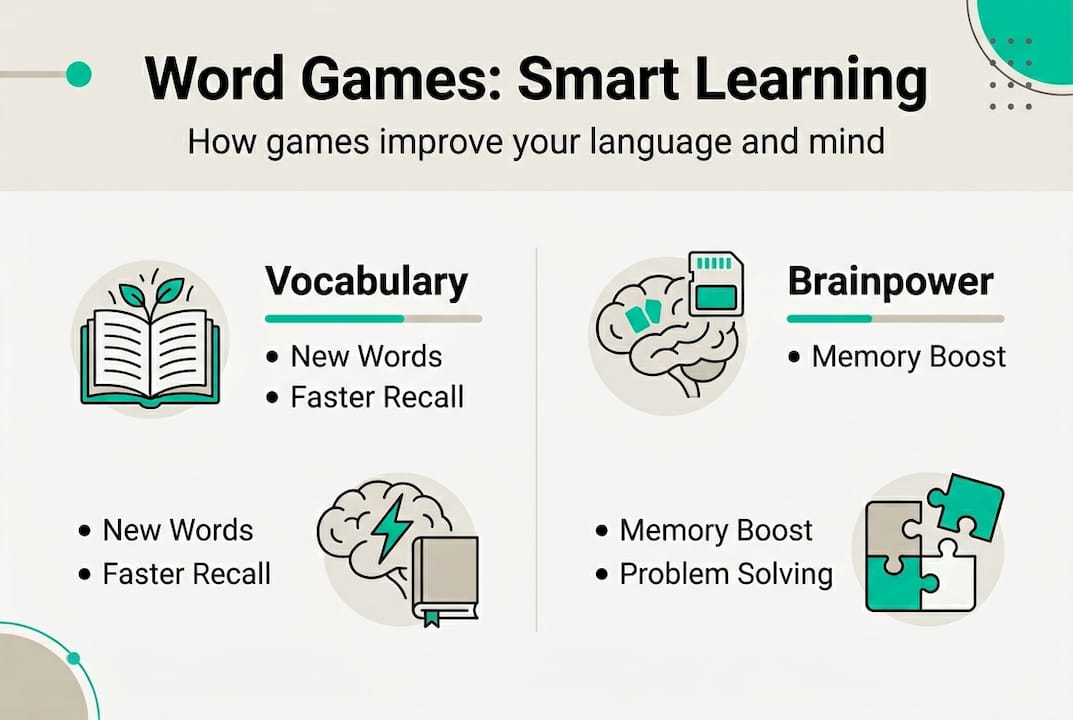
Word games sit at a productive intersection between play and active learning. When a child searches for a word that fits a category, their brain scans what it already knows, tests possibilities, and locks in new connections. That process is far more engaging than copying definitions from a textbook.
“Word games significantly improve vocabulary acquisition and retention in children through engaging, interactive methods outperforming traditional rote memorization.”
The word game benefits go well beyond spelling fluency. Here is what consistent play builds:
- Vocabulary recall: Kids retrieve words faster because games repeat exposure in varied, meaningful contexts.
- Category thinking: Sorting words by theme trains the brain to organize language, which supports reading comprehension.
- Problem-solving: Figuring out which word fits a pattern or rule strengthens flexible thinking.
- Friendly competition: Leaderboards and point systems wake up attention and sustain effort longer than solo drills.
- Immediate feedback: Games tell players instantly whether they are right or wrong, which accelerates learning.
The research on word games confirms that these mechanics work together to create a learning environment that feels effortless but is cognitively rich. That combination is hard to replicate with worksheets alone.
What research reveals: Evidence and outcomes
Now that you know the importance, let’s examine real-world results and what the numbers say. The data is encouraging, and it covers a wide range of learners.
A review of early study outcomes found measurable gains across multiple age groups and reading levels. The table below summarizes key findings:
| Learner group | Intervention length | Key outcome |
|---|---|---|
| Kindergartners | 5 weeks | Mean score rose from 8 to 13 (Cohen’s d = 2.29) |
| Primary students | 6 weeks | Statistically significant gains (p < 0.05) |
| Poor readers | 5 hours total | Decoding efficiency increased noticeably |
| ESL/EFL learners | 8 weeks | Vocabulary breadth and retention improved |
These results show that even short interventions produce real change. Five hours of gameplay spread across a few weeks is enough to move the needle for struggling readers. That is a low time investment for a meaningful return.
However, the research also identifies important boundaries. Word games work best when learners already have a basic phonics foundation. A child who cannot yet connect letters to sounds will struggle to benefit from spelling-based games. Additionally, literacy development support notes that long-term retention after short interventions still needs more study, so games should be ongoing rather than a one-time event.
Pro Tip: If you are teaching with word games in a classroom, run a quick phonics check before introducing digital vocabulary games. Students who need phonics support will benefit more from targeted phonics activities first, then word games as a reinforcing layer.
How word games work: Mechanics and best practices
The research is clear; next, let’s see how these games operate and how to use them most effectively. Understanding the mechanics helps you choose the right game for the right goal.

Common game mechanics include repetition of target words, immediate corrective feedback, semantics tasks (matching words to meanings or categories), points and badge systems, word ladders where players change one letter at a time, and board-style formats like snakes and ladders adapted for vocabulary. Each mechanic targets a different cognitive skill.
Here is a comparison of digital and traditional word games:
| Feature | Digital word games | Traditional word games |
|---|---|---|
| Feedback speed | Instant | Delayed (teacher or peer) |
| Engagement level | High (visuals, sound) | Moderate to high (social) |
| Vocabulary depth | Broad, adaptive | Curated, focused |
| Accessibility | Anytime, anywhere | Requires materials/group |
| Cognitive benefit | Pattern recognition, recall | Strategic thinking, turn-taking |
Both formats have real value. The best approach combines them. Now, here is how to put this into practice:
- Start with phonics. Confirm learners can decode basic words before introducing word games.
- Choose a game matched to your goal. Use category games for comprehension, word ladders for spelling fluency.
- Set a daily time limit. Ten to fifteen minutes per session is enough to build habits without fatigue.
- Mix digital and physical formats. Alternate between app-based games and card or board games for variety.
- Introduce group play. Multiplayer formats build collaboration and make vocabulary recall social and fun.
- Track progress. Note which words kids use correctly in writing or conversation after game sessions.
- Rotate game types. Explore the full range of types of word games to prevent boredom and target different skills.
- Apply strategies for word games to help older learners maximize their scores and deepen their thinking.
Nuances: Limitations and expert perspectives
Understanding how games work is just the start. Knowing their limitations ensures success and helps you avoid common mistakes.
Experts who study gamification in education raise valid concerns. Gamification risks include a shift in focus from genuine understanding to chasing points and badges. When a child plays only to win, they may memorize surface patterns without building real vocabulary depth. That is a meaningful distinction.
Here are the key limitations to keep in mind:
- Games are supplements, not substitutes. Direct instruction in reading and writing must remain the foundation.
- Screen time needs monitoring. Excessive digital play carries its own risks, including reduced attention span and eye strain.
- Scoring can distort motivation. Some learners become anxious about leaderboards rather than curious about words.
- Teacher facilitation matters. Research grounded in Vygotsky’s constructivist learning theory shows that experiential learning works best when a knowledgeable adult guides the experience.
- Quality beats quantity. One well-designed game session beats an hour of mindless clicking.
Pro Tip: After a game session, ask kids to use three words they encountered in a sentence or short story. This simple step shifts the focus from scoring to genuine vocabulary use, which is exactly what you want.
Understanding why gamify vocabulary learning matters helps you stay intentional. The goal is always deeper word knowledge, not just higher scores.
Practical tips: Choosing and using word games for all ages
With expert nuance in mind, here is how to translate research into day-to-day success. These steps work whether you are a parent at the kitchen table or a teacher managing a full classroom.
Follow this eight-step process for effective integration:
- Confirm phonics readiness. Do not skip this step. Games build on decoding skills, not replace them.
- Set a clear learning goal. Are you targeting spelling fluency, vocabulary recall, or category thinking? Pick one at a time.
- Select curriculum-aligned games. Curriculum-aligned choices like those recommended by educational bodies ensure games reinforce what learners are already studying.
- Use games for 10 to 15 minutes daily. Consistency matters more than long sessions. Short, regular play builds stronger habits.
- Combine digital and traditional formats. A digital category game on Monday pairs well with a physical word card game on Wednesday.
- Encourage group play. Collaborative formats build communication skills alongside vocabulary. Explore varieties of word games that support team play.
- Monitor engagement quality. Watch whether kids are thinking about words or just tapping fast. Depth of engagement predicts learning outcomes.
- Celebrate word use outside the game. When a child uses a new word in conversation, acknowledge it. That transfer from game to real life is the ultimate goal.
“Combining digital and traditional word game formats, alongside group play and age-appropriate adaptation, produces the strongest and most lasting vocabulary gains across learner groups.”
You can also explore word games organized by skill level and age group to find the right fit quickly. Matching the game to the learner is just as important as the game itself.
Take learning further with innovative word games
Ready to put these ideas into practice? Lexiloot brings together everything the research recommends: category challenges, vocabulary building, multiplayer competition, and immediate feedback, all in one engaging mobile app designed for families, students, and educators.
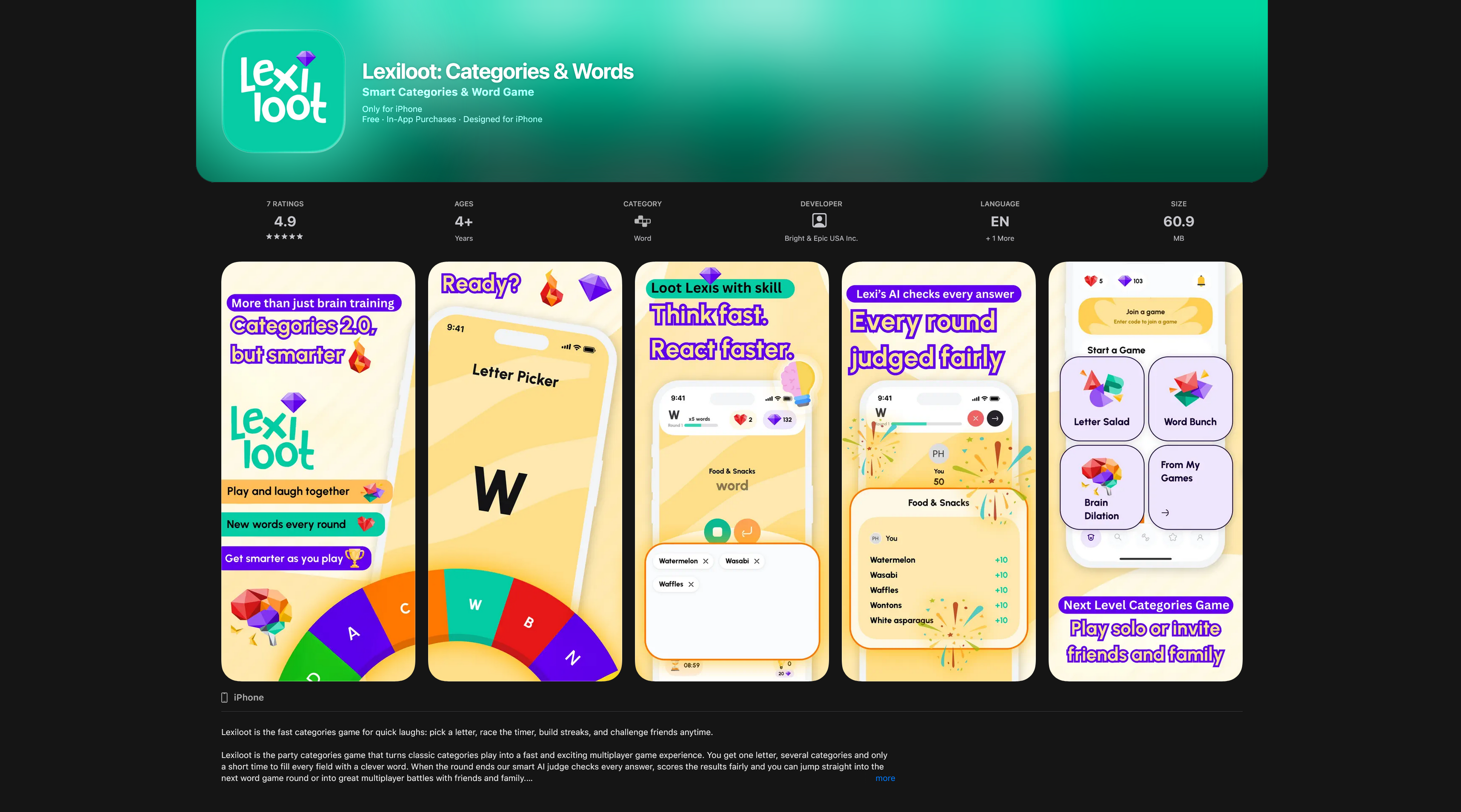
You can explore the evidence-backed benefits of word games and see how Lexiloot applies them in every game mode. Whether you want to find your perfect word game for a specific age group or need practical teaching tips to integrate games into your daily routine, Lexiloot gives you the tools to make it happen. With a pay-once model and no subscriptions, it is a straightforward investment in long-term vocabulary growth and cognitive development for every learner in your life.
Frequently asked questions
How do word games help children develop vocabulary?
Word games create interactive, memorable experiences that strengthen vocabulary recall far more effectively than rote memorization. They expose kids to words in varied, meaningful contexts, which is exactly how vocabulary acquisition sticks long-term.
Can word games be effective for struggling or ESL readers?
Yes, and the evidence is clear. Word games support poor readers and ESL learners by building decoding efficiency and vocabulary breadth, though a phonics foundation first is essential before introducing game-based vocabulary practice.
How much time should learners spend on word games for real benefit?
A focused session of 10 to 15 minutes daily produces measurable vocabulary gains. Educational guidance from BBC Teacher Support recommends this range as the sweet spot between engagement and overexposure.
What are best practices for choosing word games for different ages?
Match the game to the learner’s current skill level and curriculum, mix digital and classic formats for variety, and prioritize games that encourage real thinking over fast clicking. Combining formats and group play consistently produces the strongest results.
Are there any risks to using word games for education?
Overuse or an excessive focus on scoring can reduce learning depth and shift motivation away from genuine word knowledge. Moderation, teacher facilitation, and monitoring for deep engagement are the best safeguards against these risks.

