


Choosing the right strategy for word games can feel overwhelming when you’re staring at seven random tiles or trying to outscore your friend by just a few points. Whether you play Scrabble during family game night or challenge coworkers in Words With Friends during lunch breaks, knowing which tactics actually work makes all the difference. This article cuts through the noise to present a clear framework for evaluating and mastering the strategies that boost your scores, expand your vocabulary, and sharpen your cognitive skills in popular word games.
Table of Contents
- Criteria For Choosing Effective Word Game Strategies
- Top Foundational Strategies For Word Game Success
- Comparing Popular Word Games And Their Strategic Nuances
- Leveraging Cognitive And Social Benefits To Enhance Gameplay
- Boost Your Vocabulary And Brain Training With Lexiloot Games
Key takeaways
| Point | Details |
|---|---|
| Master two-letter words | Learning QI, XI, and ZA unlocks high scoring parallel plays in Scrabble and Words With Friends. |
| Balance your rack | Effective tile management keeps vowels and consonants in check while enabling defensive plays. |
| Consistent play builds brainpower | Regular word game sessions can improve working memory and attention by up to 40%. |
| Social modes amplify benefits | Multiplayer word games enhance engagement and develop cognitive flexibility through competition. |
| Game-specific rules matter | Understanding differences between word games guides better strategy selection and execution. |
Criteria for choosing effective word game strategies
Before diving into specific tactics, you need a framework for evaluating which strategies deserve your time and practice. The most effective approaches deliver measurable score improvements while also expanding your vocabulary in ways you can use beyond the game board. Cognitive gains from word games occur best with consistent, challenging play that pushes you slightly beyond your current comfort zone.
Adaptability matters just as much as raw effectiveness. A strategy that works brilliantly in solo play might need adjustment when you’re competing against friends in real time. The best tactics scale across skill levels, letting beginners apply basic versions while advanced players exploit deeper nuances. Social and multiplayer modes add another dimension, transforming solitary puzzling into engaging competition that keeps you coming back.
Game-specific rules and features dramatically affect which strategies succeed. The tile distribution, board layout, dictionary restrictions, and swap mechanics vary between games like Scrabble and Words With Friends, so blindly applying the same approach everywhere limits your potential. Consider these core criteria when selecting strategies:
- Score improvement potential and consistency across multiple games
- Vocabulary expansion that transfers to real-world communication
- Cognitive challenge level that promotes sustained mental growth
- Flexibility for solo practice and competitive multiplayer sessions
- Compatibility with specific game rules and mechanics
Exploring word puzzle varieties to boost vocabulary helps you understand how different game formats require tailored strategic thinking.
Top foundational strategies for word game success
Some tactics deliver outsized results regardless of which word game you choose. Mastering 2-letter words like QI, XI, ZA enables parallel plays that score points on multiple words simultaneously, often turning mediocre hands into game-changing moves. These tiny powerhouses create opportunities where none seemed to exist, letting you place tiles in tight spaces while racking up impressive totals.
Rack management involves balancing vowels and consonants to avoid getting stuck with unusable combinations. When you draw too many vowels, prioritize plays that dump extras while keeping flexible consonants for your next turn. The same principle applies in reverse when consonant-heavy racks threaten to strand you. Using hooks like adding S or ED to existing words extends your options and maximizes points from premium squares.
Defensive play becomes crucial when you’re ahead or facing a skilled opponent. Block access to triple word scores, avoid setting up easy high-value plays for your competitor, and control key board areas that offer the most scoring potential. This strategic positioning forces opponents into lower-scoring moves while preserving your lead.
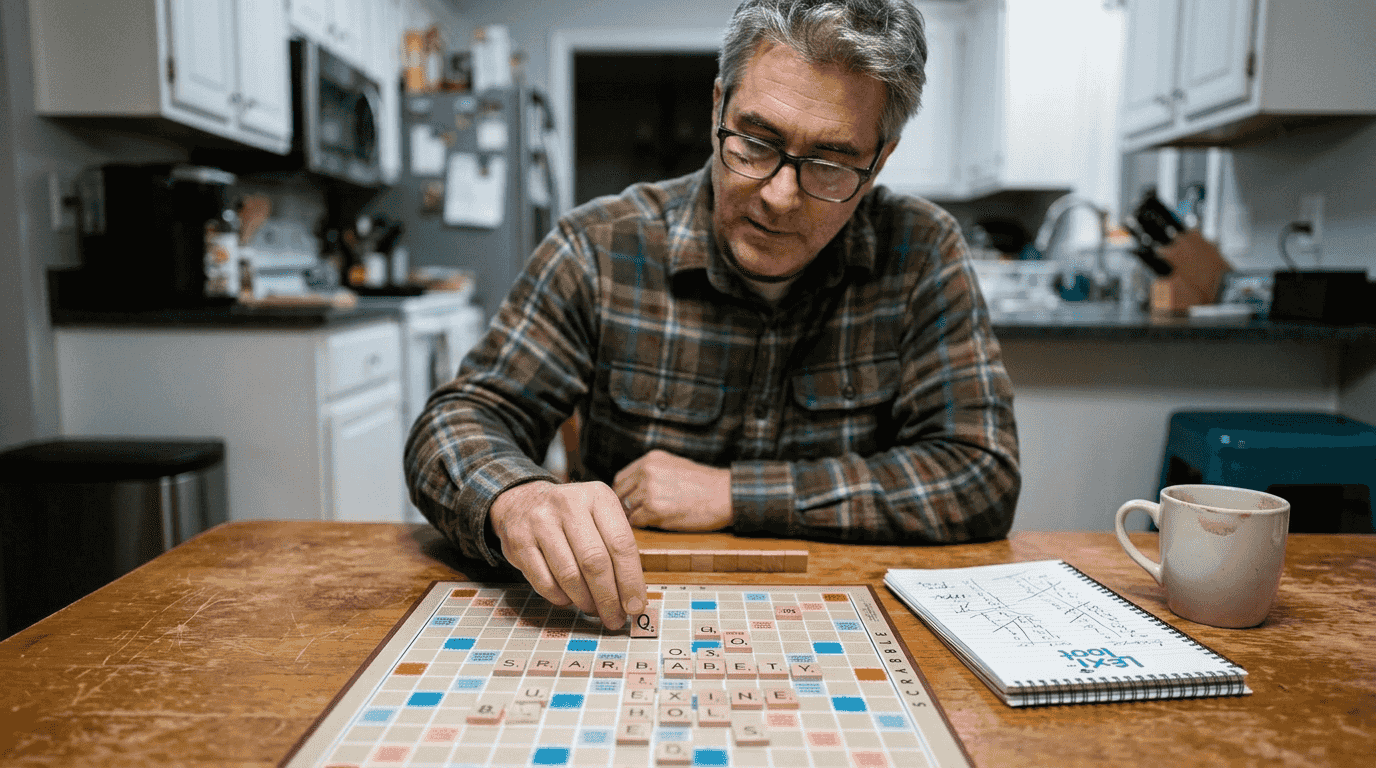
Pro Tip: Dedicate 10 minutes daily to memorizing common two and three-letter words from official game dictionaries, focusing on unusual combinations with Q, X, and Z that catch opponents off guard.
Practicing brain training terms vocabulary games builds the mental flexibility needed to spot these opportunities quickly during actual gameplay. The faster you recognize valid short words, the more time you spend strategizing rather than searching.
Comparing popular word games and their strategic nuances
Scrabble and Words With Friends dominate the word game landscape, but their differences demand adapted strategies. Words With Friends allows anytime tile swaps and uses a more permissive dictionary, while Scrabble maintains stricter rules with its fixed tile set and traditional word list. These mechanical variations create distinct strategic environments that reward different approaches.
The board layouts differ significantly between games, affecting which words deliver maximum value. Words With Friends features more scattered premium squares that favor shorter, high-value words placed strategically rather than long sprawling plays. Scrabble’s more predictable premium square arrangement rewards planning seven-letter bingos that use your entire rack for a 50-point bonus.
| Feature | Scrabble | Words With Friends |
|---|---|---|
| Dictionary | Traditional, restrictive | Flexible, includes modern slang |
| Tile swaps | Limited by turn structure | Available anytime |
| Optimal word length | Longer words, bingos valued | Shorter high-value plays favored |
| Premium squares | Predictable pattern | Scattered placement |
| Strategic focus | Long-term rack planning | Opportunistic high-value plays |
Tile distribution also varies, with Words With Friends offering different letter frequencies that change the relative value of certain plays. Adapting your strategy to these game-specific rules rather than applying a one-size-fits-all approach significantly boosts your win rate. Understanding types of word games for skill building clarifies how mechanical differences shape optimal tactics.
Leveraging cognitive and social benefits to enhance gameplay
The mental benefits of word games extend far beyond entertainment value. Gamification in word games enhances working memory and attention by 40% when players engage consistently with challenging puzzles that push their current skill ceiling. This improvement translates to better focus, faster information processing, and enhanced problem-solving in daily life.
Social multiplayer word games improve theory of mind by requiring you to anticipate opponent moves and adjust your strategy dynamically. Casual play modes maintain engagement without overwhelming pressure, making it easier to sustain long-term practice habits that compound cognitive gains over months and years. The social dimension adds accountability and friendly competition that keeps motivation high.
Multiplayer formats also develop cognitive flexibility as you adapt to different playing styles and skill levels. Competing against a defensive player requires different tactics than facing an aggressive scorer who takes big risks. This mental agility transfers to real-world situations requiring quick strategic pivots.
Pro Tip: Alternate between solo practice sessions focused on learning new words and social multiplayer games that test your skills under pressure, creating a balanced training regimen that maximizes both vocabulary growth and strategic execution.
“Consistent, challenging word game play yields measurable improvements in working memory and attention, with gamified formats delivering up to 40% gains in cognitive performance metrics.”
Exploring word game trends 2026 fun learning reveals how modern platforms integrate these cognitive benefits into engaging social experiences that feel more like entertainment than training.
Boost your vocabulary and brain training with Lexiloot games
Ready to put these strategies into practice while having fun with friends and family? Lexiloot offers engaging word and category games designed specifically to sharpen your vocabulary and cognitive skills through social multiplayer competition. The platform combines proven learning principles with modern gaming features, creating an environment where strategic thinking and vocabulary expansion happen naturally.
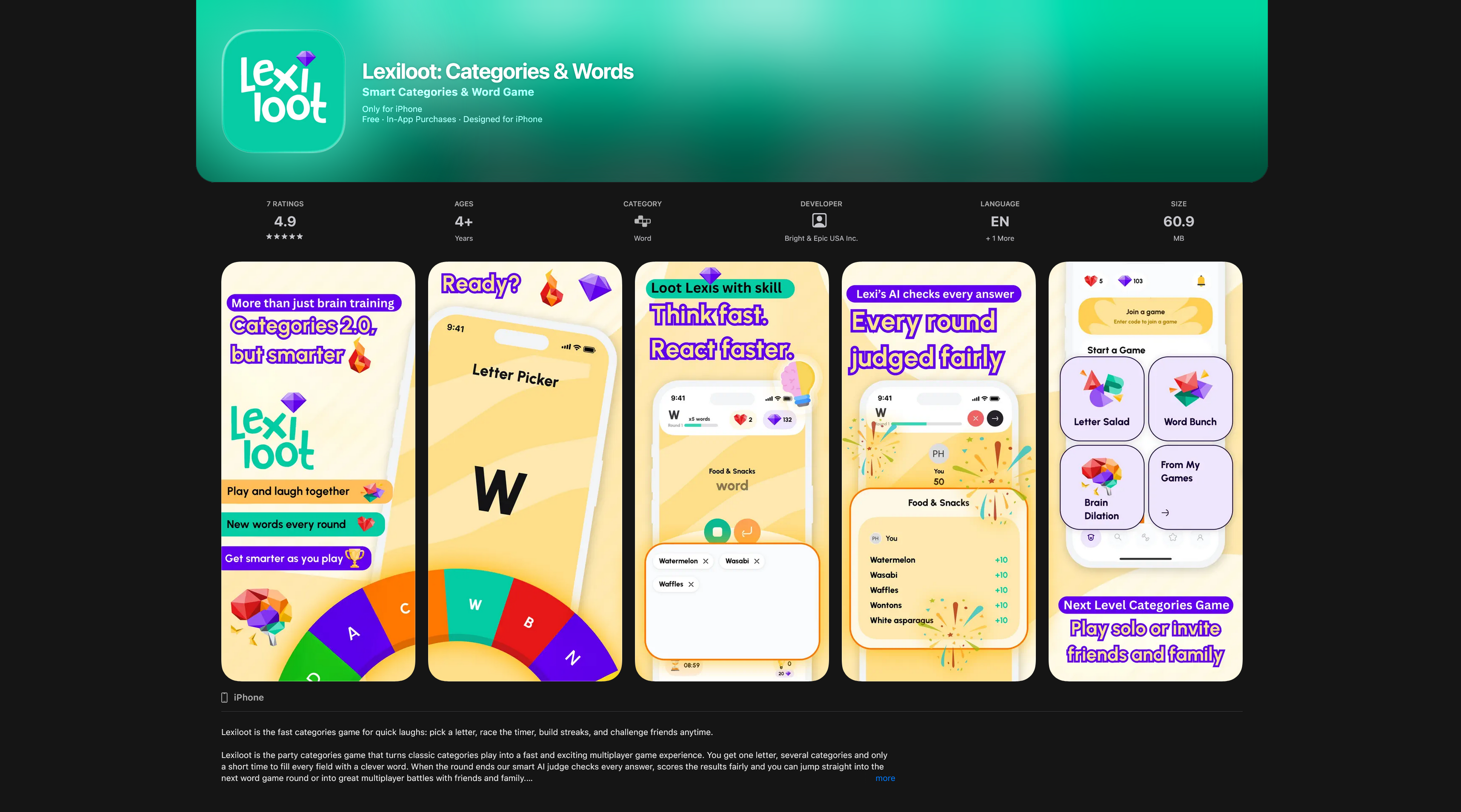
Whether you’re looking for categories game for kids and classrooms or want to master category games online as an adult, Lexiloot scales to your skill level. The app’s multiplayer modes let you challenge friends, join tournaments, and climb leaderboards while applying the foundational strategies covered in this article. Casual players enjoy relaxed sessions that still deliver cognitive benefits, while serious competitors find the depth needed for advanced tactical play. Discover what is category challenge mobile gamer guide to understand how category-based games complement traditional word puzzles for comprehensive brain training.
What are the best two-letter words to master for word games?
The most valuable two-letter words include QI, XI, ZA, JO, and KA because they use high-point tiles in short combinations that fit almost anywhere on the board. QI and XI are particularly powerful since they let you play Q and X without needing U or common vowel patterns. ZA enables parallel plays that score on multiple words simultaneously, often turning a mediocre rack into a 30-plus point move. Learning these 101 valid two-letter words from official Scrabble and Words With Friends dictionaries unlocks strategic board positions that casual players never see.
How can I manage my rack to improve my word game scores?
Balance vowels and consonants by targeting a 3:4 or 2:5 ratio that keeps your options flexible for the next turn. Use hooks like adding S, ED, or ING to existing words, extending plays while clearing problematic tiles from your rack. When you’re ahead, consider defensive plays that limit opponent access to premium squares rather than chasing maximum points on every turn. Swap tiles strategically in Words With Friends when stuck with unusable combinations, but in Scrabble, plan ahead to avoid wasting turns on exchanges.
What cognitive benefits come from playing word games regularly?
Regular word game play improves working memory by up to 40%, enhances sustained attention, and develops theory of mind through strategic anticipation of opponent moves. These gains compound over time with consistent practice, translating to better focus and problem-solving in daily activities beyond gaming. Social multiplayer modes amplify benefits by adding competitive pressure that forces faster decision-making and strategic adaptation. Casual play maintains engagement without overwhelming stress, making it easier to sustain the long-term practice needed for maximum cognitive improvement.
How do strategies differ between Scrabble and Words With Friends?
Words With Friends allows tile swaps anytime and uses a more permissive dictionary, favoring opportunistic plays with shorter high-value words on scattered premium squares. Scrabble requires more disciplined rack management with its fixed tile set and traditional word list, rewarding patient players who build toward seven-letter bingos for 50-point bonuses. The different board layouts mean Words With Friends players should focus on immediate high-value opportunities, while Scrabble competitors benefit from longer-term planning that sets up multiple strong plays in sequence. Adapting your tactical approach to these mechanical differences significantly improves win rates in both games.

