


TL;DR:
- Play-for-learning uses structured, goal-oriented play to promote vocabulary and cognitive skills.
- Guided play combines adult support with learner agency, leading to long-term retention and motivation.
- Gamification enhances engagement and memory through rewards, feedback, and varied challenges.
Many educators and parents still picture “real learning” as a child sitting quietly with a workbook. But that picture is changing fast. Research now shows that play isn’t the opposite of learning; it’s one of the most powerful vehicles for it. When children and even adult learners engage with word games and playful challenges, their brains build vocabulary, sharpen memory, and develop critical thinking in ways that drills simply can’t match. This guide breaks down the science, the strategies, and the smart design behind play-for-learning, so you can use it confidently at home, in the classroom, or anywhere learning happens.
Table of Contents
- What is play-for-learning and how does it work?
- Why guided play fosters deeper vocabulary and cognitive skills
- How gamification supercharges language and memory
- Cautions and myth-busting: What play-for-learning is and isn’t
- Our take: Balancing joy, rigor, and results in play-based learning
- Discover engaging word games and guided play tools
- Frequently asked questions
Key Takeaways
| Point | Details |
|---|---|
| Play-for-learning drives real growth | Research shows play activities build vocabulary, cognitive skills, and motivation more effectively than direct instruction alone. |
| Guided play maximizes results | Light adult scaffolding with child agency unlocks deeper retention, problem-solving, and enjoyment. |
| Gamification boosts memory | Game mechanics like points and feedback powerfully improve vocabulary retention and learner engagement. |
| Avoid overdoing or ‘fake’ play | Balance novelty, structure, and freedom to get the benefits without losing authenticity or focus. |
| Practical tools make it easy | Specialized word games and playful routines help families and classrooms apply the science of play-for-learning. |
What is play-for-learning and how does it work?
Play-for-learning is not about letting kids do whatever they want and calling it school. It’s a structured approach that uses play as the primary tool for reaching real educational goals. The difference between play-for-learning and free play is intention. There’s a clear target, whether that’s expanding vocabulary, building category thinking, or practicing spelling fluency, but the path to that target feels like a game, not a lesson.
Three core elements make this approach work:
- Intrinsic motivation: Learners engage because they want to, not because they have to. That internal drive is what makes knowledge stick.
- Child or learner agency: The player makes choices. They decide how to approach a challenge, which builds confidence and problem-solving skills alongside vocabulary recall.
- Guided exploration: A light adult presence or smart game design provides just enough structure to keep learners on track without taking over.
This combination is powerful. Play-for-learning combines intrinsic motivation, child agency, and guided exploration to foster cognitive, social, and emotional development more effectively than direct instruction alone. That’s not a small claim. It means that a well-designed word game can outperform a worksheet on multiple levels at once.
“Play is the work of childhood.” The same principle applies to language learners of any age: when the process feels meaningful and enjoyable, the outcomes are deeper and longer-lasting.
Play-for-learning also works across age groups. Young children benefit from play-based preschool learning that builds early literacy and number sense. Teens and adults learning a second language benefit from gamified vocabulary apps that replicate the same motivational loop. The mechanics shift, but the underlying principle stays the same.
You can explore the broader word game benefits for vocabulary and cognition, or read more about gamified learning explained to see how these ideas translate into real game design. The key takeaway here is simple: play-for-learning is purposeful, joyful, and backed by solid research.
Why guided play fosters deeper vocabulary and cognitive skills
Once you understand what play-for-learning is, the next question is: how exactly does it build language and thinking skills? The answer lies in the concept of guided play, where adults or smart game systems provide just enough support to keep learners growing without removing their sense of ownership.
Guided play supports learning objectives through adult scaffolding while preserving child-directed elements, promoting skills like problem-solving, agency, and enjoyment. In practice, this looks like a teacher who sets up a word-sorting game and then steps back to observe, asking questions only when a learner gets stuck. Or it looks like a mobile word game that introduces a new category challenge after a learner masters the previous one.
The cognitive gains are well documented. Play-based learning improves executive function, self-regulation, creativity, and academic readiness, with longitudinal studies showing sustained benefits into later grades. These aren’t short-term boosts that fade after a few weeks. Children who learn through guided play show stronger vocabulary recall, better attention spans, and higher school readiness scores years later.
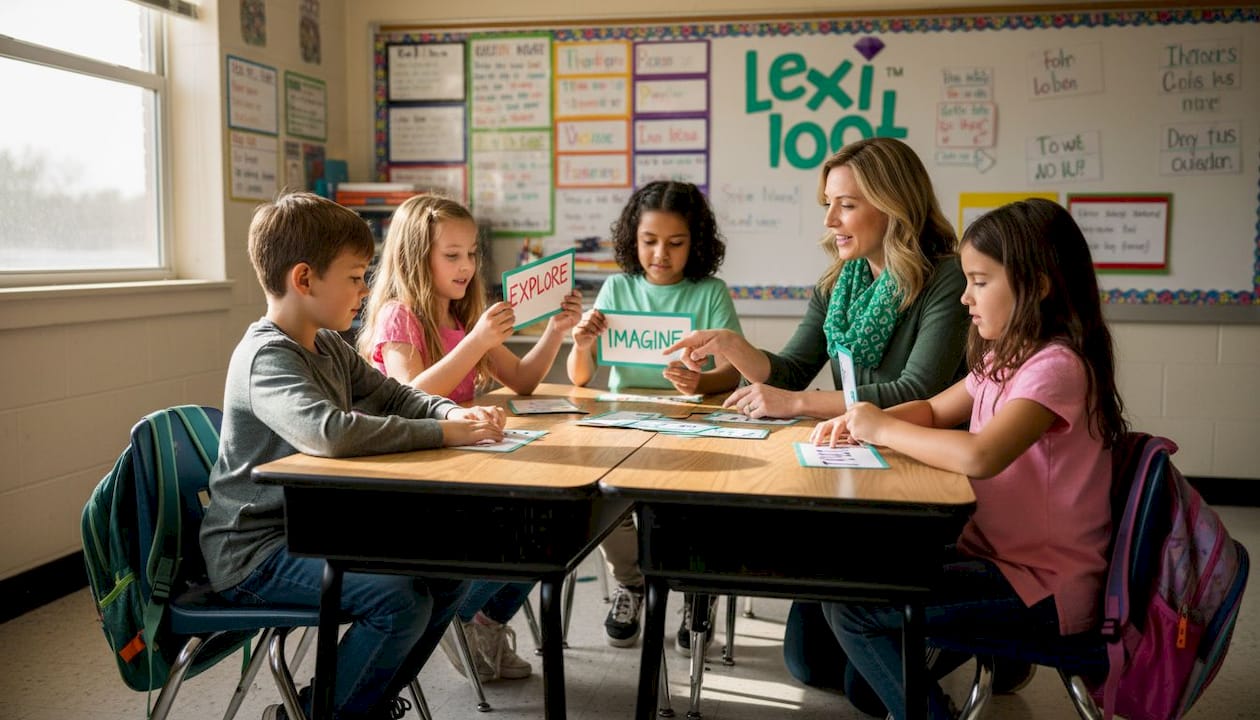
Here’s a quick comparison of what guided play develops versus traditional instruction:
| Skill area | Traditional instruction | Guided play |
|---|---|---|
| Vocabulary retention | Short-term memorization | Long-term recall through context |
| Attention span | Passive listening | Active, sustained engagement |
| Problem-solving | Teacher-directed steps | Learner-driven exploration |
| Motivation | External (grades, pressure) | Internal (curiosity, fun) |
| Social skills | Limited interaction | Collaborative and competitive play |
For parents and teachers, this means your role shifts from delivering information to designing the right environment. You don’t need to control every moment. You need to choose the right engaging vocabulary games and then let learners explore within them.
Pro Tip: When introducing a new word game, play one round alongside the child before stepping back. This brief scaffolding moment builds confidence without creating dependence. You can find more strategies in guides on teaching word games for better vocabulary outcomes. Pairing the right game with light guidance is one of the most effective moves you can make as an educator or parent. You can also explore vocabulary teaching strategies that complement a play-based approach.
How gamification supercharges language and memory
Guided play is effective on its own, but gamification takes it further. Gamification means layering game mechanics like points, badges, progress bars, and immediate feedback onto learning activities. These elements do something important: they make repetition feel exciting instead of tedious.
Repetition is essential for vocabulary acquisition. A learner needs to encounter a new word multiple times before it moves into long-term memory. Traditional methods make that repetition feel like a chore. Gamified word games make it feel like a challenge worth winning.
Gamification in mobile word games enhances vocabulary retention, working memory, attention, and motivation via elements like points, badges, feedback, and progress tracking. The mechanics work because they tap into the brain’s reward system, releasing small doses of satisfaction with every correct answer or level completion.
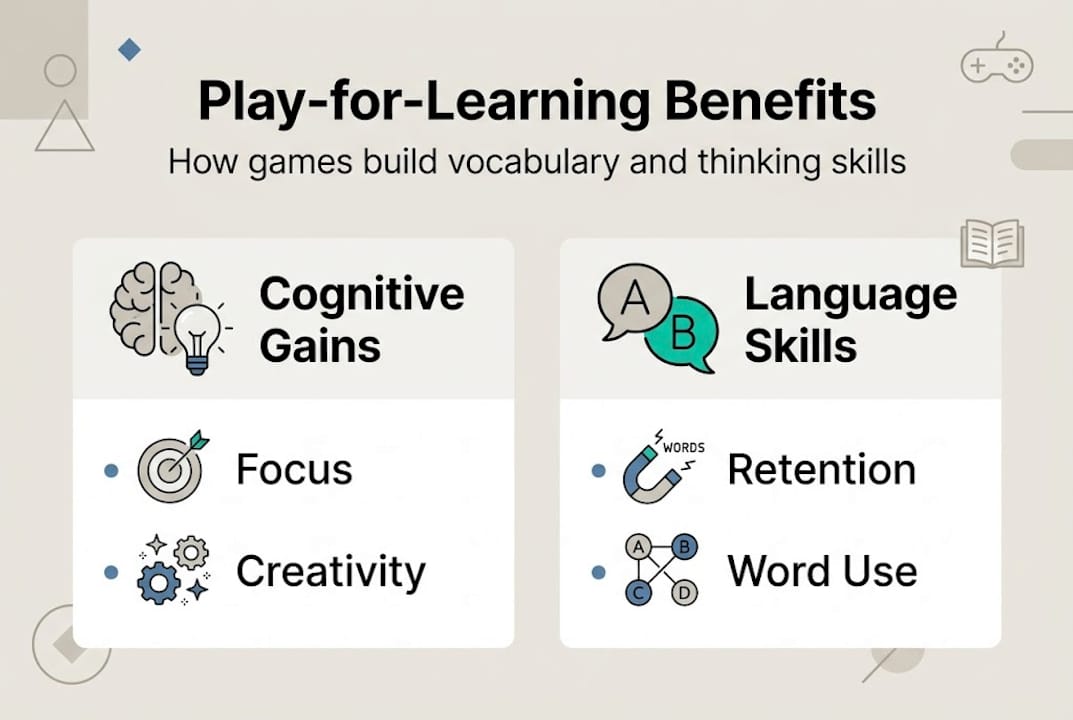
The numbers back this up. Empirical studies show significant gains: AI-gamified vocabulary learning reaches an effect size of Cohen’s d=0.72, Duolingo improves second-language reading comprehension, and gamification consistently outperforms traditional methods for memory retention. An effect size of 0.72 is considered large in educational research. That’s a meaningful difference.
What makes the best mobile word games work? Here are the key design features that drive results:
- Novelty: Fresh challenges prevent boredom and keep the brain engaged with new vocabulary.
- Immediate feedback: Learners know right away whether they’re right or wrong, which speeds up correction and reinforces correct patterns.
- Progress visibility: Seeing a streak or a level bar fill up motivates continued play.
- Balanced difficulty: Games that are too easy bore learners; games that are too hard frustrate them. The sweet spot keeps them in a state of productive challenge.
- Social elements: Leaderboards and multiplayer modes add a layer of motivation that solo practice can’t replicate.
You can read more about research on gamified apps and how these design principles translate into measurable learning outcomes. If you want to understand why these mechanics matter for kids specifically, explore why gamify vocabulary learning and how it keeps learners engaged over time. For a broader look at how word games and brainpower connect, there’s plenty of evidence to explore.
Pro Tip: Rotate game types every few weeks to prevent novelty fatigue. If a child has mastered one category challenge, introduce a new word-building format to keep vocabulary recall sharp and motivation high.
Cautions and myth-busting: What play-for-learning is and isn’t
Play-for-learning has strong evidence behind it, but it’s worth being honest about its limits. Not all play is equal, and some common misunderstandings can actually undermine the approach.
Here are the most important things to watch out for:
- Playishness is not the same as play. Some activities look like games but are really just worksheets in disguise. If there’s no genuine choice, no exploration, and no intrinsic motivation, it’s not real play-for-learning.
- Free play alone won’t hit academic targets. Unstructured free play is valuable for creativity and social development, but it won’t reliably build specific vocabulary or spelling fluency without some guidance built in.
- Over-scaffolding kills the magic. When adults control too much of the game, learners disengage. The adult role is to support, not direct.
- System pressures can squeeze out authentic play. Accountability agendas and readiness benchmarks sometimes push teachers toward direct instruction, even when play would serve learners better.
- Novelty effects wear off. Gamification works best when it keeps evolving. A game that never changes stops being motivating.
Edge cases include novelty effects waning over time in gamification, requiring design innovation, and adult-directed “playishness” that erodes authentic child-led play. This is a real risk in both classroom settings and app design.
Systemic pressures like accountability agendas and readiness benchmarks can constrain genuine play. Contrasting views remind us that the problem often isn’t play itself; it’s the system around it that limits what teachers and parents can do.
For parents and educators, the practical answer is balance. Use play-for-learning as your primary strategy, but stay alert to signs that it’s losing its edge. Rotate games, adjust difficulty, and always protect the learner’s sense of agency. Explore resources on cognitive and social growth games to find approaches that stay fresh and effective over time. You can also check authentic play insights for practical guidance on keeping play genuine.
Our take: Balancing joy, rigor, and results in play-based learning
Here’s something we’ve seen consistently: the educators and parents who get the best results from play-for-learning are the ones who resist two opposite temptations. The first temptation is to make everything a game and call it done. The second is to over-structure the play until it stops being play at all.
Pure free play is not enough for academic vocabulary growth. Learners need challenge, purpose, and regular fresh content to keep building. But over-controlling the experience strips away the very motivation that makes play work in the first place. The sweet spot is intentional design with room to breathe.
Small, consistent doses beat cramming every time. A family that plays a word category game for ten minutes after dinner will outperform one that does an hour-long vocabulary session on weekends. Routine matters more than intensity.
We also believe that failure is part of the process. Real play-for-learning means letting learners experiment, get things wrong, laugh about it, and try again. That cycle of attempt and recovery builds resilience alongside vocabulary. Don’t rush past the mistakes; they’re where the learning actually happens.
If you want to see what purposeful, refreshing play looks like in practice, explore creative word game examples that balance challenge with genuine fun. The goal is learners who are engaged, growing, and genuinely enjoying the process.
Discover engaging word games and guided play tools
Ready to move from theory to action? Lexiloot brings these research-backed principles to life through word games and category challenges designed for all ages. Whether you’re a parent looking for after-dinner brain games, a teacher building vocabulary routines, or a language learner wanting something more engaging than flashcards, there’s a starting point for you.
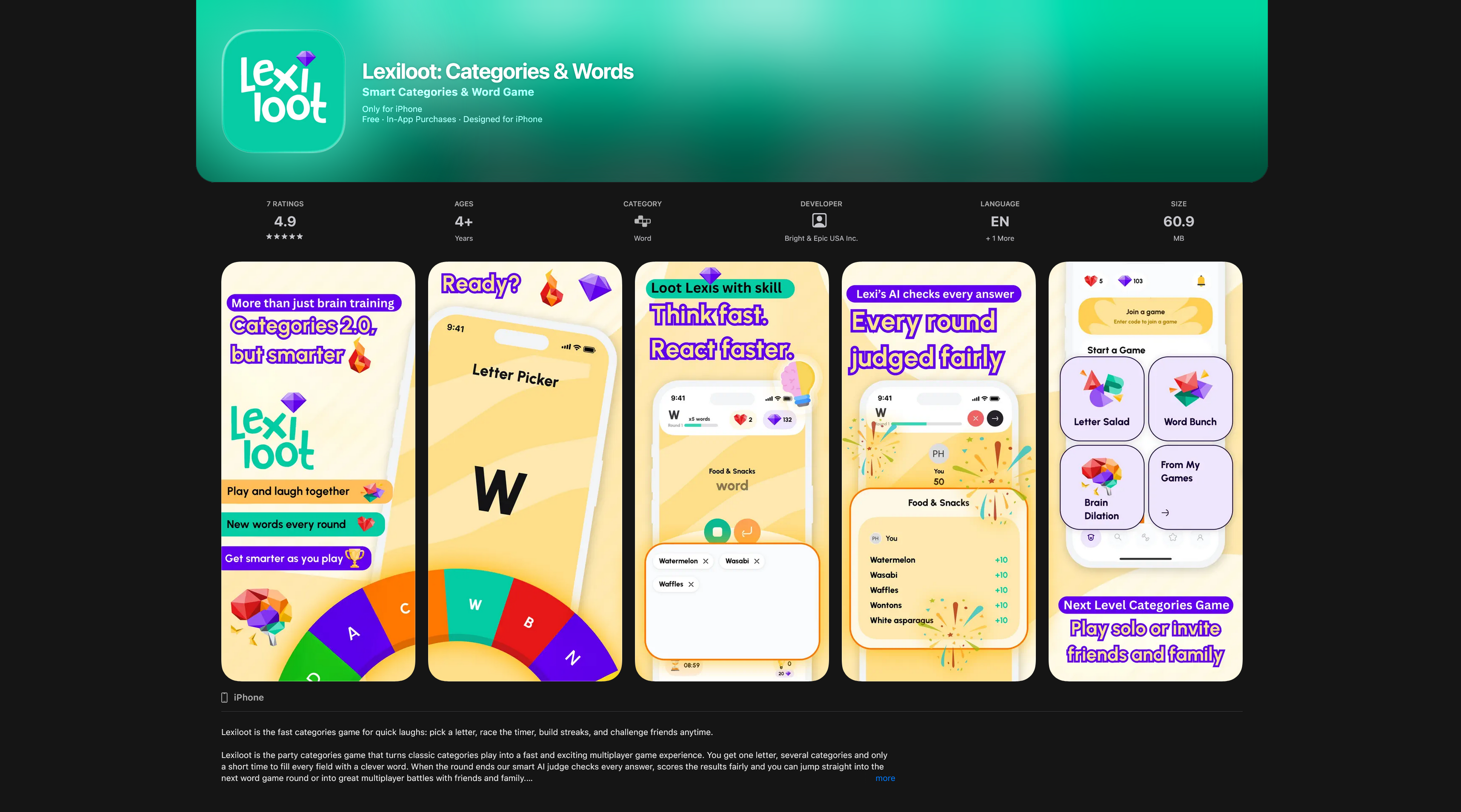
Explore how to boost vocabulary with word games that combine novelty, challenge, and social play in one place. Browse creative word game examples to find formats that fit your learners’ ages and goals. And if you want a full picture of the research behind the fun, the vocabulary and cognition boost games resource ties it all together. Start with one game, build a routine, and watch vocabulary and confidence grow together.
Frequently asked questions
Does play-for-learning really help older learners or just young kids?
While most early research focuses on young children, gamified vocabulary apps show significant gains for teens and adults learning new languages, with effect sizes that rival traditional instruction. The motivational mechanics work across age groups.
How much adult guidance is ideal in play-for-learning?
Light scaffolding works best. Guided play preserves child-directed elements while keeping adults in a supportive role, which protects the learner’s sense of agency and keeps engagement high.
Can play-based vocabulary learning replace drills and worksheets?
Playful methods outperform drills for retention and motivation because intrinsic motivation fosters deeper development than direct instruction alone. A small amount of targeted direct practice can still be useful for specific skills.
What are signs that play-based learning is being overdone or isn’t effective?
Watch for boredom, shorter attention spans during play, or repetitive gameplay with no new challenges. Novelty effects waning over time signal it’s time to introduce fresh game formats or adjust difficulty to rebuild engagement.

