


TL;DR:
- Research indicates that multiplayer word battles significantly enhance vocabulary and cognitive skills through collaborative learning. Hosting regular, themed sessions fosters community engagement and long-term vocabulary retention by emphasizing learning over competition. Utilizing fair, well-designed platforms with host migration and lag compensation ensures equitable, uninterrupted gameplay conducive to skill development.
Most people assume that multiplayer word games are mainly about bragging rights. The science says otherwise. Peer-based collaborative play measurably improves language-related skills compared to solo play or traditional study methods, with effect sizes that surprise even experienced educators. Whether you’re a casual player looking to sharpen your vocabulary recall, a competitive word game enthusiast aiming for the top of the leaderboard, or someone who simply wants to make game nights more rewarding, hosting your own game battles delivers real cognitive gains. This article walks you through the evidence, the community benefits, the technical realities, and the practical steps to host battles that genuinely build brainpower.
Table of Contents
- How game battles fuel vocabulary growth
- Hosting battles: Community, engagement, and friendly rivalry
- Competitive fairness and technical pitfalls in game battles
- Practical hosting tips: Making your next battle count
- What most game hosts overlook: Skill growth trumps scores
- Explore more ways to boost your vocabulary and game experience
- Frequently asked questions
Key Takeaways
| Point | Details |
|---|---|
| Peer play drives skill | Collaborative word game battles lead to greater vocabulary growth than solo play. |
| Community boosts learning | Hosting connects players for mutual motivation, engagement, and ongoing skill improvement. |
| Fairness matters | Technical solutions like host migration and fair matchmaking are essential for equitable game battles. |
| Practical hosting tips | Simple steps and themes make sessions more educational, fair, and enjoyable. |
| Focus beyond scores | The real win in hosting is creating lasting cognitive and language gains for all players. |
How game battles fuel vocabulary growth
Having previewed the unique benefits, let’s dig into how hosting word game battles actually accelerates vocabulary and brainpower gains.
Researchers studying game-based learning have found something genuinely striking. Collaborative game-based learning drives the highest post-test spelling scores for English language learners, outperforming both individual game play and traditional classroom instruction. That is not a marginal difference. It means that when players work through word challenges together, competing and collaborating in the same session, vocabulary recall and spelling fluency improve at a faster rate than when someone studies alone or completes worksheets.
Why does this happen? When you play against or alongside others, your brain is doing multiple things at once. It scans what it already knows, searches for new words under time pressure, and processes feedback from other players in real time. That combination of retrieval, social comparison, and immediate correction creates a much richer learning environment than passive review. You are essentially stress-testing your vocabulary in a safe, low-stakes context where mistakes are part of the fun.
The benefits apply to both casual and competitive formats. Friendly rounds with family members build category thinking and vocabulary just as effectively as intense ranked matches, because both require active word retrieval and pattern recognition. The key is social engagement. Playing with others activates cognitive and social growth pathways that solo play simply cannot replicate.
Here are some of the core vocabulary and cognitive skills that regular game battles strengthen:
- Vocabulary recall speed: Repeated exposure to words in a competitive context makes retrieval faster and more reliable over time.
- Spelling fluency: Seeing and typing words correctly under pressure reinforces spelling patterns at a deeper level than rote memorization.
- Category thinking: Word games that use category challenges train your brain to organize and retrieve vocabulary by theme, which supports broader language comprehension.
- Working memory: Holding multiple possible answers in mind while evaluating options exercises short-term memory and mental flexibility.
- Contextual reasoning: Multiplayer formats force players to think about word meaning and usage in relation to what others have already played, building a richer understanding of language. Research into vocabulary and cognition boost outcomes consistently points to this kind of contextual processing as a key driver of long-term retention.
Studies on multiplayer games research also show that the motivational element of competition encourages players to engage more deeply and for longer periods, which compounds skill gains over time.
Pro Tip: Host themed sessions focused on a specific vocabulary category, such as science terms, travel vocabulary, or food-related words. Themed battles concentrate learning on a specific domain, making it much easier for players to build and retain new vocabulary in that area.
Hosting battles: Community, engagement, and friendly rivalry
Understanding the science, it is key to see how hosting unlocks not just skill gains, but a vibrant, supportive word game community.
One of the most underappreciated aspects of hosting is the community it builds. When you regularly invite friends, family members, or fellow enthusiasts into a shared game space, you create a group with shared goals, shared vocabulary, and shared progress. That sense of community dramatically increases motivation. Players who might abandon a solo app after a few days tend to stay engaged for weeks or months when they have a group counting on them to show up.
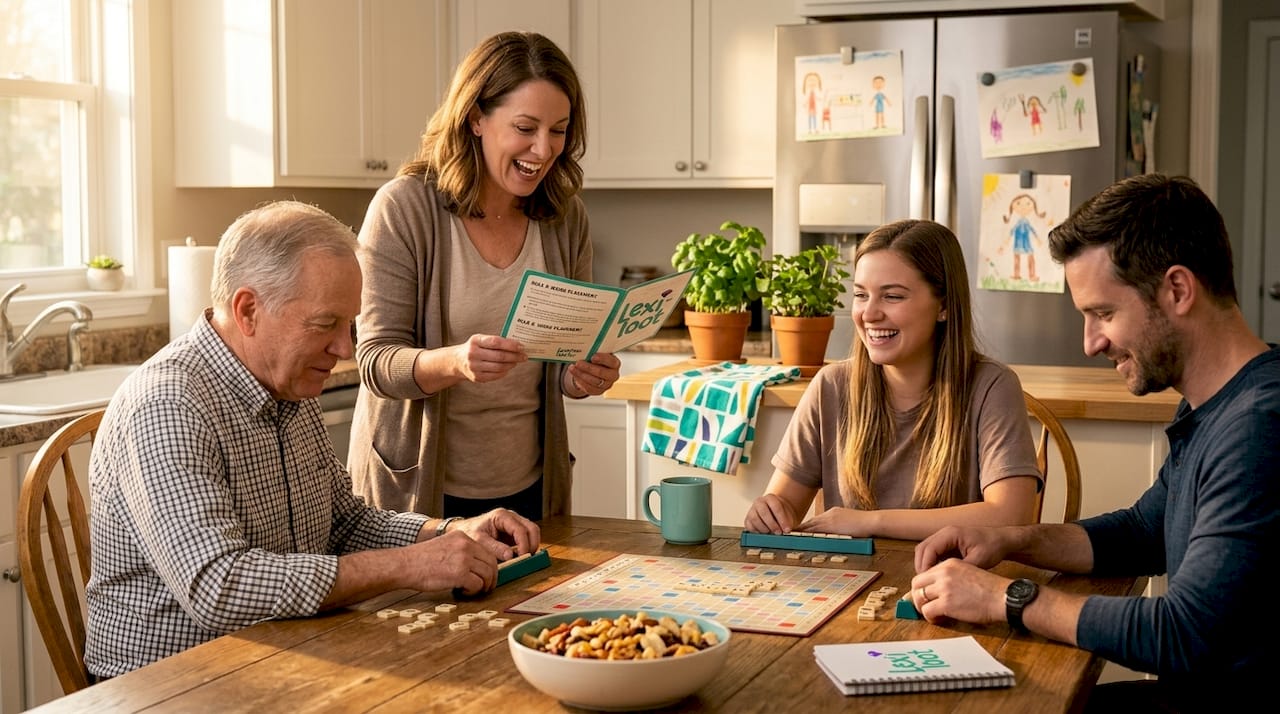
Peer-based play improves language-related skills in part because of exactly this accountability dynamic. When you know your friends will see your performance, you push a little harder. You try to learn that difficult word you kept missing. You review your weak categories before the next session. That extra effort, multiplied across many sessions, produces real and lasting vocabulary gains.
Friendly rivalry adds another layer. Competition does not have to be intense to be effective. In fact, the most productive game battles are usually the ones where players feel comfortable making mistakes because the atmosphere is warm and supportive. When someone gets a challenging word right that they previously missed, the group celebrates it. That kind of social reinforcement makes word discovery genuinely memorable.
Consider the ways that hosting builds community and learning together:
- Regular challenges keep skills sharp: Scheduling weekly or biweekly battles creates a consistent practice rhythm, which is one of the most reliable ways to build long-term vocabulary retention.
- Group accountability motivates study: Players naturally review words and categories between sessions when they know a battle is coming up.
- Shared vocabulary becomes social currency: Inside references to tricky words or funny moments from past battles strengthen group bonds and make the vocabulary stick in memory.
- Diverse players expand everyone’s wordbank: When you host players with different backgrounds or areas of expertise, the vocabulary range in each session broadens naturally.
“The social dimension of game-based learning is not a nice-to-have. It is a core mechanism that drives deeper engagement and better outcomes. When players feel connected to each other, they invest more in the learning process.”
Hosting also gives you creative control. You decide the format, the difficulty, the themes, and the tone of the session. That flexibility lets you tailor each battle for your specific group, whether you are playing social word games for pure fun or running a structured family word game workflow designed to build specific skills.
Competitive fairness and technical pitfalls in game battles
While community and skill benefits are significant, competitive multiplayer has unique technical challenges worth understanding.
If you have ever felt like the host of a game seems to have a slight edge, you are not imagining things. Hosting can create networking advantages because the host’s device processes game logic locally, giving it a small but real timing benefit over other players. In fast-paced word games where speed of response matters, even a fraction of a second can determine outcomes. This is what developers call “host advantage.”
The good news is that modern platforms have solid solutions for this. Here is how different server setups compare:
| Setup type | Host advantage risk | Fairness level | Best for |
|---|---|---|---|
| Peer-to-peer (host device) | High | Low | Casual local play |
| Dedicated game server | None | High | Competitive ranked play |
| Peer matchmaking with lag compensation | Low | Medium-high | Most online sessions |
| Host migration enabled | Medium | Medium | Groups with unstable connections |
Beyond host advantage, host disconnects disrupt multiplayer sessions and can cost players their progress and scores. When the host’s device loses connection, all connected players can be dropped from the session entirely. Host migration solves this by automatically transferring session control to another player’s device, preserving the game state and allowing the battle to continue without starting over.
When you are evaluating platforms for hosting serious competitive battles, look for these specific features:
- Dedicated server infrastructure that keeps all players on equal timing footing.
- Host migration or auto-transfer logic that protects session continuity if one player disconnects.
- Lag compensation systems that normalize response times across players on different connection speeds.
- Fair scoring algorithms that account for network variability rather than treating raw response time as the only measure.
For detailed game fairness strategies and a deeper look at what makes competitive multiplayer equitable, it is worth reviewing the design choices behind your chosen platform. Understanding these details will help you choose the right setting for every type of battle you host, from casual family rounds to serious competitive showdowns. You can also find specific guidance on hosting multiplayer games through step-by-step resources.
Pro Tip: Always choose platforms with host migration enabled for any competitive session where scores and rankings matter. A single disconnection without migration can frustrate your entire group and undermine the trust that keeps your community coming back.
Practical hosting tips: Making your next battle count
Now, let’s turn these insights into practical steps for hosting your next vocabulary-building game battle.
Research confirms that hosting and collaborative play measurably improve language skills, but only when sessions are well-structured and intentional. A great host does more than just start the game. You set the conditions that make vocabulary growth natural and fun for everyone involved.
Follow these steps to run a battle that delivers real skill gains:
- Choose a focused vocabulary theme. Pick a category relevant to your group’s interests or learning goals. Themes like “words from other languages,” “science and technology,” or “words with tricky spellings” give the session a clear educational purpose and make it easier to review afterward.
- Set clear and fair rules from the start. Explain how scoring works, how ties are handled, and what happens if a player disconnects. Clarity up front prevents disputes and keeps energy focused on the game.
- Use structured vocabulary lists. Prepare a short list of target words before the session. After the battle, review any words that tripped players up. This post-game review is where a significant portion of long-term vocabulary retention happens.
- Include a warm-up round. Start with an easier round to get everyone’s brain activated before moving to harder challenges. This reduces early-game anxiety and gets all players into a confident, engaged state.
- Keep the atmosphere positive. Celebrate good plays from every player, not just the winner. Acknowledge when someone uses a word they previously struggled with. Positive reinforcement makes players want to come back.
- Schedule regular sessions. Consistency is the single most important factor in long-term skill growth. Even one session per week, maintained over a few months, produces measurable vocabulary gains that a one-off game night simply cannot match.
- Reflect as a group after each session. Spend five minutes discussing interesting or difficult words that came up. This turns a game into a genuine learning moment and reinforces vocabulary in a social, conversational context.
Exploring top language learning games can give you inspiration for new formats and themes to keep your sessions fresh and engaging over time.
Pro Tip: Use a shared vocabulary list that all players can review between sessions. Even a simple shared note with five to ten challenging words from the last battle gives players something to study and creates continuity from one session to the next.
What most game hosts overlook: Skill growth trumps scores
Stepping back from tactics, it is vital to see what seasoned hosts and researchers know about lasting impact.
Most hosts put their energy into making sure the competition is exciting. They focus on who is winning, whether the scoring system is interesting, and how to keep the tension high. Those are valid concerns. But the hosts who see the biggest long-term growth in their communities are the ones who care just as much about what players are learning as how they are performing.
Collaborative host-based play drives measurable gains in vocabulary and spelling outcomes compared to solo play. The mechanism is straightforward: when the social environment prioritizes learning alongside winning, players feel safe to stretch beyond their current vocabulary. They try harder words, take more risks, and pay more attention to what others are playing. That openness is where real skill growth happens.
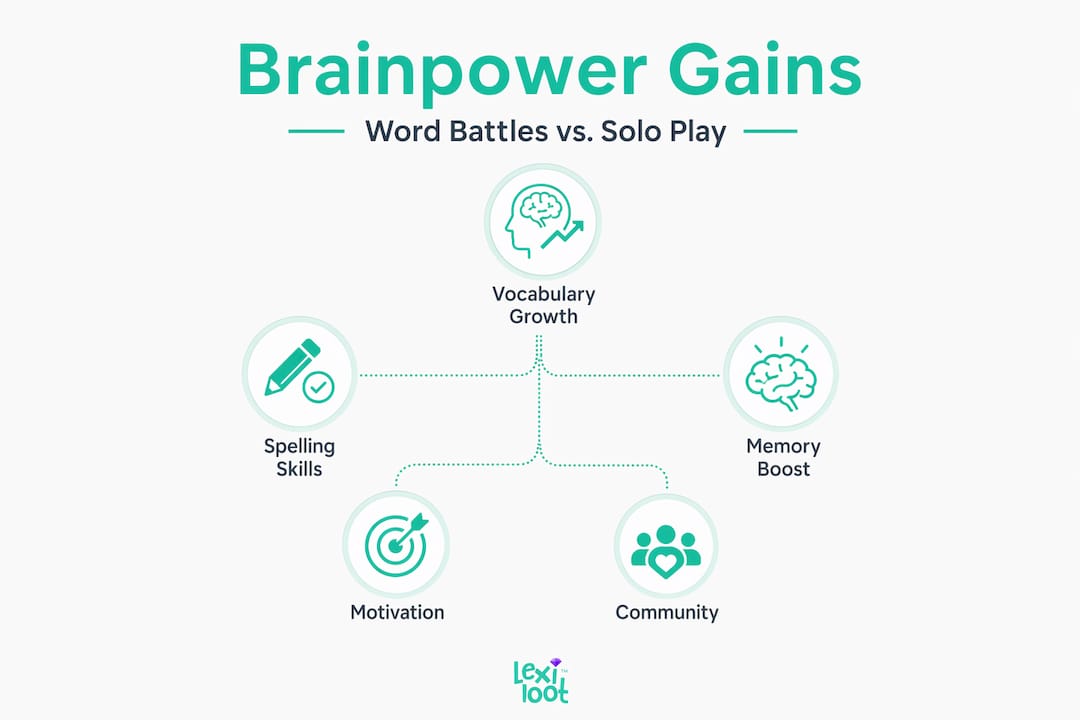
The score at the end of a session matters far less than the words a player carries with them into the rest of their week. A player who loses a battle but learns three new words they did not know before has gained something genuinely useful. A player who wins by sticking to their comfort zone has not grown at all.
This perspective shapes how we think about why play-for-learning works. The game format is a vehicle for engagement, not the destination. When you host with this mindset, you design sessions that challenge players in ways that feel exciting rather than stressful, and the vocabulary growth follows naturally.
As a host, you have more influence over your group’s cognitive development than you might realize. The themes you choose, the atmosphere you create, and the values you model all shape how players engage with language. Treat that responsibility as an opportunity, and your sessions will be more than just fun. They will be genuinely transformative.
Explore more ways to boost your vocabulary and game experience
Ready for more game-based skill growth? Here is where to keep building.
If this article has made you want to level up your hosting and vocabulary game, Lexiloot is designed specifically for players like you. We built Lexiloot to combine the thrill of multiplayer competition with real vocabulary and cognitive skill development, all in a format that is fun for everyone from casual family players to serious word game enthusiasts.
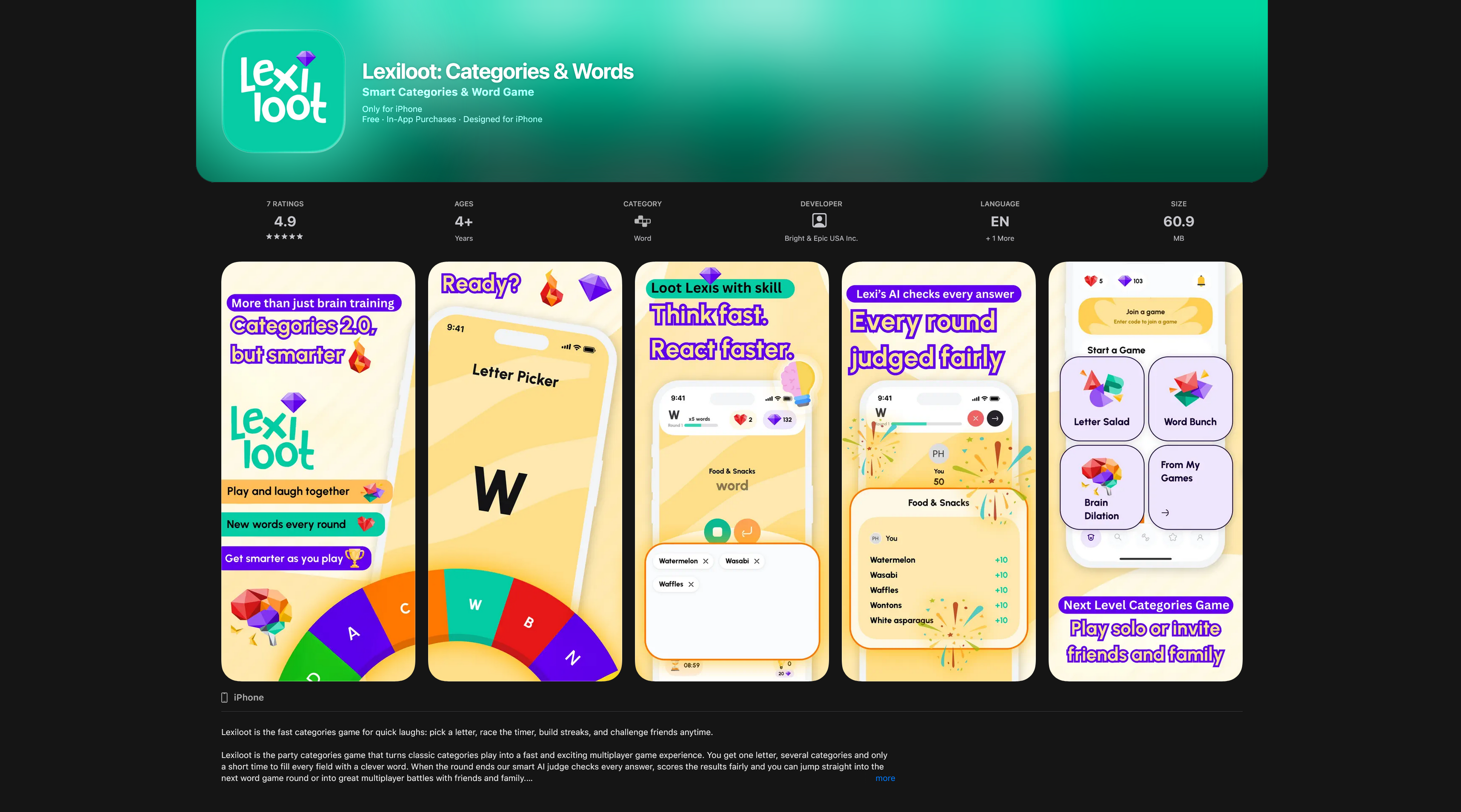
From creative word game examples to category battles, leaderboard competitions, and ad-free premium gameplay, Lexiloot gives you everything you need to run engaging, skill-building sessions with friends, family, or fellow word game lovers. Our pay-once model means you access all premium features without ongoing subscription costs. Whether you want to host your first battle tonight or build a long-term vocabulary practice habit, Lexiloot has the tools to make it happen.
Frequently asked questions
Do game battles really help with vocabulary?
Yes, collaborative game-based learning drives significant spelling and vocabulary gains compared to solo play, making peer-based battles one of the most effective formats for vocabulary development.
How can hosts create fair multiplayer sessions?
Platforms should use dedicated servers, matchmaking, and migration to avoid host advantage and host disconnect disruptions, ensuring all players compete on equal footing.
Is hosting word game battles good for casual players?
Absolutely. Friendly, casual sessions enhance motivation, fun, and vocabulary through peer-based collaborative play, so you do not need to be a competitive player to see real skill benefits.
What should I do if a battle session disconnects?
Use platforms with host migration logic that automatically transfers session control to another player, preventing score loss and keeping the battle running smoothly.

