


TL;DR:
- Challenge-based learning (CBL) promotes deeper vocabulary retention through active communication and real-world application.
- CBL enhances critical thinking, collaboration, and cognitive flexibility by involving learners in iterative, problem-solving cycles.
- Successful implementation of CBL requires gradual integration, stakeholder understanding, and scaffolding to meet diverse learner needs.
Most students can recall memorizing vocabulary lists that vanished from their minds the moment the test was over. That kind of passive learning rarely sticks because the brain does not store information it has no reason to use. CBL enhances motivation, engagement and 21st-century skills like critical thinking, collaboration, and problem-solving, producing deeper conceptual understanding and real-world application than traditional methods. This article breaks down exactly what challenge-based learning is, how it works, and what it means for vocabulary building, cognitive growth, and long-term learning success for kids and learners of all ages.
Table of Contents
- What is challenge-based learning and how does it work?
- Five ways CBL boosts vocabulary and cognitive growth
- Is CBL right for everyone? Real-world hurdles and solutions
- Why CBL outperforms traditional methods—when it’s done right
- A fresh perspective: What most experts miss about CBL’s value
- How to bring challenge-based learning to life with interactive games
- Frequently asked questions
Key Takeaways
| Point | Details |
|---|---|
| CBL drives real engagement | Students are more motivated and actively learn through real-world challenges. |
| Stronger vocabulary retention | CBL’s hands-on, collaborative tasks prompt meaningful vocabulary growth. |
| Critical skills development | Learners build critical thinking, collaboration, and problem-solving skills more effectively with CBL. |
| Implementation needs planning | CBL requires teacher support, gradual integration, and clear goals to succeed. |
| Best when blended | Mixing CBL with traditional strategies can yield the best outcomes for diverse learners. |
What is challenge-based learning and how does it work?
Challenge-based learning, or CBL, is not just another classroom trend. It is a structured approach to education that puts real problems at the center of every lesson. CBL is a collaborative, hands-on framework developed by Apple in 2008, designed to help learners solve real-world challenges while building subject knowledge and 21st-century skills at the same time.
What separates CBL from a typical assignment is its philosophy. Learners are not told what to think. Instead, they are handed a meaningful challenge and supported as they figure out the best path forward. That process is collaborative, iterative, and deeply active, which is exactly what makes it more effective than passive reading or lecture-based instruction.
CBL follows three iterative phases: Engage, Investigate, and Act. Each phase builds on the one before it, and the cycle repeats as learners refine their understanding. Here is a look at how each phase plays out in practice:
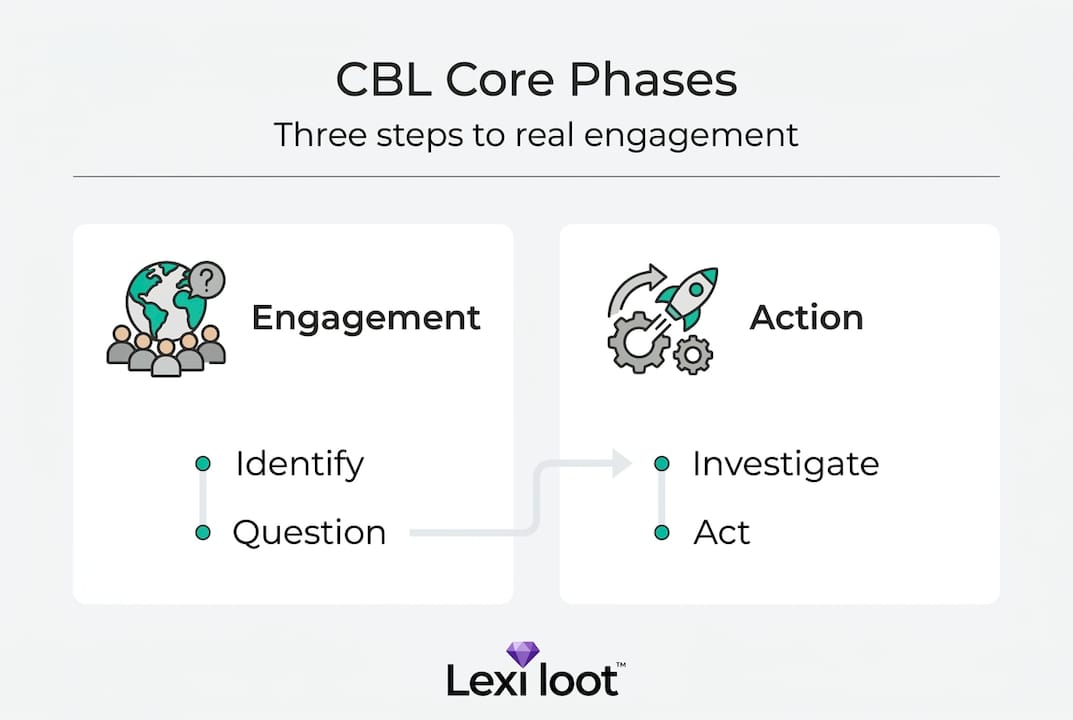
| Phase | What happens | Learner’s role |
|---|---|---|
| Engage | Learners explore a big idea and narrow it to an actionable challenge | Ask questions, identify goals |
| Investigate | Learners research, gather resources, and plan solutions | Research, analyze, collaborate |
| Act | Learners implement their solution, evaluate results, and share findings | Create, reflect, present |
The numbered steps within each phase help make the process clear and repeatable:
- Start with a big idea that connects to the real world, such as community, sustainability, or language.
- Narrow the big idea into a specific, actionable challenge that learners can realistically tackle.
- Ask essential questions to guide research and set the scope.
- Investigate by gathering information, testing assumptions, and forming a plan.
- Act by implementing the solution and collecting evidence of impact.
- Reflect and share findings with peers, teachers, or a wider audience.
This cycle repeats, which means learners continuously improve. That is a major contrast to passive learning, where information flows in one direction and rarely circles back for refinement. If you are interested in how structured cycles like this connect to gamified learning and engagement, you will find that game-based models and CBL share many core principles around motivation and active participation.
Five ways CBL boosts vocabulary and cognitive growth
Now that you know the framework, let’s see why CBL stands out in real outcomes for learners. The benefits are not just theoretical. Research consistently shows that students in CBL environments develop richer vocabulary, sharper thinking skills, and stronger habits of mind than peers in traditional classrooms.
Here are five specific ways CBL drives real growth:
- Vocabulary recall: When learners must communicate a solution or present findings, they naturally draw on and expand their vocabulary. Using a word in a meaningful context is far more powerful than reading it on a list.
- Critical thinking: CBL requires learners to evaluate options, weigh evidence, and make decisions. These habits strengthen the brain’s ability to assess information more broadly.
- Collaboration: Working in teams exposes learners to different vocabulary, perspectives, and reasoning styles, which deepens overall language and cognitive flexibility.
- Real-world application: Connecting learning to actual challenges gives the brain a reason to retain information. Context creates memory.
- Engagement: Motivated learners absorb more. When a challenge feels meaningful, attention sharpens and persistence grows.
The research behind these outcomes is striking. Empirical studies show 9.4% higher grades in CBL compared to traditional instruction for engineering physics across 1,705 students. The same body of research shows CBL was effective for reducing dropout rates in at-risk 9th graders, and 71% of students reported positive perceptions of their own competency development.
“CBL excels in building vocabulary and cognitive skills through real-world, interdisciplinary challenges that demand research, communication, and synthesis.” Wikipedia on CBL)
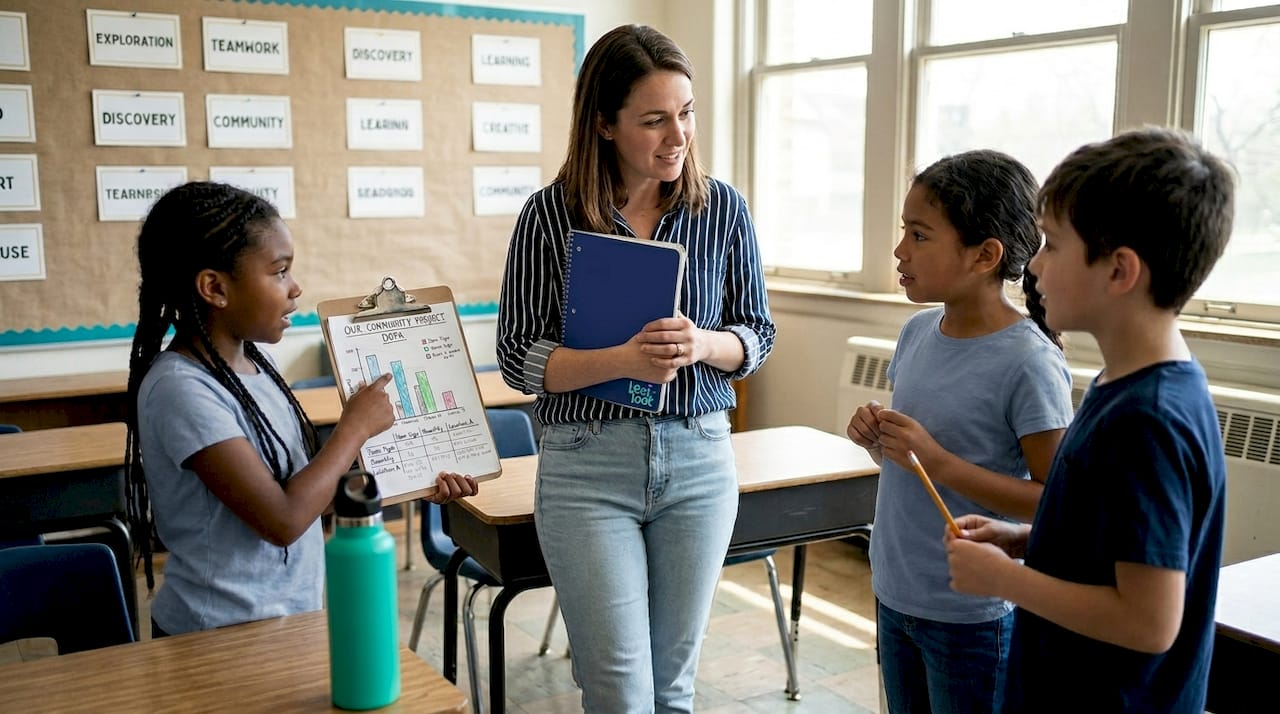
This is particularly relevant for parents and teachers focused on language development. When kids are asked to explain their reasoning, debate a solution with peers, or write a report on their findings, they are practicing spelling fluency, category thinking, and vocabulary recall in context. That kind of active use is exactly how new words move from short-term to long-term memory.
For more ideas on engaging kids through vocabulary games, you will find that the principles align beautifully with CBL’s core emphasis on active, meaningful participation. And if you are looking for structured activities, exploring vocabulary games for skill building offers practical options that complement the CBL model at home or in class.
Pro Tip: When designing a CBL challenge, make it open-ended enough that kids must explain their thinking out loud or in writing. That act of explanation drives vocabulary use, reinforces cognitive organization, and builds confidence at the same time.
Is CBL right for everyone? Real-world hurdles and solutions
Even with clear benefits, successful implementation is as much about knowing the limits of CBL as using best practices. Not every course or learner adapts to CBL easily, and that is okay. Understanding where the model faces friction helps you use it more strategically.
Here is a side-by-side comparison of traditional instruction and challenge-based learning across key categories:
| Category | Traditional instruction | Challenge-based learning |
|---|---|---|
| Student role | Passive receiver of information | Active problem solver |
| Assessment style | Tests, quizzes, grades | Project outcomes, reflection, peer review |
| Time structure | Fixed lessons, predictable pacing | Flexible, iterative cycles |
| Teacher role | Instructor, knowledge source | Facilitator, coach |
| Vocabulary development | Memorization-based | Contextual, applied, repeated in use |
| Risk level | Low (right or wrong answers) | Higher (open-ended, uncertain outcomes) |
The contrast is meaningful, but it also hints at the challenges. CBL requires gradual implementation, is not suited for every course, and comes with real hurdles including time constraints, student uncertainty with open-ended tasks, the need for teacher training, stakeholder coordination, and assessment integration.
Real-world barriers include:
- Time pressure: Teachers already face packed curriculums. CBL takes longer than a standard lesson because it asks learners to research, collaborate, and reflect.
- Ambiguity anxiety: Many students are used to clear right-or-wrong answers. Open-ended challenges can cause frustration, especially early on.
- Teacher preparation: CBL facilitation is different from traditional instruction. Teachers need training and ongoing support to do it well.
- Assessment alignment: Standard grading systems often do not account for the kind of competency growth CBL produces, making it hard to report results through traditional rubrics.
- Stakeholder buy-in: Parents, administrators, and school boards may need to understand CBL’s value before they will support the shift in approach.
For practical ideas on running structured challenges in your classroom or at home, check out these category challenge teaching tips or explore teaching word games as a manageable first step.
Pro Tip: Start with one small, low-stakes challenge before committing to a full CBL unit. Let kids practice the cycle of investigate, act, and reflect in a contained setting. Refine your approach based on what you observe, then scale from there.
Why CBL outperforms traditional methods—when it’s done right
Understanding limitations leads naturally into making meaningful comparisons and drawing lessons from research. The evidence is clear in certain areas. CBL is superior to lectures in critical thinking with a standardized mean difference of 0.75, and it consistently outperforms traditional models on teamwork and collaboration outcomes. But some researchers note a need for more theoretical grounding, qualitative studies, and careful handling of diverse learner needs.
Studies confirm CBL’s advantage in critical thinking over traditional lecture formats, with a standardized mean difference of 0.75, a significant and meaningful gap by educational research standards.
Not all studies show knowledge gains over traditional methods in every subject. This is an important nuance. CBL is not a universal replacement for all instruction. It works best when scaffolded well and connected to clear learning goals. Here is how to use it for maximum effect:
- Scaffold the challenge: Break big challenges into smaller, manageable steps so learners are not overwhelmed by the open-ended nature of the task.
- Provide ongoing feedback: Regular check-ins during the Investigate and Act phases prevent learners from going off track and maintain momentum.
- Connect to the real world: The more relevant the challenge is to learners’ lives, the more motivated they will be to push through difficulty.
- Build in structured reflection: After every challenge cycle, ask learners to articulate what they learned, what changed, and what they would do differently.
- Align assessment to outcomes: Evaluate what CBL actually produces: teamwork quality, communication skills, problem-solving reasoning, and vocabulary growth, not just test scores.
There are also cases where a hybrid approach works best. Some subjects and some learners benefit from direct instruction paired with smaller CBL activities rather than a full-scale challenge model. That flexibility is a strength, not a compromise. For deeper insight into how research supports engagement-first strategies, exploring strategies for impactful education offers a useful companion perspective.
A fresh perspective: What most experts miss about CBL’s value
Most discussions of CBL focus on critical thinking, problem-solving, and teamwork. These are real and important benefits. But two areas get far less attention: vocabulary development and the power of parent-learner collaboration.
When kids research a real challenge, they encounter new words in context. They read about the topic, discuss ideas with peers, and write or present their findings. Each of those steps reinforces vocabulary recall in a way that a single glossary exercise never could. The brain does not store isolated words well. It stores words within networks of meaning, and CBL builds those networks naturally by making language functional and purposeful.
The second overlooked area is family engagement. CBL challenges do not have to stop at the classroom door. A parent who asks “What challenge are you working on this week?” and then listens, asks questions, and shares their own perspective becomes part of the learning cycle. That kind of participatory, gamified approach where learning feels like discovery helps both parents and learners internalize skills together. It builds a shared vocabulary and a shared habit of curiosity.
The third thing experts often miss is the value of repetition at scale. True CBL mastery does not come from one ambitious project per semester. It comes from small, meaningful challenges repeated often. A learner who cycles through ten small CBL challenges over a year builds more cognitive flexibility, stronger vocabulary habits, and greater confidence than one who does a single large project. Frequency matters. So does keeping challenges manageable enough to complete in full.
Exploring modern word puzzles for learning shows how this principle of frequent, iterative challenge applies directly to vocabulary and cognitive training in an accessible, enjoyable format.
How to bring challenge-based learning to life with interactive games
Ready to put CBL into action? Leap from theory to practice with these interactive solutions.
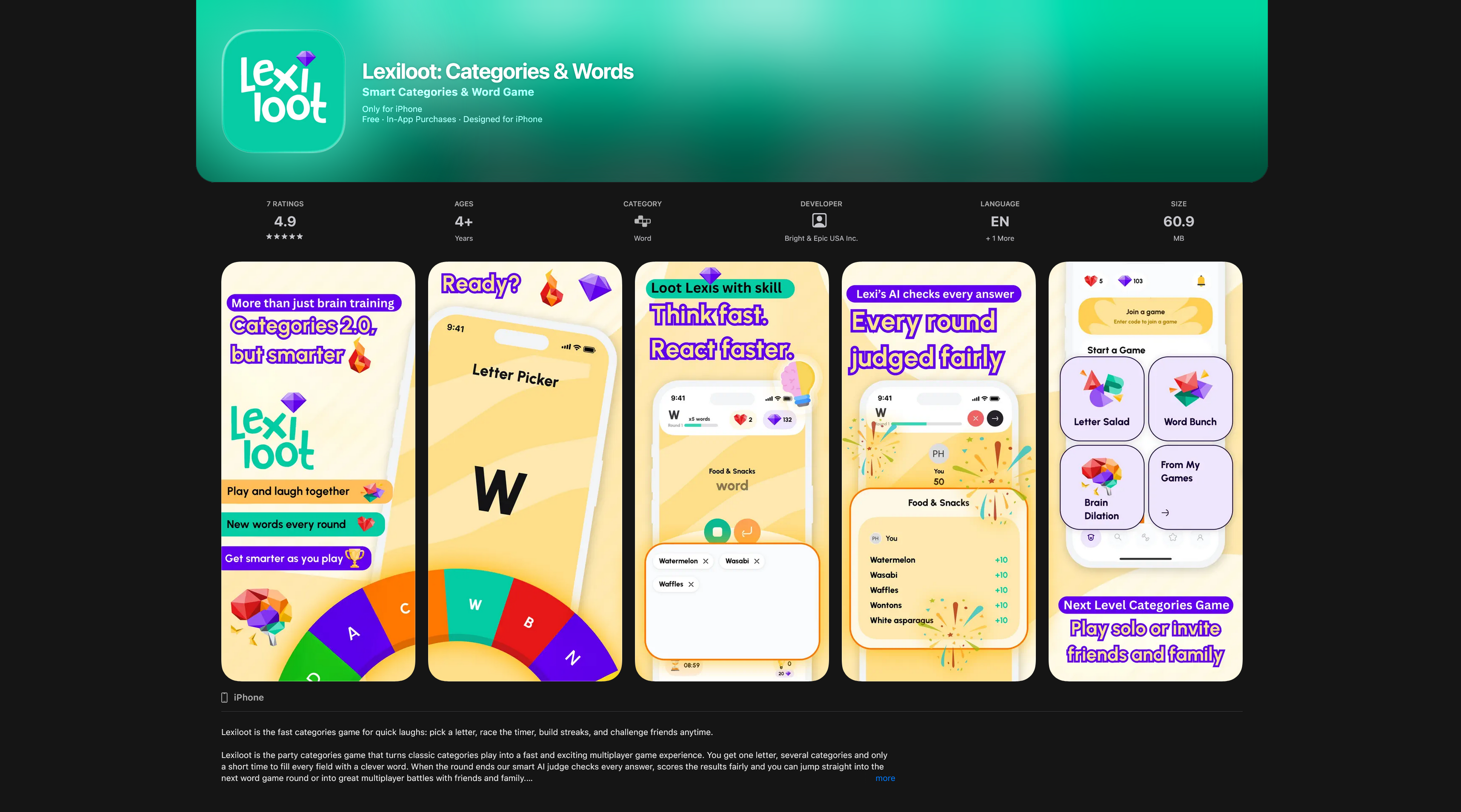
CBL principles translate naturally into game-based learning tools, and that is exactly where Lexiloot comes in. The app is built around the same core idea that drives CBL: real challenges, active participation, and skill-building through meaningful engagement rather than passive repetition. When kids compete in category-based challenges or work through vocabulary puzzles, they are practicing the same cognitive habits that CBL develops in classroom settings.
For parents and teachers ready to extend CBL into daily routines, exploring creative word game examples gives you immediate, practical activities to use at home or in class. If you want to understand how games connect to broader skill-building goals, word games for vocabulary and brainpower breaks down the research in an easy-to-apply format. And for learners working to build lasting language skills, vocabulary skills and reading comprehension shows how every vocabulary challenge connects to broader literacy growth. Lexiloot makes these connections interactive, social, and genuinely fun.
Frequently asked questions
How does challenge-based learning differ from project-based learning?
CBL was developed collaboratively) by Apple in 2008 as a framework specifically focused on real-world challenges, while project-based learning centers on student-led inquiry that may not always connect to current, real-world issues. CBL’s collaborative, community-facing structure is its defining feature.
What subjects are best suited for CBL?
Subjects like science, language arts, and social studies connect naturally to real-world challenges and adapt well to CBL, though any subject can use CBL with thoughtful planning and gradual implementation.
Are there proven cognitive benefits to using CBL?
Yes. Studies confirm 9.4% higher grades in CBL versus traditional instruction, along with measurable improvements in critical thinking, problem-solving, and collaboration across diverse student populations.
What challenges should schools expect when adopting CBL?
Common CBL challenges include time constraints, assessment alignment, student discomfort with open-ended tasks, and the need for dedicated teacher training and administrative support.
Does CBL work for all types of learners?
CBL supports diverse learning styles and is most effective when scaffolded to individual needs, with flexibility built into the challenge design so every learner can engage at their own level.

