


TL;DR:
- True social gaming involves ongoing interactions, shared goals, and meaningful relationships.
- Features like persistent groups, in-game communication, and social graph matchmaking deepen social engagement.
- Building recurring play with friends enhances vocabulary growth and creates lasting, enjoyable social experiences.
Most people assume that any game you play against another person online counts as social gaming. That assumption misses a lot. True social gaming is about more than just sharing a server or competing for a high score. It involves real interaction, ongoing relationships, and shared goals that make every session more rewarding than the last. For word game fans especially, understanding this difference can completely change how you choose games, how often you actually play, and how much vocabulary you pick up along the way.
Table of Contents
- Defining social gaming: More than just multiplayer
- Core features of social gaming: What matters most
- Social word games in action: Real-world examples
- What makes social gaming meaningful (not just functional)
- What most guides miss about social gaming’s real value
- Level up your social play and vocabulary skills
- Frequently asked questions
Key Takeaways
| Point | Details |
|---|---|
| Social gaming defined | It means meaningful interaction, communication, or cooperation—not just multiplayer competition. |
| Mobile game social features | High-quality social games integrate real-time or asynchronous play, friends lists, and in-game communication. |
| Meaningful play matters | The best social gaming experiences involve persistent groups and shared goals, not just quick matches. |
| Boost engagement and vocabulary | Playing social word games increases motivation, connection, and language learning in a fun way. |
Defining social gaming: More than just multiplayer
With that confusion in mind, let’s clarify what social gaming actually means and what it doesn’t.
Social gaming generally refers to games designed to enable interaction, communication, and collaboration among multiple players, often integrated with social platforms or social graph features. That last phrase, “social graph,” means the network of connections you already have, like your friends list on Facebook, your contacts, or your followers. When a game taps into that network to help you find and play with people you already know, it starts to feel genuinely social rather than just competitive.
However, there is an important distinction to keep in mind. Social features can be superficial if they don’t create coordination, cooperation, or meaningful social structures. A game that simply adds a global leaderboard or a generic chat box isn’t automatically a social game. If those features don’t encourage you to coordinate with others, build something together, or interact repeatedly over time, they’re mostly decorative.
Here is a quick comparison to make this clearer:
| Feature | Basic multiplayer | True social gaming |
|---|---|---|
| Competing against others | Yes | Yes |
| Friends list integration | Rare | Common |
| In-game chat or communication | Sometimes | Usually |
| Persistent groups or clubs | No | Often |
| Shared goals or cooperative play | Rare | Frequently |
| Social graph matchmaking | No | Yes |
The key ingredients that make gaming truly social include:
- Friend or contact integration so you play with people you actually know
- Ongoing communication tools like in-game chat or reactions
- Persistent groups such as clubs, guilds, or recurring teams
- Shared objectives that require cooperation, not just competition
- Progress tracking that is visible to your social circle
“Social features that don’t create real coordination or persistent social structures are little more than a coat of paint on a solo experience.” This idea, echoed across game design communities, explains why so many ‘social’ games still feel hollow.
Understanding this connects directly to how gamified learning and engagement works. When the social layer is genuine, learning outcomes improve because motivation stays higher and players return more consistently.
Core features of social gaming: What matters most
Now that we know not all multiplayer games are truly social, let’s examine what real social gaming looks like under the hood.
In mobile casual contexts, social gaming is often implemented as real-time or asynchronous interaction between players plus social-graph matchmaking. Asynchronous means you and your opponent don’t have to be online at the same moment. You play your turn, then your friend plays theirs when they’re available. This model works exceptionally well for word games because it fits into busy schedules without requiring both people to clear an hour at the same time.

Here is a data comparison of how these features show up across different types of mobile word games:
| Feature | Casual word puzzle | Social word game | Category battle game |
|---|---|---|---|
| Real-time play | No | Sometimes | Often |
| Asynchronous turns | No | Yes | Sometimes |
| Friend challenges | No | Yes | Yes |
| Social graph matchmaking | No | Yes | Yes |
| In-game chat | No | Yes | Yes |
| Clubs or persistent groups | No | Sometimes | Yes |
When you start a social word game challenge, the experience typically unfolds like this:
- Connect your account to your contacts or social graph so the game can find friends who also play.
- Send or accept a challenge from a specific friend or let the matchmaking system find a suitable opponent.
- Play your turn by selecting letters, forming words, or choosing categories, depending on the game format.
- Receive a notification when your opponent has responded so you know it’s your turn again.
- Chat or react to your opponent’s moves using built-in communication tools.
- Track your shared progress on mutual leaderboards or challenge records that both players can see.
- Join a group or club if the game supports persistent social structures for recurring play.
This step-by-step process is what separates a social experience from simply playing a game in the same virtual room as a stranger. The richest experiences in language games for social growth follow this kind of layered structure. And if you’re curious about how to get more from vocabulary practice through play, the science behind gamifying vocabulary learning is both fascinating and practical.
Pro Tip: Before downloading a word game, check whether it supports friend challenges, in-game chat, and persistent groups. Games that include all three will almost always offer a richer, longer-lasting experience than those that only provide a leaderboard.
Social word games in action: Real-world examples
Understanding the features is helpful, but what does social gaming actually look like for word game fans?
A strong example of social gaming mechanics is head-to-head turn-based play where users challenge friends or use matchmaking, with notifications and in-game social layers like chat. Words With Friends built an enormous player base precisely because it combined familiar word-building gameplay with a genuinely social structure. Players could challenge specific friends, receive nudges when it was their turn, and maintain multiple games simultaneously with different people.
The social layers that word games commonly use include:
- Direct friend challenges where you personally invite someone you know
- Matchmaking systems that pair you with players of similar skill
- In-game chat that lets you congratulate, tease, or strategize with your opponent
- Friendly competitions with visible score histories between recurring players
- Category-based challenges that add variety and require different vocabulary skills
- Notification systems that keep the game active without demanding constant attention
These layers do more than just make games more fun. They create accountability. When your friend is waiting for your move, you’re more likely to come back. When you know your score is visible to your social circle, you’re more motivated to practice. This social pressure (the positive kind) pushes vocabulary recall and spelling fluency in ways that solo puzzles simply can’t match.
The benefits stack up quickly. You engage more consistently, which means more exposure to new words. You’re motivated by friendly rivalry, which makes you try harder. You communicate about words and meanings in the chat, which reinforces learning. Exploring social categories word games specifically shows how category thinking, where your brain organizes words by theme or type, improves when you’re playing alongside others who challenge your assumptions.
Pro Tip: Invite a friend who reads a lot or has a different background from yours. Their vocabulary strengths will complement yours, and the friendly rivalry will push both of you to improve faster than playing against strangers would.
Teachers and parents will also find this useful. When you understand how these social mechanics work, you can use them intentionally. The guide on teaching with word games offers practical classroom strategies that build on exactly this kind of social engagement.
What makes social gaming meaningful (not just functional)
Seeing how social word games work is insightful, but what truly separates a meaningful experience from a shallow one?
The criteria for truly meaningful social play are specific and worth measuring against any game you’re considering:
- Genuine cooperation or coordination where players need each other to achieve something, not just compete in parallel.
- Persistent social context meaning you play with the same people repeatedly, building a shared history and friendly rivalry.
- Real communication that goes beyond generic reactions or canned phrases and lets you actually express yourself.
- Repeat interaction so that relationships form over time and the game becomes part of your social routine.
- Shared objectives that give everyone a reason to stay invested beyond personal high scores.
Simple chat or a competition alone isn’t enough for sustained fun or meaningful vocabulary growth. If every match is against a random stranger with no follow-up, the social potential is essentially wasted. You get a transaction, not a relationship.
“The difference between social gaming and multiplayer gaming is the difference between a conversation and a race. In a race, you notice others are present. In a conversation, you actually need them.” This distinction, highlighted in expert analysis, captures why so many feature-rich games still feel lonely.
Playing with real-life friends or recurring groups like clubs offers something qualitatively different. You develop shared jokes about words you played. You remember the game where someone pulled off an extraordinary move. That history builds emotional investment, which keeps you coming back and reinforces the vocabulary you’ve built together.
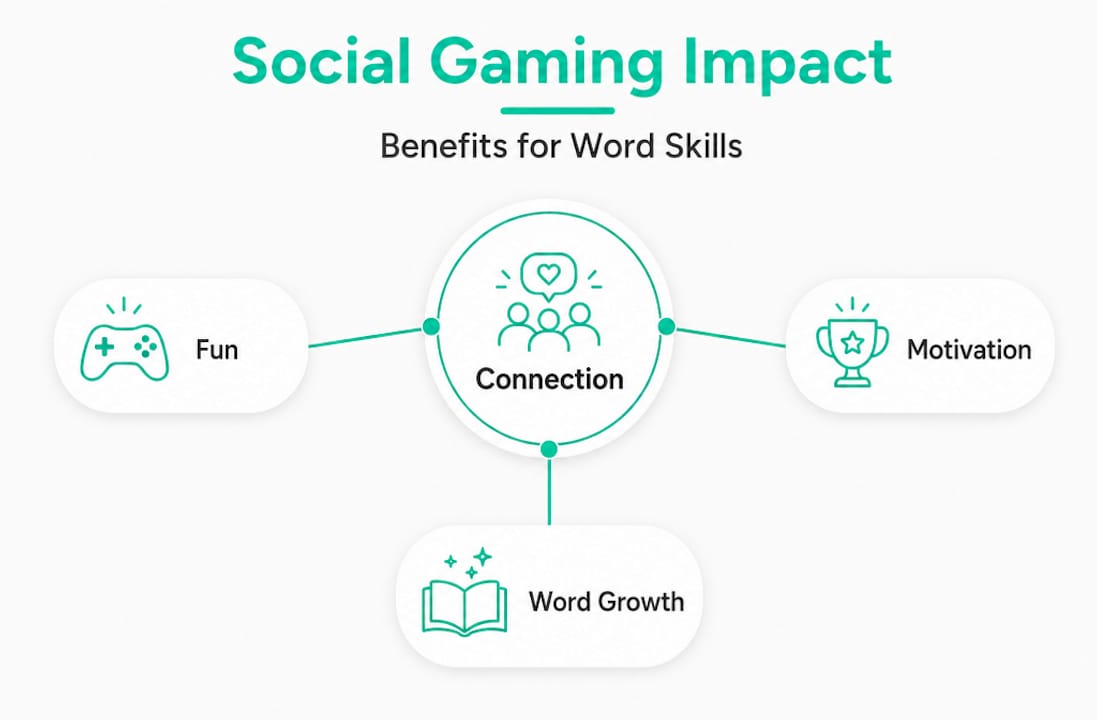
For word games specifically, this creates a powerful learning loop. The stronger your social structure, the more often you return, and the more vocabulary you absorb and practice. Research into cognitive growth from multiplayer games confirms that consistent, socially motivated play builds vocabulary recall and cognitive flexibility more effectively than isolated practice.
What most guides miss about social gaming’s real value
Most articles comparing social games stop at listing features. They’ll tell you whether a game has chat or leaderboards, and leave it there. But that approach misses the most important question: why are you playing together, and does the game help you keep doing it?
When assessing social gaming for casual mobile and word-game audiences, the real focus should be on how players connect through friends or social graph, how play is structured through real-time or asynchronous turns, and whether there is persistent social context through clubs, guilds, or repeated shared objectives versus one-off multiplayer sessions. That third element, persistent context, is the one most players overlook and most guides ignore.
Here’s the uncomfortable truth: a game with slightly fewer features but a strong group of recurring players will almost always be more rewarding than a technically superior game you play against strangers every time. The social loop, the habit of returning to the same people with a shared goal, is what transforms a game from a distraction into a lasting hobby.
For casual word game fans, this means being intentional. Don’t just download a game and accept random opponents. Recruit two or three friends. Join a club if the game offers one. Set a small recurring goal together, like competing every Sunday or maintaining a monthly streak. These small commitments create the persistent context that makes social gaming genuinely valuable.
Pro Tip: Don’t just chase random matches. Invest in repeat connections and friendly rivalries with specific people. The payoff in both enjoyment and vocabulary growth is significantly higher when you play with the same people over weeks and months rather than cycling through strangers.
The deeper impact on learning is also real. As explored in games’ impact in education, games that build sustained social engagement consistently produce better educational outcomes than either solo games or one-off competitive play. The lesson here applies equally to kids in classrooms and adults playing on their lunch break.
Level up your social play and vocabulary skills
Ready to put all this knowledge into practice? Here’s where you can experience and enjoy the best of social word gaming right now.
Lexiloot brings everything this guide covers into one place. You get word games built with genuine social mechanics, category-based challenges that flex your vocabulary recall, and the ability to invite friends for head-to-head battles or recurring group play. Whether you’re a parent looking for a family-friendly way to build your children’s vocabulary or a word game enthusiast who wants real competition with people you care about, Lexiloot is designed to deliver both the fun and the learning.
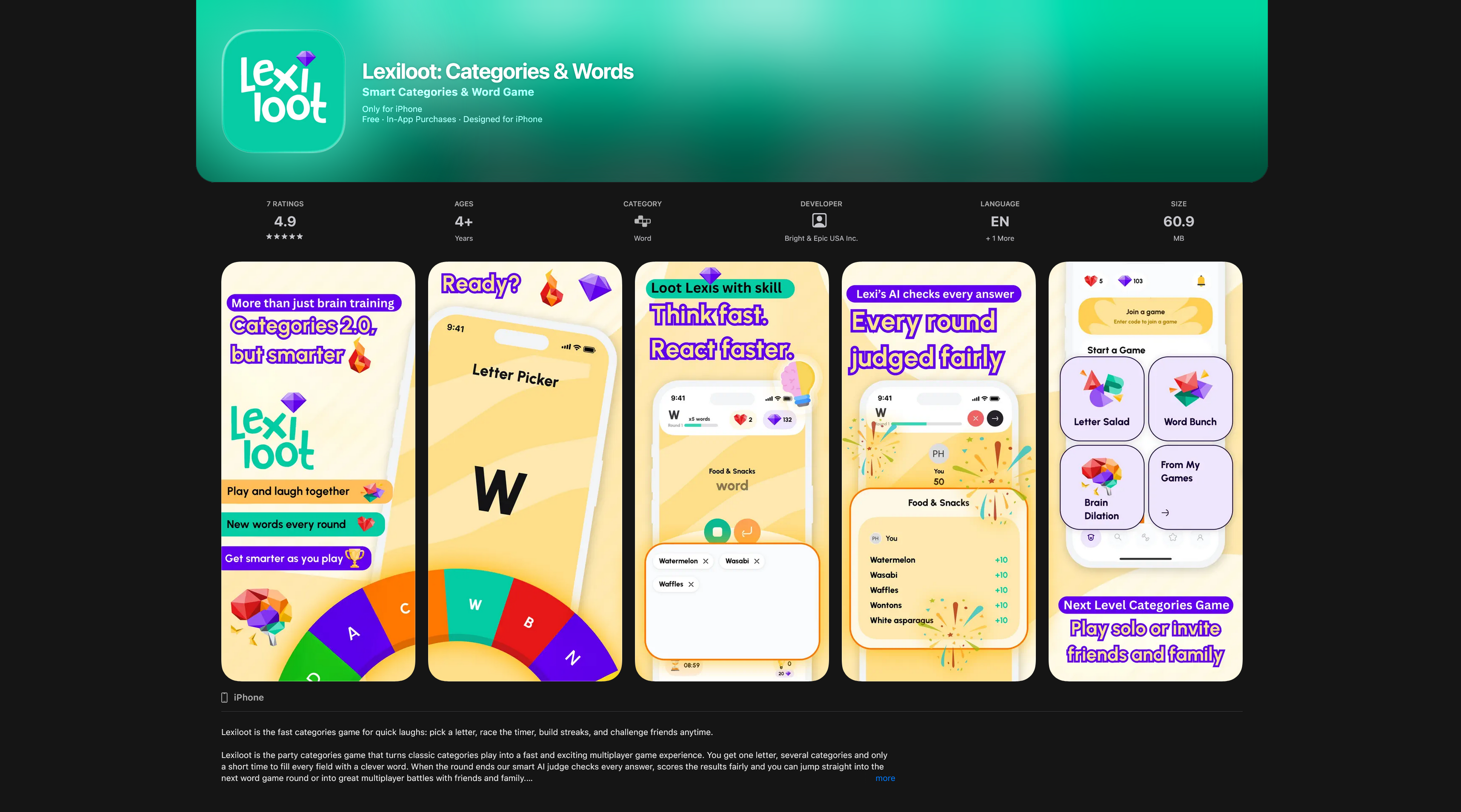
Start by inviting friends to social word games so you can build that persistent social context that makes gaming meaningful. If you’re looking for fresh formats and fresh challenges, browse creative word game ideas to keep things interesting. And for players who want to see real vocabulary growth, the collection of engaging vocabulary games shows exactly how to make every session count. The best part is that Lexiloot uses a pay-once model, so you get full access without worrying about monthly fees.
Frequently asked questions
What exactly is ‘asynchronous play’ in social gaming?
Asynchronous play means you and your opponent take turns at your own pace, instead of playing live at the same time. It’s perfect for people with busy schedules who want to stay socially connected through games without needing to coordinate free hours.
Is every game with a leaderboard considered a social game?
No, leaderboards alone do not make a game social. As experts point out, social features are superficial when they don’t create real coordination, cooperation, or meaningful social structures between players.
How does social gaming help improve vocabulary?
Word-based social games boost vocabulary by encouraging repeated play, friendly challenges, and in-game communication that reinforces word meanings in a fun and engaging context. The social motivation keeps you coming back, which is where the real learning happens.
What features should I look for in a high-quality social word game?
Look for real-time or turn-based multiplayer, friend and challenge systems, in-game chat, and options for clubs or recurring groups. Expert guidance confirms that persistent social context, not just individual features, is what distinguishes the most rewarding social word games from basic multiplayer options.

