


Word puzzles do more than fill time. Research shows they can improve vocabulary recall by 15% and sharpen problem solving skills by 10%. These brain training tools combine entertainment with measurable cognitive benefits, making them valuable for families, students, and word enthusiasts seeking mental stimulation. This guide explores what truly defines a word puzzle, examines the science behind their effectiveness, and shows how different puzzle types target specific cognitive skills to help you choose the right challenges for 2026.
Table of Contents
- What Is A Word Puzzle? Defining The Concept
- How Word Puzzles Boost Cognitive Skills And Vocabulary
- Common Types Of Word Puzzles And Their Unique Challenges
- How To Make Word Puzzles Engaging And Educational For All Ages
- Discover Word Puzzle Games And Brain Training On Lexiloot
- What Defines A Word Puzzle? Frequently Asked Questions
Key takeaways
| Point | Details |
|---|---|
| Word puzzle definition | Challenges based on finding, forming, or understanding words using letters, grids, clues, or configurations |
| Cognitive benefits | Regular engagement strengthens vocabulary, memory, pattern recognition, and problem solving abilities |
| Puzzle variety | Different types like crosswords, word searches, and anagrams target distinct mental skills |
| Universal accessibility | Puzzles adapt to all ages and skill levels through adjustable difficulty and theme selection |
| Brain health support | Consistent puzzle play builds neural pathways that protect against cognitive decline |
What is a word puzzle? Defining the concept
A word puzzle consists of any challenge requiring players to find, form, or understand words through letter manipulation or pattern recognition. These puzzles share common characteristics that distinguish them from other games. They rely on linguistic knowledge, spatial reasoning, or both to create engaging mental exercises.
The core elements include letters arranged in grids, sequences, or patterns that players must decode. Clues guide solvers toward hidden words or correct arrangements. Difficulty scales based on grid size, directional complexity, word obscurity, and time constraints. Some puzzles emphasize vocabulary breadth while others test speed and visual scanning.
Common word puzzle formats include:
- Word searches featuring hidden words in letter grids running horizontally, vertically, diagonally, or backward
- Crosswords combining intersecting words with definition based clues
- Anagrams challenging players to rearrange letters into valid words
- Category games requiring word grouping by shared themes or characteristics
- Cryptograms using letter substitution codes to conceal messages
These formats serve dual purposes as entertainment and cognitive training. Casual players enjoy the satisfaction of discovery and completion. Serious enthusiasts appreciate the mental workout and skill development. Educators value puzzles as vocabulary building tools that engage students through interactive learning.
The beauty of word puzzles lies in their flexibility. Simple versions introduce children to spelling and word recognition. Advanced puzzles challenge experienced solvers with obscure vocabulary and complex patterns. This scalability makes word puzzles accessible across age groups and skill levels, supporting lifelong learning and brain health maintenance. Exploring word puzzle varieties reveals options for every preference and goal.
How word puzzles boost cognitive skills and vocabulary
Scientific research confirms word puzzles deliver measurable brain benefits beyond simple entertainment. Studies demonstrate that regular puzzle engagement enhances cognitive functions including vocabulary retention, memory formation, and analytical thinking. These improvements accumulate over time, creating lasting mental advantages.
Vocabulary expansion represents one of the most significant benefits. Solving word puzzles exposes players to unfamiliar terms in context, reinforcing learning through active discovery rather than passive memorization. This approach increases retention rates and builds practical language skills applicable to reading, writing, and conversation.
Key cognitive improvements include:
- Enhanced verbal memory through repeated word recall and pattern recognition
- Faster problem solving as players develop efficient search strategies
- Improved focus and attention span during sustained puzzle sessions
- Stronger neural connections supporting overall brain plasticity
- Better visual processing skills from scanning grids and identifying patterns
Research indicates consistent puzzle play delays cognitive decline and maintains mental agility into older age. The brain responds to puzzle challenges by strengthening existing neural pathways and forming new connections. This neuroplasticity protects against age related memory loss and processing speed reduction.
Regular engagement with word based challenges creates a cognitive reserve that buffers against mental decline, making puzzles valuable preventive tools for brain health maintenance across the lifespan.
The educational value extends beyond individual skill building. Teachers use word puzzles to reinforce curriculum vocabulary in engaging formats. Parents incorporate puzzles into family activities that combine fun with learning. The social aspect of collaborative puzzle solving adds emotional benefits to the cognitive gains.
Timing matters for optimization. Short daily sessions of 10 to 15 minutes provide consistent stimulation without mental fatigue. Varying puzzle types prevents adaptation and ensures comprehensive skill development. The cumulative effect of regular practice creates measurable improvements in language proficiency and mental flexibility. Understanding brain gaming cognition benefits helps players maximize their puzzle practice for optimal results.
Common types of word puzzles and their unique challenges
Each word puzzle format targets specific cognitive skills through distinct mechanics and challenge structures. Understanding these differences helps players select puzzles aligned with their learning goals and skill development priorities. Different word puzzle types engage separate brain regions and thinking processes.
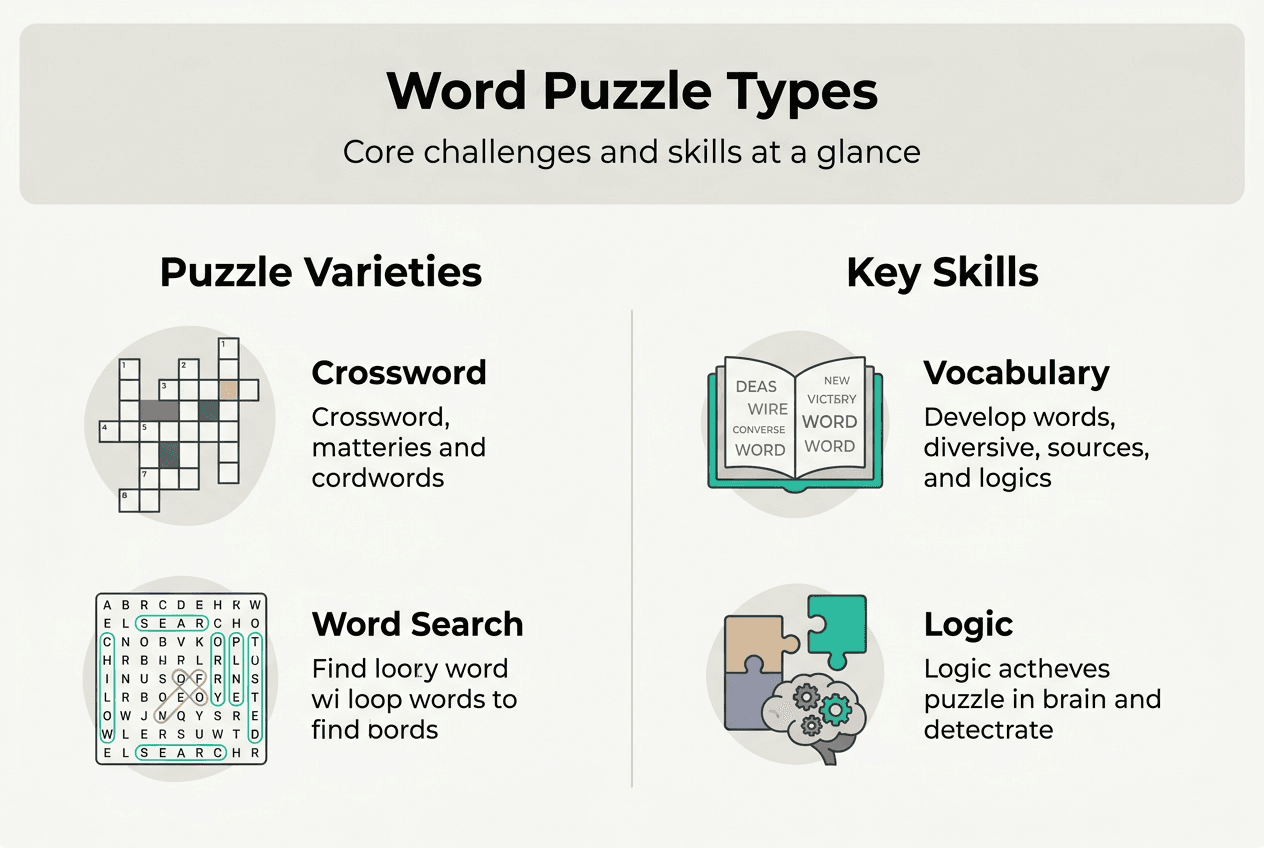
Crossword puzzles emphasize vocabulary depth and general knowledge. Solvers must retrieve words from memory based on definition clues while considering letter constraints from intersecting answers. This dual challenge strengthens verbal memory and flexible thinking. Advanced crosswords incorporate wordplay, puns, and cultural references that reward broad knowledge and creative interpretation.
Word searches develop visual scanning efficiency and sustained attention. Players systematically search letter grids to locate hidden words running in multiple directions. Success requires methodical scanning patterns and the ability to recognize words from various angles. Themed word searches add educational value by grouping related vocabulary.

Anagrams test pattern recognition and mental flexibility. Rearranging scrambled letters into valid words demands the ability to see multiple letter combinations quickly. This skill transfers to spelling improvement and vocabulary expansion. Timed anagram challenges add pressure that builds quick thinking abilities.
| Puzzle Type | Primary Skills | Difficulty Factors | Best For |
|---|---|---|---|
| Crosswords | Vocabulary, general knowledge, verbal memory | Clue obscurity, grid size, wordplay complexity | Building language skills and broad knowledge |
| Word Searches | Visual scanning, focus, pattern recognition | Grid size, word direction variety, letter density | Developing attention and systematic thinking |
| Anagrams | Letter manipulation, quick thinking, spelling | Word length, time limits, vocabulary difficulty | Enhancing mental flexibility and speed |
| Category Games | Logic, vocabulary, association skills | Category specificity, time pressure, word variety | Combining multiple cognitive skills |
Category based word games blend logic with vocabulary knowledge. Players group words by shared characteristics or identify category members under time constraints. This format combines analytical thinking with language skills, creating comprehensive mental workouts. The social element of competitive category games adds motivation and engagement.
Pro Tip: Rotate through different puzzle types weekly to ensure balanced cognitive development. Spending Monday on crosswords, Wednesday on word searches, and Friday on anagrams provides varied mental stimulation that prevents skill plateaus and maintains engagement through novelty.
The strategic value lies in matching puzzle types to specific goals. Students preparing for vocabulary tests benefit from crosswords and anagrams. Older adults maintaining cognitive health gain from word searches requiring sustained focus. Families seeking shared activities enjoy category games that accommodate mixed skill levels. Exploring various word game types reveals options for every situation and objective.
How to make word puzzles engaging and educational for all ages
Maximizing word puzzle effectiveness requires thoughtful selection and presentation strategies. Word puzzles adapt to all ages when properly calibrated to player abilities and interests. The right approach transforms puzzles from frustrating challenges into rewarding learning experiences.
Age appropriate difficulty prevents discouragement while maintaining engagement. Young children need simple word searches with short, familiar words and clear grid layouts. Teenagers handle complex anagrams and themed crosswords matching their expanding vocabularies. Adults appreciate challenging puzzles incorporating specialized knowledge and cultural references.
Implementation strategies for maximum impact:
- Start with easier puzzles to build confidence before advancing to harder challenges
- Choose themes matching player interests such as animals, sports, or science topics
- Set reasonable time expectations that allow completion without excessive pressure
- Celebrate progress and improvement rather than focusing solely on speed or perfection
- Introduce new puzzle types gradually to maintain novelty without overwhelming players
- Create social puzzle sessions where family members collaborate on solutions
- Track vocabulary growth by noting new words learned through puzzle solving
Thematic consistency enhances educational value. Science themed puzzles reinforce classroom learning for students. History focused crosswords support curriculum retention. Seasonal puzzles tied to holidays or events increase relevance and motivation. This contextual learning strengthens memory formation compared to random word lists.
Social puzzle solving amplifies benefits through collaboration and discussion. Family puzzle nights create shared experiences while building communication skills. Classroom puzzle competitions motivate students through friendly rivalry. Multiplayer word games combine cognitive training with social interaction, addressing both mental and emotional needs.
Pro Tip: Create custom word searches using vocabulary from current school units or work projects. This targeted approach reinforces specific knowledge while providing familiar puzzle enjoyment, making learning feel less like work and more like play.
Regular scheduling builds habits that compound cognitive benefits over time. Daily 15 minute puzzle sessions create consistent brain stimulation without demanding excessive time commitments. Morning puzzles activate mental processes for the day ahead. Evening puzzles provide relaxing wind down activities that still engage the mind productively.
Progression tracking maintains motivation through visible improvement. Recording completion times shows speed gains. Noting vocabulary expansion demonstrates learning outcomes. Advancing to harder puzzle levels provides concrete achievement milestones. These metrics transform abstract cognitive benefits into tangible progress markers. Resources for creating word puzzles help families and educators design custom challenges perfectly suited to their specific needs and goals.
Discover word puzzle games and brain training on Lexiloot
Putting these insights into practice becomes easier with dedicated platforms designed for word puzzle enthusiasts and families. Lexiloot offers comprehensive word puzzle and category game collections that embody the educational principles and cognitive benefits explored throughout this guide.
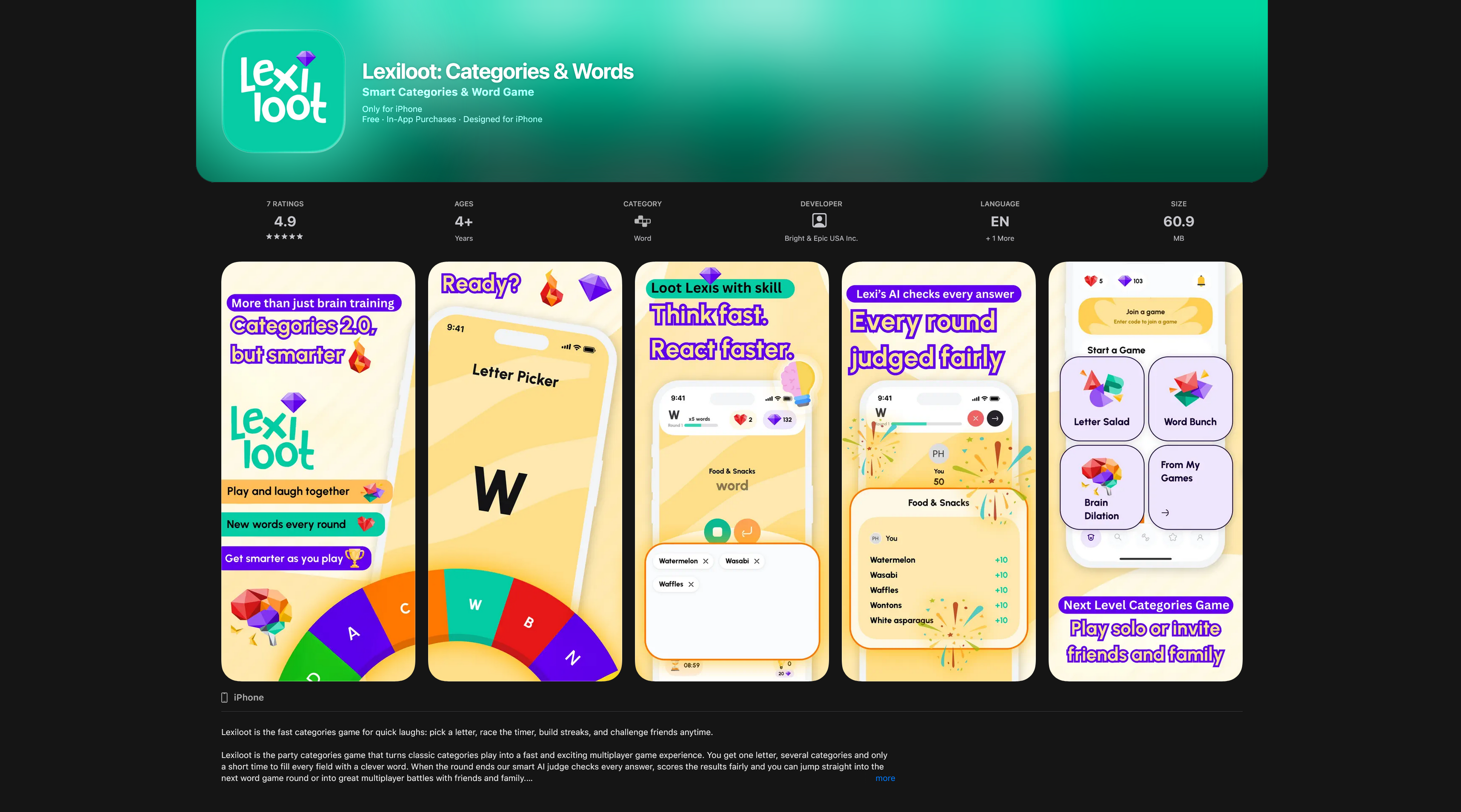
The platform provides puzzle varieties spanning difficulty levels from beginner friendly word searches to advanced category challenges requiring quick thinking and broad vocabulary. Families find age appropriate options for every member, while educators access tools for classroom vocabulary reinforcement. The social gaming features enable friendly competitions that motivate consistent engagement.
Lexiloot’s categories game for kids and classrooms combines learning with entertainment through themed word grouping challenges. Players develop logical thinking alongside vocabulary expansion. The multiplayer modes create collaborative learning opportunities that strengthen both cognitive skills and social bonds. Premium features offer ad free experiences and advanced brain training modes supporting serious skill development.
Exploring the word puzzle varieties available helps players discover formats matching their interests and goals. Guides for creating word puzzles empower families and educators to design custom challenges perfectly tailored to specific learning objectives, making 2026 the year of enhanced vocabulary and cognitive growth through engaging word play.
What defines a word puzzle? Frequently asked questions
What qualifies as a word puzzle?
Any challenge requiring players to find, form, or understand words through letter manipulation, pattern recognition, or vocabulary knowledge qualifies as a word puzzle. This includes word searches, crosswords, anagrams, category games, and cryptograms.
How do word puzzles improve brain function?
Word puzzles strengthen neural pathways through active vocabulary recall, pattern recognition, and problem solving. Regular engagement improves memory, processing speed, and verbal skills while building cognitive reserve that protects against age related decline.
Which word puzzle type works best for vocabulary building?
Crossword puzzles excel at vocabulary expansion because they require retrieving words from memory based on definition clues. Anagrams also build vocabulary by exposing players to letter patterns and word formations, reinforcing spelling and recognition skills.
Can beginners start with any puzzle type?
Beginners should start with simple word searches featuring short, familiar words in clear grid layouts. These build confidence and scanning skills before advancing to crosswords or anagrams requiring more complex vocabulary and analytical thinking.
How often should someone solve word puzzles for cognitive benefits?
Daily 10 to 15 minute sessions provide optimal cognitive stimulation without mental fatigue. Consistent practice builds cumulative benefits more effectively than occasional long sessions, with varied puzzle types ensuring comprehensive skill development.
Do word puzzles help children learn vocabulary?
Word puzzles provide interactive vocabulary learning that increases retention compared to passive memorization. Themed puzzles reinforce classroom content while maintaining engagement through game like formats that make learning enjoyable and effective.

