


Choosing the right stop game categories can transform a simple word game into a powerful tool for vocabulary expansion and cognitive training. Whether you’re a casual mobile gamer looking for quick entertainment or a family seeking educational fun, category selection directly impacts engagement and learning outcomes. The challenge lies in balancing familiarity with novelty, ensuring rounds stay fast-paced while delivering genuine brain training benefits. This guide walks you through a clear evaluation framework, explores the top stop game categories proven to maximize both fun and educational value, and helps you match categories to your group’s age, skill level, and play style.
Table of Contents
- How To Choose Effective Stop Game Categories
- Top Stop Game Categories For Casual Gamers And Families
- Comparing Stop Game Categories: Educational And Gaming Value
- Choosing The Right Stop Game Category For Your Group
- Discover The Best Categories Game On Lexiloot
- FAQ
Key takeaways
| Point | Details |
|---|---|
| Criteria matter | Effective categories balance round speed, vocabulary growth, and multiplayer fun for all ages. |
| Top five categories | Animals, food, countries, occupations, and movies offer the best mix of challenge and accessibility. |
| Family-friendly options | Zen mode and simpler categories like animals reduce pressure for younger or casual players. |
| Apps enhance play | Stop game apps add global multiplayer, hints, and adjustable difficulty for richer experiences. |
| Cognitive benefits | Rapid word recall and categorization strengthen vocabulary, memory, and critical thinking skills. |
How to choose effective stop game categories
Selecting the right stop game categories requires balancing several key factors to ensure maximum engagement and educational value. Round length stands as the first criterion, with ideal categories supporting 60-second gameplay perfect for casual mobile gamers and families seeking quick entertainment bursts. Educational value ranks equally high, as categories should naturally expand vocabulary through repeated exposure to diverse words within themed groups. Word familiarity matters too, especially for mixed-age groups where overly obscure categories frustrate younger players while too-simple ones bore experienced gamers.
Multiplayer friendliness determines whether a category sparks social interaction and friendly debate. The best categories generate edge cases where players negotiate whether an answer fits, building critical thinking alongside vocabulary skills. Consider your group’s composition when evaluating categories, as families benefit from options accessible to children while still challenging adults. Modes like zen mode remove time pressure, letting younger players enjoy the game without stress while still building cognitive skills through categorization practice.
Pro Tip: Test new categories in zen mode first to gauge difficulty before introducing timed rounds, ensuring everyone can participate confidently.
Here are essential criteria for category selection:
- Round completion time should allow most players to generate 3 to 5 answers per category
- Educational value emerges from categories that introduce new vocabulary naturally through gameplay
- Age appropriateness ensures all players can contribute without feeling overwhelmed or bored
- Debate potential creates opportunities for negotiation and critical thinking about edge cases
- Cultural accessibility means categories work across different backgrounds and knowledge bases
Explore more about category challenge mechanics and strategy to understand how different category types affect gameplay dynamics and learning outcomes.
Top stop game categories for casual gamers and families
Animals consistently rank as the most universally accessible category, offering rich vocabulary potential from common pets to exotic wildlife. Players of all ages can quickly recall familiar animals while learning new species names through repeated play. The category’s breadth accommodates both simple answers like “dog” and sophisticated choices like “axolotl,” making it perfect for mixed-skill groups where everyone contributes meaningfully.
Food and drinks provide culturally diverse vocabulary that engages players through personal experience and curiosity. This category naturally introduces international cuisine terms, expanding cultural awareness alongside language skills. From everyday items like “apple” to specialty foods like “quinoa,” the range supports players at every vocabulary level while encouraging exploration of culinary traditions.
Countries and cities deliver strong educational value by reinforcing geography knowledge through active recall. Players strengthen mental maps of the world while building vocabulary around place names, capitals, and landmarks. This category works especially well for families wanting to combine entertainment with learning, as children naturally absorb geographic information through repeated gameplay.
Occupations expand awareness of career-related vocabulary while prompting discussions about different professions and their roles. The category spans from common jobs like “teacher” to specialized roles like “epidemiologist,” offering vocabulary growth opportunities across familiarity levels. Players develop broader understanding of the working world while practicing rapid word retrieval.
Movies and celebrities appeal to older players and social groups seeking entertainment-focused categories. This option sparks conversations about popular culture while challenging players to recall names quickly under pressure. The category works best for teen and adult groups where shared cultural knowledge creates common ground.
Using 50 ESL categories in zen mode reduces pressure for families, letting players enjoy vocabulary building without time stress. This approach particularly benefits households with younger children or players new to word games.
Discover how categories games work in educational settings to understand their broader applications beyond casual play. Learn comprehensive strategies for playing categories to maximize vocabulary growth across different skill levels and age groups.
Comparing stop game categories: educational and gaming value
Understanding how categories stack up against each other helps you select the optimal mix for your group’s needs and goals. Each category brings distinct strengths in difficulty, educational benefit, and social dynamics that shape the gameplay experience.

| Category | Difficulty | Educational Value | Family Friendly | Best For |
|---|---|---|---|---|
| Animals | Easy | High vocabulary | Excellent | All ages, beginners |
| Food | Easy | Cultural awareness | Excellent | Families, casual play |
| Countries | Medium | Geography skills | Good | Educational focus |
| Occupations | Medium | Career knowledge | Good | Mixed ages |
| Movies | Hard | Pop culture | Moderate | Teens, adults |
Animals and food categories deliver the strongest combination of accessibility and educational value, making them ideal foundations for family game sessions. Their universal familiarity ensures every player can participate while still encountering new vocabulary through gameplay. These categories work especially well in zen mode, where the absence of time pressure lets younger players think through options without frustration.
Countries and occupations occupy the middle ground, offering moderate difficulty that challenges players without overwhelming them. These categories provide clear educational benefits, reinforcing geography knowledge and career awareness through active recall. They suit groups seeking more substantial cognitive training while maintaining accessibility for most age ranges.
Movies and celebrities present the highest difficulty level, requiring specific cultural knowledge that varies widely among players. These categories excel in social settings where shared pop culture creates common ground and sparks lively discussions. They work best for older players who enjoy competitive, fast-paced rounds focused on entertainment over education.
Stop games offer faster, party-oriented play compared to Scattergories, with apps adding global multiplayer and hint systems that enhance casual accessibility. The quicker round structure keeps energy high while reducing the pressure that can make longer word games feel tedious.
Pro Tip: Rotate between easy and challenging categories each round to maintain engagement across skill levels, ensuring no player feels consistently overwhelmed or bored.
Explore detailed comparisons of category games online to understand how different formats and platforms affect learning outcomes and entertainment value.
Choosing the right stop game category for your group
Matching categories to your specific group dynamics maximizes both enjoyment and cognitive benefits. Start by assessing the age range and vocabulary skill levels present in your group, as these factors fundamentally shape which categories will engage rather than frustrate players.
- Evaluate player ages and vocabulary comfort zones to establish a baseline difficulty level
- Consider your group’s primary goal, whether casual entertainment, competitive challenge, or educational focus
- Test categories in zen mode first to gauge appropriate difficulty before adding time pressure
- Mix familiar and novel categories to balance comfort with vocabulary expansion opportunities
- Encourage debate on edge-case answers to build critical thinking and negotiation skills
- Rotate category selections each session to maintain freshness and prevent predictability
- Adjust round times based on group performance, extending them if players consistently struggle
Younger children thrive with simpler, highly familiar categories like animals and food where they can draw on everyday experience. These options build confidence through successful participation while gradually introducing new vocabulary in low-pressure contexts. Parents and teachers should prioritize categories that feel accessible yet still offer room for learning, avoiding both frustration and boredom.
Older players benefit from complex categories like movies, occupations, and specialized topics that challenge vocabulary depth and recall speed. These options engage competitive instincts while delivering cognitive training through rapid categorization under time constraints. Teen and adult groups often enjoy the social dynamics that emerge when debating whether obscure answers fit category definitions.
Play style significantly impacts optimal category selection. Casual groups prioritize entertainment and social interaction, favoring categories that spark conversation and laughter over strict educational outcomes. Competitive players seek challenging categories that differentiate skill levels and reward vocabulary breadth. Educational-focused groups emphasize categories with clear learning objectives, such as countries for geography or occupations for career awareness.
Rapid categorization and vocabulary retrieval train cognitive skills, while handling edge cases teaches valuable debate and negotiation abilities. These benefits compound over time, making regular play with varied categories a powerful tool for brain training.
Zen mode serves as an excellent entry point for families wanting to reduce pressure while maintaining educational value. This format removes time constraints, letting players think through answers carefully and discuss options without the stress of a ticking clock. As comfort grows, gradually introduce timed rounds to add challenge and cognitive training intensity.
Learn about different types of word games to understand how stop game categories fit within the broader landscape of vocabulary-building entertainment.
Discover the best categories game on Lexiloot
Lexiloot delivers an optimized categories game experience designed specifically for families, casual gamers, and vocabulary enthusiasts seeking both entertainment and brain training. The app features dozens of carefully curated stop game categories that balance accessibility with educational value, ensuring players of all ages find engaging challenges matched to their skill levels.
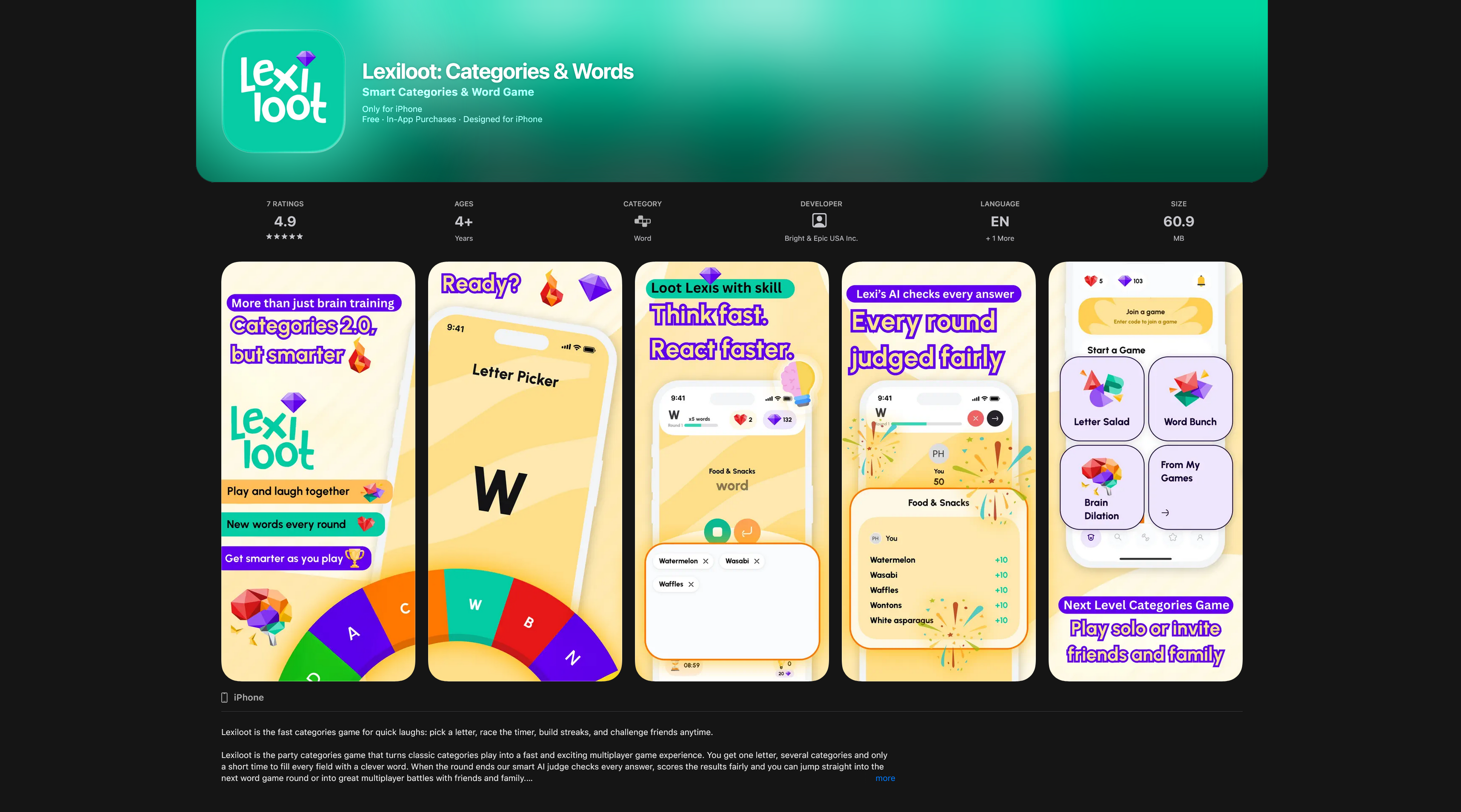
The platform includes multiplayer modes that connect you with players worldwide, hints to support learning without frustration, and adjustable difficulty settings that grow with your vocabulary skills. Whether you’re introducing children to word games through kid-friendly categories or seeking competitive challenges through advanced category game strategies, Lexiloot adapts to your needs. The app’s pay-once model eliminates subscription pressure, letting families enjoy unlimited gameplay while building vocabulary and cognitive skills at their own pace. Explore Lexiloot to experience the stop game categories discussed here within a polished, user-friendly platform that makes brain training feel like pure fun. Enhance your gameplay further with proven word game strategies that boost both scores and cognitive benefits.
FAQ
What are stop game categories?
Stop game categories are themed word groups that structure gameplay rounds, with players racing to name items fitting each category before time expires. Common examples include animals, food, countries, and occupations, chosen for their balance of familiarity and vocabulary-building potential. These categories transform simple word recall into engaging cognitive challenges that strengthen categorization skills and memory.
How do stop game categories improve vocabulary?
Categories prompt rapid word retrieval linked to specific themes, forcing players to access and activate vocabulary they might not use in everyday conversation. Repeated exposure to diverse categories naturally expands active vocabulary as players encounter new words through gameplay and discussion. The competitive element motivates players to seek out less common answers, driving exploration of vocabulary depth beyond basic terms. Over time, this practice strengthens both recall speed and the breadth of accessible vocabulary across multiple domains. Discover more about vocabulary growth through category play.
What are the best categories for family game time?
Animals, food, and countries provide the ideal foundation for family play, offering accessibility for children while still engaging adults. These categories draw on everyday knowledge that all ages possess, ensuring everyone can contribute meaningfully to gameplay. Using zen mode with diverse category lists removes time pressure, letting kids enjoy vocabulary building without stress or frustration. Rotating between these core categories keeps sessions fresh while maintaining the comfort level needed for positive family experiences. Explore family-friendly category game options designed specifically for mixed-age household play.
Can stop game categories be used for educational purposes?
Absolutely. Stop game categories excel as educational tools by encouraging quick categorization, active vocabulary recall, and critical thinking about word meanings and category boundaries. The rapid categorization and edge-case negotiation inherent in gameplay teach valuable debate skills and logical reasoning alongside vocabulary expansion. Teachers use categories games to reinforce subject-specific vocabulary in engaging, low-pressure formats that feel like play rather than study. The social dynamics of group play also build communication skills and collaborative problem-solving abilities. Learn how brain training through vocabulary games delivers measurable cognitive benefits across age groups and skill levels.

