


TL;DR:
- Multiplayer educational games provide effective vocabulary development through structured social interaction and targeted mechanics.
- Research shows that intentional design emphasizing real learning outcomes outperforms just entertaining gameplay, with customizable features enhancing their impact.
The market for educational games has grown fast, and multiplayer formats are showing real results for vocabulary learning compared with traditional solo methods. But with hundreds of apps and platforms competing for your attention, it can feel nearly impossible to tell which games actually help kids build word skills and which ones simply look good on a product page. This guide cuts through the noise. You will find clear criteria, specific game picks backed by research, and practical tips to help parents, teachers, and students get genuine vocabulary and cognitive gains from social gaming.
Table of Contents
- How to evaluate multiplayer educational games for vocabulary growth
- Top multiplayer educational games: Evidence-backed picks
- Comparison: Which multiplayer games maximize vocabulary and social gains?
- Making the most of multiplayer vocabulary games: Tips for parents and teachers
- Our perspective: What most multiplayer game lists miss about real learning
- Boost vocabulary and connection with research-proven multiplayer games
- Frequently asked questions
Key Takeaways
| Point | Details |
|---|---|
| Evidence matters | Effective multiplayer games have research-backed outcomes for vocabulary growth, not just engagement. |
| Collaboration and competition both work | Both competitive and team-based games can build vocabulary as long as they’re well-designed. |
| Game choice should match your needs | The best game balances peer interaction, challenge, and customization for your classroom or home. |
| Integration drives real gains | Regular, structured play and feedback loops maximize vocabulary and cognitive impact. |
| Customize for learning | Choose games allowing educator or parent controls to tailor experiences for any learner. |
How to evaluate multiplayer educational games for vocabulary growth
With a crowded market, knowing what makes a game effective is step one. Not every game that calls itself “educational” will actually move the needle on vocabulary recall, category thinking, or spelling fluency. The difference between a game that builds skills and one that simply entertains comes down to a few key design choices.
Look for evidence, not just claims. The most actionable games are those with pre/post testing and retention data behind them. A game that reports measurable word gains after controlled study periods is far more trustworthy than one backed only by testimonials. Ask yourself: has this game been tested in real classrooms? Do students retain what they learned a week later, not just during play?
Check the game mechanics carefully. Good multiplayer vocabulary games use social features to support learning, not replace it. Here is what to look for:
- Competition and collaboration balance: The game should use friendly rivalry or teamwork to motivate, not to distract.
- Feedback systems: Players should receive immediate, clear feedback on word choices, spelling, or category accuracy.
- Progression systems: Levels, streaks, or leaderboards work best when tied directly to vocabulary mastery, not just time played.
- Cognitive load management: A well-designed game limits “coordination overhead,” which is the mental effort wasted on figuring out group rules instead of learning words.
- Educator or parent input: The best games allow teachers or caregivers to customize content, set difficulty, and monitor progress.
You can learn more about how to gamify vocabulary learning effectively and what the latest multiplayer game research says about social formats and cognitive outcomes.
“Not all social features add learning value. When multiplayer mechanics are too complex or unstructured, players spend more mental energy on coordination than on actual vocabulary practice.” This is why structure matters as much as the social element itself.
Pro Tip: Before committing to any multiplayer educational game, run a quick two-week test. Track your child’s or student’s ability to recall and use new words before and after play. If retention improves, the game is working.
Top multiplayer educational games: Evidence-backed picks
Now that you know what to look for, here are specific multiplayer educational games that excel at vocabulary building. These picks come with real research support, not just popularity scores.
-
Kahoot!
Kahoot! is a quiz-based platform that teachers have used in classrooms worldwide. Its live competitive format, where players race to answer questions correctly, creates genuine urgency that boosts vocabulary recall. Peer-reviewed studies report vocabulary gains from gamified quiz sessions using this platform. Teachers can build custom word lists, run team rounds, or let students compete individually. The social pressure of a live leaderboard wakes up attention in a way that a worksheet simply cannot. -
Digital Snakes and Ladders
Classic game formats adapted for vocabulary practice have shown impressive results. Digital adaptations of Snakes and Ladders show improved vocabulary retention when players must answer word questions to advance. The familiarity of the format reduces anxiety, which means more cognitive bandwidth goes toward learning. When a student climbs a ladder by correctly defining a word, the positive reinforcement sticks. -
Minecraft Education Edition
This version of Minecraft is specifically designed for classroom use. Educator controls in Minecraft Education allow teachers to set permissions, assign vocabulary-based building challenges, and structure multiplayer sessions so that collaboration stays focused. Students can work in teams to build worlds that represent story settings or category concepts, reinforcing vocabulary through creative application rather than rote memorization. -
Online Categories and Scattergories-style games
Word category games, where players race to name items in a category within a time limit, are extremely effective for building category thinking and vocabulary breadth. When played in teams, these games push players to recall words quickly and evaluate which words their teammates might miss. This is retrieval practice at its best, wrapped in social motivation. -
Vocabulary team quiz games
Platforms that allow teachers to import custom word lists and run team-based quiz rounds are highly flexible. The team format means students coach each other, which doubles the vocabulary exposure per session. Explaining a word to a teammate is one of the strongest memory reinforcement techniques known to learning science.
Pro Tip: Rotate between competitive and collaborative formats week by week. Kids who feel burned out by constant competition often rediscover motivation when they switch to team-based play, and vice versa.
“The most powerful vocabulary gains happen when players are socially invested in the outcome. When your team depends on your answer, your brain prioritizes that word in memory.”
Explore a broader collection of engaging vocabulary games and get detailed advice on teaching word games for stronger language development across age groups.
Comparison: Which multiplayer games maximize vocabulary and social gains?
It is useful to see how these top picks stack up side by side. This table highlights each game’s vocabulary and social strengths so you can match the right tool to your setting.
| Game | Vocabulary focus | Multiplayer format | Custom content | Educator controls | Feedback speed |
|---|---|---|---|---|---|
| Kahoot! | High (quiz-based recall) | Competitive and team | Yes | Yes | Instant |
| Digital Snakes and Ladders | Medium-High (contextual) | Competitive | Limited | Limited | Per turn |
| Minecraft Education | Medium (applied vocabulary) | Collaborative | Yes | Yes | Session-based |
| Online Categories/Scattergories | High (category thinking) | Competitive and team | Partial | Varies | Instant |
| Vocabulary team quiz platforms | High (recall and definition) | Collaborative | Yes | Yes | Instant |
What the research says about design choices: Game-based learning research shows that competition, collaboration, and progression mechanics each drive motivation and outcomes in different ways. Competition tends to sharpen focus and speed up recall. Collaboration tends to deepen understanding and word retention. Progression systems, such as leveling up or earning badges tied to vocabulary mastery, keep players coming back for more.
Neither competitive nor collaborative play wins outright. What matters most is matching the format to the group. A highly competitive class might benefit from collaborative team rounds. A shy group of learners might open up faster in competitive head-to-head formats where individual pressure feels lower because everyone is anonymous on the leaderboard.
A key statistic worth noting: Studies comparing game-based learning to traditional vocabulary instruction consistently find that games with social mechanics produce stronger engagement scores, which correlates with better long-term word retention. The social element is not a bonus. It is part of the learning mechanism.
Check out our breakdown of top language learning games for an even wider view of what is available across platforms and age groups.
Making the most of multiplayer vocabulary games: Tips for parents and teachers
Choosing the right game is powerful, but real impact depends on thoughtful integration. Here is how to get great results from multiplayer educational games in your home or classroom.
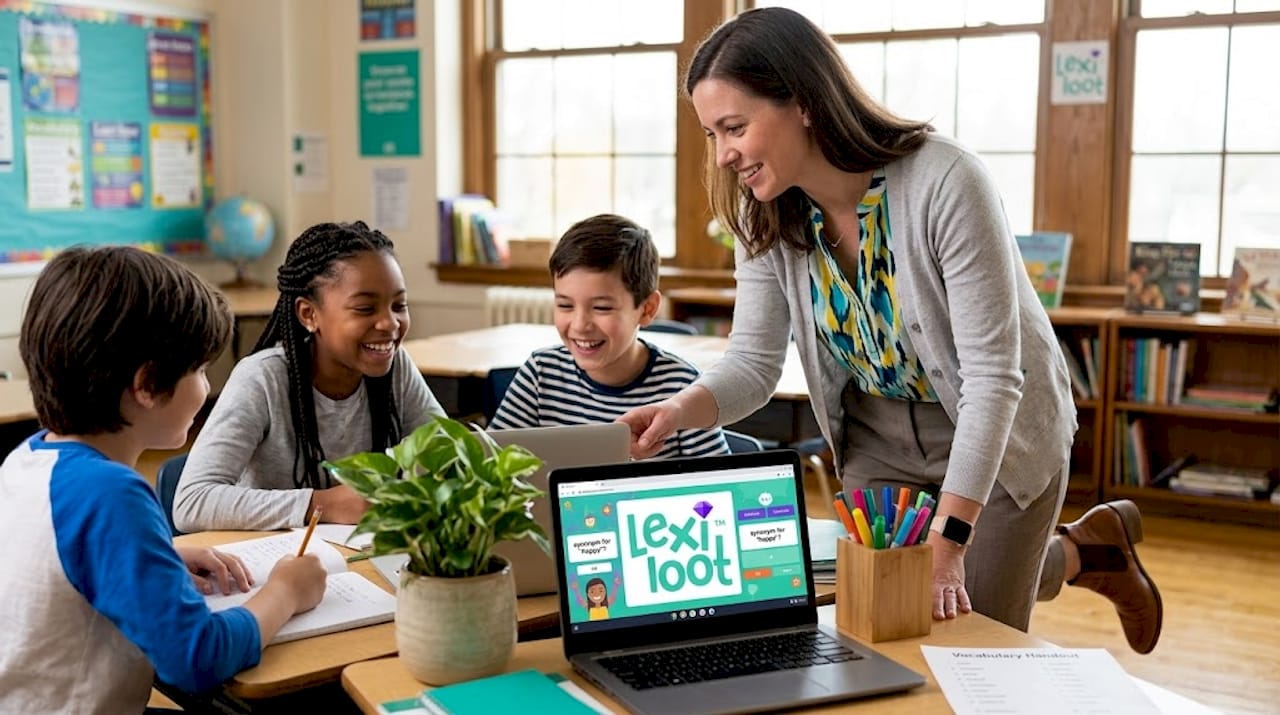
Set a consistent schedule. Short retrieval and quiz loops practiced regularly produce stronger vocabulary gains than long, infrequent sessions. Aim for 15 to 20 minutes of focused gameplay several times a week. This frequency keeps vocabulary recall fresh and builds strong memory traces over time.
Use these practical strategies:
- Start with warm-up rounds. A quick solo or paired round before competitive play reduces anxiety and primes vocabulary recall.
- Debrief after each session. Ask students or kids to name three words they used or heard during play. This reflection step doubles down on retention.
- Rotate group compositions. Mixing up team members exposes players to different vocabulary strategies and prevents social cliques from dominating game flow.
- Use educator mode whenever available. Parental and teacher controls let you adjust difficulty, filter content, and track progress without interrupting play.
- Blend digital and physical game formats. A physical Scattergories round on Tuesday and a digital quiz battle on Thursday gives learners varied retrieval contexts, which supports deeper word learning.
Balance competition and collaboration intentionally. Some kids thrive under competitive pressure. Others shut down. Watch for signs of frustration or disengagement and adjust the format accordingly. A child who stops participating in a competitive round might flourish when given a collaborative team role.
Pro Tip: For younger learners, keep teams small (two to three players) and rounds short. Coordination overhead, which is the mental effort spent organizing rather than learning, increases with group size and reduces vocabulary gains for children under age ten.
You can find deeper guidance on building vocabulary and cognitive power through play, as well as research-backed advice on using mobile games for vocabulary in ways that produce lasting results.
Our perspective: What most multiplayer game lists miss about real learning
Most articles about multiplayer educational games focus on which titles are popular or which have the most features. That misses the real question: does the game design actually produce word learning, or does it just produce fun?
We have seen this pattern repeatedly. A game gets praised for its social features, kids love playing it, and parents feel good about screen time. But when you check vocabulary recall two weeks later, the gains are minimal. Why? Because more social interaction can slow learning when it creates coordination overhead rather than focused retrieval practice. Players spend their mental energy on group dynamics, not on words.
The games that produce real skill growth share one quality: intentional design. They use social mechanics purposefully, tying every competitive or collaborative moment back to a vocabulary task. The social element is not decoration. It is the delivery system for learning.
We also want to name something that lists rarely mention: the right game for a group depends heavily on age, group size, and the specific vocabulary goals you have. A game that works beautifully in a fifth-grade classroom may frustrate a group of second graders. A platform perfect for ESL students building everyday vocabulary may bore a student preparing for advanced testing.
Understanding what social gaming actually is and how it functions as a learning tool, rather than just an entertainment format, is the starting point for making genuinely good choices. Intentional design, not brand popularity or feature count, predicts skill growth over time.
Boost vocabulary and connection with research-proven multiplayer games
If you are ready to put these ideas into practice, Lexiloot is built exactly for this moment. Our platform combines categories games, vocabulary challenges, and multiplayer competitions in a format designed to produce real cognitive gains, not just fun sessions.
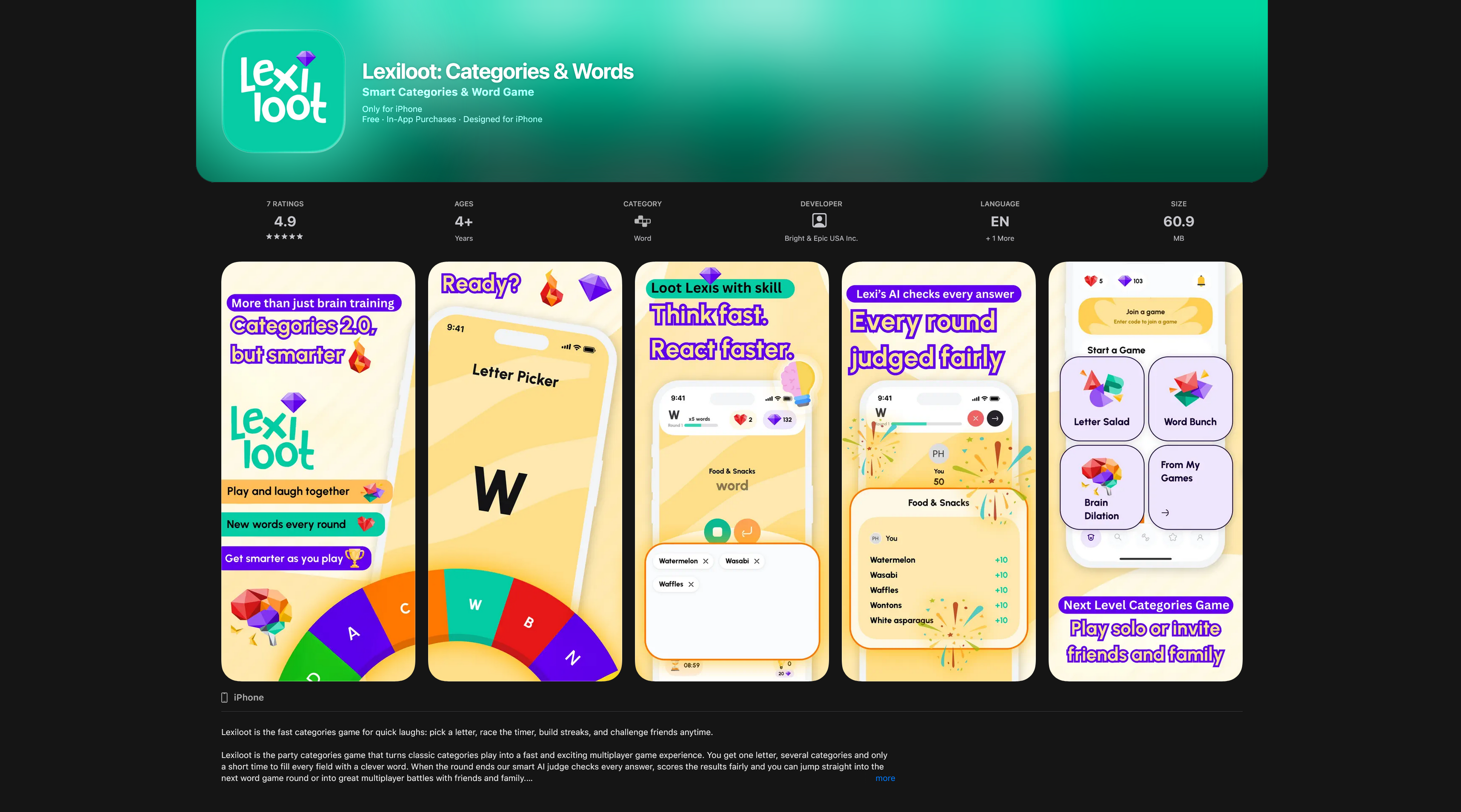
Whether you are a parent looking for structured word games your family will actually enjoy, a teacher searching for classroom-ready vocabulary tools, or a student who wants to grow word skills through friendly competition, Lexiloot has a mode that fits. Explore our evidence-based games in education resources, browse our full collection of top vocabulary games, and discover how social gaming builds word skills in ways that last. One purchase, no subscription, unlimited vocabulary growth.
Frequently asked questions
Do multiplayer educational games really improve vocabulary faster than solo games?
Yes, multiplayer game mechanics improve vocabulary over traditional approaches, especially when the social features are tied directly to vocabulary tasks rather than general gameplay.
Is competitive or collaborative play better for vocabulary learning?
Research finds no significant difference between competitive and collaborative game conditions for overall vocabulary gain, so both formats work well depending on the group.
Which features make a multiplayer game most effective for learning?
The best games use short retrieval and quiz loops paired with social peer or team interaction modes, giving players frequent feedback and low-pressure chances to practice word recall.
Are commercial multiplayer games (not built for education) useful for vocabulary learning?
Major commercial games can provide some vocabulary exposure, but more social play in commercial settings was linked to slower learning rates for core vocabulary skills compared with purpose-built educational game formats.
Can parents or teachers customize multiplayer games for their child’s level?
Many top educational games allow full customization; for example, Minecraft Education provides educator controls for structured multiplayer use, and most quiz platforms let you import custom word lists to match any learner’s current level.

