


TL;DR:
- Premium word practice offers advanced tools, adaptive challenges, and progress tracking that accelerate vocabulary growth and retention. It provides extensive content, personalized difficulty, and motivational features, resulting in faster mastery and deeper cognitive benefits for learners. Choosing the right app depends on clear goals, feature comparison, and fostering consistent, intentional use to maximize results.
Most people assume that paying for a word game just removes the ads. That assumption costs you. Premium word practice is actually a structured layer of advanced tools, adaptive challenges, and progress tracking that changes how quickly you build vocabulary and how long those words stick. Whether you’re a casual gamer squeezing in ten minutes before bed or a teacher planning Friday’s vocabulary lesson, understanding what premium word practice really offers can genuinely shift your results. This guide breaks down the features, the research, and the practical steps so you can make smarter choices for learning and play.
Table of Contents
- Defining premium word practice: More than just ad-free
- Key features of premium word practice apps and games
- Educational benefits: Why choose premium word practice?
- Gaming for growth: How casual play powers your skills
- How to choose the right premium word practice tool
- Why premium word practice is worth the investment, if you use it right
- Discover top premium word practice games for skill and fun
- Frequently asked questions
Key Takeaways
| Point | Details |
|---|---|
| Premium means more than ad-free | Premium word practice tools offer deeper learning features, not just the removal of ads. |
| Features drive better results | Advanced content, tracking, and adaptive modes make premium word games more effective for both fun and learning. |
| Cognitive gains are measurable | Strong vocabulary predicts up to 64% of reading comprehension and cognitive improvement. |
| Gamers and educators both benefit | Premium tools boost engagement for casual players and support rapid growth for learners. |
| Choose intentionally | Real gains come from picking and using the best-fit tools, rather than just paying for access. |
Defining premium word practice: More than just ad-free
The phrase “premium word practice” gets used loosely, and that creates confusion. At its core, premium word practice refers to any paid or upgraded version of a vocabulary game or word learning tool that gives you access to richer content, smarter challenge systems, and deeper feedback than the free version allows.
Here is what premium word practice typically includes:
- Adaptive difficulty: The app adjusts word complexity based on your performance, keeping you in that productive learning zone where words are challenging but not overwhelming.
- Expanded word libraries: Premium access usually means thousands more words, covering niche categories, academic vocabulary, and subject-specific terms.
- Progress tracking and reporting: You see exactly which words you know, which ones need more work, and how your performance has changed over time.
- Offline play: Many premium versions let you practice without an internet connection, which matters for classrooms with limited Wi-Fi.
- Advanced game modes: Think category challenges, timed sprints, and multiplayer competitions that push you beyond basic matching exercises.
It is also important to know that no single tool dominates the “premium word practice” market under that exact name. The space includes dozens of well-built apps, each with its own approach to advanced vocabulary practice.
“Premium word practice is not a single product. It is an approach to learning that puts smarter tools in your hands so you can grow faster, track progress, and stay motivated longer.”
This distinction matters because it shifts your thinking from “which app has this name?” to “which features do I actually need?” That is a much more useful question.
Key features of premium word practice apps and games
With these definitions in mind, it is easy to see that premium word practice stands apart thanks to its unique features. But what exactly do these apps offer that standard versions do not?
Advanced modes, adaptive difficulty, and robust reporting tools are the hallmarks of any worthwhile premium product. Here is a side-by-side look at how free and premium versions typically compare:
| Feature | Free version | Premium version |
|---|---|---|
| Word library size | Limited (500 to 2,000 words) | Extensive (5,000 to 50,000+ words) |
| Game modes | 1 to 3 basic modes | 5 to 15+ modes including timed, adaptive, and category play |
| Difficulty adjustment | Manual or none | Automatic, based on performance data |
| Progress reporting | Basic score display | Detailed dashboards, word mastery maps, and export tools |
| Multiplayer and social | Rare or absent | Leaderboards, battles, and friend invites |
| Ads | Frequent | None |
| Offline access | Usually not available | Often included |
| Customer support | Community forums only | Dedicated support channels |
These differences add up fast. The features that drive better learning outcomes are the ones found almost exclusively in premium tiers. Here is why each matters:
- Adaptive difficulty keeps players from getting bored (too easy) or frustrated (too hard), which is the sweet spot for vocabulary retention.
- Progress dashboards let teachers spot which students need extra help before a quiz, not after.
- Multiplayer and social features add accountability. When you compete with a friend, you practice longer and try harder.
- Expanded content means you are never stuck repeating the same fifty words, which is a fast track to boredom.
Pro Tip: If you are a teacher, prioritize apps with exportable progress reports. Being able to show parents a word mastery chart is far more powerful than a simple quiz score.
These are the features that support what researchers call premium brain training: deliberate, structured practice that stretches cognitive skills in enjoyable ways. When you look at it this way, the benefits of word games go far beyond just expanding a word list.
Educational benefits: Why choose premium word practice?
After seeing how features work, it is important to understand why upgrading matters, not just for fun, but for actual learning results.
The research is clear: vocabulary skills account for 64% of reading comprehension, making the quality of your practice directly tied to how well students read and understand text. This is not a minor detail. It means that every extra word a student genuinely learns and retains has a measurable ripple effect on their ability to process written information across every subject.
“Vocabulary is not just a language skill. It is a thinking skill. The more words you know deeply, the more clearly you can reason, read, and communicate.”
Here is a look at how free and premium practice compare in terms of measurable learning outcomes:
| Metric | Free practice (average) | Premium practice (average) |
|---|---|---|
| New words learned per week | 3 to 5 | 8 to 12 |
| Retention after 30 days | 40 to 50% | 65 to 80% |
| Time to reach basic mastery (100 words) | 8 to 12 weeks | 4 to 6 weeks |
| Student engagement rate | 45 to 55% | 70 to 85% |
These numbers reflect the combined effect of adaptive learning, immediate feedback, and engaging game structures. Premium features cut the time to mastery nearly in half, and they dramatically improve how long words stick.
Here are the top educational benefits in concrete terms:
- Faster vocabulary growth: Adaptive systems push learners to just the right challenge level, which accelerates word acquisition without causing frustration.
- Better retention: Spaced repetition features, common in premium tools, schedule review at the optimal moment so words move into long-term memory.
- Higher motivation: Progress tracking lets students see their own improvement, which is one of the strongest motivators in any learning context.
- Reduced frustration: When difficulty adjusts automatically, learners stay in a comfortable stretch zone rather than hitting walls of unfamiliar words all at once.
- Classroom-level insights: Teachers using premium tools get data on the whole class, allowing targeted instruction instead of guessing who needs help.
Premium word practice also supports word games and brainpower development beyond vocabulary. Memory, category thinking, and concentration all improve when learners engage regularly with well-designed word challenges. And for younger students especially, engaging vocabulary games make the whole process feel like play rather than homework.
Gaming for growth: How casual play powers your skills

Educators see big results, but casual players can unlock surprising benefits too. Let us explore how premium word practice turns fun into fuel for your brain.
Here is something that catches many people off guard: casual gamers who play premium word games consistently outperform those who use structured study tools inconsistently. Why? Because consistency matters more than intensity. If a game is fun enough that you come back every day, you are going to learn more words than someone who sits down for an hour once a week with a flashcard deck.
Premium features target fun, engagement, and cognitive skill simultaneously. That combination is what makes premium game apps different from simple study tools.
Here are the gaming features that drive real vocabulary growth:
- Leaderboards: Competing for a top spot motivates players to practice more frequently and more carefully.
- Achievement systems: Unlocking badges or rewards gives short-term satisfaction that keeps players coming back day after day.
- Social play and battles: Inviting a friend to a word battle creates accountability and makes the experience more memorable.
- Adaptive puzzles: As your skill grows, the puzzles grow with you, which means you never plateau.
- Category challenges: Grouping words by theme (animals, food, science terms) strengthens category thinking, which helps your brain organize and retrieve vocabulary faster.
- Daily streaks: Even a five-minute daily session builds momentum that leads to measurable skill gains over weeks and months.
The research on gamifying vocabulary learning consistently shows that game-based practice increases both the frequency and the enjoyment of study sessions. And when learning is enjoyable, people stick with it. A vocabulary trainer game that keeps you engaged for thirty days will always outperform a textbook you opened twice.
Pro Tip: Match your premium game mode to the time you have. A five-minute daily sprint during your commute builds more vocabulary over a month than a single long session on weekends.
How to choose the right premium word practice tool
With all these benefits in mind, how do you actually make the right choice for yourself, your students, or your kids? Here is a proven way to pick the best option.
Multiple vocabulary apps offer premium features, and the right choice depends entirely on individual needs. Follow these steps to narrow it down:
- Define your goal first. Are you building academic vocabulary for tests? Expanding everyday word use? Training for competitive word games? Your goal should drive your choice.
- Compare the feature sets. Check specifically for adaptive difficulty, progress tracking, and the types of game modes available. Do not pay for features you will never use.
- Read verified reviews from people like you. Look for feedback from parents, teachers, or gamers who share your situation. Ignore generic star ratings and focus on written reviews.
- Try the free version or demo. Most premium apps offer a limited free tier. Use it. If the interface frustrates you in the free version, the premium version will not fix that.
- Evaluate the price model carefully. Monthly subscriptions can cost more in a year than a one-time purchase. Look for apps with a pay-once model if you plan to use the tool long-term.
- Check for updates and active development. An app that has not been updated in two years may not be worth investing in, no matter how good the initial feature set looked.
There are also common pitfalls to avoid when making your selection:
- Overpaying for features you do not need. A solo learner rarely needs enterprise-level classroom reporting tools.
- Ignoring engagement quality. A technically impressive app that bores you after three sessions is a waste of money.
- Skipping the trial period. Almost every quality premium tool offers some form of trial. Use it before committing.
- Choosing based on price alone. The cheapest option is rarely the most effective. Look at value, not just cost.
- Neglecting to ask students or kids for input. If the app is for someone else, their buy-in matters. An app they enjoy using will always produce better results.
Exploring methods for advanced vocabulary before you commit to a tool helps you understand what features actually support learning so you can spot the real value in any premium offering.
Why premium word practice is worth the investment, if you use it right
Here is a perspective that most buying guides skip: paying for premium features is the easy part. The harder part is actually using them well.
Most premium apps get downloaded, opened a few times, and then forgotten. That is not a problem with the tool. It is a problem with intention. The people who get real results from premium word practice are the ones who set a specific goal before they even open the app, then build a routine around it.
Think about it this way. If you pay for a premium tool and use it three times a week with a clear focus, you will see measurable vocabulary gains within three to four weeks. If you pay for the same tool and open it randomly whenever you remember, you will see almost nothing. The benefits of word games and premium features are real, but they require consistent, purposeful engagement to deliver results.
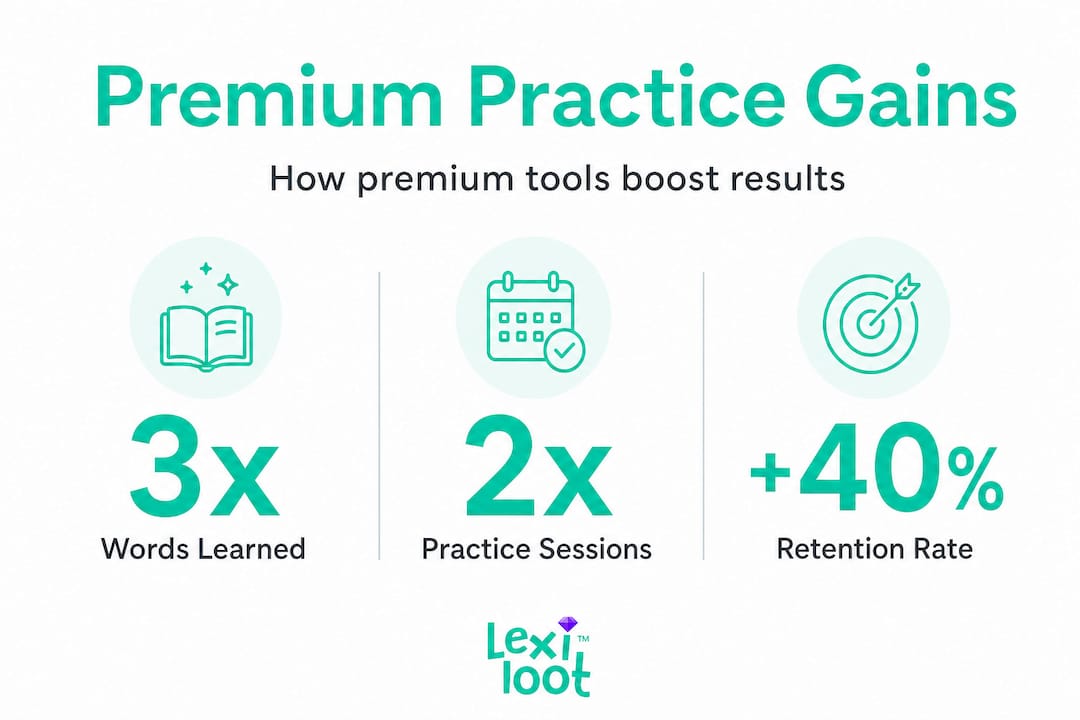
Using premium tools effectively for word growth requires intention, not just purchase. That sounds obvious, but it is genuinely the most overlooked piece of advice in this space.
For teachers, this means building the app into a weekly lesson structure rather than treating it as an optional extra. For gamers, it means picking one challenge mode and mastering it before jumping to the next. For parents, it means sitting with your child for the first few sessions so they understand how the features work and feel encouraged to keep going.
The investment in premium word practice pays off when you match the tool to a real routine and real goals.
Discover top premium word practice games for skill and fun
Ready to put high-impact, premium word practice into action? Here is how to get started with top resources.
At Lexiloot, we have built our platform around exactly this kind of intentional, joyful learning. Our engaging vocabulary games combine category challenges, adaptive word puzzles, and multiplayer battles into one social experience that works for families, classrooms, and solo players alike.
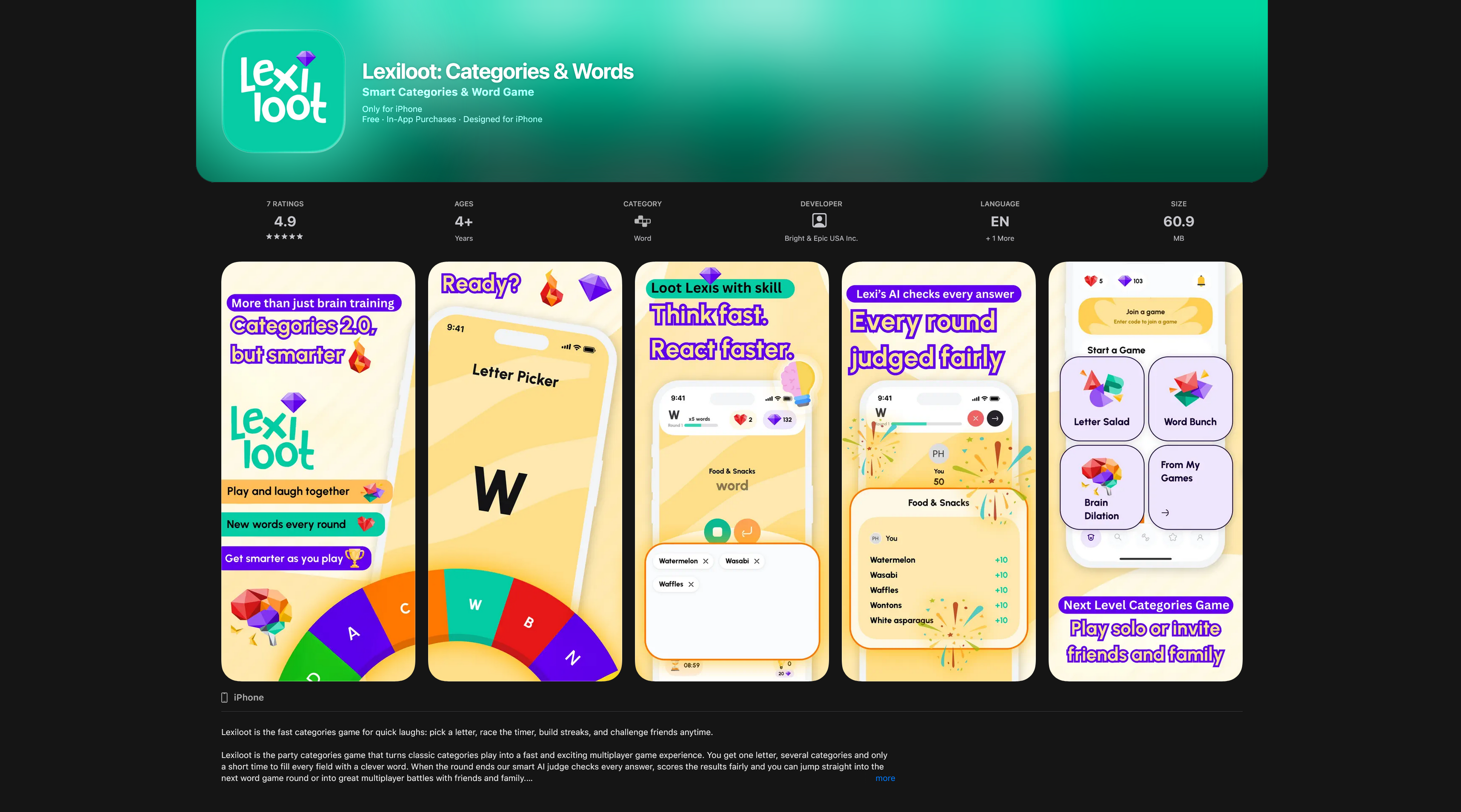
We also share evidence-backed strategies and research on games in education so you can understand the “why” behind every feature we build. Whether you are a parent looking for something your kids will actually enjoy, a teacher wanting real classroom data, or a gamer who wants smarter challenges, Lexiloot gives you a premium experience without a monthly subscription. Pay once, play and learn for as long as you want.
Frequently asked questions
Is there a single app called Premium Word Practice?
No, multiple vocabulary apps offer premium features, but there is not one dominant brand by this exact name. The term describes a category of upgraded tools, not a single product.
What do you get with premium word practice?
Premium features typically include more words, adaptive challenges, progress tracking, and social or multiplayer modes. Advanced modes and reporting tools are standard in most quality premium vocabulary apps.
Who benefits most from premium word practice?
Both casual gamers and educators gain real value. Gamers enjoy better challenges and social competition, while teachers benefit from faster vocabulary gains and classroom insights. Given that vocabulary skills drive 64% of reading comprehension, learners of all types stand to gain.
How do I pick the best premium vocabulary app?
Compare your learning goals against each app’s feature set, try a free demo, and check the price model carefully. Selection depends on individual needs, so avoid choosing by price or popularity alone.

