


TL;DR:
- Premium brain training provides full access to personalized workouts, extensive game libraries, and detailed progress analytics.
- While it improves practiced skills like memory and vocabulary, research shows limited transfer to broader real-life cognition.
- Combining structured app use with social word games enhances motivation, vocabulary retention, and lasting cognitive benefits.
Most mobile gamers have heard the pitch: pay a little more each month and your brain gets sharper, your vocabulary grows, and your focus improves. It sounds almost too good to be true. And honestly, for many users, the reality of premium brain training is a mix of genuine benefits and overstated promises. This guide breaks down exactly what you get when you upgrade, what the science actually says about cognitive gains, and how blending premium apps with social word gameplay gives you the best shot at real, lasting improvement.
Table of Contents
- What is premium brain training?
- Features and gameplay: What do you actually get?
- Cognitive skills and real-world impact: Hype vs. evidence
- Social and multiplayer brain training: Adding fun and competition
- Getting the most from premium brain training apps
- Why premium brain training matters and what most reviews miss
- Try fun category and word games for smarter play
- Frequently asked questions
Key Takeaways
| Point | Details |
|---|---|
| Premium unlocks | Paid subscriptions grant access to all games, detailed analytics, and ad-free experiences. |
| Social options | Blending social play with training apps enhances motivation and vocabulary gains. |
| Real-world impact | Most cognitive improvements occur in the practiced areas but rarely transfer to unrelated skills. |
| Value for users | Premium is best for those who value routine, feedback, and distraction-free gameplay. |
What is premium brain training?
Premium brain training means paying for full access to a cognitive training app, usually through a monthly or yearly subscription. The free versions of most apps give you a taste: a few games, limited plays per day, and basic stats. Upgrading removes those limits and opens up the full experience.
Here is a quick look at what leading apps charge:
| App | Monthly cost | Annual equivalent |
|---|---|---|
| Lumosity | $12/mo | ~$60/yr |
| Elevate | $10/mo | ~$48/yr |
| BrainHQ | $14/mo | ~$96/yr |
| Peak | ~$7/mo | ~$35/yr |
Premium brain training offers personalized daily workouts with full game access, analytics, and no ads, priced between $7 and $14 per month. That range puts it in line with a streaming service, which helps explain why millions of users consider the upgrade.
What does premium actually unlock? Here are the core features you gain:
- Full game library: 40 or more cognitive games covering memory, logic, processing speed, vocabulary, math, and attention
- Personalized daily workouts: the app selects games based on your weak spots and goals
- Advanced analytics: detailed charts showing your progress over days, weeks, and months
- Ad-free play: no interruptions during timed exercises
- Offline access: practice without a data connection
- Tailored difficulty: games adjust to your current skill level automatically
For mobile gamers and learners, the appeal is clear. You get a structured, distraction-free environment that feels more like a real training program. Getting familiar with key brain training terms before you start helps you understand what each game is actually building. The vocabulary game terminology used across apps can feel confusing at first, but once you know the difference between working memory and processing speed, you can choose games that match your actual goals.
Features and gameplay: What do you actually get?
Once you understand what premium unlocks, it is critical to see how the experience and features actually change day to day for users.
The biggest shift is adaptive difficulty. In free versions, games often stay at a fixed level or progress very slowly. Premium versions adjust in real time. If you nail three rounds of a memory sequence game, the next round adds more items. If you struggle with a grammar challenge in Elevate, the app serves you more of that type until your score improves. This is what makes the experience feel like training rather than just playing.
Premium users get access to personalized adaptive games, daily workouts, detailed progress insights, and no ads, compared to limited plays in free versions. That difference matters more than it sounds, because interrupted or capped sessions break the habit loop that makes training effective.
Here is a comparison of free versus premium features across top apps:
| Feature | Free version | Premium version |
|---|---|---|
| Daily game limit | 3 to 5 games | Unlimited |
| Adaptive difficulty | Basic | Full adaptive engine |
| Progress analytics | Minimal | Detailed charts |
| Ad interruptions | Yes | None |
| Offline play | No | Yes |
| Personalized workouts | No | Yes |
A typical premium workout session looks like this:
- Open the app and view your personalized daily workout (usually 3 to 5 games)
- Complete a warm-up game targeting your weakest skill area
- Move through vocabulary, logic, and focus games in sequence
- Review your performance dashboard after the session
- Compare your score against your personal best or friends on the leaderboard
Pro Tip: Set a consistent time each day for your workout, ideally morning, when your working memory is freshest. Even 10 minutes daily beats an hour once a week for building all-age brain training habits that stick.
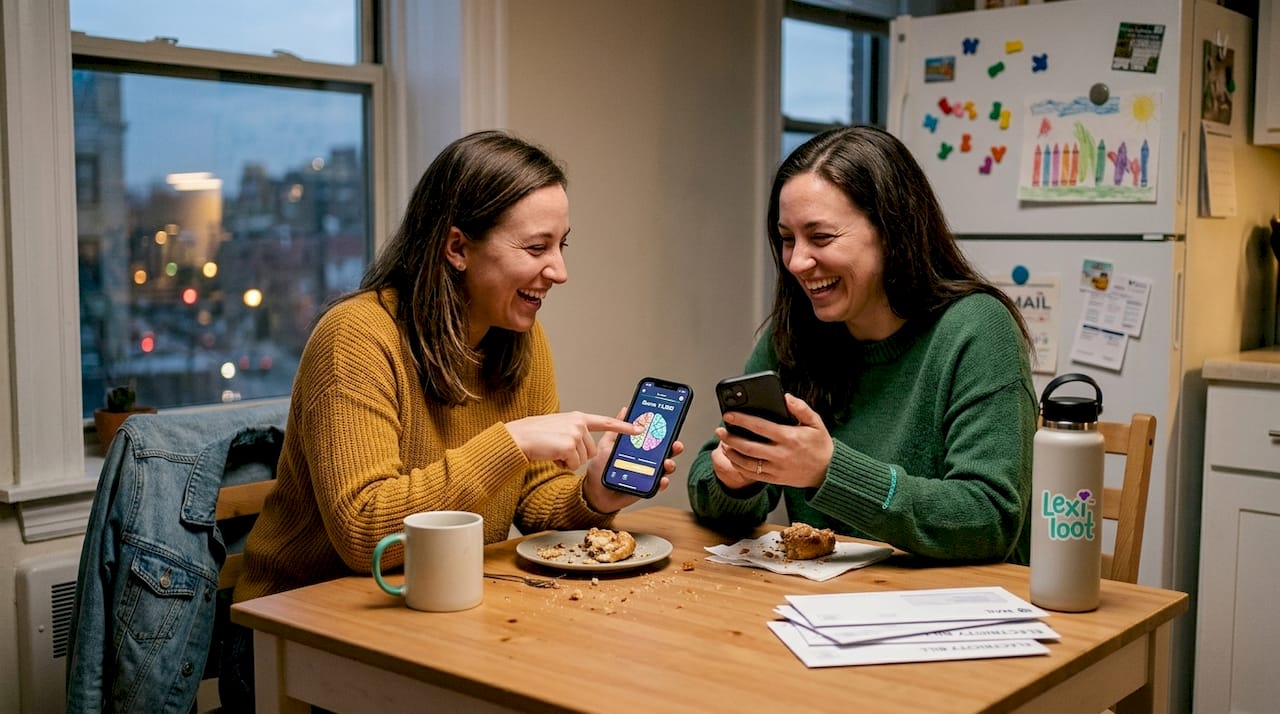
The social comparison features in premium versions also add motivation. Seeing your score improve week over week, or watching a friend edge ahead on the leaderboard, keeps you coming back. That competitive spark is something free versions rarely offer in full.
Cognitive skills and real-world impact: Hype vs. evidence
While features matter, the real question is whether upgrading actually sharpens your mind or just boosts your game scores.
The honest answer is: it depends on what you measure. Brain training apps are very good at making you better at brain training apps. You practice a memory game, you get better at that memory game. This is called the practice effect, and it is real and measurable.
The harder question is whether those gains transfer to real life. Can better scores in a word-recall game help you remember names at work? The evidence on transfer is mixed at best. Most peer-reviewed studies find that cognitive training improves the specific skills practiced but shows limited transfer to broader, unrelated thinking tasks.
“Apps build skills practiced in games but show limited transfer to broader cognition. BrainHQ has the strongest evidence base; Lumosity showed real-world ADHD gains in specific populations.”
Here is what the research actually supports:
- Processing speed: BrainHQ has over 200 published studies showing genuine improvements in how quickly the brain processes information, especially in older adults
- Vocabulary recall: Apps like Elevate show measurable gains in word knowledge and reading comprehension for consistent users
- Attention and focus: Short-term improvements are documented, but long-term real-world impact is still debated
- Working memory: Gains are task-specific; improvement in one memory game does not reliably improve memory in daily life
For users focused on vocabulary and cognition boost, the evidence is actually more encouraging. Vocabulary is a skill that transfers naturally because words you learn in a game are the same words you use in conversation, reading, and writing. That direct connection makes vocabulary-focused brain training more practically useful than abstract logic puzzles.
The takeaway: go in with realistic expectations. Premium brain training will make you sharper at the skills you practice. Pair it with reading, social word games, and real conversation to maximize how those gains show up in everyday life.
Social and multiplayer brain training: Adding fun and competition
Brain training is not all stats and solo play. Adding friends and social elements changes how you learn and enjoy the experience.
Most premium brain training apps are built around single-player gamification. Elevate and Peak do this well, using streaks, badges, and leaderboards to keep you motivated. But they are not truly multiplayer. You compare scores after the fact rather than competing live.
For real-time social gameplay, multiplayer vocabulary apps like Words With Friends, Wordox, and Ruzzle fill the gap. These apps put vocabulary recall under pressure, which is actually one of the best ways to strengthen word knowledge. When you have to find a high-scoring word quickly while your opponent is also playing, your brain retrieves vocabulary faster and more reliably over time.
Here are some tips for finding brain training that fits your gaming style:
- If you prefer structured daily practice, Elevate or Peak premium suits you well
- If you love live competition, Words With Friends or a platform like Lexiloot gives you real-time word battles
- If you want family-friendly options, look for apps that allow multiple profiles and age-appropriate difficulty
- If your goal is vocabulary growth specifically, prioritize word-focused games over abstract logic apps
Language games for social growth are especially powerful because they combine vocabulary recall with emotional engagement. You remember words better when there is a social context attached to learning them. Engaging vocabulary games that involve friends or family create that context naturally.
Pro Tip: Mix your premium app sessions with at least two or three social word game sessions per week. The combination of structured training and live competition builds vocabulary faster than either approach alone. You can find ideas on how to gamify vocabulary learning to keep the experience fresh.
Getting the most from premium brain training apps
So, how do you turn premium app access into real cognitive wins? Follow these guidelines.
Consistency is the single most important factor. Daily use, even for just 10 to 15 minutes, produces better results than occasional long sessions. Over 90% of Elevate users report vocabulary and math improvement, and 93% feel sharper after consistent use. That stat reflects habit, not just access.
Here is a practical approach to building a sustainable premium brain training routine:
- Set a daily reminder at the same time each day, morning or lunch works well
- Choose games that match your goals: vocabulary and grammar games for language learners, logic and memory games for general cognitive fitness
- Track your progress weekly: look at your analytics dashboard every Sunday to spot patterns
- Mix in social play: schedule two multiplayer word game sessions per week alongside your solo training
- Reward consistency: celebrate streaks, not just high scores, to reinforce the habit
- Adjust your game mix every month: rotate in new game types to prevent the brain from going on autopilot
Pro Tip: If you feel stuck on a plateau, switch to a game type you find harder rather than sticking with your strongest area. Growth happens at the edge of your comfort zone, not in the middle of it. Resources like teaching word games can give you fresh strategies to apply.
Blending premium app training with social word games is the most effective long-term strategy. Solo training builds the foundation; social play tests and reinforces it under real conditions.
Why premium brain training matters and what most reviews miss
Most app reviews spend their energy comparing feature lists: how many games, whether the interface is clean, whether the analytics look impressive. That misses the point entirely.
What actually determines whether premium brain training works for you is not the number of games unlocked. It is whether the experience keeps you coming back. Engagement is the real variable. A free app you use every day will outperform a premium app you open twice a month.
The reviews also rarely talk about the social dimension. Structured solo training is valuable, but it is the combination of routine practice and social word play that produces the most durable vocabulary and cognitive gains. When you connect word games for brainpower with real social interaction, the learning sticks in a way that solo drills simply cannot replicate.
Our take: premium brain training is worth it if you treat it as one part of a broader habit, not a magic solution. Pair it with social gameplay, stay consistent, and focus on vocabulary-rich games where the skills transfer directly to real life. That balanced approach beats any single app, free or paid.
Try fun category and word games for smarter play
Ready to take your brain training to new levels? Discover the best ways to combine premium apps with Lexiloot’s powerful language games.
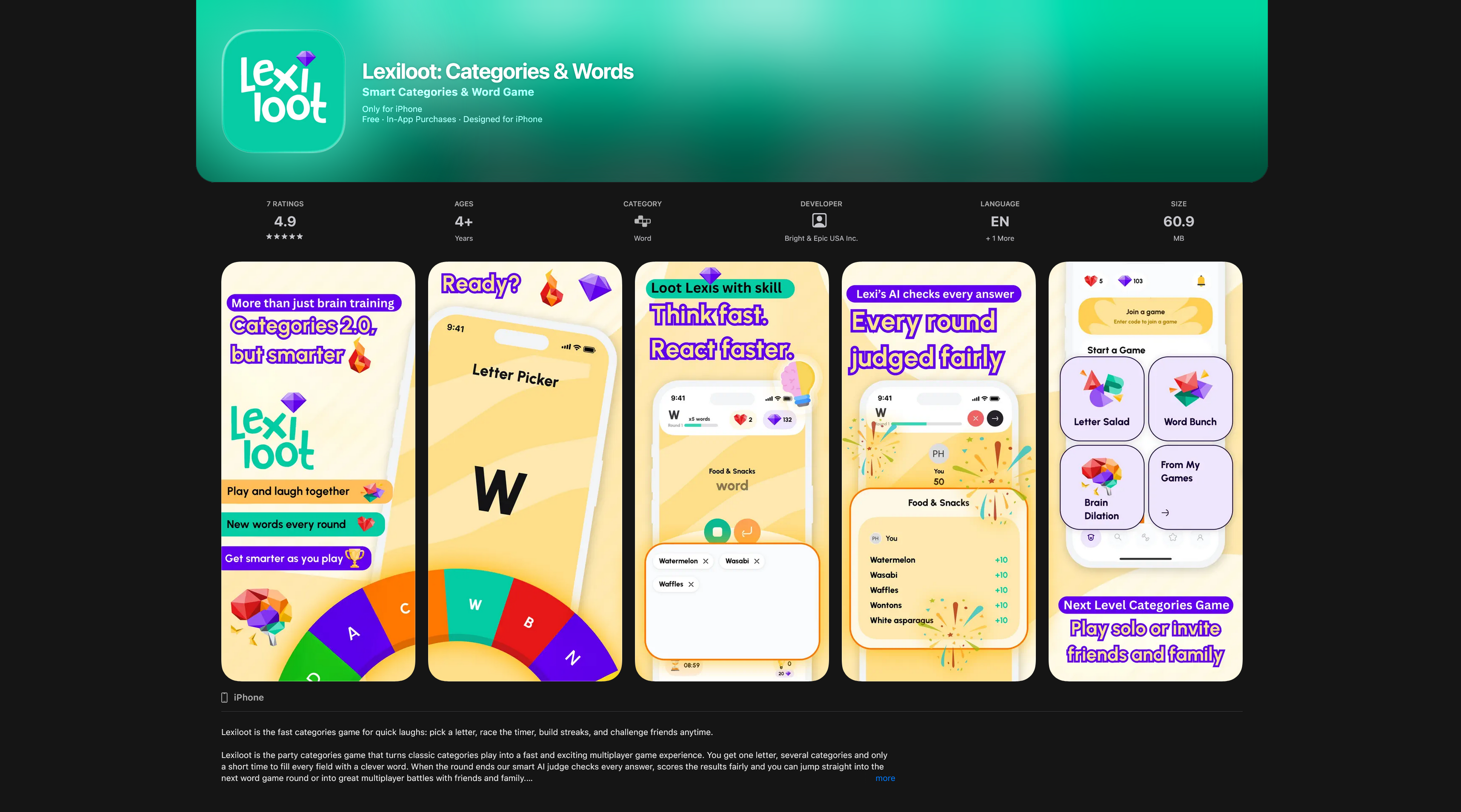
Lexiloot brings together category challenges, word puzzles, and multiplayer vocabulary battles in one social gaming platform. It is designed to complement the structured training you get from premium apps by adding the competitive, social layer that makes vocabulary growth stick. Whether you want to challenge friends, practice with family, or sharpen your word skills in a classroom setting, Lexiloot fits right into your routine. Explore word puzzle varieties to find your best fit, level up with advanced word puzzle strategies, or browse our guide to language games for cognitive growth to build a smarter play habit today.
Frequently asked questions
Is paying for premium brain training apps worth it?
Premium apps offer more features, analytics, and motivation tools, but cognitive gains are limited to the skills you practice. For many users, the ad-free experience and structured workouts alone justify the cost.
Which brain training app is best for vocabulary and social play?
Elevate and Peak lead for structured vocabulary practice, while Words With Friends and Wordox add real-time social competition that makes word learning more engaging and memorable.
How much does premium brain training cost?
Most subscriptions range from $7 to $14 per month, with annual plans typically cutting the monthly rate by 40 to 60 percent.
Do brain training games really make you smarter?
They reliably improve the skills you practice, like vocabulary recall or focus, but research shows weak transfer to unrelated real-life thinking tasks beyond the games themselves.
What is the difference between brain training and vocabulary games?
Brain training covers a broad mix of memory, logic, and processing skills, while vocabulary games focus specifically on word knowledge, spelling fluency, and language skills that transfer directly to reading and communication.

