


TL;DR:
- Peer challenges in mobile word games foster vocabulary growth, problem-solving skills, and sustained motivation through social interaction. They provide real-time and asynchronous competition, encouraging organic learning and emotional investment that surpass solo play. To maximize their benefits, players should focus on growth, set personalized goals, and balance competitive and collaborative formats.
Most mobile word game fans assume peer challenges are simply about outscoring opponents. You finish a round, see who won, and move on. But that framing misses the bigger picture entirely. Peer challenges are actually one of the most effective ways to build vocabulary, sharpen problem-solving speed, and sustain long-term motivation in ways that solo play simply cannot match. This guide explains exactly how peer challenges work, why they are so powerful for learning and engagement, and how you can structure them to get the most out of every match you play.
Table of Contents
- What is a peer challenge in games?
- Why peer challenges boost motivation and skill
- The zero-sum problem and alternatives
- Practical strategies to maximize peer challenge benefits
- Why peer challenge works — if you do it your way
- Connect with games that build skills
- Frequently asked questions
Key Takeaways
| Point | Details |
|---|---|
| Peer challenges defined | Inviting real people to compete in turn-based games drives higher engagement and skill-building. |
| Motivation boost | Social competition and gamification elements increase motivation more than playing solo. |
| Personal improvement | Balancing competition with self-challenges keeps learning fun and avoids demotivation. |
| Practical strategy matters | Structuring peer challenges with themed rounds or cooperative play maximizes learning and enjoyment. |
| Expert insight | True progress happens when you combine friendly rivalry with a focus on personal growth. |
What is a peer challenge in games?
A peer challenge in mobile word games is a structured competition between two or more real people, usually friends, family members, or matched opponents. Instead of playing against a computer, you are up against someone who thinks, adapts, and responds the way you do. That simple shift changes everything about how you approach the game.
In casual mobile word games like Word Chums, Words With Friends, and Wordfeud, peer challenges involve inviting friends or random opponents to turn-based word building on a board, scoring points for words placed on bonus tiles. Each player takes turns placing letter tiles to form words, trying to maximize points by landing on double or triple letter and word squares. The board layout, tile draws, and turn order all factor into strategy.
The mechanics of these games include real-time or async multiplayer, leaderboards, chat for social interaction, push notifications for moves, and features like team modes or randomized boards for variety. Asynchronous (async) play means you do not need to be online at the same time as your opponent. You make a move, the app notifies them, and they respond when ready. This flexibility makes peer challenges easy to fit into a busy schedule.
Here is how peer challenges compare to other play styles across a few key dimensions:
| Feature | Solo play | AI opponent | Peer challenge | Team mode |
|---|---|---|---|---|
| Social interaction | None | None | High | Very high |
| Motivation to improve | Low | Medium | High | High |
| Vocabulary pressure | Low | Medium | High | Medium |
| Flexibility | Full | Full | Partial | Partial |
| Learning feedback | Self-driven | Automated | Peer-driven | Collaborative |
Key features you will find in most peer challenge formats:
- Invite system: Send a challenge via username, contact, or social media link
- Turn notifications: Push alerts keep both players engaged across multiple days
- In-game chat: Quick messages or emojis add a social layer to every match
- Leaderboards: Track standings across all your active games at once
- Randomized boards: Some platforms shuffle tile placements so every game feels fresh
The vocabulary and brainpower benefits that come from playing against real people are meaningfully different from playing alone. When a real person places an unusual word you have never seen, your brain naturally gets curious. You look it up. You remember it. That kind of organic vocabulary learning is hard to replicate with an AI opponent that does not surprise or challenge you the same way. Understanding social gaming and word skills together helps explain why peer formats are so consistently popular with word game fans of all ages.
Why peer challenges boost motivation and skill
Human competition is motivating in a way that AI competition rarely is. When you know a friend or family member is waiting for your move, you actually think harder about your options. You push yourself to find a better word. That small social pressure is a powerful learning tool.

Research on gamification in educational settings consistently points in the same direction. Gamification boosts motivation in learning contexts, though the quality of that boost varies depending on how the game is structured. Leaderboards, achievements, and real-time feedback all contribute to sustained engagement, and peer challenges naturally include all three.
Here is a practical comparison of how motivation and skill growth tend to look across different game modes:
| Game mode | Motivation level | Vocabulary growth | Cognitive speed | Long-term retention |
|---|---|---|---|---|
| Solo puzzle | Low to medium | Low | Low | Low |
| AI opponent | Medium | Medium | Medium | Medium |
| Peer challenge | High | High | High | High |
| Team cooperative | High | Medium to high | Medium | High |
The game impact evidence is clear: social formats outperform individual formats for sustained engagement and vocabulary development. The reason is straightforward. When you have an audience, even an audience of one friend, you invest more effort. That effort builds real skill over time.
Here is why peer challenges specifically accelerate skill development:
- Social accountability makes you show up consistently rather than abandoning the game after a few days
- Vocabulary pressure pushes you to think of words you would not normally try in solo play
- Opponent modeling means you study how others play and learn from their word choices
- Emotional investment in the outcome keeps your attention sharper during each turn
- Immediate feedback on your word choices (via scoring) teaches you what works and what does not
“Gamified learning that involves real social stakes, not just points or badges, produces deeper motivation and better retention of new vocabulary and problem-solving strategies.”
Gamified learning engagement is at its strongest when the stakes feel real but friendly. Peer challenges hit that exact balance. You want to win, but losing to a friend is not devastating. That emotional safety allows you to take vocabulary risks, like trying an unusual word, that you might avoid in a more stressful context.
Pro Tip: Play with friends for fun, but set a small personal goal for each match, such as trying at least one word you have never played before. This keeps peer challenges educational rather than purely competitive.
You can explore top games for vocabulary to see which platforms structure peer challenges in the most skill-friendly ways.
The zero-sum problem and alternatives
Here is the part most gaming guides skip over. Not every peer challenge is equally positive for every player. Competitive formats are, by definition, zero-sum: one person wins and one person loses. For players who consistently lose to stronger opponents, that cycle can become discouraging rather than motivating.
Zero-sum competition can demotivate lower performers over time. When the gap between players is too wide, the weaker player stops trying creative moves and just goes through the motions. The learning stops. The fun fades. This is a real problem, and it is worth taking seriously.
The good news is that there are easy ways to restructure how you approach peer challenges so that growth becomes the goal, not just the win.
Key ways to shift from pure competition to balanced growth:
- Track your personal bests instead of just your win record. Longest word played, highest single-move score, or fastest response time are all meaningful progress markers.
- Celebrate vocabulary milestones by noting new words you used for the first time and looking up their definitions after the match.
- Choose matched opponents when possible. Playing someone at your skill level keeps the challenge productive rather than frustrating.
- Mix team modes and solo challenges throughout your week so you are not always in a win-or-lose mindset.
- Set friendly, collaborative challenges with opponents, such as “let’s both try to play at least one six-letter word this game.”
“While engaging, peer competition can be zero-sum and counterproductive for motivation in some educational settings. Balance with cooperative or self-improvement elements for lasting results.”
The self-improvement challenge model is particularly effective. Instead of asking “did I beat my opponent?” you ask “did I play better than I did last week?” That reframe keeps motivation high regardless of the match outcome. You can find competition workflow tips that help you build this kind of progress-focused mindset into your regular play habits.
Pro Tip: Set three personal weekly goals before you start a new round of challenges. Examples might include: place a word worth 30 or more points, use a word from a category you find difficult, or respond to all moves within 12 hours. These concrete targets give you something to celebrate beyond just the final score.
Teachers and parents who use word games in learning settings will find these alternatives especially useful. Rather than always pitting students or kids against each other, teaching word games works best when you build in self-improvement checkpoints alongside peer challenges.
Practical strategies to maximize peer challenge benefits
Now that you understand both the strengths and the limitations of peer challenges, here are concrete strategies that help you structure them for genuine skill growth and social enjoyment.
Five steps to create a balanced, motivating peer challenge:
- Choose your opponent thoughtfully. Match with someone close to your skill level or someone slightly stronger. The gap should stretch you without overwhelming you.
- Set a theme or focus for the challenge. For example, agree that both players will try to prioritize words from a specific category, like animals, geography, or food. This adds a learning layer on top of competition.
- Use the chat feature for encouragement. After your opponent plays an impressive word, acknowledge it. This builds a collaborative spirit even inside a competitive game and makes both players more likely to keep playing.
- Review your stats after every match. Most platforms show your average word length, highest scoring move, and total points per game. Use these numbers to track improvement over time rather than just wins and losses.
- Alternate between team modes and head-to-head play. Team challenges reduce the all-or-nothing pressure and encourage cooperative vocabulary thinking, which actually builds different skills than solo competition.
The types of skill-building word games you choose matter too. Category-based formats, speed challenges, and themed rounds all create different cognitive demands and vocabulary pressures. Rotating between them keeps your brain engaged and prevents the kind of automatic, low-effort play that can settle in when you stick to one format too long.
Additional strategies for sustained peer challenge success:
- Create a “me vs. me” challenge by comparing your current game stats to your stats from a month ago. Screenshot your weekly summary and use it as a personal benchmark.
- Play across different times of day. Some players find they generate more creative vocabulary when playing in the morning. Others perform better in the evening. Notice your own patterns.
- Invite a mix of opponents, including beginners, peers, and stronger players, to get different kinds of vocabulary exposure and challenge types.
The multiplayer cognitive growth that comes from varied peer challenge formats is well worth the small amount of planning it takes to set them up properly.
Pro Tip: Build a “challenge log” in your phone’s notes app. After each match, write one new word you learned and one move you wish you had played differently. This five-second habit accelerates vocabulary recall and game strategy over weeks.
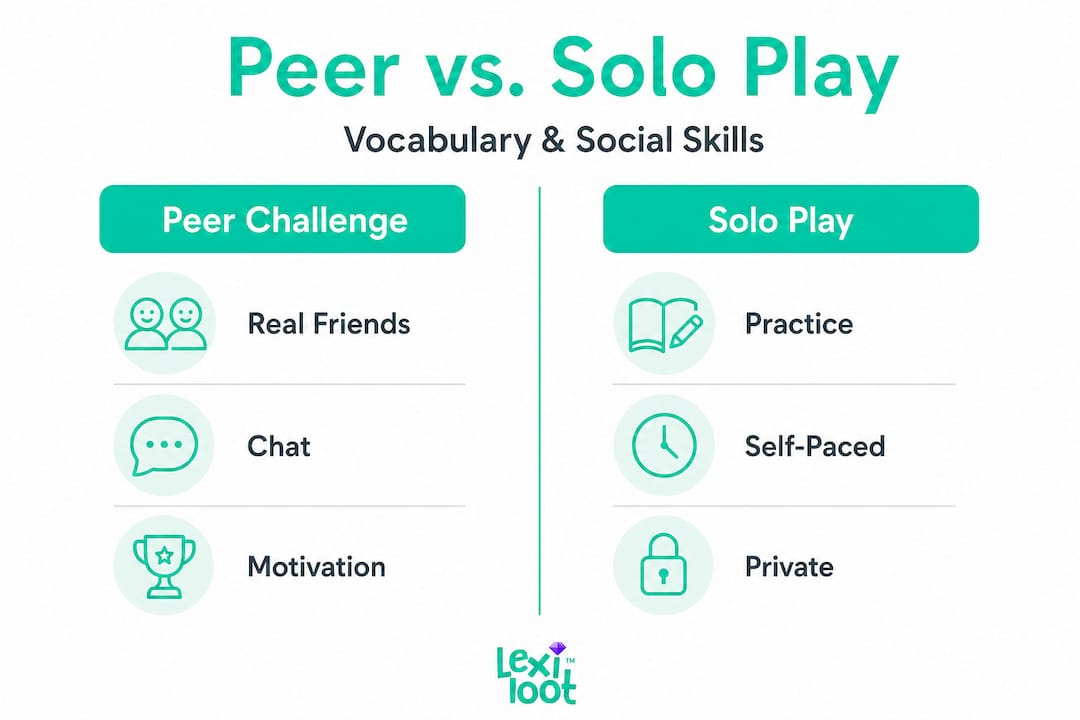
Why peer challenge works — if you do it your way
Here is the contrarian truth that most gaming content does not say clearly enough: peer challenges are not automatically better than solo play. They are better when you use them intentionally.
Most casual gamers jump into peer challenges purely for the social rush of competition. That is a fine starting point. But players who consistently grow their vocabulary and cognitive skills over time are the ones who treat each match as a data point rather than just a verdict. They are not obsessed with winning. They are curious about improving.
The win-or-lose framing is actually the biggest obstacle to real skill growth in peer challenges. When you define success as “I beat my friend,” you set yourself up for inconsistent motivation. Some weeks you win, some weeks you lose, and your investment in the game rises and falls with your record. That is not a reliable path to multiplayer cognitive growth.
The more effective mindset treats peer challenges as mirrors. Each match reflects your current vocabulary range, your strategic thinking, and your response to pressure. A loss against a stronger opponent tells you exactly where your gaps are. That is useful information, not a reason to feel discouraged.
“Balance peer competition with self-improvement for lasting skill gains. The goal is not to beat your friend every time. The goal is to be a better player next month than you are today.”
Competition that demotivates does so because players focus entirely on outcome rather than process. When you shift focus to process, including how you approach each turn, what new words you tried, and how your scores trend over time, peer challenges become one of the most effective vocabulary and cognitive training tools available in mobile gaming.
Pro Tip: After every match, spend 60 seconds reviewing your stats. Look for one thing you did well and one area where you left points on the board. This brief reflection habit builds the growth mindset that separates players who improve steadily from those who plateau.
Connect with games that build skills
You have got the strategies, the mindset, and the mechanics. The next step is finding the right games and resources to put it all into practice.
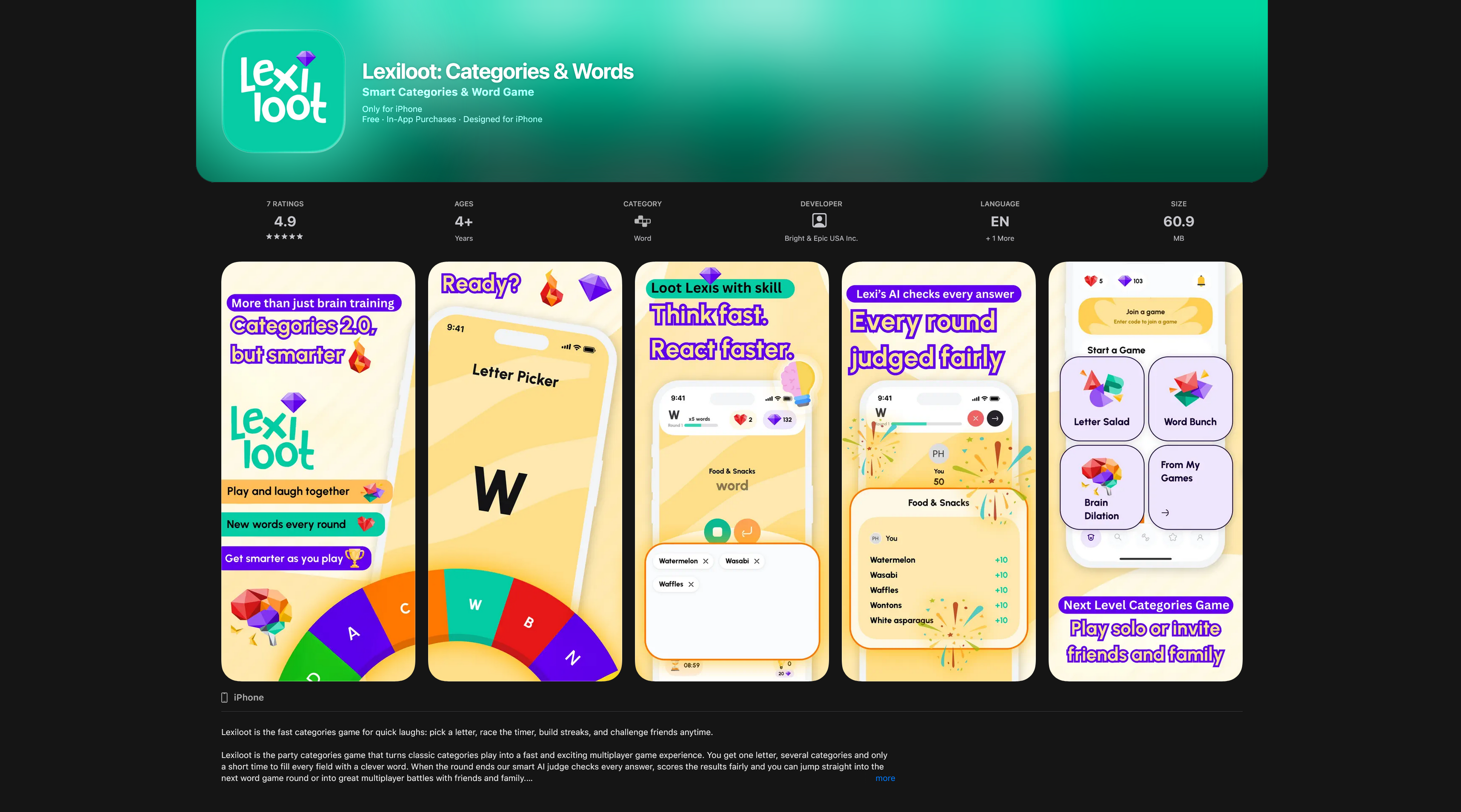
Lexiloot is built specifically for players who want more than just competition. It combines word challenges, category games, vocabulary building, and cognitive training in one social platform designed to grow your skills over time. Whether you want to challenge a friend, host a group battle, or track your personal vocabulary progress, Lexiloot gives you the tools to do it in a format that is genuinely fun. Explore creative word game examples for fresh challenge ideas, check out the full guide to boost vocabulary and brainpower through play, or try the step-by-step approach to fun games for vocabulary growth to level up your game starting today.
Frequently asked questions
How do peer challenges differ from solo play in word games?
Peer challenges introduce real social competition and interaction that solo play cannot replicate, which significantly increases motivation and vocabulary pressure. Async and real-time multiplayer formats with leaderboards and chat keep players more consistently engaged than playing alone.
Can peer challenges help me improve my vocabulary?
Yes, because playing against real opponents exposes you to words and strategies you would not encounter in solo play. Turn-based peer play on a shared board naturally pushes you to think of less familiar words to maximize your score.
What are the potential downsides of peer challenges?
Competitive formats can discourage players who consistently lose to much stronger opponents. The zero-sum nature of competition makes personal improvement challenges, comparing yourself to your own past performance, a healthier alternative for some players.
Is there scientific evidence that peer challenges work?
Gamification in educational contexts consistently boosts motivation, though specific benchmarks for word game peer challenges are still limited. The broader research on social learning and competitive engagement strongly supports the value of peer-based formats for vocabulary development.

