


TL;DR:
- Many mobile word gamers mistakenly believe that non-subscription games are always free, leading to surprises when charges appear. Non-subscription models include pay-to-play and free-to-play without recurring fees, offering control and stress-free practice for vocabulary building. Choosing these models promotes consistent, autonomous brain training and fair social play without the pressures of ongoing subscriptions.
Most mobile word gamers assume that “non-subscription” simply means “free.” That’s one of the most common misconceptions in mobile gaming today, and it leads to real frustration when unexpected charges appear. Understanding what is non-subscription gaming helps you choose word games and brain-challenge apps that match your learning goals without locking you into recurring fees. This guide walks through every major model, clears up the confusion, and gives you the tools to find the best vocabulary and cognitive training games for your needs.
Table of Contents
- What non-subscription gaming means: models and definitions
- Why non-subscription matters for mobile word and brain-challenge games
- Common misconceptions and nuances of non-subscription gaming on mobile
- Comparing non-subscription and subscription gaming models for mobile word players
- How to choose non-subscription word and brain games that boost vocabulary and social fun
- Why non-subscription gaming offers unique advantages for brain-training word gamers
- Explore Lexiloot: your non-subscription categories game for fun brain training
- Frequently asked questions
What non-subscription gaming means: models and definitions
Non-subscription gaming is more specific than most people realize. The core definition is simple: non-subscription means no recurring fee for access. You are not billed monthly or annually just to keep playing. But that leaves room for two very different models, and knowing the difference matters.
Pay-to-play (buy-to-play): You purchase the game once. After that, the base game is yours with no ongoing fee. Some games offer optional content expansions, but those are one-time purchases, not subscriptions.
Free-to-play without subscription: You download and start playing at no cost. The game earns money through optional in-game purchases, cosmetics, or convenience features. No membership is required.
These two models are both non-subscription. What sets them apart from subscription gaming is important to grasp:
- Subscription gaming charges a recurring monthly or annual fee, often bundling access to a library of games.
- Non-subscription models give you access without that ongoing commitment.
- Ad-free gameplay for word games is one feature that pay-to-play and premium non-subscription upgrades often include, making the learning experience smoother.
For mobile word gamers focused on vocabulary recall and cognitive challenges, this distinction shapes everything from how you budget your gaming time to how consistently you can practice category thinking and spelling fluency.
Why non-subscription matters for mobile word and brain-challenge games
Understanding the definitions is one thing. Feeling why they matter in practice is what actually changes how you choose games.
Mobile word game players primarily work within two non-subscription models: pay-to-play or free-to-play with optional purchases. Each affects your brain-training routine differently.

When a game sits behind a subscription paywall, you feel a quiet pressure to keep playing just to justify the fee. That pressure is the opposite of what healthy cognitive training looks like. Brain training works best when it is consistent and low-stress, not guilt-driven.
Here is how non-subscription models support vocabulary building and cognitive growth:
- Steady access without pressure: You can pick up a non-subscription word game after a break without worrying about wasted subscription fees.
- Full control over spending: Optional purchases are your choice, not a monthly obligation.
- Focused learning sessions: Without subscription mechanics pushing daily engagement streaks, you can practice vocabulary at your own pace.
- Social play on your terms: Multiplayer features in non-subscription games let you compete and collaborate without both players needing active memberships.
- Games built around word games for vocabulary growth and social competition are most effective when players are not distracted by fee-related stress.
Pro Tip: Before downloading any mobile word game, check whether the optional purchases affect your vocabulary progress or just cosmetics. If the game locks core word challenges behind repeated purchases, that is a red flag even without a subscription.
Multiplayer educational word games thrive specifically in non-subscription environments because friends and family can join without everyone paying a membership fee first.
Common misconceptions and nuances of non-subscription gaming on mobile
With the benefits clear, let’s clarify common misconceptions and the nuanced realities behind non-subscription mobile gaming.
Non-subscription does not mean zero payments. This is the biggest misunderstanding. Here is a numbered breakdown of the most common misconceptions and what is actually true:
- “Non-subscription means free” — Not always. Pay-to-play games require an upfront purchase. Free-to-play is free to start, but may include purchases.
- “No subscription means no recurring charges ever” — This is mostly true, but some games use auto-renewing season passes that blur the line. Always read the store listing carefully.
- “Microtransactions make a game subscription-like” — Not exactly. Microtransactions are optional one-time purchases. They are not recurring fees. The difference matters for budgeting.
- “DLC means I am paying a subscription” — DLC (downloadable content) is a one-time expansion cost, not a recurring fee. It adds content rather than renting you access.
- “No-install minigames are always truly free” — No-install minigames often rely on rewarded ads and in-app payments, which shapes the session economy differently than standard pay-to-play.
Important: Many non-subscription mobile games monetize through consumables, premium currency, or time-gating despite having no recurring fee. Always check the store listing and watch how the game paces progression before spending money.
The nuance you really want to catch is time-gating. Some free-to-play word games let you play a certain number of rounds for free each day, then ask you to pay to unlock more. That is not a subscription, but it can feel like one if you rely on daily practice for vocabulary building.
Reviewing premium word practice options that are transparent about their model helps you stay in control of both your spending and your learning routine.
Comparing non-subscription and subscription gaming models for mobile word players
Having cleared up misunderstandings, let’s directly compare non-subscription and subscription models to help you decide which fits your gaming and learning style.
| Feature | Non-subscription | Subscription |
|---|---|---|
| Upfront cost | One-time or free | Low/none |
| Recurring fee | None | Monthly or annual |
| Game access | Owned or limited | Rented (bundled library) |
| Spending control | High | Predictable but ongoing |
| Learning pace | Fully self-directed | Can create pressure |
| Social access | Open for all players | May require shared membership |
| Optional purchases | Yes, one-time | Varies by service |
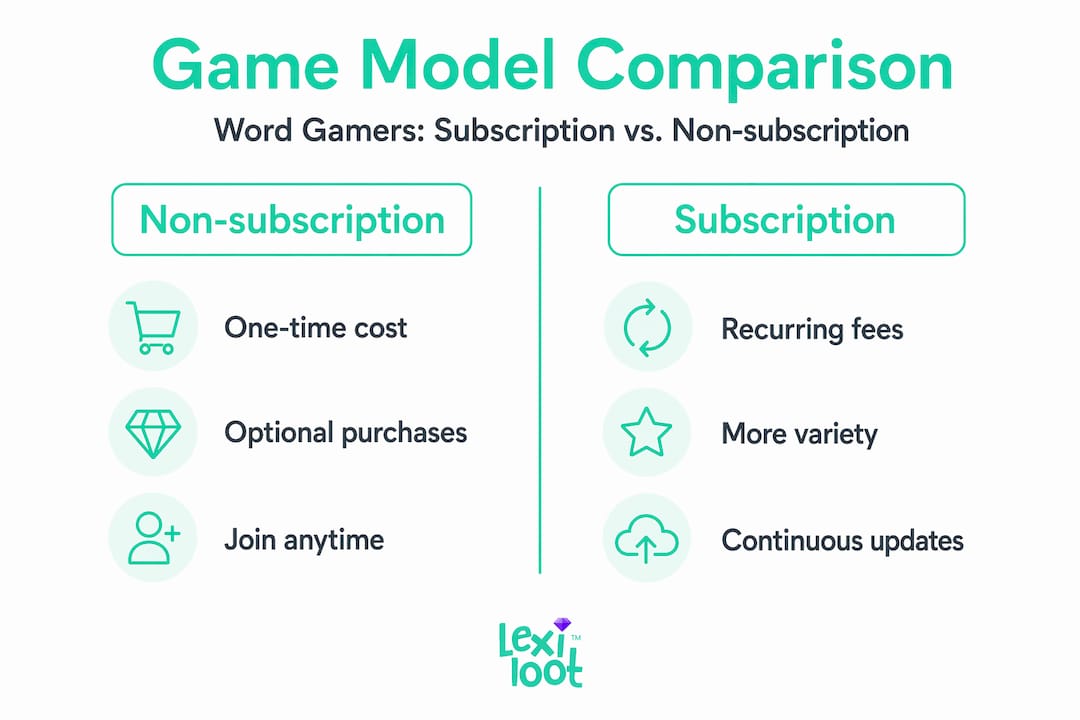
The table makes the trade-offs easy to see. Subscription services deliver variety, which is great if you want to explore many types of word games without buying each one. But variety is not the same as depth.
For vocabulary recall, category thinking, and brain training, depth usually wins over breadth. Playing one strong vocabulary game consistently will sharpen your word skills faster than rotating through a subscription library without focus.
Key considerations when comparing the two models:
- Subscription services can become expensive if you only use one or two games within the bundle.
- Non-subscription games often provide better word game trends in 2026 alignment, since standalone games update their vocabulary and challenge modes more directly in response to player feedback.
- Social leaderboards and multiplayer battles work more fairly in non-subscription games because everyone plays by the same rules without tiered membership advantages.
Pro Tip: Think about how often you play and whether a gap in playing would feel like “wasting” a subscription fee. If you tend to play in bursts or take breaks, non-subscription is almost always the smarter financial choice for cognitive training.
How to choose non-subscription word and brain games that boost vocabulary and social fun
With clear comparisons in mind, here’s how to pick non-subscription mobile word games that boost your skills and social fun.
The market for mobile word games is big, and not every non-subscription game is equally committed to vocabulary growth or fair play. These guidelines help you find the ones worth your time.
- Transparent monetization first: Look for games that clearly explain what is free and what costs extra. If you cannot figure out the model from the app store listing, that is a warning sign.
- Vocabulary depth matters: Choose games that go beyond simple three-letter puzzles. Look for category-based challenges, word association modes, and games that expand spelling fluency alongside vocabulary recall.
- Social multiplayer without a paywall: The best cognitive training happens when you compete and collaborate with others. Prioritize games where social gaming for word skills is built into the core experience, not gated behind extra fees.
- Ad-free or manageable ads: Ads break focus, which directly interrupts vocabulary recall during practice. Look for games that offer a one-time purchase to remove ads or that limit ads to natural break points.
- Leaderboards and brain challenges: Social motivation is one of the most effective tools for sustained cognitive engagement. Games with leaderboards encourage you to keep building vocabulary to stay competitive.
The most effective vocabulary trainer games share a common trait: they make optional purchases feel like genuine upgrades rather than mandatory steps to enjoying the game. If a game feels frustrating without paying, it is designed that way intentionally.
Pro Tip: Before committing to a game, play at least five to ten sessions at the free level. If you are enjoying the vocabulary challenge and social features without paying, that is a strong sign the game’s non-subscription model is genuinely player-friendly.
Look for games without subscription gates that still offer rich vocabulary challenges and optional event purchases as extras rather than necessities.
Why non-subscription gaming offers unique advantages for brain-training word gamers
Here is an honest perspective from working closely with mobile word gamers: the biggest advantage of non-subscription gaming is not financial. It is psychological.
Subscriptions create a hidden engagement pressure. When you pay monthly, your brain starts framing every session as an obligation rather than a choice. That shift matters more than most people expect. Cognitive training works best when your motivation is internal, driven by curiosity and the pleasure of getting smarter, not by guilt over a membership fee.
Non-subscription gaming puts the player back in charge. You decide when to play, when to stop, and when to invest in an upgrade. That autonomy aligns naturally with how vocabulary building and brain training actually work: in consistent, motivated sessions rather than forced marathons.
When experienced mobile word gamers describe why they prefer non-subscription models, the answer is almost always the same: “I play because I want to, not because I paid.” That feeling is not a small thing. It is the foundation of long-term cognitive improvement.
There is also a clarity of value that non-subscription models force. When you buy a game once or choose a specific upgrade, you ask yourself: is this worth it for my vocabulary and learning goals? That question keeps you focused on educational value rather than passively consuming content to justify a subscription.
Non-subscription gaming also supports authentic social play. Without subscription dependencies, you and a friend can both access the same game and compete fairly without checking whether both memberships are active. This matters for the kind of social word battles and leaderboard competitions that genuinely accelerate vocabulary growth.
The play-for-learning benefits are most powerful when the player is intrinsically motivated. Non-subscription models protect that motivation by removing the pressure that subscriptions quietly create.
Explore Lexiloot: your non-subscription categories game for fun brain training
If these insights resonate with you, Lexiloot is built around exactly this model. It is a pay-once, non-subscription mobile game that focuses on vocabulary building, category thinking, and social brain challenges without recurring fees.
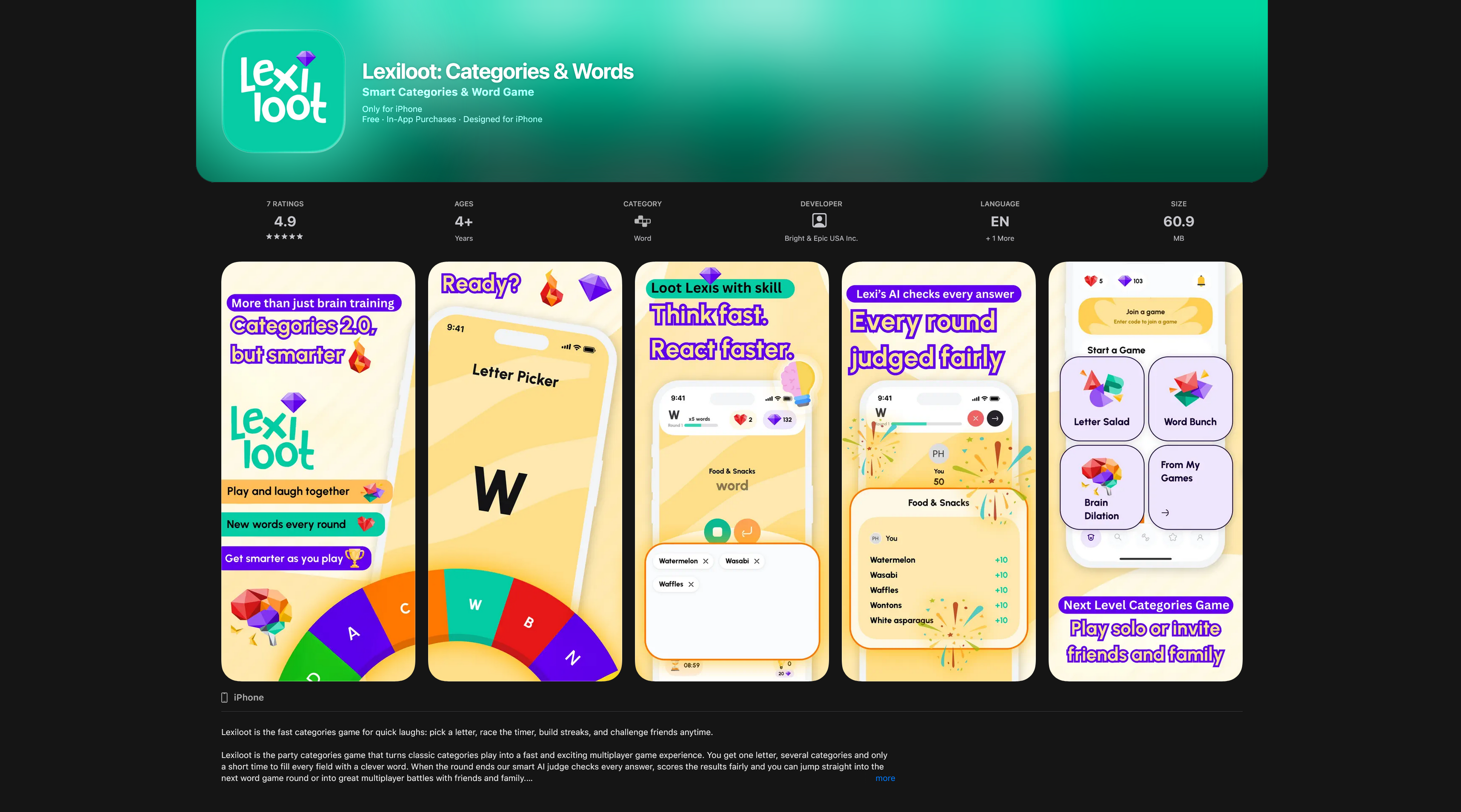
Lexiloot’s categories game challenges players to think across topics, recall words under pressure, and expand their vocabulary through social multiplayer battles and leaderboard competitions. The ad-free word game experience keeps your focus on learning rather than interruptions. You buy once and own full access. No monthly fee, no membership pressure. The optional premium upgrade adds deeper vocabulary practice and advanced brain training modes for players who want to go further, but the core game is genuinely complete without it. Invite friends, host word battles, and see how fast your vocabulary grows through social gaming with Lexiloot.
Frequently asked questions
What exactly does non-subscription gaming mean?
Non-subscription gaming means you don’t pay a recurring monthly or annual fee to access the game; instead, you either buy it once or play for free with optional in-game purchases but no membership required.
Are free-to-play games always non-subscription?
Often yes, free-to-play games are non-subscription because they have no upfront cost, making money through optional purchases instead of monthly fees, but you should always verify that no membership is needed to access the full experience.
Can non-subscription games still have in-app purchases?
Yes, many non-subscription games include in-app purchases for cosmetic items or convenience features, but these are optional and do not require recurring subscription payments.
Why choose non-subscription word games for cognitive training?
Non-subscription word games let you avoid subscription gates, control your spending, and focus on learning and social play without pressure to maintain a membership, which suits vocabulary and brain-training needs best.

