


TL;DR:
- Multiplayer gaming enhances critical cognitive skills like working memory, attention, and strategic reasoning.
- Cooperative modes foster prosocial behavior and empathy, while competition sharpens strategy and resilience.
- Intentional, structured multiplayer play with reflection maximizes cognitive growth and social benefits.
Multiplayer gaming gets a bad reputation. Parents worry about screen time, teachers question its value, and casual gamers often assume the benefits stop at entertainment. But social interaction in gaming actually boosts self-efficacy and self-awareness, according to recent research. The science is clear: playing with others does something to your brain that solo play simply cannot replicate. This guide walks you through the evidence, explains what actually happens cognitively when you compete and cooperate in multiplayer environments, and shows you how to make the most of every session.
Table of Contents
- How multiplayer games shape cognitive skills
- Cooperation vs competition: Which boosts growth?
- The social advantage: How multiplayer boosts vocabulary
- Maximizing benefits and minimizing risks
- A fresh perspective on multiplayer for learning
- Try smart multiplayer games for cognitive growth
- Frequently asked questions
Key Takeaways
| Point | Details |
|---|---|
| Social play fuels cognitive growth | Collaborative multiplayer games boost reasoning, attention, and teamwork more than solo play. |
| Cooperation trumps competition | Cooperative modes foster prosocial skills and vocabulary, while competitive ones best suit strategic thinking. |
| Balance is crucial | Structured, time-limited multiplayer enhances outcomes and prevents negative effects from excessive gaming. |
| Language learning happens naturally | In-game chats and teamwork drive effective and fun vocabulary mastery. |
How multiplayer games shape cognitive skills
With the foundation set, let’s look at how multiplayer environments directly impact your brain’s most critical skills. The effect is broader than most people expect.
When you play with or against other people, your brain works harder. You track multiple players, anticipate moves, adjust strategies in real time, and communicate under pressure. These demands activate several key cognitive domains at once.
Core cognitive skills multiplayer games develop:
- Working memory: Holding game rules, player positions, and strategies in mind simultaneously
- Sustained attention: Staying focused across longer, socially dynamic sessions
- Reasoning and planning: Predicting outcomes and adjusting tactics on the fly
- Communication: Expressing ideas clearly and quickly under time pressure
- Team problem-solving: Coordinating with others to reach shared goals
Research backs this up directly. Multiplayer games like Roblox and Minecraft improved collaboration and leadership skills in young players, showing that the social layer of gaming adds measurable developmental value. It is not just about reflexes or screen time.
The type of game matters too. Action and strategy multiplayer modes improve attention and working memory, while prosocial game formats increase helpful behavior. This means the cognitive payoff depends heavily on how the game is structured, not just how long you play.
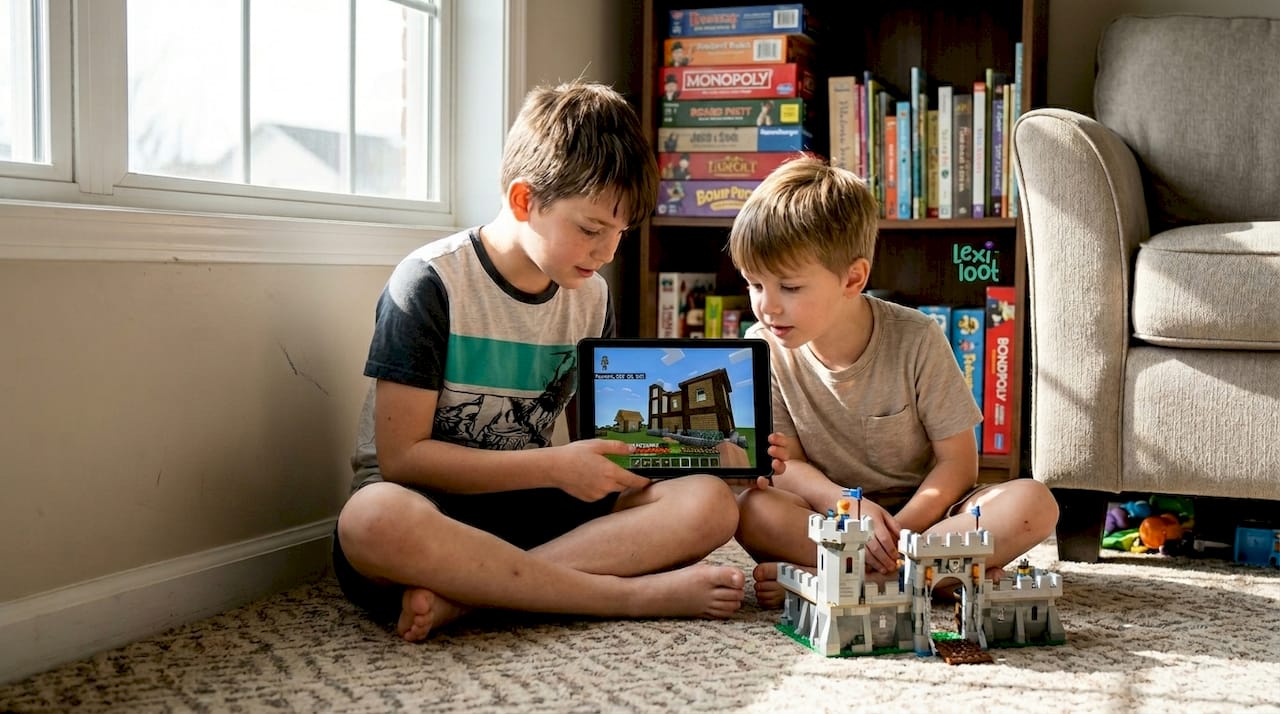
Take Minecraft as a practical example. When kids build together, they negotiate roles, solve spatial puzzles, and use language to coordinate. That is a live exercise in language games for growth and executive function happening at the same time.
| Cognitive skill | Solo play impact | Multiplayer impact |
|---|---|---|
| Working memory | Moderate | High |
| Attention | Moderate | High |
| Communication | Low | High |
| Strategic reasoning | Moderate | High |
| Social problem-solving | Low | Very high |
Pro Tip: Limit sessions to 30 to 45 minutes and follow up with a quick conversation about what happened in the game. Reflection after play is one of the most underused tools for locking in cognitive gains. You can also explore brain training terms to understand the vocabulary behind these skills.
Cooperation vs competition: Which boosts growth?
Now that we understand the overall impact on cognitive skills, it is important to examine how game modes shape different developmental outcomes.
Not all multiplayer is created equal. Cooperative and competitive formats activate different parts of your social and cognitive toolkit. Understanding the difference helps you choose the right mode for your goals.
How cooperative and competitive modes compare:
| Feature | Cooperative mode | Competitive mode |
|---|---|---|
| Primary skill developed | Empathy, communication | Strategic thinking, resilience |
| Social outcome | Prosocial behavior, sharing | Status awareness, drive |
| Risk factor | Groupthink, low challenge | Aggression, frustration |
| Best for | Language learners, younger kids | Older players, skill sharpening |
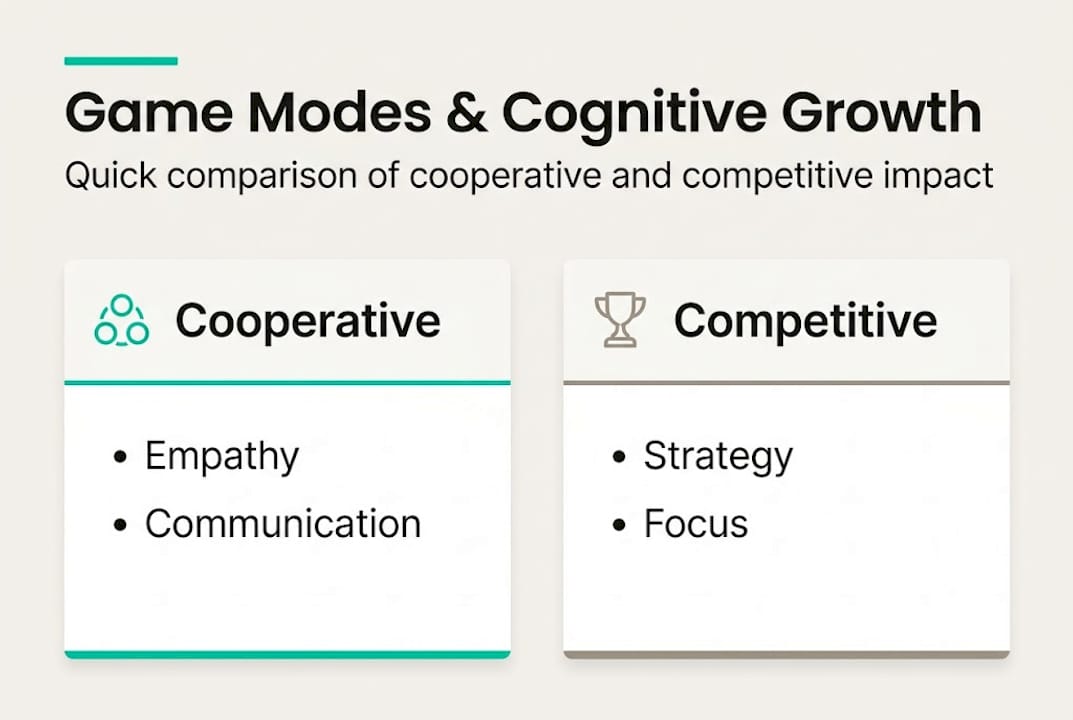
Cooperative play has a clear edge for social development. A cooperative setting produces higher sharing attitudes and behavior, especially in children. When players work toward a shared goal, they naturally practice empathy, take turns speaking, and build vocabulary through collaborative discussion.
Competitive play is not without value, but it comes with trade-offs. Girls showed more sharing in competitive settings than boys, which points to real gender differences in how competition is processed. For some players, competition sharpens focus and strategic thinking. For others, it can trigger frustration or aggressive responses.
The smartest approach combines both. Hybrid game designs that blend teamwork with strategic competition give players the emotional benefits of cooperation and the mental sharpening of competition.
“The most effective multiplayer formats are those that require players to cooperate toward a goal while also navigating moments of healthy competition. Neither mode alone captures the full range of cognitive and social benefits.”
Here is a practical framework for choosing your mode:
- Start with cooperative modes when introducing new players, younger kids, or language learners
- Introduce light competition once players feel comfortable and confident
- Use hybrid formats as the default for balanced cognitive and social growth
- Debrief after competitive rounds to process emotions and reinforce positive behavior
- Revisit cooperative challenges regularly to maintain prosocial habits
For more on how social word play supports vocabulary and social development, the research is encouraging across age groups.
The social advantage: How multiplayer boosts vocabulary
While cooperation and competition shape behavior and strategy, the social fabric of multiplayer games delivers a unique language learning opportunity.
Vocabulary growth does not only happen in classrooms. It happens in context, when you need a word to explain something quickly, describe a strategy, or react to a teammate’s move. Multiplayer games create exactly that kind of pressure.
Ways multiplayer games build vocabulary organically:
- Voice and chat features push players to use precise language in real time
- Collaborative problem-solving introduces new terms through shared discovery
- Repeating game-specific vocabulary across sessions builds long-term recall
- Social pressure to communicate clearly motivates players to expand their word use
- Exposure to other players’ language patterns broadens vocabulary range naturally
MMORPGs promote incidental vocabulary learning through collaborative discussion, with game features actively motivating ESL learners to engage with new language. This is called incidental learning, which means vocabulary gains happen as a side effect of doing something else, not as a direct study goal.
That is a big deal. It means players do not have to feel like they are studying. The learning is embedded in the fun.
“When kids play together and need to explain their thinking, they reach for words they might never use in a worksheet. That is vocabulary recall in action.”
For teachers and parents, this is a practical insight. You can use multiplayer games as a low-pressure environment for language practice. Check out resources on teaching vocabulary with games for structured approaches, or explore kid-friendly vocabulary games that are designed with this in mind.
If you are looking for classroom-tested options, ESL vocabulary games offer a solid starting point for language learners of all ages.
Pro Tip: Encourage kids to explain their in-game decisions out loud, either to a teammate or a parent watching. This verbal reflection forces vocabulary recall and strengthens the connection between words and meaning.
Maximizing benefits and minimizing risks
To unlock the full cognitive power of multiplayer gaming, intentional strategies and smart boundaries are essential.
The research is clear that more hours does not mean more gains. In fact, the opposite can be true. Excessive gaming can impair attention, while structured multiplayer formats enhance executive functions. The difference between benefit and harm often comes down to how the game is used, not just which game is chosen.
Steps to maximize multiplayer benefits:
- Set a consistent daily or weekly time limit for gaming sessions
- Choose games with clear objectives, cooperative elements, and positive social interaction
- Prioritize games that blend vocabulary, strategy, and social challenge
- Use guided play formats where an adult or teacher participates or debriefs afterward
- Monitor mood and behavior after sessions to catch early signs of frustration or overuse
- Rotate game types to keep cognitive demands varied and engaging
Key stat: A meta-analysis of 35 studies found large effects on cognitive and attitudinal outcomes when multiplayer gamification was applied in structured learning contexts. That is not a small finding.
Choosing the right game type matters enormously. Games with structured objectives and built-in social mechanics consistently outperform open-ended or purely entertainment-focused formats for cognitive development. For a deeper look at the value of gamifying vocabulary learning, the evidence strongly supports intentional design over passive play.
For a balanced view, including some contrasting perspectives on multiplayer gaming, it is worth reading broadly before setting up a game plan for your family or classroom.
Pro Tip: Look for games that include word games for brainpower as a core mechanic. When vocabulary practice is built into the game structure, the cognitive benefits multiply without requiring extra effort from players.
A fresh perspective on multiplayer for learning
With best practices outlined, it is time for an expert take on what actually fosters cognitive growth beyond the basics.
Here is something most guides will not tell you: the hours you spend in multiplayer mode matter far less than what happens before and after you play. Real cognitive growth is not about accumulating game time. It is about reflection, intention, and choosing formats that challenge you socially and strategically at the same time.
Hybrid cooperative-competitive modes consistently outperform single-format games because they force players to switch cognitive gears. You cooperate, then compete, then cooperate again. That switching is exactly the kind of mental flexibility that transfers to real-world skills.
Most people also underestimate guided multiplayer. When a teacher or parent participates in the game or leads a five-minute discussion afterward, the learning sticks. A meta-analysis of 35 studies confirmed large cognitive gains when gamification was applied with structure and intent, not just as free play.
The uncomfortable truth is that passive multiplayer, sitting in a session without goals or reflection, delivers very little. But intentional multiplayer, where you set a learning objective, choose a hybrid format, and debrief afterward, is one of the most efficient cognitive training tools available. Explore more about insights on gamification to see how this plays out in practice.
Try smart multiplayer games for cognitive growth
Ready to translate science into real-life results? Here is where you can put these multiplayer principles to work.
Lexiloot is built around exactly the kind of intentional, social, and cognitively rich gameplay this research supports. The game library is curated for vocabulary building, category thinking, and cognitive training through multiplayer competition and cooperation.
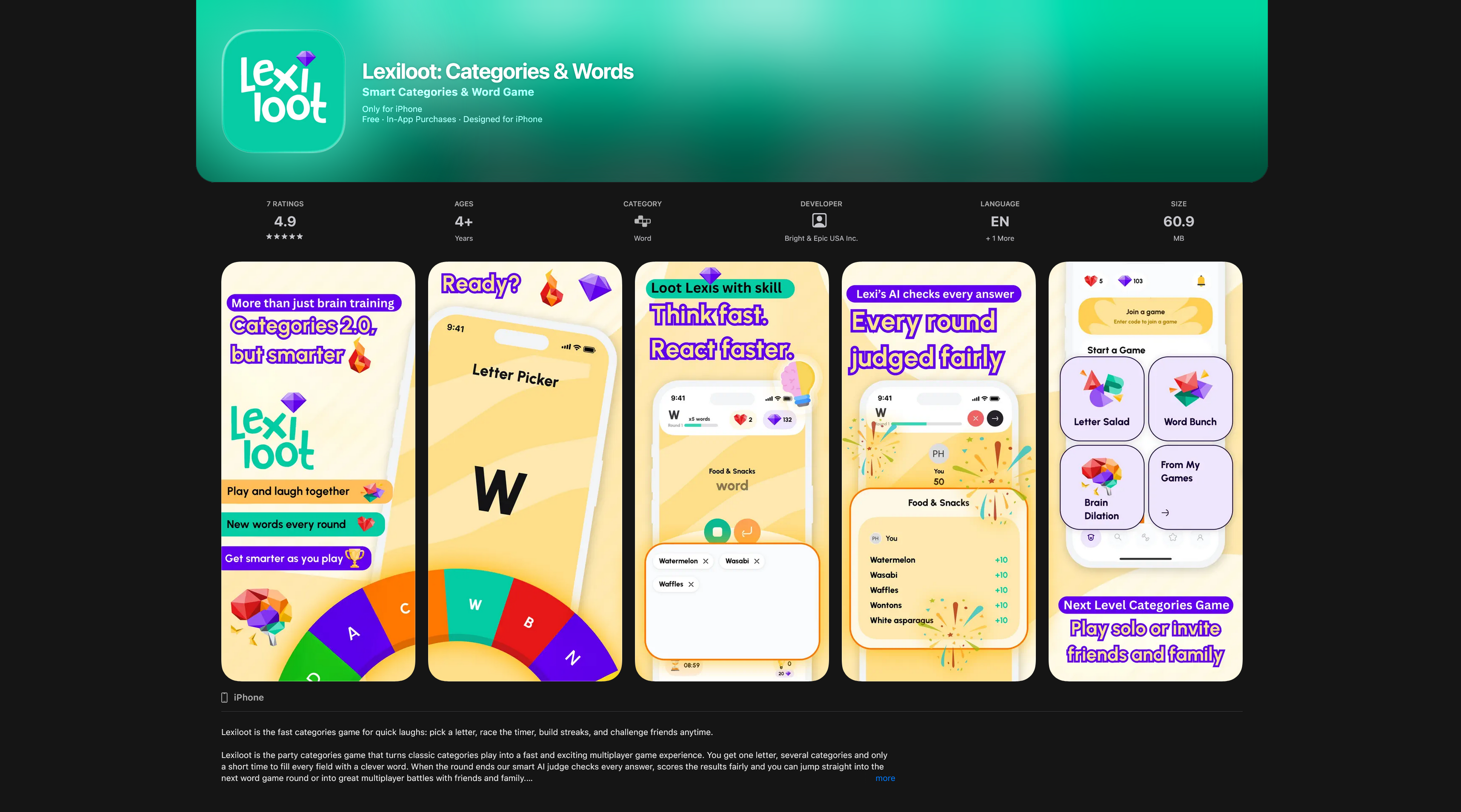
You can explore word games for growth that are designed to stretch vocabulary recall in a social setting, or try the Categories Game for Kids for a classroom-friendly option that blends strategy and language. Every game mode in Lexiloot is designed to support cognitive and social growth through play, making it easy to put the research into action starting today.
Frequently asked questions
Can multiplayer games really help with vocabulary learning?
Yes. Multiplayer games create social contexts where players use and encounter new words naturally, and collaborative game discussions have been shown to significantly improve vocabulary through incidental learning.
Are cooperative or competitive multiplayer modes better for cognitive growth?
Both offer distinct benefits. Cooperative play boosts sharing and prosocial behavior, while competitive modes sharpen strategic thinking. A hybrid approach delivers the most balanced cognitive and social growth.
How can I avoid the risks of excessive multiplayer gaming?
Set consistent time limits, choose games with structured objectives, and keep the focus on social and cognitive goals. Structured multiplayer formats enhance executive functions, while unstructured excessive play carries real attention risks.
Does playing with friends make a difference?
Absolutely. Social interaction in gaming directly boosts self-efficacy and self-awareness, and playing with people you know increases engagement, which amplifies both vocabulary and social skill development.

