


Word puzzles have evolved far beyond traditional crosswords and word searches. Today’s modern word puzzles combine entertainment with serious educational value, offering diverse formats that challenge your vocabulary and cognitive skills in surprising ways. From category-based challenges to timed multiplayer competitions, these games transform learning into an engaging experience. Whether you’re a casual player seeking brain stimulation or an educator looking for effective teaching tools, understanding how modern puzzles work can unlock significant benefits for vocabulary growth and mental agility.
Table of Contents
- Key takeaways
- Understanding modern word puzzles: types and features
- How modern word puzzles boost vocabulary and cognition
- Strategies for getting the most out of modern word puzzles
- Using modern word puzzles in education and casual play
- Explore engaging word puzzles with Lexiloot
- Frequently asked questions
Key Takeaways
| Point | Details |
|---|---|
| Diverse puzzle formats | Modern word puzzles come in many formats that engage casual players and educators alike. |
| Adaptive difficulty | Adaptive systems adjust challenge levels based on performance to sustain appropriate cognitive load and foster growth. |
| Vocabulary and cognitive gains | Puzzle play strengthens vocabulary, processing speed, and problem solving through retrieval practice and pattern recognition. |
| Classroom and social use | Multiplayer and collaborative modes transform solitary puzzles into shared learning experiences. |
Understanding modern word puzzles: types and features
Modern word puzzles represent a significant departure from the static newspaper crosswords of previous decades. Modern word puzzles come in diverse formats that engage different cognitive skills and vocabulary aspects, creating dynamic learning experiences through interactive gameplay.
The landscape of contemporary word puzzles includes several distinct categories. Word categories games challenge players to identify words belonging to specific themes or groups, testing both vocabulary breadth and categorical thinking. Anagram puzzles require rearranging letters to form valid words, strengthening spelling patterns and letter recognition. Word-building challenges ask players to construct words from limited letter sets, promoting creative thinking and vocabulary recall. Timed vocabulary quizzes add pressure elements that enhance processing speed and decision-making under constraints.
Key features distinguish modern puzzles from their traditional counterparts. Multiplayer modes enable social competition and collaborative learning, transforming solitary activities into shared experiences. Educational themes integrate curriculum-relevant vocabulary, making puzzles valuable classroom tools. Adaptive difficulty systems adjust challenge levels based on player performance, ensuring appropriate cognitive load for continued growth. Real-time feedback mechanisms provide immediate reinforcement, accelerating learning through instant correction and explanation.
The diversity of word puzzle varieties creates opportunities for targeting specific skills and preferences:
- Category-based puzzles develop thematic vocabulary and conceptual organization skills
- Speed challenges enhance quick recall and decision-making abilities
- Pattern recognition games strengthen spelling intuition and word structure awareness
- Collaborative modes foster social learning and competitive motivation
| Puzzle Type | Primary Skills | Typical Players | Educational Benefits |
|---|---|---|---|
| Category games | Thematic vocabulary, classification | Families, students, casual gamers | Conceptual organization, vocabulary breadth |
| Anagram challenges | Letter patterns, spelling | Word enthusiasts, learners | Spelling accuracy, pattern recognition |
| Word-building | Creative construction, recall | All ages, educators | Vocabulary depth, problem-solving |
| Timed quizzes | Speed, pressure management | Competitive players | Processing speed, quick recall |
How modern word puzzles boost vocabulary and cognition
The cognitive benefits of word puzzles extend well beyond simple entertainment. Playing word puzzles improves vocabulary acquisition and cognitive processing speed through mechanisms that engage multiple brain systems simultaneously.

Active recall forms the foundation of puzzle-based learning. Unlike passive reading or listening, puzzles require you to retrieve words from memory without external prompts. This retrieval practice strengthens neural pathways, making future recall faster and more reliable. Pattern recognition develops as you identify common letter combinations, word structures, and thematic relationships. Problem-solving skills improve through the strategic thinking required to navigate constraints and optimize solutions. Processing speed increases as repeated practice automates recognition and response patterns.
Specific vocabulary skills receive targeted enhancement through puzzle play. Word knowledge expands as you encounter unfamiliar terms in context, with gameplay providing natural motivation to learn meanings. Spelling accuracy improves through repeated visual and motor engagement with correct letter sequences. Categorization abilities strengthen as you organize words by themes, parts of speech, or conceptual relationships. Contextual usage understanding deepens when puzzles present words in meaningful scenarios rather than isolated definitions.
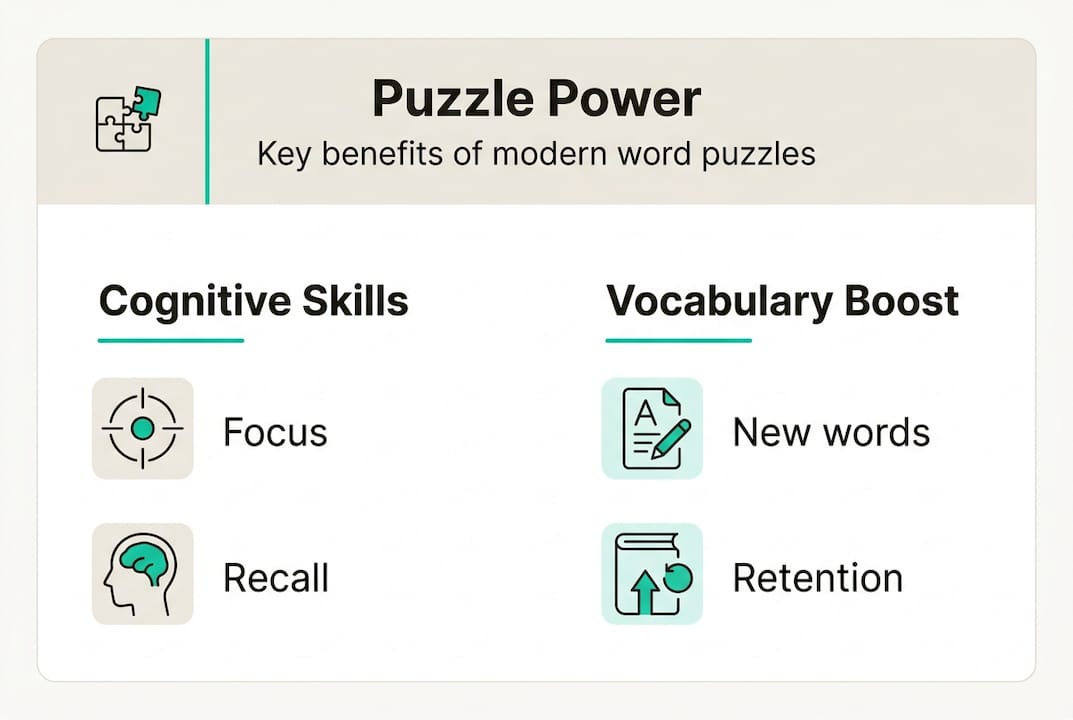
Research demonstrates measurable learning gains from puzzle engagement. Word game trends in 2026 demonstrate a 25% boost in learning effectiveness when integrated with gameplay, highlighting the power of gamified education approaches. This improvement stems from increased engagement, immediate feedback, and the intrinsic motivation that games naturally generate.
The cognitive advantages manifest across multiple domains:
- Memory enhancement through repeated retrieval practice and spaced repetition effects
- Attention improvement via focused engagement and distraction resistance
- Mental flexibility development through adapting to varied puzzle formats and rules
- Executive function strengthening via planning, strategy selection, and self-monitoring
Pro Tip: Playing word puzzles for 15 minutes daily produces better long-term vocabulary retention than hour-long weekly sessions, as distributed practice strengthens memory consolidation more effectively than massed practice.
The educational value extends to brain gaming word puzzles that specifically target cognitive training objectives. These specialized formats combine entertainment with structured learning progressions, ensuring systematic skill development alongside enjoyable gameplay.
Strategies for getting the most out of modern word puzzles
Maximizing puzzle benefits requires strategic approaches that go beyond casual play. Using strategic approaches increases both the enjoyment and effectiveness of word puzzle play, transforming random entertainment into structured learning experiences.
A systematic approach to puzzle improvement follows these progressive steps:
- Build foundational vocabulary by focusing on high-frequency words and common patterns before attempting advanced puzzles
- Practice pattern recognition by studying common letter combinations, prefixes, suffixes, and root words that appear across multiple terms
- Develop category awareness by organizing vocabulary into thematic groups that facilitate faster recall during gameplay
- Master time management by allocating appropriate attention to different puzzle elements based on point values and difficulty
- Analyze mistakes systematically to identify knowledge gaps and prioritize learning areas for maximum improvement
- Implement spaced repetition by revisiting challenging puzzles after intervals to reinforce learning and prevent forgetting
Strategy effectiveness varies significantly between skill levels. Beginners benefit most from vocabulary expansion and basic pattern recognition, while advanced players gain advantages from sophisticated time management and strategic risk assessment. Understanding your current level helps prioritize the most impactful improvement areas.
| Strategy Element | Beginner Effectiveness | Advanced Effectiveness | Implementation Difficulty |
|---|---|---|---|
| Vocabulary expansion | Very high | Moderate | Low |
| Pattern recognition | High | Very high | Moderate |
| Time management | Moderate | Very high | High |
| Strategic risk-taking | Low | High | High |
| Category organization | High | Moderate | Low |
Advanced techniques provide competitive edges for experienced players. Word game strategies 2026 emphasize the importance of adaptive approaches that respond to specific puzzle contexts. Probability-based guessing uses letter frequency knowledge to make educated choices when uncertain. Strategic skipping involves bypassing difficult items to maximize points from easier ones within time constraints. Pattern exploitation identifies recurring puzzle structures to apply proven solution methods efficiently.
Pro Tip: Setting a timer slightly shorter than puzzle limits during practice sessions trains your brain to work efficiently under pressure, improving both speed and accuracy during actual gameplay.
Specialized resources offer deeper skill development. Advanced word puzzle strategies provide comprehensive frameworks for competitive play, covering topics from optimal opening moves to endgame optimization techniques.
Using modern word puzzles in education and casual play
The versatility of modern word puzzles makes them valuable across educational and recreational contexts. Modern category games are popular in classrooms for boosting engagement and vocabulary skills, demonstrating how game-based learning effectively complements traditional instruction methods.
Educators leverage puzzle mechanics to enhance student participation and learning outcomes. Vocabulary quizzes transform rote memorization into competitive challenges that students actively enjoy. Category games reinforce curriculum concepts by organizing terms into meaningful thematic groups. Multiplayer formats encourage peer learning and collaborative problem-solving. Adaptive difficulty ensures all students face appropriate challenges regardless of current skill levels. Progress tracking provides teachers with data-driven insights into individual student needs and class-wide patterns.
Classroom implementations take various forms depending on educational goals. Warm-up activities use quick puzzles to activate vocabulary knowledge at lesson starts. Review sessions employ puzzle competitions to reinforce previously taught material in engaging formats. Homework assignments incorporate puzzle elements to increase completion rates and practice quality. Assessment tools use puzzle performance as alternative evaluation methods that reduce test anxiety.
Casual players benefit from features designed for entertainment and personal growth:
- Flexible difficulty settings accommodate varying skill levels and time availability
- Social features enable friendly competition with family and friends
- Achievement systems provide motivation through badges, streaks, and milestone rewards
- Offline modes allow play without internet connectivity for convenience
- Short session designs fit puzzle play into brief breaks throughout the day
The categories game kids classrooms model demonstrates effective educational integration, showing how properly designed puzzles serve dual purposes as both teaching tools and enjoyable activities. This dual nature makes puzzles particularly valuable for homeschooling families, after-school programs, and self-directed learners seeking structured yet entertaining vocabulary practice.
Creating custom puzzles extends educational applications further. Teachers and parents can design puzzles targeting specific vocabulary sets, curriculum units, or skill gaps. The create word puzzles guide provides frameworks for developing effective custom content that aligns with particular learning objectives while maintaining engagement through game mechanics.
Explore engaging word puzzles with Lexiloot
Lexiloot offers a comprehensive platform for experiencing the full range of modern word puzzle benefits. The app combines diverse game modes including category challenges, vocabulary builders, and multiplayer competitions within a single integrated experience designed for both educational and entertainment purposes.
The categories game kids classrooms feature provides structured learning opportunities perfect for families and educators seeking effective vocabulary development tools. Players can master category games online through progressive difficulty levels that adapt to individual skill growth, ensuring continued challenge without frustration.
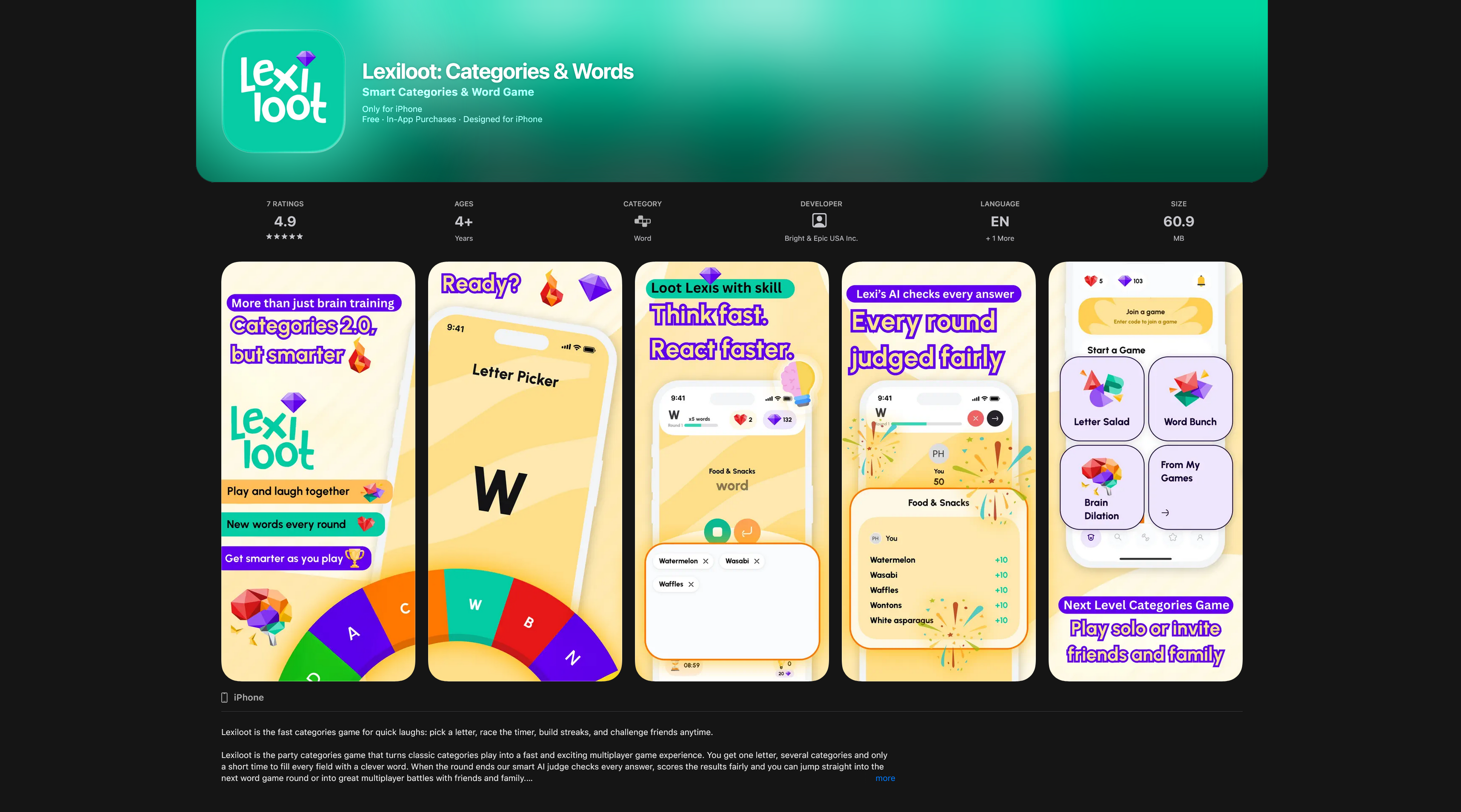
Lexiloot’s focus on brain training terms vocabulary games creates targeted cognitive benefits alongside vocabulary expansion. The platform’s social features enable friendly competition and collaborative learning, making skill development a shared experience rather than solitary practice. Whether you’re seeking classroom resources, family entertainment, or personal brain training, Lexiloot delivers engaging word puzzle experiences that combine fun with measurable learning outcomes.
Frequently asked questions
What makes modern word puzzles different from traditional crosswords?
Modern word puzzles incorporate interactive elements like timed challenges, multiplayer competition, adaptive difficulty, and immediate feedback that traditional crosswords lack. They often focus on specific skills such as category recognition or pattern matching rather than general knowledge, making them more targeted for vocabulary and cognitive development.
How do word puzzles improve vocabulary more effectively than studying?
Puzzles engage active recall rather than passive recognition, forcing your brain to retrieve words without prompts. The game context provides intrinsic motivation and immediate feedback, while varied puzzle formats ensure exposure to words in multiple contexts, all of which strengthen memory formation and retention more effectively than rote memorization.
Can adults benefit from word puzzles designed for educational purposes?
Absolutely. Adult brains maintain neuroplasticity throughout life, meaning cognitive skills and vocabulary continue developing with appropriate stimulation. Educational puzzles provide structured challenges that benefit learners of all ages, with difficulty adjustments ensuring appropriate cognitive load regardless of current skill level.
How much time should I spend on word puzzles for optimal benefits?
Research suggests 15 to 20 minutes of daily practice produces better results than longer infrequent sessions. Distributed practice strengthens memory consolidation more effectively than massed practice, making consistent short sessions the optimal approach for vocabulary retention and cognitive skill development.
Where can I find quality modern word puzzles for family use?
Look for apps and platforms specifically designed for educational gameplay that offer multiplayer modes, adjustable difficulty, and diverse puzzle types. Features like progress tracking, age-appropriate content filters, and offline play capability indicate quality family-friendly options that balance entertainment with genuine learning value.

