


Language games do far more than pass the time on your commute. Recent research reveals these interactive challenges reshape how your brain processes information, builds vocabulary, and connects with others. Whether you’re solving category puzzles or competing in multiplayer word battles, you’re engaging in a form of cognitive training that improves executive function, memory, and social communication. This guide explores the science behind language games, their role in vocabulary development, and how modern mobile platforms transform casual play into meaningful brain training for gamers and language enthusiasts alike.
Table of Contents
- Key takeaways
- How language games boost cognitive development
- Vocabulary and language learning through mobile word and category games
- Popular mechanics in language games and their social effects
- The deeper meaning and early development role of language games
- Explore language games with Lexiloot for fun and brain training
- Frequently asked questions about language games
Key Takeaways
| Point | Details |
|---|---|
| Cognitive gains | Language games strengthen executive function, working memory, and processing speed through regular play. |
| Vocabulary growth | Vocabulary expands through engaging word and category games on mobile platforms. |
| Social benefits | Multiplayer play enhances social interaction and communication skills. |
| Daily practice cadence | A 15 to 20 minute daily routine maximizes cognitive benefits while avoiding fatigue. |
| Long term brain health | Repeated language game challenges support neuroplasticity and cognitive health across the lifespan. |
How language games boost cognitive development
The cognitive benefits of language games extend well beyond vocabulary memorization. Studies show significant improvements in executive function, working memory, and reaction times using mobile word games. These findings come from controlled research involving older adults with mild cognitive impairment, demonstrating that language game interventions produce measurable gains in brain agility and processing speed.
Executive functions govern your ability to plan, focus attention, remember instructions, and juggle multiple tasks simultaneously. When you play word puzzles or category challenges, you’re actively training these cognitive systems. The Stroop test, which measures cognitive control by asking participants to name the color of ink rather than read the word itself, showed marked improvement in language game players. Similarly, auditory reaction time tests revealed faster processing speeds after just weeks of consistent gameplay.
These cognitive improvements aren’t limited to memory tasks. Players develop better pattern recognition, enhanced problem solving abilities, and improved mental flexibility. The brain’s neuroplasticity responds to the repeated challenges presented by word games, creating stronger neural pathways that support both linguistic and non-linguistic cognitive tasks. This makes language games valuable tools for maintaining cognitive health across the lifespan.
Key cognitive benefits from language game training:
- Enhanced working memory capacity for holding and manipulating information
- Faster reaction times in both visual and auditory processing tasks
- Improved executive control for managing competing demands and distractions
- Stronger pattern recognition skills applicable to problem solving
- Increased mental flexibility for switching between different task demands
Pro Tip: Schedule 15 to 20 minute daily sessions with language games to maximize cognitive benefits without mental fatigue. Consistency matters more than marathon gaming sessions.
“The intersection of play and cognition creates powerful learning opportunities. Language games leverage this connection by making cognitive training feel effortless and enjoyable, which increases adherence and long term benefits.” – Cognitive psychology researcher
The transition from entertainment to casual brain gaming represents a shift in how we view mobile gaming. These cognitive advantages position language games as legitimate brain training tools, not just time fillers. Understanding this foundation helps you appreciate how vocabulary acquisition builds on these cognitive improvements.
Vocabulary and language learning through mobile word and category games
Vocabulary development through language games operates on principles of engagement, repetition, and contextual learning. Word and category games increase vocabulary learning, engagement, and critical thinking in EFL and high school students. This research spans multiple educational contexts, revealing consistent patterns of improved retention and application when students learn vocabulary through game-based methods rather than traditional memorization.
Mobile word games create immersive learning environments where vocabulary acquisition happens naturally through gameplay. Scrabble-like applications challenge you to form words from limited letter sets, forcing creative thinking and deep vocabulary retrieval. Category challenges require rapid recall of words fitting specific themes, strengthening semantic networks in your brain. These mechanics transform passive vocabulary knowledge into active usage, which dramatically improves retention rates.

The motivational aspect of gamified vocabulary learning cannot be overstated. Points, badges, and progression systems tap into intrinsic motivation, making players eager to expand their word knowledge to advance in the game. This emotional investment creates stronger memory encoding than rote memorization exercises. When you earn rewards for discovering new words or completing challenging puzzles, your brain releases dopamine, which enhances learning and memory consolidation.
Top vocabulary game mechanics and their learning benefits:
- Letter tile formation (Scrabble-style): Builds spelling skills and word pattern recognition
- Category rapid recall: Strengthens semantic associations and thematic vocabulary groups
- Definition matching: Reinforces meaning comprehension and contextual understanding
- Synonym and antonym challenges: Expands nuanced vocabulary and relationship mapping
- Fill-in-the-blank sentences: Develops contextual usage and grammatical awareness
| Game Type | Vocabulary Focus | Engagement Level | Best For |
|---|---|---|---|
| Word formation puzzles | Spelling and patterns | High | Visual learners |
| Category challenges | Thematic grouping | Very high | Quick thinkers |
| Definition quizzes | Meaning and usage | Moderate | Methodical learners |
| Crossword variants | Context and clues | High | Problem solvers |
| Multiplayer word battles | Competitive recall | Very high | Social learners |
Pro Tip: Focus on learning 5 to 10 new words per gaming session rather than trying to memorize dozens. Spaced repetition through regular gameplay creates stronger long term retention than cramming.
The connection between vocabulary growth and critical thinking deserves special attention. As you encounter new words in game contexts, you must evaluate their meanings, consider their relationships to known vocabulary, and apply them strategically. This metacognitive process develops analytical skills that transfer to academic and professional contexts. Language games become thinking tools, not just word repositories.
Exploring different types of word games reveals how varied mechanics target different aspects of vocabulary development. Some emphasize breadth of knowledge, while others focus on depth of understanding. The best vocabulary development comes from playing diverse game types that challenge different linguistic skills.
Popular mechanics in language games and their social effects
Language game mechanics have evolved dramatically with mobile technology, creating rich social experiences alongside cognitive challenges. Multiplayer gaming fosters communication skills with high engagement and adherence, featuring 2-4 player matches and large tournaments. These social gaming structures transform solitary word puzzles into collaborative and competitive experiences that build interpersonal skills while training linguistic abilities.
Flashcard battles represent one popular mechanic where players race to answer vocabulary questions faster than opponents. This format combines speed, accuracy, and knowledge recall in an adrenaline-fueled competition. The social pressure of real-time competition increases focus and motivation, pushing players to perform at their cognitive peak. Victory requires both broad vocabulary knowledge and quick mental processing.
Fill-in-the-blank challenges create collaborative problem solving opportunities when played in team modes. Players must communicate their thinking, share vocabulary knowledge, and coordinate strategies to complete puzzles efficiently. This verbal interaction strengthens communication skills while reinforcing vocabulary usage in natural conversational contexts. The social dimension adds layers of complexity beyond the linguistic challenge itself.
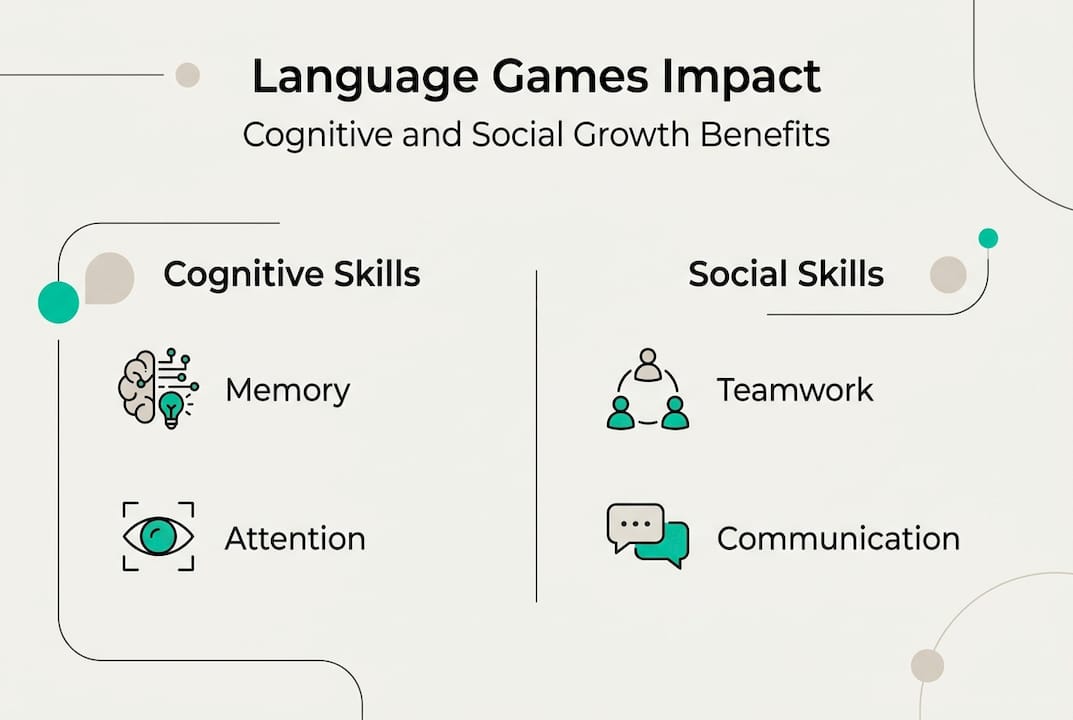
Image guessing games combine visual and linguistic processing, requiring players to identify pictures and generate appropriate vocabulary. When played socially, these games spark discussions about word choice, precision, and creative description. Players learn from each other’s vocabulary selections, expanding their linguistic repertoire through peer modeling. The visual component also aids memory encoding through dual coding theory.
Engaging language game mechanics for social play:
- Real-time multiplayer word races with live leaderboards
- Cooperative puzzle solving requiring team communication
- Tournament brackets with elimination rounds and prizes
- Friend challenges with personalized difficulty settings
- Guild or clan systems for long term social engagement
Leaderboards and tournament structures create sustained motivation through social comparison and achievement recognition. Players return regularly to maintain rankings, defend titles, or climb competitive ladders. This engagement pattern supports consistent practice, which maximizes both cognitive and vocabulary benefits. The social accountability of visible rankings encourages players to improve continuously.
| Mechanic Type | Social Benefit | Cognitive Demand | Player Interaction |
|---|---|---|---|
| Flashcard battles | Competitive motivation | High speed recall | Direct competition |
| Team puzzles | Collaboration skills | Strategic thinking | Cooperative problem solving |
| Tournament play | Achievement recognition | Sustained performance | Structured competition |
| Friend challenges | Relationship building | Personalized difficulty | Casual competition |
| Guild systems | Community belonging | Long term engagement | Ongoing cooperation |
Pro Tip: Balance competitive and cooperative game modes to develop both assertive communication and collaborative skills. Each mode trains different social competencies.
The psychological impact of social gaming extends beyond immediate gameplay. Players develop digital communication skills, learn to handle competitive pressure gracefully, and build online communities around shared interests. These social benefits complement the cognitive and vocabulary advantages, creating holistic development opportunities. Understanding advanced word puzzle strategies helps you leverage these mechanics for maximum benefit.
The deeper meaning and early development role of language games
The philosophical and developmental foundations of language games provide crucial context for understanding their modern applications. Ludwig Wittgenstein’s concept of language games emphasizes that meaning emerges through shared use and practice within social contexts. Words don’t have fixed, abstract meanings independent of how communities use them. Instead, language functions through agreed-upon patterns of usage, much like games operate through shared rules and conventions.
This philosophical insight illuminates why interactive language games prove so effective for learning. They replicate the natural social contexts where language meaning develops. When you play word games with others, you’re participating in the fundamental process of language use that Wittgenstein described. The game mechanics create miniature language communities with specific rules, goals, and communication patterns that mirror real-world linguistic interaction.
Empirical research on early childhood development strengthens this connection between play and language. Symbolic play in early childhood corresponds to language milestones, supporting cognitive and language development. Studies tracking children from 18 to 24 months show strong correlations between symbolic play behaviors and expressive language abilities. Children who engage in more pretend play demonstrate larger vocabularies and reach language milestones earlier.
The link between symbolic play and language development reveals important principles applicable to language games across the lifespan. Just as toddlers use play to explore and internalize language concepts, adults benefit from game-based language practice that engages similar cognitive systems. The playful, low-stakes environment of games reduces anxiety and increases experimentation, both crucial for language learning and cognitive growth.
These developmental insights explain why language games feel intuitive and engaging. They tap into fundamental human learning mechanisms that evolved to support language acquisition through social interaction and play. Modern mobile language games essentially digitize and optimize these natural learning processes, making them accessible anytime and anywhere.
“Language games bridge the gap between abstract linguistic concepts and practical communication skills. By embedding vocabulary and grammar practice within engaging gameplay, they activate the same neural pathways that support natural language development in children.”
Understanding the philosophy of language games enriches your appreciation for why these tools work so effectively. The combination of philosophical insight and empirical research creates a robust foundation for using language games as serious learning tools, not just entertainment. This foundation supports practical applications in education, cognitive training, and personal development.
Explore language games with Lexiloot for fun and brain training
Now that you understand the science and philosophy behind language games, you can leverage these insights with purpose-built platforms. Lexiloot offers engaging category and word games specifically optimized for cognitive growth and vocabulary expansion. The app combines evidence-based game mechanics with social features that maximize both learning outcomes and player enjoyment.
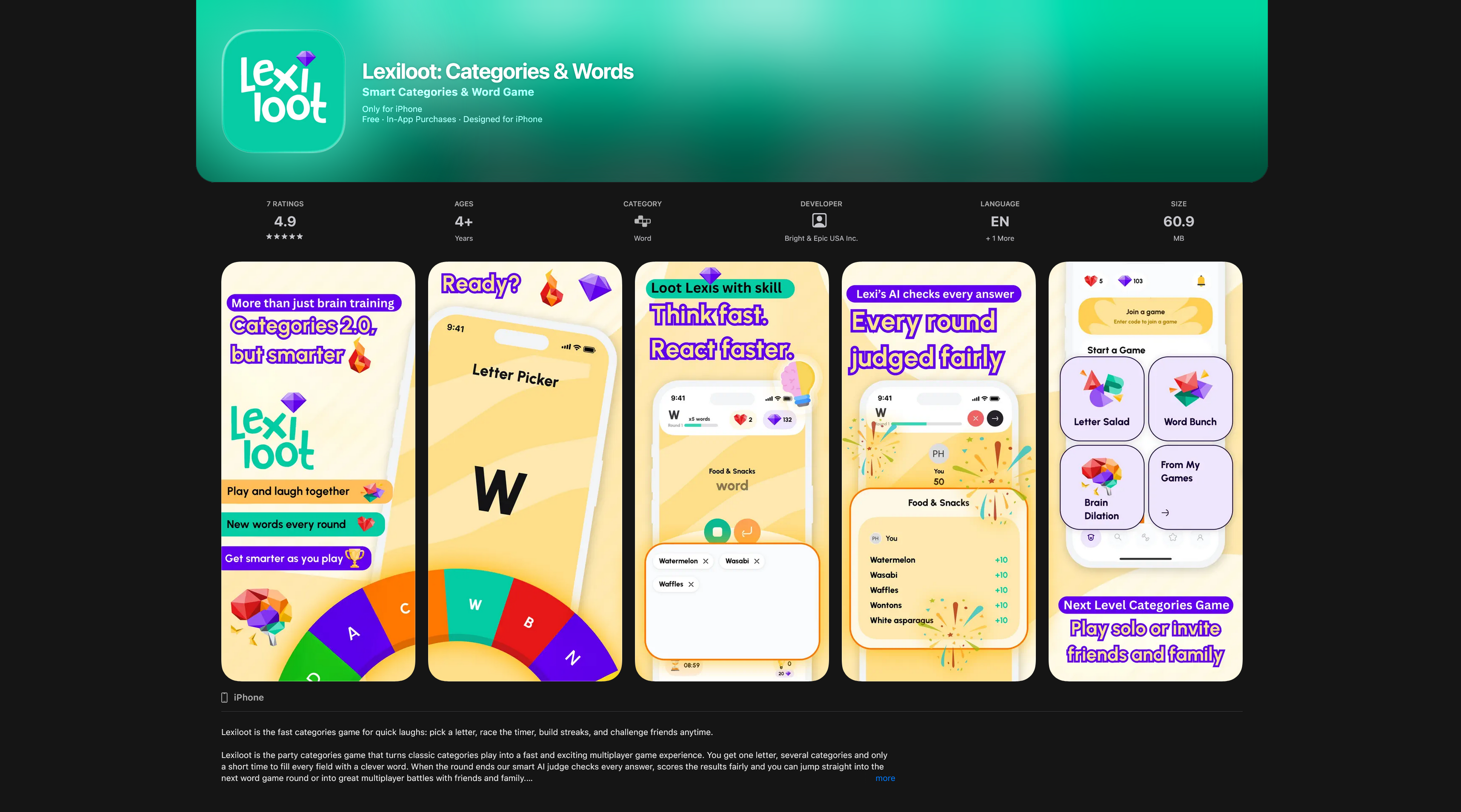
Whether you’re interested in categories game for kids and classrooms or competitive multiplayer challenges, Lexiloot provides diverse game modes targeting different skills. Strategy guides like word game strategies boost scores help you optimize your gameplay for maximum cognitive benefits. The platform’s focus on both individual improvement and social interaction creates comprehensive development opportunities.
For those curious about specific game formats, resources like the category challenge mobile gamer guide provide detailed explanations of mechanics and strategies. These educational materials complement the games themselves, helping you understand not just how to play, but why these activities benefit your brain and vocabulary.
Frequently asked questions about language games
What exactly are language games in the context of mobile gaming?
Language games are interactive challenges that combine linguistic tasks with game mechanics, including word formation puzzles, vocabulary quizzes, and category recall challenges. They transform language practice into engaging gameplay through points, levels, and social competition. Modern mobile versions offer accessibility and convenience for on-the-go brain training.
How do language games improve cognitive function beyond vocabulary?
Language games train executive functions like working memory, attention control, and mental flexibility through repeated cognitive challenges. Research shows measurable improvements in reaction time, problem solving speed, and pattern recognition. These benefits transfer to non-linguistic tasks, making language games effective general brain training tools.
Can adults benefit from language games or are they mainly for children?
Adults gain significant cognitive and vocabulary benefits from language games, with research showing improvements even in older adults with mild cognitive impairment. The neuroplasticity that supports learning continues throughout life, making language games valuable for maintaining mental sharpness at any age. Social features also provide community connection for adult players.
What makes mobile language games more effective than traditional vocabulary study?
Mobile language games leverage engagement, immediate feedback, and spaced repetition to enhance retention compared to passive study methods. The motivational aspects of gameplay increase practice frequency and duration. Contextual learning through game scenarios creates stronger memory associations than isolated word memorization.
How much time should I spend on language games for optimal benefits?
Research suggests 15 to 20 minutes of daily language game play provides optimal cognitive benefits without mental fatigue. Consistency matters more than session length, with regular practice creating stronger neural pathways. Balance different game types to target various cognitive and linguistic skills for comprehensive development.

