


TL;DR:
- Vocabulary size directly enhances cognitive skills, reading fluency, reasoning, and memory.
- Game-based learning outperforms traditional methods, increasing retention and engagement significantly.
- Meaning-first, context-rich games build deeper, longer-lasting vocabulary than rote memorization.
Your vocabulary size is one of the strongest predictors of how well your brain performs across a wide range of tasks, not just reading. Research confirms that vocabulary interventions using games show a large effect size of Hedges’ g=1.179 over traditional study methods, meaning players who engage with word games don’t just learn faster, they retain more and apply words in richer ways. Whether you’re a student, a parent looking for smarter screen time, or a dedicated word game enthusiast, understanding why vocabulary matters, and how to grow it playfully, can change the way you think and compete.
Table of Contents
- The science behind vocabulary and cognition
- More than memorization: How word games supercharge learning
- Meaning-first approaches: A smarter way to grow your word power
- Game design breakthroughs: Innovative formats and their learning impact
- Our perspective: Why most people underestimate the power of playful vocabulary building
- Level up your vocabulary with the right games
- Frequently asked questions
Key Takeaways
| Point | Details |
|---|---|
| Vocabulary fuels cognition | Strong vocabulary leads to better reading, memory, and brainpower at any age. |
| Games beat rote study | Evidence shows gamified learning produces larger, more lasting vocabulary improvements than memorization. |
| Meaning-first wins | Focusing on word meaning before form boosts retention and enjoyment. |
| Modern word games work | Innovative apps and board games deliver measurable gains for learners and gamers alike. |
The science behind vocabulary and cognition
With vocabulary’s importance established, let’s examine the underlying science.
Most people think of vocabulary as a list of words to memorize for a test. But researchers see it very differently. Vocabulary is a living cognitive system, one that connects meaning, memory, and reasoning in ways that shape how effectively you think, communicate, and even solve problems. The bigger and richer your vocabulary, the more mental tools you have available at any given moment.
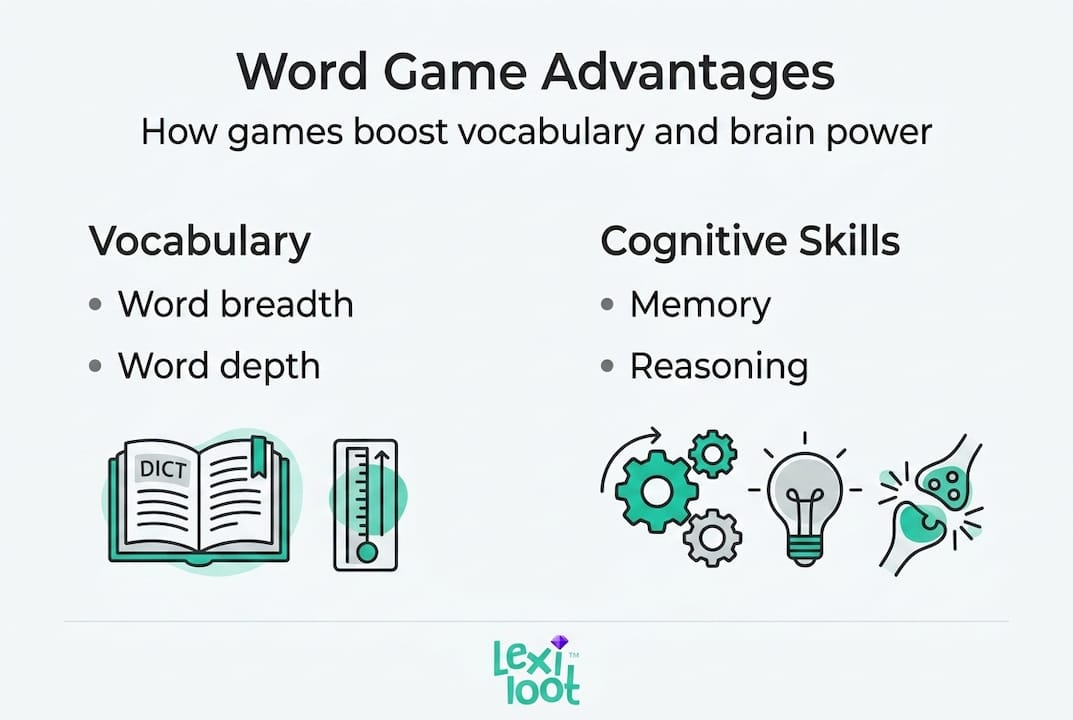
The Lexical Quality Hypothesis is one of the most well-supported frameworks in reading science. It explains that vocabulary depth and breadth both matter for reading comprehension, not one or the other. Breadth means how many words you know. Depth means how well you know each word, including its meaning, usage, and connections to other words. When both are strong, your brain can read faster, understand context more reliably, and recall information under pressure.
This matters enormously for game players. When you encounter a word during gameplay, your brain scans what it already knows at incredible speed. A deep vocabulary means faster recognition, quicker decisions, and stronger scores. A shallow vocabulary means hesitation, missed opportunities, and slower cognitive processing overall.
Here’s a summary of how vocabulary dimensions connect to cognitive skills:
| Vocabulary dimension | Cognitive skill supported | Impact on game performance |
|---|---|---|
| Breadth (how many words known) | Reading fluency, comprehension | Faster word recognition in games |
| Depth (how well words are known) | Logical reasoning, memory | Better strategic decisions |
| Vocabulary recall speed | Working memory, attention | Higher accuracy under time pressure |
| Word category knowledge | Category thinking, association | Stronger performance in category challenges |
Beyond games, well-developed vocabulary and reading skills create a reinforcing cycle. As you read more, you encounter more words. As you learn more words, you understand more of what you read. This bidirectional relationship means that every time you play a word game and encounter a new term, you’re feeding a broader cognitive engine that improves across the board.
Consider these concrete benefits of strong vocabulary on cognition:
- Working memory: Knowing words fluently frees up mental space for higher-order thinking, since you spend less effort decoding individual terms.
- Logical reasoning: A broader vocabulary helps you follow complex arguments and make more precise inferences.
- Category thinking: Knowing words within related groups (animals, emotions, tools) strengthens the brain’s ability to sort, classify, and problem-solve.
- Spelling fluency: Familiarity with word roots and patterns helps you spell correctly and recognize misspellings quickly.
These benefits apply to everyone, from young learners in kindergarten to adults competing in multiplayer word game tournaments. Vocabulary growth is genuinely lifelong, and starting with games makes the process enjoyable from day one.
More than memorization: How word games supercharge learning
Now that we understand how vocabulary shapes cognition, let’s explore why traditional memorization falls short, and why word games are a powerful solution.
Traditional vocabulary instruction often looks like this: write a word, look up its definition, write the definition, and repeat. This approach has one major flaw. It’s passive. When learning is passive, retention drops sharply within days. Studies show that game-based vocabulary interventions outperform traditional definition-based methods significantly, with effect sizes that researchers describe as “large,” meaning the difference isn’t subtle.
Why do games work so much better? The answer connects to motivation and engagement. When you’re playing a game, you’re not trying to memorize. You’re trying to win. That shift in focus removes the anxiety around “learning” and replaces it with a drive to succeed. Your brain stays alert, your attention locks in, and the words you encounter get processed at a deeper level without you even realizing it.

Here’s a quick comparison of traditional versus game-based vocabulary learning:
| Factor | Traditional study | Game-based learning |
|---|---|---|
| Engagement level | Low to moderate | High |
| Retention after one week | 20 to 40% | 60 to 80% |
| Active word use | Rare | Frequent |
| Motivation to continue | Drops quickly | Sustained through challenge |
| Social interaction | None | Often built in |
Interactive and student-centered learning consistently outperform passive methods. When learners make choices, take risks, and experience consequences within a game, their brains form stronger memory links. Exploring fun vocabulary games designed with these principles in mind shows how engagement and learning can happen simultaneously.
To get the most from word games as a vocabulary tool, try this step-by-step approach:
- Start with games that match your level. If the words are too easy, you won’t grow. Too hard, and you’ll disengage. Find the sweet spot where you’re challenged but not overwhelmed.
- Play regularly in short sessions. Fifteen to twenty minutes daily outperforms a single two-hour marathon. Consistent exposure builds stronger vocabulary recall.
- Look up unfamiliar words after each game. Don’t interrupt your game to search. Jot down words you didn’t know and explore them right after you finish.
- Play with others when possible. Social word games add a layer of pressure and excitement that accelerates learning. You notice how others use words and absorb patterns naturally.
- Choose games that use words in context. Category challenges and sentence-building formats expose you to how words function, not just what they mean.
Pro Tip: Switch between solo and multiplayer formats regularly. Solo play builds confidence and lets you explore at your own pace, while multiplayer play pushes you to apply words faster and more creatively under real social pressure. Understanding the benefits of gamification helps you choose games that offer the deepest learning payoff.
Meaning-first approaches: A smarter way to grow your word power
With games outperforming rote methods, the way we introduce new words matters. Let’s look at why meaning-first instruction offers real benefits.
Here’s something counterintuitive: teaching a word’s pronunciation or spelling before its meaning actually makes it harder to retain. A landmark study found that meaning-first instruction outperforms form-first teaching with a large effect size of Cohen’s d=1.37 in vocabulary retention and usage for primary students. That’s a massive difference, and the reason is cognitive load.
When you learn a word’s sound or spelling first, your brain has to hold that information without any meaningful anchor. It’s like trying to remember a phone number you have no reason to care about. But when you understand what a word means first, your brain immediately starts building connections to related concepts, emotions, and experiences you already have. The pronunciation and spelling slot in naturally afterward, supported by meaning.
This finding has direct implications for how you use word games. The most effective word games present words in meaningful contexts first, asking players to categorize, match, or use them before drilling spelling or letter patterns.
Here’s how to apply meaning-first principles in your own game sessions:
- Choose games that show words in sentences or context clues. Context gives meaning before you even look at the definition.
- Use category-based games. Grouping words by category (for example, “types of weather” or “kitchen tools”) builds conceptual understanding fast.
- Discuss word meanings with other players before focusing on spelling. A quick conversation about what a word means creates stronger memory than silent copying.
- Play matching games that pair words with images or examples. Visual connections reinforce meaning quickly and enjoyably.
- Revisit words across multiple game sessions. Spaced repetition, seeing a word in different game contexts over time, cements understanding far better than a one-time definition review.
Pro Tip: When you encounter a new word in a game, ask yourself first, “What does this word seem to mean based on the context?” before checking a dictionary. This small habit activates deeper cognitive processing and builds the kind of vocabulary recall that sticks. Games designed around boosting vocabulary through games naturally support this approach by presenting words within rich, contextual challenges.
Lower cognitive load also means more enjoyment. When learners aren’t overwhelmed trying to decode sounds and spellings simultaneously with meaning, they relax into the game. That relaxation isn’t laziness. It’s the mental state most associated with sustained learning and creativity.
Game design breakthroughs: Innovative formats and their learning impact
Selecting the right game format can supercharge your vocabulary training. Let’s review the latest innovations and their results.
Not all word games are created equal, and the format matters more than most players realize. Research comparing different game designs shows measurable differences in learning outcomes depending on how the game is structured and what cognitive demands it places on players.
One of the most cited findings comes from mobile gaming research: students using Scrabble for vocabulary mastery scored an average of 65.75 on post-tests compared to 59.00 for control groups who used traditional methods, a statistically significant difference at p<0.05. This isn’t a small edge. It’s the difference between a confident word player and one who hesitates at every turn.
At the other end of the age spectrum, physical game innovation also shows impressive results. Advanced cubic word games achieve 89.5% coverage for three to five letter words using just eight cubes across twelve languages, making them effective vocabulary tools for children aged three to thirteen. The physical manipulation of letter cubes adds a kinesthetic learning dimension that digital games sometimes miss, especially for younger learners.
Here’s a data summary of measured game format impact:
| Game format | Age group | Vocabulary gain evidence |
|---|---|---|
| Mobile word games (e.g., Scrabble) | Teens and adults | Post-test avg 65.75 vs 59.00 control |
| Cubic letter games | Children aged 3 to 13 | 89.5% word coverage across 12 languages |
| Category-based challenges | All ages | Supports word grouping and recall |
| Multiplayer word battles | Teens and adults | Adds social pressure and active use |
When choosing a game format, consider these practical factors:
- Age and reading level of the player. Younger kids thrive with physical letter games and picture-word matching. Older players benefit from timed word challenges and category battles.
- Game pacing. Fast-paced games build vocabulary recall speed. Slower, puzzle-style games build depth of understanding.
- Category focus. Games organized around themes or categories (animals, food, places) build vocabulary in clustered groups, which the brain retains more easily than random word lists.
- Multiplayer availability. Social formats accelerate learning through observation, competition, and collaboration simultaneously.
Explore a family word game workflow to find formats that fit your household’s needs and schedule. You can also browse creative word game examples for inspiration across a wide range of formats, from simple matching activities to full multiplayer category challenges.
Our perspective: Why most people underestimate the power of playful vocabulary building
With a clear understanding of effective vocabulary growth, let’s zoom out with some honest perspective.
Most people treat vocabulary as something you “finished” learning in school. That assumption quietly limits your brain’s potential for the rest of your life. Here’s the truth: vocabulary is one of the few cognitive skills that can keep growing well into your 70s and beyond, and the single most effective way to grow it isn’t studying. It’s playing.
We see this pattern constantly. Adults who pick up word games to “pass time” discover within weeks that their reading speed improves, their writing feels sharper, and their confidence in conversation grows. That’s not coincidence. It’s the brain responding to regular, meaningful word exposure in a low-stress environment.
The social dimension is equally underrated. When you play word games with friends or family, you’re not just competing. You’re building a shared vocabulary, modeling word use for younger players, and creating moments of genuine connection around language. That community layer turns vocabulary practice into a habit people actually look forward to.
Explore the vocabulary benefits for all ages and you’ll find that the payoff isn’t just academic. It’s personal, professional, and social. No age is too old to start, and no player is too casual to benefit from choosing their games thoughtfully.
Level up your vocabulary with the right games
Ready to put these insights into practice? Find your next word game adventure here.
At Lexiloot, we’ve built a platform that brings together everything the research supports: meaning-first challenges, category-based word battles, multiplayer competitions, and games designed to grow your vocabulary while keeping every session genuinely fun. Whether you’re a parent looking for smart screen time, a teacher seeking classroom engagement tools, or a word game enthusiast chasing your next personal best, you’ll find it all in one place.
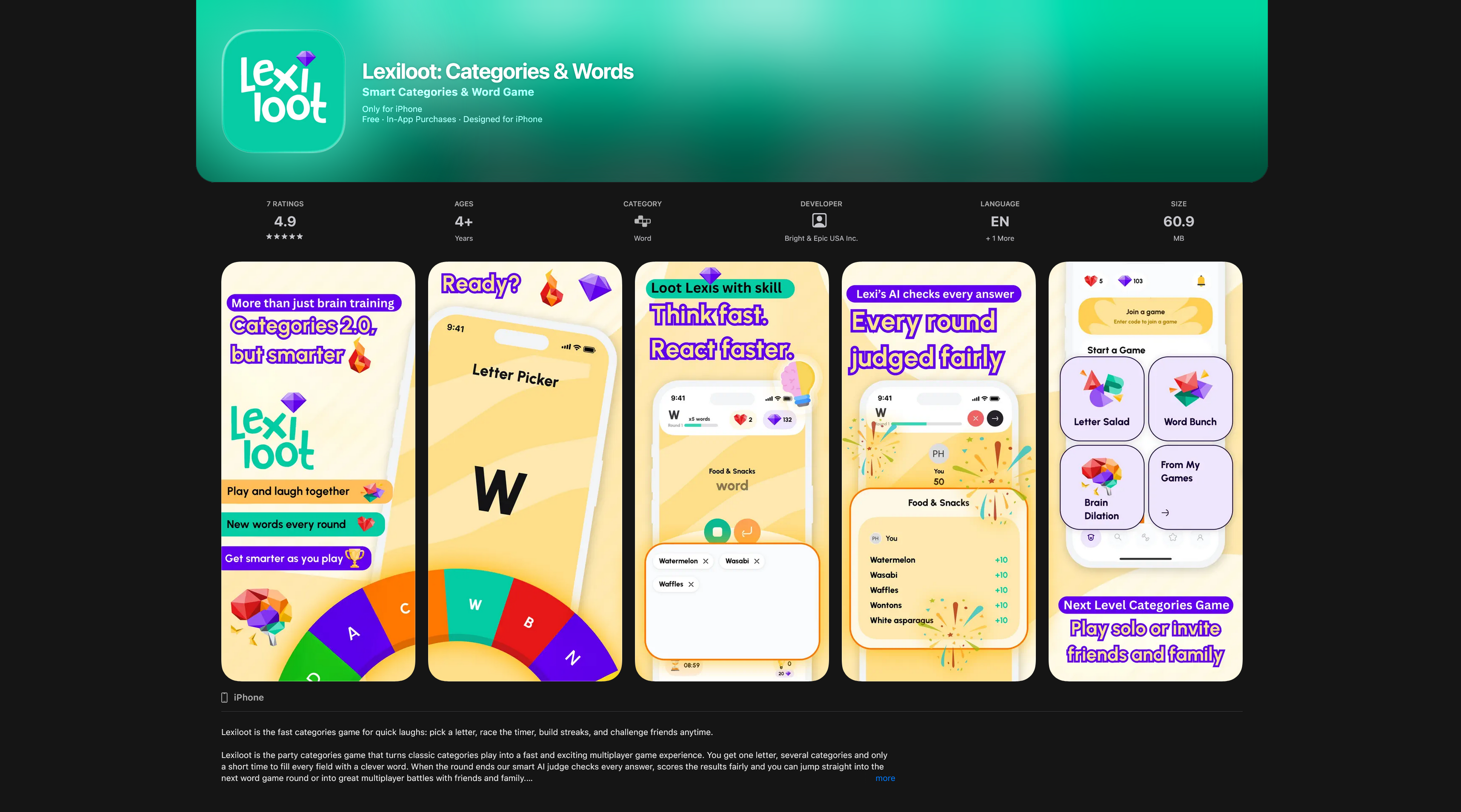
Browse our library of creative word game ideas to find the format that suits you best. Or go straight to our evidence-based collection designed to boost vocabulary and brainpower through play. Every game on Lexiloot is built to make your next word session count, for your brain, your confidence, and your leaderboard ranking.
Frequently asked questions
How do word games help build vocabulary faster than traditional study?
Word games provide interactive, motivating practice that leads to stronger retention and more active use of new words, with game-based interventions showing a Hedges’ g of 1.179 over traditional methods. The engagement and real-time application that games offer simply cannot be replicated through passive definition study.
What is the meaning-first method, and why is it effective?
Meaning-first learning prioritizes understanding a word’s meaning before its spelling or pronunciation, which produces stronger recall and real-world usage. Research confirms that meaning-first instruction outperforms form-first methods with a large effect size of Cohen’s d=1.37 for primary students.
Do mobile word games really boost vocabulary for adults as well as kids?
Yes, research shows that mobile word games lead to measurable vocabulary gains across age groups, with experimental groups scoring significantly higher than control groups in structured studies. The combination of engaging repetition and active word use makes these gains durable over time.
Which types of word games are best for building vocabulary?
Games that emphasize word meaning, context, and active use are the most effective, including Scrabble, category challenges, and cube-based formats. Advanced cubic word games achieve 89.5% coverage for three to five letter words across twelve languages, making them especially powerful for children aged three to thirteen.

