


TL;DR:
- Research confirms that mobile games significantly boost vocabulary acquisition more than passive review.
- Consistent practice with suitable apps, combined with active engagement and spaced repetition, enhances long-term retention.
Staring at a list of new words and hoping they’ll magically stick is one of the most frustrating experiences a language learner can have. You study, you forget, you study again. Research shows that mobile games dramatically improve vocabulary acquisition with an effect size of g=1.25, far beyond what passive review typically delivers. This guide walks you through everything: what you need before you start, a clear step-by-step method, common pitfalls to dodge, and how to track real gains so every minute you spend playing actually counts.
Table of Contents
- What you need before you start
- Step-by-step: Effective vocabulary learning methods with games
- Pitfalls and how to avoid them
- Measuring your vocabulary gains and keeping progress fun
- Why mobile vocabulary learning works—and where it falls short
- Level up your vocabulary with engaging, research-backed games
- Frequently asked questions
Key Takeaways
| Point | Details |
|---|---|
| Mobile games boost learning | Evidence shows interactive games can significantly increase vocabulary acquisition. |
| Mix methods for best results | Combining different game features and learning techniques strengthens both short and long-term retention. |
| Track and adjust | Self-assessment and progress tracking help maintain motivation and reveal what works best. |
| Know common pitfalls | Avoiding burnout and the wrong kind of competition sustains your learning journey. |
| Not a full replacement | Mobile games are best as a supplement to other language learning methods, especially for vocabulary. |
What you need before you start
Having set the stage for why mobile games help, let’s get specific about what you need to get started on the right foot.
First, you need a smartphone or tablet with a reliable internet connection. Most vocabulary apps run smoothly on mid-range devices, so you don’t need the latest hardware. What matters more is your consistency and having a comfortable place to play where you won’t be constantly interrupted.
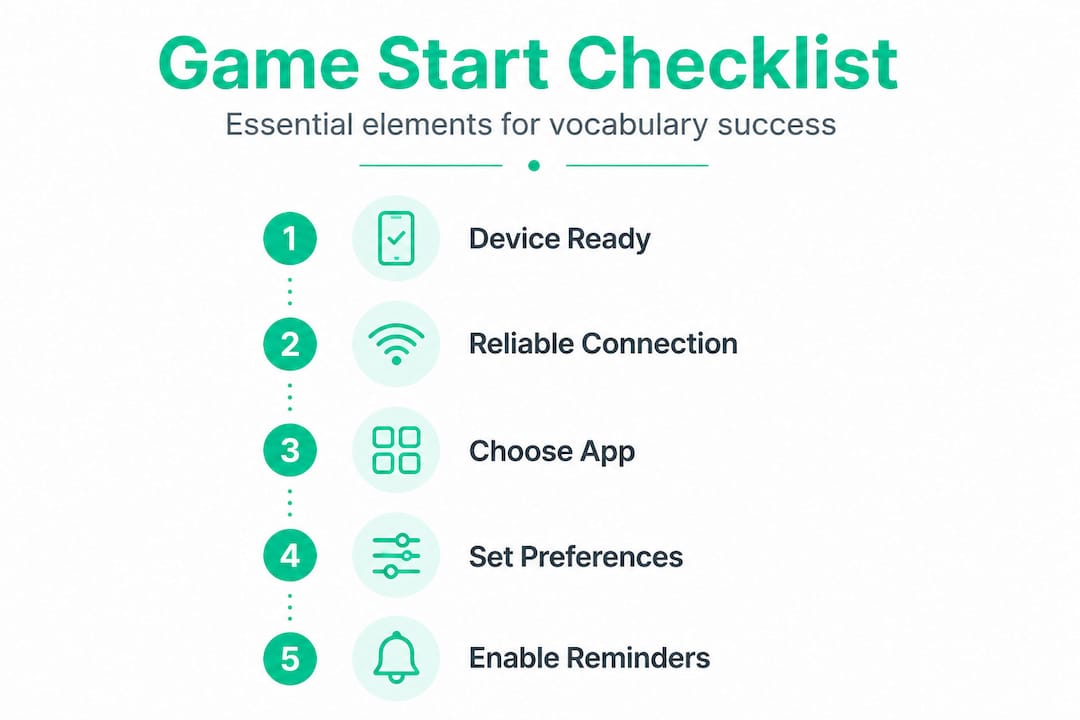
Next, decide on your learning style. Are you a solo learner who prefers working at your own pace? Or do you thrive when competing with or cooperating alongside others? Some learners do best with guided apps that track every session, while others enjoy the flexibility of social word battles. Knowing your preference early saves you a lot of trial and error.
Choosing the right app is where many people get stuck, so here’s a simple comparison to make it easier:
| App | Best feature | Free tier | Social play | Spaced repetition |
|---|---|---|---|---|
| Quizlet | Spaced repetition via Memory Score | Yes (Learn mode) | Yes (Quizlet Live) | Paid (cross-session) |
| Duolingo | Gamified daily streaks | Yes | Leaderboards | Yes (built-in) |
| Drops | Visual word-picture pairing | Limited | No | Limited |
Quizlet’s Learn mode uses in-session spaced repetition for free and adds a paid Memory Score that tracks retention across multiple study sessions. Its multiplayer Quizlet Live feature makes it especially useful for building both receptive and productive vocabulary skills.
Beyond picking an app, think about your environment. A few small habits make a big difference:
- Study in a quiet space to help vocabulary recall form without distraction.
- Keep sessions to 15 to 20 minutes to avoid mental fatigue.
- Set a consistent daily time, morning or evening, so practice becomes automatic.
- Use a game-based vocabulary trainer that matches your skill level rather than one that feels too easy or overwhelming.
- Explore engaging vocabulary games that blend fun with structured learning to keep you coming back.
Pro Tip: Turn on app notifications and daily reminders. Research consistently shows that learners who receive prompts complete significantly more practice sessions than those who rely on willpower alone.
Step-by-step: Effective vocabulary learning methods with games
With tools and apps in hand, here are the concrete, research-backed methods to use them for real vocabulary improvement.
Not all game time is equal. The way you engage with the material during play makes the biggest difference. Follow these steps to get the most out of every session:
-
Pretest yourself first. Before a new unit, try to guess word meanings from pictures or context clues. This primes your brain and makes the feedback you receive afterward more memorable. Studies show that pretesting with feedback improves cued recall by d=0.18 to 0.40 and multiple-choice performance by d=0.25 to 0.67 compared to simply reading word lists.
-
Use immediate feedback actively. When you get a word wrong, don’t just click past the correction. Pause for a second and read the correct answer carefully. This small habit transforms mistakes into powerful learning moments.
-
Mix recognition and recall tasks. Recognition tasks (matching a word to its picture) are great for building initial familiarity. Recall tasks (typing a word from memory) strengthen deeper retention. Most strong vocabulary apps offer both. Alternate between them during your sessions.
-
Space out your practice sessions. Cramming a hundred words in one night rarely works. Spread sessions across several days. Spaced repetition, reviewing words right before you’d naturally forget them, is the most proven technique for long-term vocabulary retention.
-
Review your progress at the end of each week. Use your app’s built-in score tracker or journal five words you learned and use each one in a sentence. This self-check reinforces active memory and shows you where you need more practice.
Here’s a quick look at how popular apps support each step:
| Learning step | Duolingo | Quizlet | Drops |
|---|---|---|---|
| Pretesting | Yes (word-picture match) | Partial | Yes (visual guess) |
| Immediate feedback | Yes | Yes | Yes |
| Recognition tasks | Yes | Yes | Yes |
| Recall tasks | Limited | Yes | No |
| Spaced repetition | Yes | Yes (paid) | Limited |
| Progress review | Yes | Yes (paid) | Limited |
Adventure and story-driven games deserve a special mention. Mobile games that use narrative frameworks, like adventure-style challenges, show larger vocabulary gains compared to drill-based formats. When words appear in a meaningful context, your brain forms stronger memory connections. Platforms that teach word games effectively often use this approach to build word knowledge naturally.

Browsing top learning games that use category challenges and narrative formats can help you find the style that keeps you most engaged.
Pro Tip: Interleaving, mixing different game types within a single session, accelerates word recall. Try 10 minutes of matching games, then 5 minutes of word recall quizzes. The variety keeps attention fresh and forces your brain to retrieve words from different angles.
Pitfalls and how to avoid them
Now that you know the steps, it’s crucial to recognize the roadblocks that can trip up even motivated learners.
Mobile vocabulary games offer real benefits, but they also come with traps that quietly undermine your progress. Knowing these ahead of time puts you in a much stronger position.
Here are the most common mistakes and how to recover from them:
- Relying on competition when it causes stress. Gamified apps use points, badges, and leaderboards to boost engagement, but for some learners, these competitive features trigger anxiety rather than motivation. If leaderboards make you feel defeated, switch to cooperative modes or solo challenges.
- Using only one app. Each app has its strengths. Drops excels at visual, short-term memory, while Duolingo builds long-term speaking and comprehension. Rotating between them gives you a fuller learning experience.
- Treating games as your only study tool. Games supplement vocabulary learning beautifully, but they work best alongside reading, conversation practice, or writing. Think of gamified learning as one powerful layer in a broader strategy.
- Playing passively. Clicking through answers without thinking is the gaming equivalent of highlighting every line in a textbook. Slow down and actively engage with each word.
- Ignoring session review. Many learners finish a session and immediately close the app. Take 30 seconds to mentally replay two or three new words you encountered. This brief review significantly strengthens retention.
“Game-based apps effectively boost motivation and engagement through points, badges, and leaderboards. However, competitive elements may increase anxiety for some learners, making cooperative game designs a better fit for building vocabulary confidence.” (Source)
Visual-first apps like Drops are genuinely effective in the short term. Research shows Drops achieves 14% higher short-term vocabulary retention thanks to its image-based approach, while Duolingo users show 28% higher speaking and comprehension scores over the long term. Neither app is the winner for everything. Use them together.
Understanding why games work can also help you use them smarter. Exploring the idea of why gamify vocabulary learning reveals that the real magic is not the game itself but the feedback loops that games create.
Pro Tip: After every session, take 10 seconds to silently recall the three words that felt hardest. That brief reflection can double the chance those words stick in long-term memory.
Measuring your vocabulary gains and keeping progress fun
To ensure your efforts pay off, let’s look at how you can check your own progress and keep learning enjoyable for the long run.
Progress tracking is not just satisfying, it’s scientifically important. When you can see growth, your motivation stays strong even on days when learning feels slow. Here’s how to measure what you’re gaining:
-
Use your app’s built-in scores. Quizlet’s Memory Score (available on paid plans) tracks word retention across sessions, not just within a single study block. This gives you an honest picture of what you actually know versus what you merely recognized during a game.
-
Keep a personal word journal. Write down five new words after each week of practice. Return to that list two weeks later and test yourself. The ones you still remember are genuinely learned. The ones you struggle with need another round of review.
-
Take short self-quizzes. Set a timer for 5 minutes and write as many words as you can recall from a recent category. This active recall test is more revealing than any in-app score.
-
Share milestones with others. Telling a friend or classmate about a word you just learned forces you to put it in context. Social sharing creates an extra layer of memory reinforcement.
-
Compare your starting point to where you are now. Many learners forget how far they’ve come because they only focus on what they don’t know yet. Looking back at your earliest app scores is a powerful motivator.
Here’s how top apps compare for progress tracking features:
| App | In-session tracking | Cross-session tracking | Long-term reports | Social sharing |
|---|---|---|---|---|
| Quizlet | Yes | Yes (paid) | Limited | Yes |
| Duolingo | Yes | Yes | Yes (streaks/XP) | Yes |
| Drops | Limited | Limited | No | No |
Duolingo enhances vocabulary achievement, participation, and motivation through its game-based features. Its streak system in particular keeps learners coming back daily. For deeper vocabulary practice, pair its engagement tools with step-by-step brain training resources that build on what you’ve already learned in-app.
Celebrating small wins matters more than most learners realize. A 5-word milestone this week becomes 100 words in 5 months. Keeping that long view in mind makes steady daily play feel genuinely worthwhile.
Why mobile vocabulary learning works—and where it falls short
With methods and tracking in place, let’s step back and critically examine what makes mobile vocabulary learning truly effective, and where guides like this one can sometimes oversell the promise.
Mobile games are not a shortcut. They are a powerful tool when used consistently and with intention. Research on adaptive algorithms, like the Memory Champion study which showed 27 words retained versus the control group’s 80 words using mnemonic plus retrieval practice, reminds us that games alone rarely outperform games combined with active strategies like mnemonics and self-testing. The algorithm helps. Your effort amplifies it.
Short intervention periods produce shallow results. Many learners download an app, spend two weeks playing, and feel disappointed when deep word knowledge hasn’t formed. Vocabulary retention requires repeated exposure over months, not days. This is where mobile games highly effective for vocabulary show their real strength: when used consistently over time, not as a one-time experiment.
Games are also much better suited for vocabulary than for grammar or conversational nuance. A game can teach you what “melancholy” means. It cannot easily teach you when to use it in a complex sentence, or how its connotation shifts depending on context. If you’re an advanced learner, games should supplement your learning about cognitive and social growth through language, not replace the deeper reading and conversation practice that grammar and nuance require.
The honest truth is that most guides, including this one, can fall into the trap of making technology sound like the answer to everything. It is not. Self-motivation, realistic goal-setting, and genuine curiosity about language matter just as much as which app you choose. The learners who succeed are the ones who show up every day, adjust when something stops working, and stay genuinely engaged with the words they’re learning, not just the points they’re earning.
Level up your vocabulary with engaging, research-backed games
Ready to put all of this into action? Lexiloot brings together the best of vocabulary building and category-based word challenges in one ad-free, social gaming experience. Whether you’re a student, a teacher, or a passionate word game fan, you’ll find game modes that match your style and pace.
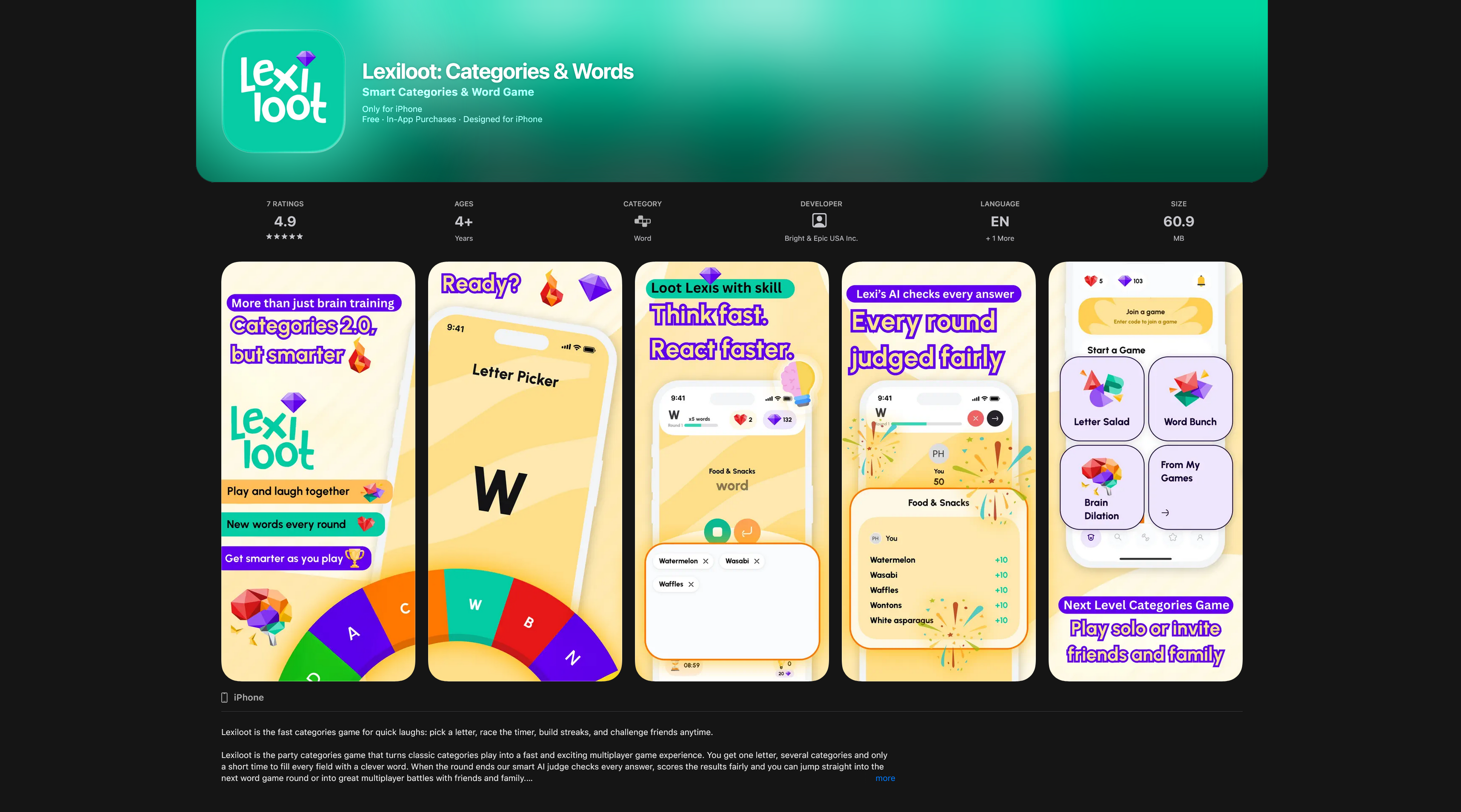
Explore creative word games that keep your brain sharp while expanding your vocabulary in ways that actually feel fun. Learn how vocabulary builds skills far beyond just knowing more words, reaching into reading comprehension, writing confidence, and cognitive flexibility. And when you’re ready to compete or collaborate with friends and family, check out our word game strategies guide to sharpen your edge and maximize every session. Lexiloot is available as a one-time purchase with no subscription required, making it a smart, lasting investment in your vocabulary journey.
Frequently asked questions
Which mobile game is best for vocabulary learning?
Duolingo is best for long-term language skills including speaking and comprehension, while Drops provides 14% higher short-term vocabulary retention through its visual approach. Using both together gives you the strongest overall results.
How often should I practice vocabulary with mobile games?
Daily practice for at least 15 minutes is ideal for building consistent vocabulary recall and retention. Shorter, frequent sessions outperform long, infrequent ones for long-term word learning.
Do mobile games really improve vocabulary better than flashcards?
Yes, mobile games show g=1.25 vocabulary gains over traditional methods because they combine immediate feedback, engagement, and motivation in ways that passive flashcard review cannot match.
Are competitive vocabulary games suitable for everyone?
No. Competitive elements may cause anxiety for some learners, making cooperative or solo game modes a much better fit for building vocabulary confidence without added stress.
Will vocabulary games help with grammar or speaking too?
Mobile games are highly effective for vocabulary but show smaller gains for grammar or speaking skills. They work best as a supplement to, rather than a replacement for, broader language practice.

