


Teaching vocabulary to children often feels like an uphill battle. Traditional flashcards and rote memorization leave kids bored and disengaged, making retention difficult. Word games offer a powerful alternative that transforms learning into an interactive, enjoyable experience. These games boost vocabulary retention through multi-sensory engagement while developing critical thinking and social skills. This guide will show you exactly how to use word games effectively, from selecting the right materials to measuring learning outcomes, so you can help children build stronger vocabularies while having genuine fun.
Table of Contents
- Key takeaways
- Gathering tools and preparing for word games
- Step-by-step guide to teaching word games effectively
- Common challenges and troubleshooting tips
- Measuring success and expected results
- Explore interactive word games with Lexiloot
- Frequently asked questions
Key Takeaways
| Point | Details |
|---|---|
| Multisensory games boost retention | Engaging vocabulary work through multiple senses and active participation strengthens long term retention. |
| Short sessions boost comprehension | Brief, regular game sessions help students improve reading comprehension over time. |
| Collaborative play boosts social skills | Working together on word games builds collaboration, communication, and social learning outcomes. |
| Tracking progress informs adjustments | Using simple tracking sheets helps identify vocabulary gaps and guides future session difficulty. |
Gathering tools and preparing for word games
Before you start teaching, gather the right materials to create engaging game experiences. You need basic supplies like index cards for creating custom vocabulary sets, letter cubes or tiles for building words, timers to keep sessions focused, and a whiteboard or paper for tracking scores and displaying words. Digital tools complement physical materials beautifully. Apps and online platforms provide interactive experiences that capture attention while reinforcing learning.
Start with simple, proven game formats that children grasp quickly. Word Detective challenges kids to find specific vocabulary words hidden in text passages. Dictionary Scavenger Hunt sends players racing to locate and define target words using reference materials. Vocabulary Clue adapts the classic guessing game format, where children provide hints without using the target word itself. These interactive word games boost retention through contextual learning and active participation.
Preparing for diverse learners requires thoughtful adaptation. English language learners benefit from visual supports like picture cards paired with vocabulary words. Children with attention difficulties thrive in shorter game bursts with clear, simple rules. Create word lists that match your group’s reading level, starting with familiar terms before introducing challenging vocabulary. Mix concrete nouns with abstract concepts to build comprehensive language skills.
Establish a consistent routine that signals game time. Set up your space with materials organized and accessible. Explain that games will happen at regular intervals, building anticipation and habit. Keep initial sessions brief to assess engagement levels and adjust difficulty accordingly.
Pro Tip: Create a simple tracking sheet where you note which words children struggle with during games. This reveals vocabulary gaps and helps you target future game sessions more effectively.
Monitor progress through informal observation during play. Notice which children confidently use new vocabulary and which hesitate. Track how quickly players complete challenges over multiple sessions. This ongoing assessment informs your material selection and difficulty adjustments, ensuring games remain challenging without becoming frustrating.
| Game Type | Materials Needed | Best For | Time Required |
|---|---|---|---|
| Word Detective | Text passages, highlighters | Reading comprehension | 10-15 minutes |
| Dictionary Race | Dictionaries, word lists | Reference skills | 5-10 minutes |
| Vocabulary Clue | Word cards, timer | Speaking and listening | 15-20 minutes |
| Letter Building | Letter tiles or cubes | Spelling and creativity | 10-15 minutes |
| Category Challenge | Paper, pencils, timer | Critical thinking | 10-15 minutes |
Explore different types of word games to discover which formats resonate most with your learners. Variety prevents boredom and exposes children to vocabulary in multiple contexts, strengthening neural pathways and improving long-term retention.
Step-by-step guide to teaching word games effectively
Introduce each new game with crystal clear instructions. Demonstrate gameplay yourself first, walking through one complete round while explaining your thinking process aloud. Children learn best by watching before doing. Keep your explanation under three minutes to maintain attention. Answer questions before starting, ensuring everyone understands the objective and rules.
- Select vocabulary words appropriate for your group’s skill level, choosing 5-10 target terms per session
- Explain the game rules using simple language and visual demonstrations
- Play one practice round together where mistakes don’t count, allowing children to ask questions
- Start the actual game with a clear timer visible to all players
- Encourage players to explain their thinking when they use vocabulary words correctly
- Provide immediate, specific feedback that reinforces learning without discouraging effort
- End each session by reviewing 2-3 vocabulary words that challenged players most
Encourage group play whenever possible. Collaborative game-based learning produces stronger spelling and vocabulary outcomes than individual gaming or traditional methods. Partner weaker readers with stronger ones, creating natural peer teaching opportunities. Rotate partnerships regularly so children learn from multiple classmates.
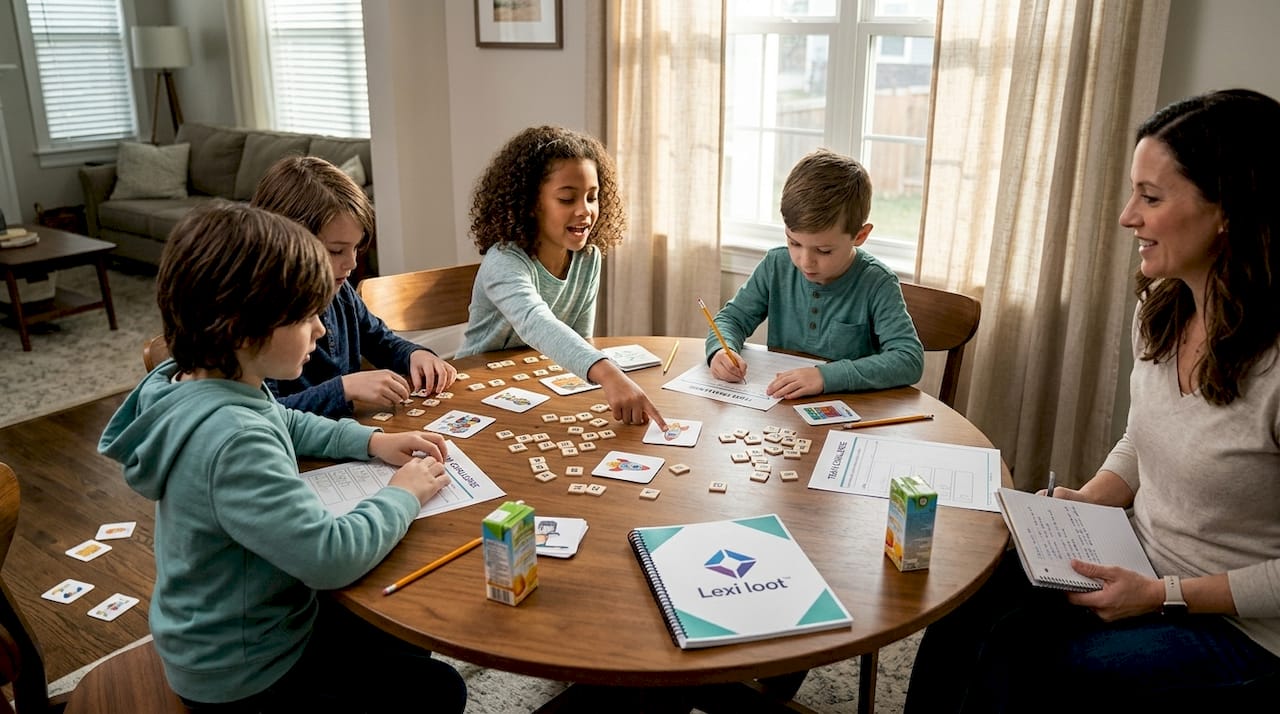
Adapt difficulty by adjusting word complexity, time limits, and support materials. Beginners need longer time periods and access to word banks or visual aids. Advanced players thrive with challenging vocabulary, tighter time constraints, and fewer hints. Pay attention to frustration signals like disengagement or complaints. If a game feels too hard, simplify immediately rather than pushing through.
Maintain motivation through varied game formats and genuine celebration of progress. Avoid focusing solely on winning. Instead, highlight specific vocabulary gains, creative word use, and improved speed. Create a points system that rewards multiple achievements, not just first place finishes. Some children excel at finding obscure words while others shine at quick thinking. Recognize both.
Pro Tip: Keep a victory journal where you record each child’s best moments during games. Share these observations periodically to build confidence and demonstrate that you notice their growth.
Track improvements through simple metrics. Note how many vocabulary words each child uses correctly during free play or writing activities. This application beyond game time proves genuine learning. Review your tracking sheets weekly to identify patterns and adjust your teaching approach. Some children need more repetition while others crave new challenges constantly.
Provide meaningful feedback that guides future learning. Instead of just saying “good job,” explain exactly what impressed you. “You remembered that ‘meticulous’ means careful and detailed, and you used it in a complete sentence” teaches more than generic praise. Constructive feedback should focus on effort and strategy rather than innate ability. “You thought carefully before answering” encourages persistence better than “you’re so smart.”
Learn effective word game strategies that help children develop systematic approaches to vocabulary challenges. Teaching strategy alongside content creates independent learners who can tackle new words confidently.
Common challenges and troubleshooting tips
Short attention spans derail even the best-planned game sessions. Combat this by keeping individual games under 15 minutes. Break longer sessions into multiple short games with brief movement breaks between rounds. Physical activity resets focus and prevents restlessness. Try having children do 10 jumping jacks or stretch for 30 seconds before starting a new game.
Disputes over rules and scoring happen frequently during competitive play. Prevent arguments by writing rules on a visible poster before you start. When disagreements arise, refer to the written rules together rather than making judgment calls that feel arbitrary. Teach children to resolve disputes through discussion, asking them to explain their interpretation before you provide guidance. This builds conflict resolution skills alongside vocabulary.
- Establish clear consequences for poor sportsmanship before games begin, applying them consistently
- Rotate the role of scorekeeper so children take ownership of fair play
- Use collaborative games where teams work together toward shared goals rather than competing
- Celebrate creative word use and effort as much as winning to reduce competitive pressure
- Model gracious winning and losing through your own behavior and commentary
English language learners need additional support to participate fully. Provide visual aids like pictures or objects representing vocabulary words. Simplify instructions by demonstrating rather than explaining verbally. Allow ELLs to use their first language when brainstorming before translating to English. Pair them with patient, supportive classmates who can clarify confusion without taking over.
Digital games enhance motivation compared to traditional methods, but they require clear rules and appropriate difficulty levels. Technical issues frustrate children quickly. Test all digital tools before sessions and have backup analog games ready. Set firm boundaries around screen time and game selection. Not all digital word games offer educational value. Choose apps and websites that align with your learning objectives and provide meaningful vocabulary practice.
Maintaining motivation over time requires intentional variety. Rotate through different game types weekly so children don’t tire of repeated formats. Introduce new vocabulary themes that connect to their interests, like sports terms, animal names, or words related to their favorite books. Let children suggest vocabulary topics occasionally, giving them ownership over their learning.
“The key to sustained engagement is balancing familiarity with novelty. Children need enough repetition to build confidence but enough variety to stay curious.”
Children with attention difficulties benefit from modifications that match their processing style. Use visual timers that show time remaining rather than just beeping when finished. Provide fidget tools they can manipulate during other players’ turns. Break complex games into smaller steps with checkpoints. Offer choices between two game options, giving them control over their learning experience. These accommodations help all children, not just those with diagnosed attention challenges.
Keep rules consistent across sessions while allowing minor variations that maintain interest. If you change a rule, explain why and ensure everyone understands before playing. Consistency builds security and confidence, helping children focus on vocabulary rather than constantly learning new procedures.
Explore how to play categories for a versatile game format that adapts easily to various skill levels and learning objectives while keeping children engaged through friendly competition.
Measuring success and expected results
Verify learning through pre and post testing that reveals concrete vocabulary gains. Before starting your game-based approach, assess which vocabulary words children know through simple oral or written tests. Don’t make this stressful. Frame it as a baseline that helps you choose appropriate games. After six weeks of regular game sessions, repeat the assessment using the same format. Compare results to quantify improvements.
Observation provides rich qualitative data that tests miss. Notice whether children use new vocabulary during conversations, writing, and free play. Listen for correct context and pronunciation. Track how quickly they recall word meanings when prompted. These real-world applications matter more than test scores because they demonstrate genuine integration into active vocabulary.
Students using vocabulary games show 23% higher retention compared to traditional methods. Daily 15-minute sessions improve reading comprehension within six weeks. These aren’t abstract statistics. They represent real children reading more confidently, expressing themselves more precisely, and engaging more deeply with texts.
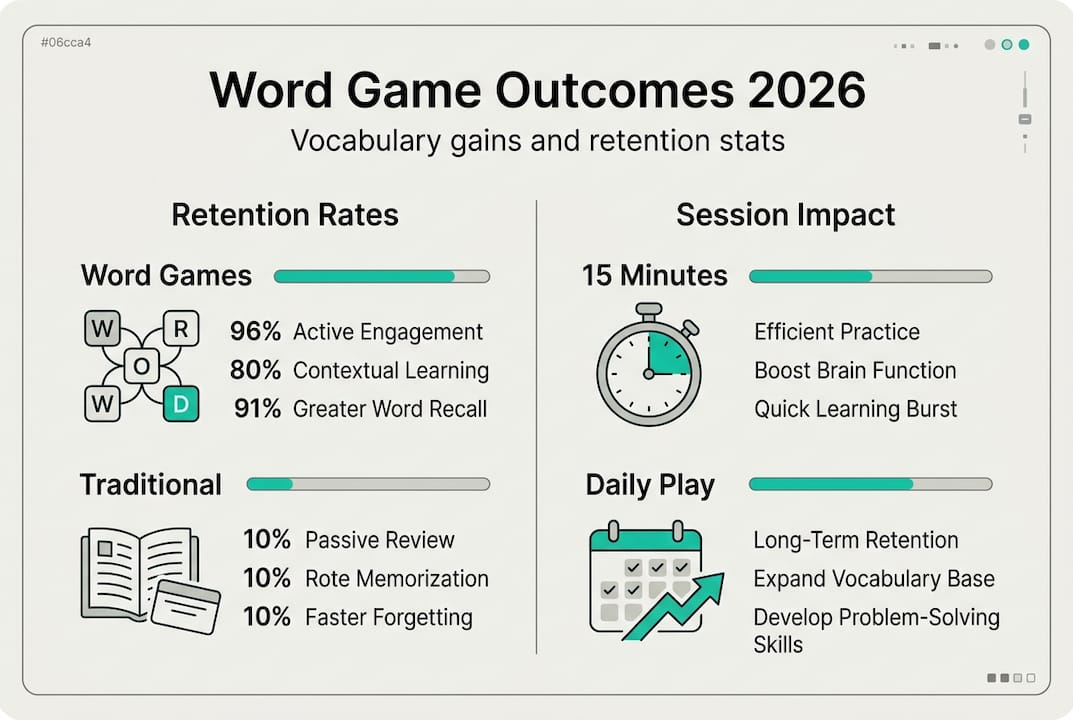
| Learning Method | Retention Rate | Time to Results | Engagement Level |
|---|---|---|---|
| Traditional flashcards | Baseline | 8-10 weeks | Low to moderate |
| Rote memorization | Below baseline | 10-12 weeks | Low |
| Vocabulary games | 23% above baseline | 6 weeks | High |
| Collaborative word games | 30% above baseline | 6 weeks | Very high |
Expect observable improvements beyond vocabulary size. Children develop stronger critical thinking as they analyze word relationships and patterns. Social skills improve through collaborative play and friendly competition. Confidence grows as success in games translates to success in reading and writing. Some children discover a genuine love of words and language that extends far beyond your structured sessions.
Beyond vocabulary, watch for cognitive skill development:
- Improved working memory as children hold multiple vocabulary words in mind during games
- Enhanced processing speed when recalling word meanings quickly under time pressure
- Stronger pattern recognition when identifying word families and roots
- Better executive function through following multi-step game rules and strategies
- Increased metacognition as children reflect on their learning and strategy choices
Recommend daily 15-minute sessions for optimal results. Consistency matters more than duration. Five days of brief games outperform one long weekly session because spaced repetition strengthens memory formation. If daily sessions aren’t possible, aim for at least three times weekly. Less frequent practice significantly reduces retention and slows progress.
Document progress through simple methods that don’t create extra work. Keep a class or family vocabulary journal where you note new words introduced each week and which children mastered them. Take occasional videos of game sessions to review later, noticing improvements in speed, confidence, and vocabulary use. Share progress with children regularly, helping them see their own growth. This metacognitive awareness motivates continued effort.
Set realistic expectations based on starting skill levels. Children with strong foundational vocabulary will add words more quickly than those with significant gaps. Both groups benefit equally from games, but their growth trajectories differ. Celebrate individual progress rather than comparing children to each other. Every child who expands their vocabulary and enjoys learning wins.
Discover more about the categories game for kids and how it develops vocabulary alongside critical thinking skills through structured yet playful challenges that adapt to various classroom and home settings.
Explore interactive word games with Lexiloot
Now that you understand how to teach word games effectively, you need practical tools that bring these strategies to life. Lexiloot offers interactive word games specifically designed for children and educational settings, combining the engagement of digital play with serious vocabulary building. The platform features category challenges, word puzzles, and multiplayer competitions that align perfectly with the teaching methods you’ve learned.
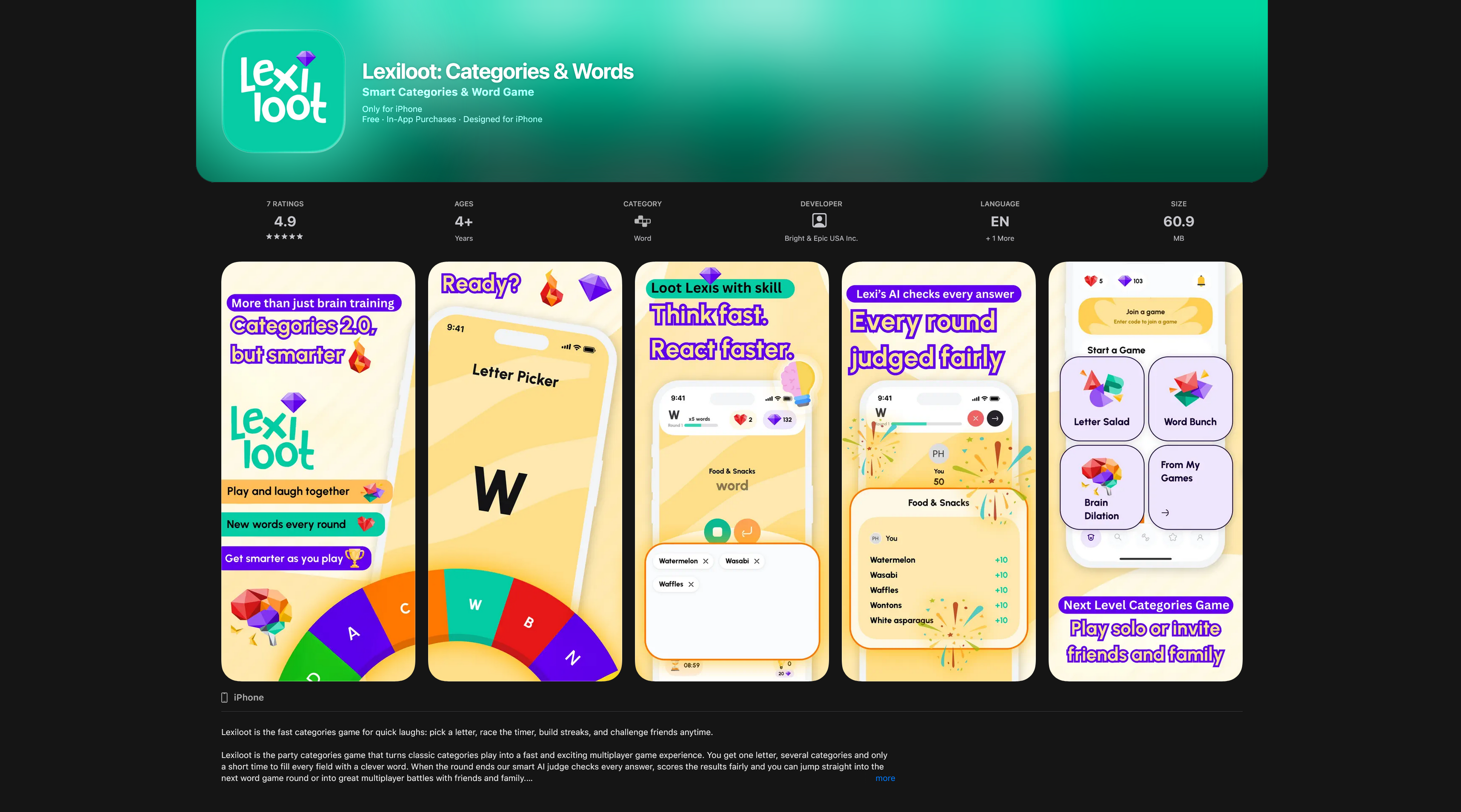
Create custom word puzzles tailored to your students’ exact needs and learning objectives. Whether you’re targeting specific vocabulary themes or adapting difficulty for diverse learners, Lexiloot provides the flexibility educators and parents need. The app’s social features encourage the collaborative play that research shows produces the strongest learning outcomes.
Explore the categories game for kids and classrooms to see how structured category challenges develop vocabulary and critical thinking simultaneously. Learn how to create word puzzles that match your teaching goals perfectly. Discover various word puzzle varieties that keep learning fresh and engaging across multiple sessions. Lexiloot transforms the teaching strategies you’ve learned into practical, ready-to-use games that children genuinely enjoy while building stronger vocabularies.
Frequently asked questions
How long should word game sessions last for effective learning?
Short daily sessions around 15 minutes maximize retention and engagement without overwhelming children. Daily 15-minute sessions improve reading comprehension within six weeks. Consistency matters more than duration in individual sessions. Brief, regular practice strengthens memory formation through spaced repetition better than occasional long sessions.
What are the best word games for children with attention difficulties?
Use short, engaging games with frequent breaks matched to attention spans. Incorporate visual aids and multi-sensory elements to maintain focus and accommodate diverse processing styles. Games like quick category challenges or timed word building work well because they provide natural stopping points. Allow movement between rounds and offer fidget tools during other players’ turns to channel restless energy productively.
How can I incorporate digital and analog word games together?
Alternate digital games with hands-on analog games for balanced stimulation throughout the week. Use digital games for motivation and immediate feedback while employing analog games for tactile learning and social interaction. Blend digital and analog approaches to maximize engagement across different learning styles. This combination prevents screen fatigue while maintaining the motivational benefits technology provides.
Can word games really improve reading comprehension?
Yes, vocabulary games directly improve reading comprehension by expanding the words children recognize and understand in context. When children know more words, they decode text faster and grasp meaning more deeply. Research shows measurable comprehension gains within six weeks of regular game-based vocabulary practice. The contextual learning that games provide helps children apply vocabulary to actual reading situations more effectively than isolated memorization.
How do I choose vocabulary words for game sessions?
Select words slightly above your children’s current reading level to provide appropriate challenge without frustration. Include words from their current reading materials, upcoming lessons, or topics that interest them. Mix familiar words for confidence building with new terms for growth. Group words thematically when possible, as related vocabulary reinforces connections and aids memory. Start each session with 5-10 target words, adjusting based on how quickly children master them.

