


Finding word games that genuinely improve vocabulary while staying fun for all ages can feel impossible. Most apps either bore you with repetitive puzzles or fail to deliver real cognitive benefits. Category-based word games solve both problems by combining rapid recall challenges with proven learning methods. They boost vocabulary retention by 15-20% while keeping gameplay fresh and engaging. This guide shows you exactly how to play categories effectively, avoid common mistakes, and track measurable progress in your language skills and mental agility.
Table of Contents
- What You Need To Start Playing Category-Based Word Games
- How To Play Categories: Step-By-Step Gameplay Instructions
- Common Mistakes And Troubleshooting When Playing Categories
- What Results To Expect And How To Track Your Progress
- Explore Category Games And Boost Your Brain Power With Lexiloot
- Frequently Asked Questions
Key takeaways
| Point | Details |
|---|---|
| Vocabulary boost | Category games improve vocabulary recall by 15-20% through repeated semantic memory activation. |
| Cognitive benefits | These games enhance processing speed and problem-solving skills across all age groups. |
| Variety matters | Playing different category game types prevents boredom and sustains long-term learning. |
| Strategic play | Thoughtful gameplay approaches maximize both entertainment value and educational outcomes. |
What you need to start playing category-based word games
Before jumping into category games, you need a few essentials. First, build a basic grasp of word categories and how vocabulary organizes into groups like animals, foods, or professions. This foundational knowledge makes gameplay smoother and more rewarding from day one.
You’ll need a platform that offers category-based word games effectively engaging users of all ages. Mobile apps, web-based games, or even traditional pen-and-paper formats all work. Choose what fits your lifestyle and accessibility preferences.
Commit to regular engagement. Sporadic play won’t deliver the cognitive benefits you’re after. Plan for consistent sessions, even if they’re short, to activate the spaced repetition effect that strengthens memory pathways.
Familiarize yourself with types of word games for fun and skill building in 2026 to identify which category formats match your goals. Some focus on speed, others on depth, and many blend both approaches.
Essential preparation checklist:
- A device or game platform ready to use
- 15-30 minutes of daily time blocked out
- Basic understanding of common word categories
- Willingness to challenge yourself with new categories
- A tracking method for monitoring progress
Pro Tip: Start with familiar categories like foods or animals to build confidence, then gradually introduce abstract categories like emotions or professions to expand your semantic range.
| Category Type | Difficulty Level | Best For |
|---|---|---|
| Concrete (Animals, Foods) | Beginner | Building foundational recall speed |
| Abstract (Emotions, Concepts) | Intermediate | Deepening semantic connections |
| Specialized (Scientific Terms) | Advanced | Vocabulary expansion in specific domains |
| Mixed Categories | All Levels | Maintaining engagement and variety |
How to play categories: step-by-step gameplay instructions
Playing categories is straightforward but rewards strategic thinking. Start by selecting a category, either randomly assigned by the game or chosen from a list. Common categories include animals, cities, foods, colors, or occupations.

Once the category appears, your goal is recalling and listing as many words fitting that category as possible within the time limit. The core mechanic of categories relies on rapid semantic memory retrieval, activating neural pathways that strengthen with practice.
Standard gameplay sequence:
- Category announcement or selection
- Timer starts (typically 30-90 seconds)
- Recall and input words matching the category
- Scoring based on unique, valid answers
- Round completion and score display
Many games add variations to keep things interesting. Timed rounds create urgency and improve processing speed. Solitaire formats let you play at your own pace, perfect for focused learning sessions. Multiplayer modes introduce competition, which research shows enhances motivation and retention.
Apply smart strategies to maximize scores and learning. Focus on less obvious words rather than the first ones everyone thinks of. For the category “fruits,” skip “apple” and “banana” to list “persimmon” or “kumquat” instead. This approach forces deeper semantic exploration and builds rarer vocabulary.
Pro Tip: Use the alphabet method by mentally running through A to Z, asking what category members start with each letter. This systematic approach prevents blanking and uncovers words you wouldn’t naturally recall.
Explore different game modes to find what works best. Some players thrive under time pressure, while others prefer untimed practice. Master category games online for brain training by experimenting with various formats until you discover your optimal challenge level.
| Game Mode | Time Limit | Players | Learning Focus |
|---|---|---|---|
| Speed Round | 30-60 seconds | 1+ | Quick recall and processing |
| Endurance | 2-5 minutes | 1 | Deep semantic exploration |
| Battle | 60-90 seconds | 2+ | Competitive motivation |
| Practice | Untimed | 1 | Thorough category mastery |
Track your unique word count per category over time. Improvement in this metric directly correlates with vocabulary expansion and cognitive flexibility gains.
Common mistakes and troubleshooting when playing categories
Many players sabotage their progress by choosing overly simple categories repeatedly. Sticking with “colors” or “numbers” feels comfortable but limits growth. Your brain needs progressive challenge to build new neural connections and vocabulary depth.
Keep your game library fresh with new categories. Boredom is the enemy of consistent play, and a common pitfall is oversimplifying categories, reducing challenge and engagement. Rotate through diverse topics weekly to maintain interest and cognitive stimulation.
Avoid rushing answers, especially when starting out. Accuracy matters more than speed in early sessions. Prioritize correct recall and proper spelling to reinforce learning pathways. Speed naturally increases as your semantic networks strengthen.
Balance challenge and fun carefully. Games that frustrate you won’t get played, but games that bore you won’t deliver benefits. Adjust difficulty settings or category complexity to stay in the sweet spot where you’re challenged but not overwhelmed.
Common issues and solutions:
- Mental blanking: Use systematic methods like the alphabet technique or think of subcategories
- Repetitive answers: Consciously avoid your go-to words and push for deeper recall
- Declining motivation: Switch game modes, add multiplayer elements, or track visible progress metrics
- Plateau in scores: Introduce harder categories or shorter time limits to reignite growth
“The most effective category game practice involves gradually increasing difficulty while maintaining enjoyment. Players who quit due to frustration or boredom miss the cumulative cognitive benefits that emerge after consistent engagement.”
Don’t ignore the social dimension. Playing solo has value, but multiplayer sessions dramatically boost engagement and learning retention. Invite friends or family to join, creating accountability and friendly competition that keeps you coming back.
Pro Tip: If you’re stuck on a category, visualize physical spaces where those items appear. For “kitchen items,” mentally walk through a kitchen and name everything you see. This spatial memory technique unlocks words your abstract recall might miss.
Monitor your emotional response to different categories. If certain topics consistently frustrate you, that signals a vocabulary gap worth addressing through targeted practice or supplementary learning.
What results to expect and how to track your progress
Consistent category game play delivers measurable improvements. Regular play improves vocabulary recall by 15-20% and cognitive processing speed by 10-15% after eight weeks of daily practice. You’ll notice faster word retrieval in conversations and writing.
Enhanced problem-solving and cognitive flexibility emerge as secondary benefits. Your brain becomes better at switching between semantic categories and making novel connections between concepts. This mental agility transfers to real-world tasks beyond word games.
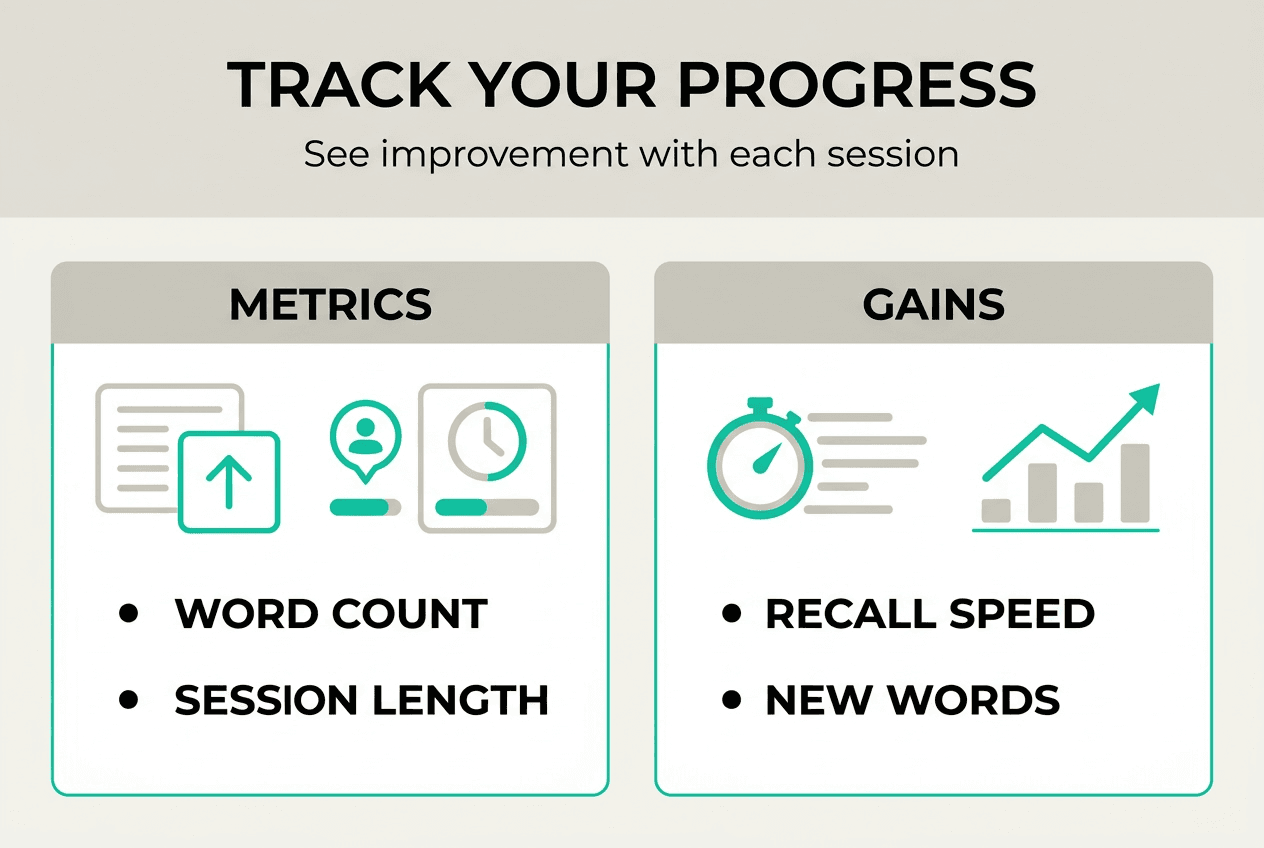
Track sessions completed, unique words recalled per category, and time per round to quantify progress. Many apps provide built-in analytics, or you can maintain a simple spreadsheet logging these metrics weekly.
Key performance indicators:
- Total unique words per category (target: 20% increase monthly)
- Average response time per word (target: 15% decrease monthly)
- Category completion rate (percentage of categories where you list 10+ words)
- Streak days (consecutive days played)
- New vocabulary words learned and retained
Compare your performance to baseline measurements taken during your first week. This approach reveals genuine improvement rather than subjective feelings of progress. Celebrate milestones like doubling your word count in challenging categories or maintaining a 30-day streak.
| Metric | Week 1 Baseline | Week 4 Target | Week 8 Target |
|---|---|---|---|
| Words per category | 8-12 | 12-16 | 16-22 |
| Response time | 4-6 seconds | 3-4 seconds | 2-3 seconds |
| Daily streak | 1-3 days | 20+ days | 50+ days |
| Categories mastered | 2-3 | 8-10 | 15-20 |
Look for transfer effects in daily life. Do you recall names faster? Find the right word in conversations more easily? Notice richer vocabulary in your writing? These real-world improvements validate the time invested in gameplay.
Some platforms offer leaderboards and achievement systems that gamify progress tracking. Use these features if they motivate you, but don’t let competition overshadow personal growth metrics. Your journey is unique to your starting point and goals.
Pro Tip: Take monthly vocabulary assessments using free online tools to measure gains beyond game-specific metrics. This external validation confirms that improvements translate to general language ability.
Research on crossword puzzle cognitive benefits shows similar brain training effects, suggesting category games sit within a broader ecosystem of effective cognitive enhancement activities. Combine them with other word puzzles for comprehensive mental fitness.
Set realistic expectations for timeline. Noticeable vocabulary improvements typically appear after 3-4 weeks of consistent play. Cognitive processing gains may take 6-8 weeks to become obvious. Patience and consistency beat intense but sporadic effort.
Explore category games and boost your brain power with Lexiloot
Ready to put these strategies into practice? Lexiloot offers engaging category games for kids and classrooms and adults alike, combining proven cognitive benefits with genuinely fun gameplay. Our platform adapts to your skill level, ensuring you stay challenged without frustration.
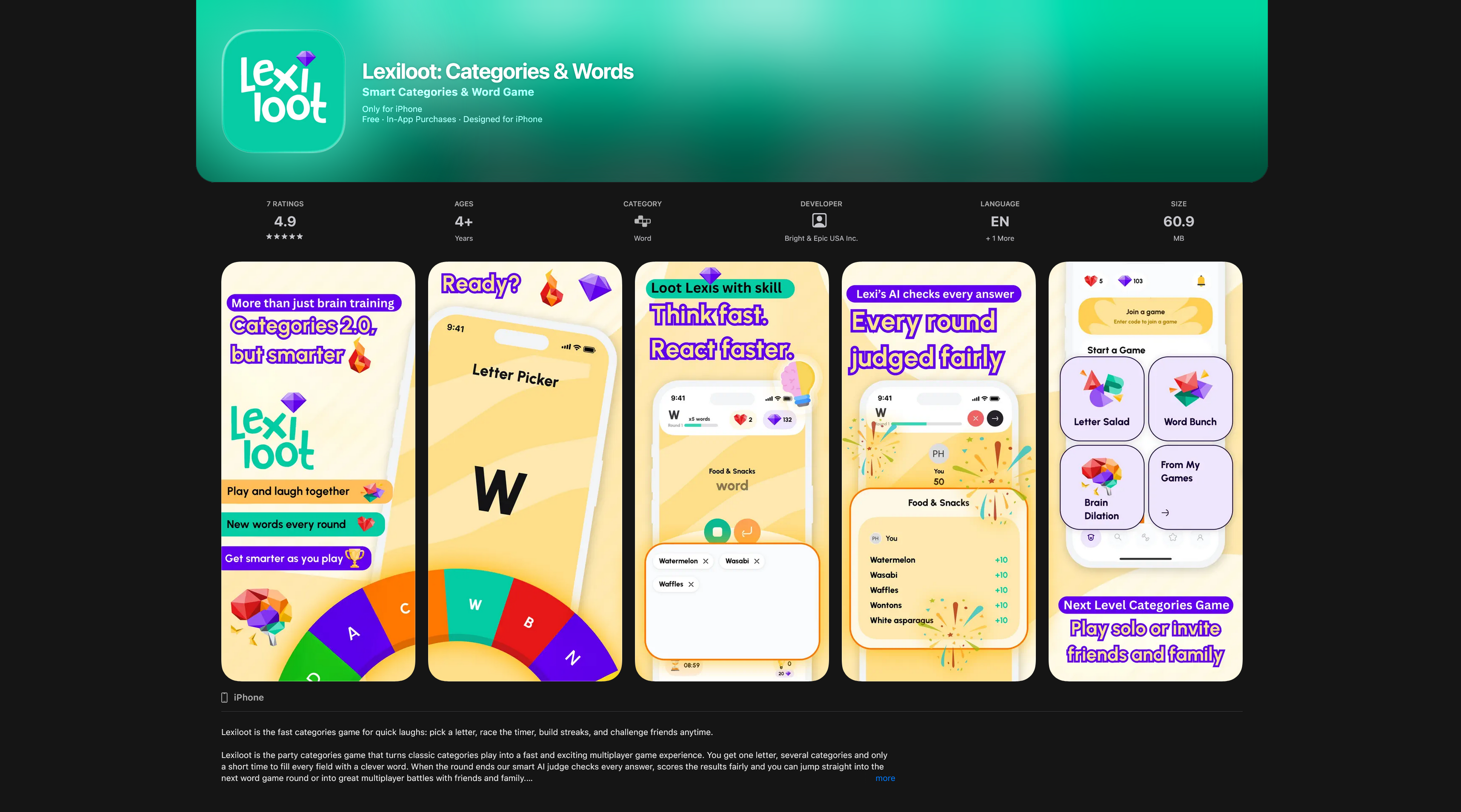
Explore different game modes and training plans tailored to your vocabulary goals. Whether you’re a student building academic language, a teacher seeking classroom tools, or a casual gamer wanting mental stimulation, Lexiloot provides the variety and structure you need. Master category games online for fun and brain training with our comprehensive game library and progress tracking features. Discover types of word games for fun and skill building in 2026 that fit your learning style and schedule.
Frequently asked questions
What age groups benefit most from playing categories?
Category games benefit children, adults, and seniors equally, though in different ways. Kids develop foundational vocabulary and categorization skills essential for reading comprehension. Adults maintain cognitive sharpness and expand professional vocabulary. Seniors use these games to preserve memory function and semantic fluency. Games adapt in difficulty to challenge different skill levels, making them accessible across generations. Consistent play improves vocabulary and cognition across all ages, with benefits appearing after just a few weeks of regular engagement.
Can playing categories help with memory and cognitive decline?
Cognitive training with word puzzles shows promise for maintaining brain health. Crossword and category games show promise as cognitive enhancement tools for people at risk for Alzheimer’s disease. Categories games engage memory and semantic association, two functions that typically decline with age. While not a cure, regular play may slow cognitive decline when combined with other healthy lifestyle factors. The key is consistency rather than intensity, making these games ideal for daily mental maintenance routines.
What types of category games are best for improving vocabulary?
Games combining association and category matching prove highly effective for vocabulary growth. Word association and category matching games show 15-20% vocabulary improvement after consistent play. Progressive difficulty and varied categories sustain learning by preventing adaptation and boredom. Look for games that introduce new categories regularly and track your expanding word knowledge. Multiplayer formats add social motivation that enhances retention. The categories game app approach works best when it balances familiar categories for confidence building with challenging ones for growth.
How often should I play category games to see benefits?
Consistent daily play yields the best results for both vocabulary and cognitive gains. Studies show improvements after playing category games 30 minutes a day for 8 weeks. This duration activates spaced repetition effects without causing mental fatigue. You can split this into two 15-minute sessions if that fits your schedule better. The critical factor is regularity rather than session length. Five days of 20-minute play beats one marathon weekend session. Track your streak days to build the habit, and you’ll notice vocabulary recall improvements within the first month.

