


TL;DR:
- Engaging, evidence-based vocabulary games and apps effectively enhance word recall through active engagement and feedback.
- Consistency, variety, and tracking progress are crucial for long-term vocabulary growth across all age groups.
Most people hit the same wall at some point: you’re writing an email, joining a conversation, or helping your child with homework, and the right word just won’t come. It’s a frustrating feeling, and it happens to learners of all ages. The good news is that this is a very solvable problem. Research shows that interactive learning methods consistently outperform old-school rote memorization for building vocabulary recall. In this guide, we’ll walk you through a clear, step-by-step approach to expanding your word knowledge using engaging, evidence-backed games and apps.
Table of Contents
- Get ready: What you need to start boosting your vocabulary
- Step 1: Choose proven word games and apps
- Step 2: Play daily and use cognitive training strategies
- Step 3: Check your progress and avoid common pitfalls
- Why real progress comes from mixing play and purpose
- Ready to grow your vocabulary? Try the top word game platforms
- Frequently asked questions
Key Takeaways
| Point | Details |
|---|---|
| Interactive learning works | Active games and quizzes beat memorization for building a bigger vocabulary. |
| Best results need daily play | Playing word games 10-20 minutes a day achieves steady, lasting progress. |
| Mix fun and education | Combining playful and educational apps delivers rapid, trackable vocabulary growth. |
| Track and adapt | Test your vocabulary regularly and adapt your strategies when growth slows. |
Get ready: What you need to start boosting your vocabulary
Now that you’ve seen why traditional methods aren’t enough, let’s look at what you’ll need to succeed. Preparation matters more than most people expect. Getting your mindset, tools, and realistic goals in place before you start will set you up for faster, more lasting results.
How your brain actually learns new words
Your brain doesn’t lock in new vocabulary by simply reading a definition once. It learns through active engagement, meaning you need to retrieve, use, and apply words repeatedly in different ways. Think of it like a muscle: passive reading doesn’t build much strength, but actively guessing, testing yourself, and getting feedback exercises that memory pathway directly.
Research confirms this. Retrieval practice with feedback, including pretesting where you guess an answer before seeing it, produces Cohen’s d gains of 0.18 to 0.40 in cued recall for vocabulary. That’s a meaningful, measurable jump in how well people remember new words.
Explore engaging vocabulary games to understand how well-designed games activate this kind of deep processing from the very first session.
What tools and habits you need
Here’s what you’ll want to set yourself up properly:
- A mobile device or tablet: Most modern vocabulary apps work on both Android and iOS. A reliable internet connection ensures you get updated content and adaptive feedback.
- A trusted vocabulary game or learning app: Not every app is built the same way. Look for ones that include quizzes, immediate feedback, and progress tracking rather than just flashcard drills.
- Interactive features: Get comfortable with formats like multiple-choice quizzes, word-matching games, and timed spelling challenges. These formats work because they replicate the retrieval process your brain needs.
- A realistic daily goal: Research and educators consistently recommend aiming for 10 new words per day. That’s manageable, measurable, and enough to see noticeable growth within weeks.
Understanding why gamify vocabulary learning works can help you make smarter choices about which apps and features to prioritize from the start.
| Daily goal | Words per week | Words per month |
|---|---|---|
| 5 words/day | 35 words | 150 words |
| 10 words/day | 70 words | 300 words |
| 15 words/day | 105 words | 450 words |
Pro Tip: Don’t aim for 50 new words a day. Consistent, moderate learning beats cramming every time. Your brain consolidates vocabulary best during sleep after shorter, focused sessions.

Step 1: Choose proven word games and apps
With your tools and goals in place, it’s time to pick the best vocabulary games to maximize your learning. Not all word games deliver the same results. Some are fun but give you little structure; others are evidence-based and designed to track your actual growth.
What separates a good vocabulary app from a great one
A great vocabulary app does three things well: it adapts to your current level, gives you immediate feedback when you get something wrong, and tracks your progress over time. Apps that only show you flashcards and ask you to swipe are limited because they don’t force your brain to work hard enough.
Empirical studies show that Duolingo delivers 25% better retention compared to traditional methods, with significant pre and post test gains measured in research settings. Quizlet, with its spaced repetition model, also shows strong results for building what researchers call receptive vocabulary, which is understanding words when you read or hear them.
The distinction between entertainment games and dedicated educational apps is also worth understanding. Entertainment games expand vocabulary incidentally through exposure, but educational apps like Vocabulary Builder and structured platforms provide targeted, trackable growth. Both have a place in a smart vocabulary routine.
How to pick the right mix
Here’s a numbered approach to building your app stack:
- Start with one core educational app. This should offer adaptive quizzes, daily goals, and progress tracking. Examples include Duolingo, Quizlet, or Lexiloot for a gamified, category-based experience.
- Add one “fun” word game for variety. Word puzzles, Scrabble-style games, and category challenges keep learning fresh without the feel of studying.
- Check that your app tracks your history. If you can’t see which words you’ve mastered and which ones you keep missing, you lose one of the biggest advantages of digital learning.
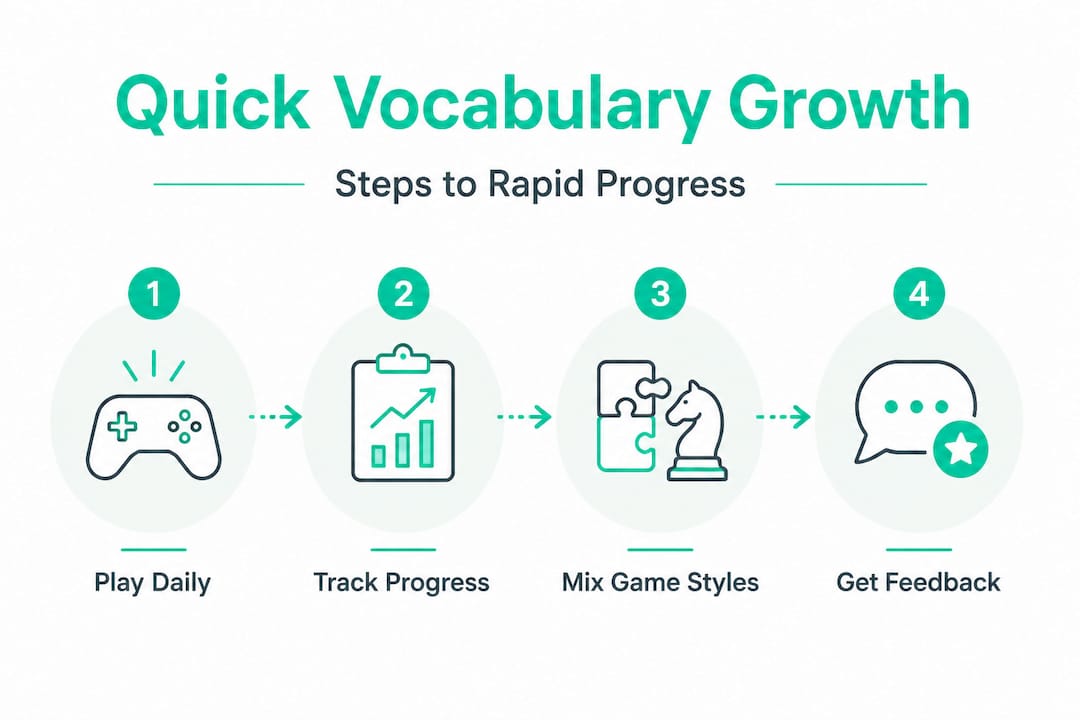
- Switch between apps strategically. Spend three or four days on your core app, then play a casual game on the weekend. This variety keeps motivation high and exposes you to new vocabulary in different contexts.
Learning how to teach with word games is useful not just for educators but also for anyone who wants to understand why certain game structures produce better learning outcomes.
| App | Best for | Learning method | Progress tracking |
|---|---|---|---|
| Duolingo | General vocabulary | Adaptive quizzes | Yes |
| Quizlet | Receptive vocabulary | Spaced repetition | Yes |
| Lexiloot | Category thinking and word games | Gamified challenges | Yes |
| Scrabble | Casual exposure | Word building | No |
Exploring vocabulary trainer games gives you a deeper look at how game mechanics translate directly into real vocabulary gains in practical use.
Step 2: Play daily and use cognitive training strategies
Once you’ve chosen the right games, it’s critical to use them effectively with the best learning strategies. Daily practice is the core engine of vocabulary improvement. But how you practice matters just as much as how often.
Why short, focused sessions work better
Playing for 10 to 20 minutes every day produces better results than playing for two hours once a week. Short, focused sessions keep your brain engaged without mental fatigue setting in. Fatigue is the enemy of vocabulary recall: when you’re tired, your brain shifts from active retrieval to passive recognition, and that’s when learning efficiency drops sharply.
Research from a large-scale Memrise study shows that retrieval practice with adaptive algorithms helped learners recall an average of 27 out of 80 target words, significantly outperforming other methods. Combining this kind of structured recall with real-world reading for context produced the best all-around results.
“The most effective vocabulary learners don’t just play more, they play smarter. They use apps that challenge their recall, give instant feedback, and push just beyond their comfort zone every session.”
Strategies that dramatically improve results
Use this routine to get the most from your daily sessions:
- Warm up with a category challenge. Grouping words by theme, such as food, emotions, or science terms, activates category thinking and primes your brain for faster word retrieval.
- Use recall over recognition. When given a choice, choose game modes that ask you to type or speak a word rather than just pick from a list. Recognition is easier but recall builds stronger memory.
- Play with immediate feedback turned on. If you guess wrong, you want to know instantly and see the correct answer. This feedback loop is what turns mistakes into lasting learning.
- Track your daily streak. Streaks create a lightweight commitment that keeps you consistent. Most well-designed apps use this feature because it works.
Check out advanced vocabulary practice for strategies that go deeper once you’ve built your daily routine.
Pro Tip: Set a specific time for your vocabulary session, like right after breakfast or before bed. Tying practice to an existing habit makes it far easier to stay consistent over weeks and months.
Understanding vocabulary and brainpower helps explain why these strategies do more than just add new words; they also strengthen the cognitive networks your brain uses for reading, writing, and conversation. And learning how word games grow vocabulary at the cognitive level gives you confidence that your practice is doing real, meaningful work.
Step 3: Check your progress and avoid common pitfalls
Practicing daily is essential, but to keep improving, you need to track results and adjust. Many learners put in consistent effort but stall because they’re not checking whether their vocabulary is actually growing.
How to measure your vocabulary gains
Self-testing is the clearest and most honest way to measure progress. Once a week, try a set of new, harder words and see how many you recall correctly without any hints. If you find that you’re recognizing words but struggling to use them in a sentence, that’s a signal that your practice is weighted too heavily toward recognition rather than active recall.
Here are the key habits that keep your progress moving forward:
- Quiz yourself weekly with new words at a slightly harder level than your current practice.
- Track your mastery count over time, meaning the total number of words you can use confidently, not just recognize.
- Revisit missed words immediately, adding them to a separate practice list so they get extra repetition.
- Use words in context, not just in isolation. Write a sentence, use a new word in conversation, or look for it in something you’re reading.
- Celebrate milestones, like mastering your first 100 words or finishing a level. Positive reinforcement genuinely supports continued learning.
Studies confirm that pretesting with feedback produces Cohen’s d effect sizes of 0.18 to 0.40 in vocabulary cued recall. That means even a short self-quiz before you learn something new produces measurably better retention than skipping directly to study.
Common mistakes that slow vocabulary growth
These are the errors we see most often, and the ones that are easiest to fix:
- Focusing only on recognition: You know you’ve seen a word before, but you can’t recall its meaning without a clue. Shift toward recall-based practice.
- Ignoring context: Words learned in isolation are harder to use. Always practice seeing words in sentences and different contexts.
- Skipping the review of missed words: If you get something wrong and move on, you’re missing the most valuable learning moment in your session.
- Treating all game modes as equal: Time spent on passive word-matching is worth far less than time spent on active recall challenges.
Learning how vocabulary builds reading comprehension shows you the direct connection between the words you’re practicing and real improvements in how you understand what you read.
Pro Tip: Keep a simple vocabulary journal, even just a note on your phone, where you write five of the hardest words you encountered each week. Reviewing that list on Sunday takes three minutes and dramatically improves long-term retention.
Why real progress comes from mixing play and purpose
Here’s something most vocabulary guides won’t tell you directly: the people who make the biggest, longest-lasting vocabulary gains are not the ones who practice the most. They’re the ones who practice with the most variety and feedback.
Many learners fall into one of two traps. Either they treat word games as pure entertainment with no structure, playing the same casual puzzle over and over, or they treat vocabulary practice as a serious drill that feels more like homework than play. Both approaches miss the sweet spot.
Real, lasting improvement happens when you blend structured learning with genuine enjoyment. This isn’t just motivational advice. Research comparing entertainment games to educational apps shows that educational apps provide targeted, trackable growth while entertainment games contribute through incidental exposure. The strongest results come from using both in a deliberate, rotating routine.
What often gets overlooked is the role of adaptive challenges. An app that keeps giving you the same word at the same difficulty level isn’t really training your brain anymore. You want an experience that consistently pushes just past what you know, a concept sometimes called the “zone of proximal development” in learning theory. Apps with adaptive algorithms do this automatically, and it’s one of the clearest advantages modern vocabulary platforms have over static flashcard decks or word lists.
Variety also prevents the most common reason people quit: boredom. Switching between category challenges, spelling games, multiplayer competitions, and word puzzles keeps the learning environment fresh. You’re not just studying the same words in the same way. You’re encountering them in new contexts, which is exactly what the brain needs to build strong, flexible vocabulary recall.
Understanding the benefits of word games for cognition reinforces why this blended, varied approach pays off not just in vocabulary size but in broader cognitive engagement. The goal isn’t just a bigger word list. It’s a more responsive, flexible mind.
Ready to grow your vocabulary? Try the top word game platforms
If you’re serious about putting this blended approach into practice, the right platform makes all the difference. Lexiloot is designed specifically to combine the fun of word games with the structure of evidence-based vocabulary training, all in one mobile app.
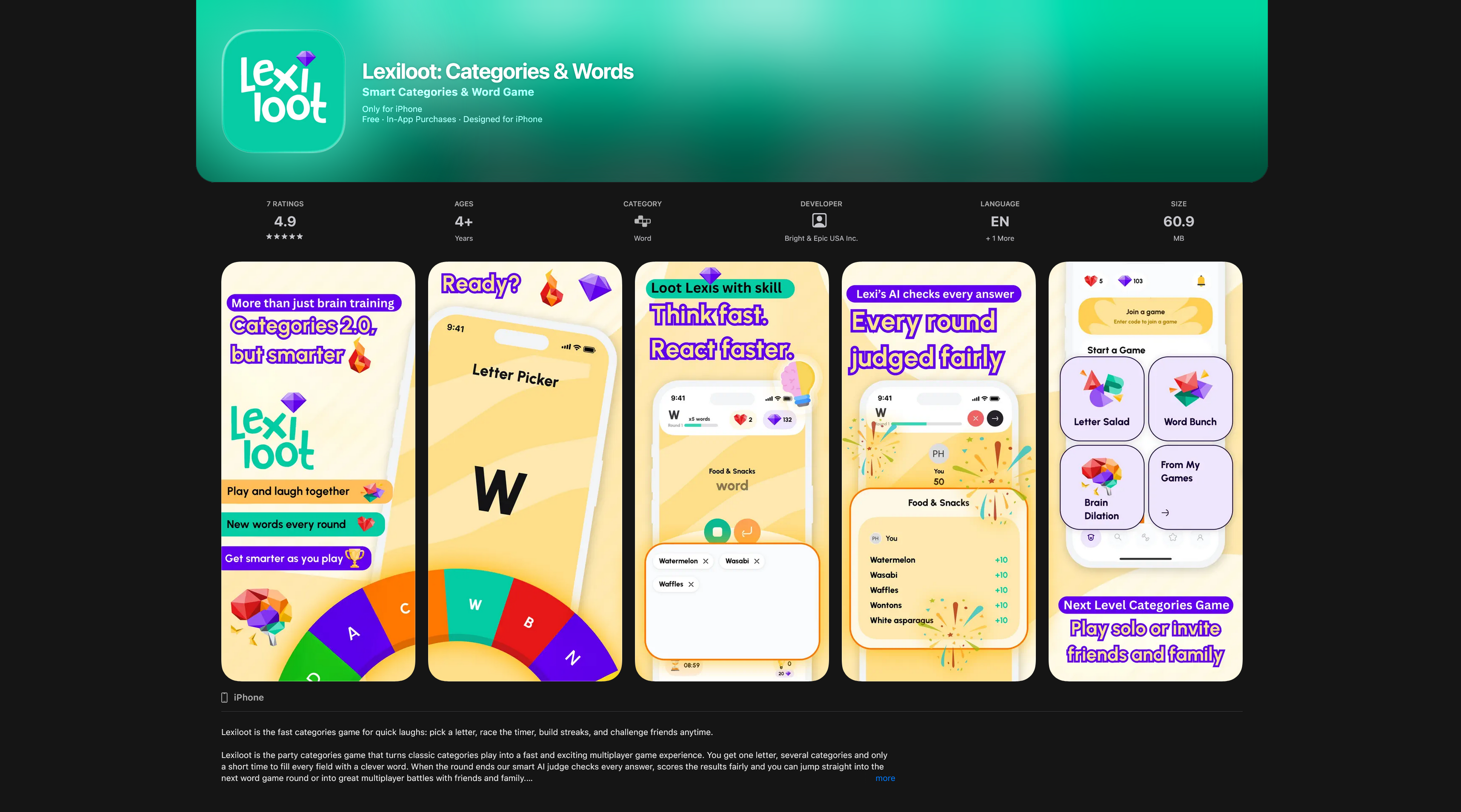
With Lexiloot, you get daily challenges, category-based word battles, and multiplayer competitions that make practice feel like play. The app tracks your progress, adapts to your level, and gives you the feedback loops that real vocabulary growth depends on. Whether you prefer casual puzzles or competitive leaderboard challenges, there’s a mode for you.
Explore advanced word puzzle strategies to get the most out of every session, or browse word puzzle varieties to find the formats that match your learning style best. And if you want to see how a stronger vocabulary pays off in the real world, read about how vocabulary builds skills across reading, writing, and communication.
Frequently asked questions
What are the most effective strategies for quickly improving vocabulary?
Interactive word games and retrieval practice with real-time feedback significantly outperform passive reading, with measurable gains in vocabulary cued recall even from short daily sessions.
Do mobile word games really help expand my vocabulary long term?
Yes, studies show Duolingo delivers 25% better retention and significant pre and post test gains compared to traditional study methods, with trackable vocabulary growth over time.
How much time should I spend daily to see progress?
Consistent, focused play for 10 to 20 minutes daily offers the best vocabulary improvement results, especially when combined with immediate feedback and active recall challenges.
Can kids and adults use the same apps for vocabulary improvement?
Most modern vocabulary apps and games offer adaptive difficulty settings, making them effective and appropriate for learners of all ages, from early readers to adult language enthusiasts.
Is playing just for fun as effective as using educational word games?
Entertainment games expand vocabulary through incidental exposure, but educational apps with structured tracking deliver more measurable, targeted growth. A combination of both types gives you the strongest overall results.

