


TL;DR:
- Children learn vocabulary most effectively through meaningful, context-rich interactions rather than isolated drills. Playing active, game-based strategies enhances long-term retention, comprehension, and confidence in language use. Engaged teaching methods that focus on understanding, morphology, and repeated exposure foster deeper vocabulary growth over time.
Children who struggle with vocabulary often share one thing in common: they were taught words in isolation, through lists, definitions, and repetition drills that the brain quickly discards. Knowing how to build word knowledge the right way makes a real difference, not just for reading scores, but for confidence, comprehension, and cognitive growth. This guide walks you through exactly what parents and educators need, from the science behind effective vocabulary instruction to the practical strategies and interactive word games that make new words genuinely stick.
Table of Contents
- What you need: Key tools and knowledge to build word knowledge
- Step-by-step: How to teach word knowledge using interactive word games
- Avoiding common pitfalls: How to troubleshoot and keep vocabulary learning on track
- Measuring success: How to verify your child’s growing word knowledge
- Why traditional vocabulary drills fall short and what really works
- Enhance your child’s vocabulary with engaging word games from Lexiloot
- Frequently asked questions
Key Takeaways
| Point | Details |
|---|---|
| Meaning-first instruction | Teaching word meanings in context before spelling enhances retention and natural use. |
| Morphology boosts learning | Understanding roots and affixes helps children unlock meanings of many related words. |
| Interactive games engage | Children learn vocabulary better with play-based, context-rich activities than memorization. |
| Repetition aids retention | Repeated exposure to words across sessions consolidates long-term memory. |
| Active application matters | Using new words in conversation and writing strengthens understanding and confidence. |
What you need: Key tools and knowledge to build word knowledge
Now that you know why vocabulary building matters and how games can help, let’s cover what you will need to start effectively.
Strong vocabulary instruction does not begin with a word list. It begins with understanding how children actually learn and retain language. Research shows that explicit teaching with child-friendly definitions and repeated exposure across meaningful contexts produces significant vocabulary gains. That means the tools you gather and the knowledge you carry into each session both matter equally.
Here is what you need before you begin:
- A clear target word list. Focus on high-utility words that appear across subjects, not rare or overly specialized terms. Think words like analyze, contrast, or sequence that children will encounter in science, social studies, and language arts alike.
- Visuals and real-life examples. Pairing each word with an image, a story, or a concrete scenario gives the brain a hook. Without that hook, new vocabulary often fades within a day.
- A working understanding of morphology. Morphology means the study of word parts, including roots, prefixes, and suffixes. Teaching a child that “port” means “carry” helps them understand transport, export, and portable all at once.
- Interactive word games aligned to your goals. You can find engaging vocabulary games ideas that match different age groups and skill levels to make practice feel rewarding rather than repetitive.
The table below shows the difference between passive and active vocabulary teaching tools at a glance:
| Tool type | Example | Learning outcome |
|---|---|---|
| Passive (low impact) | Reading a definition aloud | Short-term recall only |
| Moderate engagement | Matching games with pictures | Recognition improves |
| High engagement | Interactive category games | Deeper understanding and transfer |
| Highest engagement | Multiplayer word challenges | Application, retrieval, and motivation |
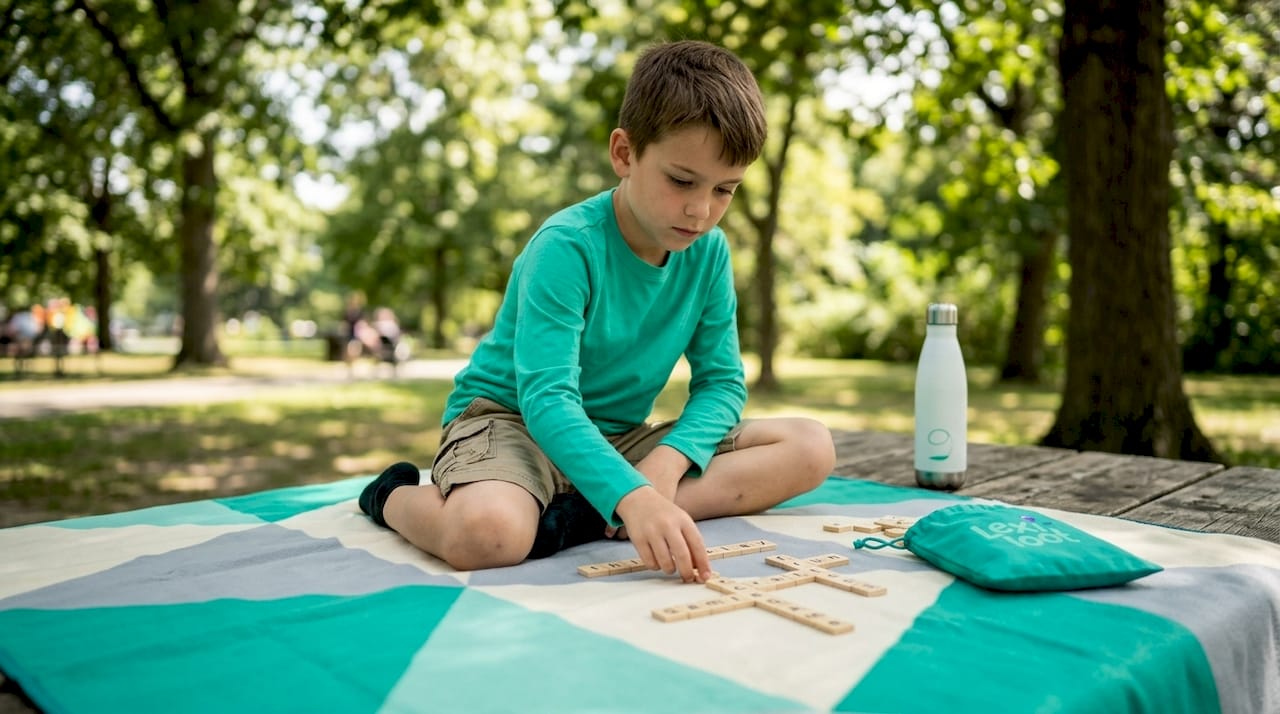
Passive methods have their place, but children need active, game-based practice to move words from short-term memory into long-term use.
Step-by-step: How to teach word knowledge using interactive word games
With your tools ready, let’s explore the exact steps to engage children through interactive word games.
The order in which you introduce vocabulary matters more than most people realize. Meaning-first vocabulary instruction produces better retention and natural word usage compared to approaches that start with spelling or pronunciation. Start with meaning. Build from there.
- Introduce the word in context. Before asking a child to spell or define a word, use it in a sentence that feels real. “The explorer had to navigate through the dense forest” lands differently than “navigate means to find your way.”
- Add a visual or story anchor. Show a picture, act out the meaning, or tell a short story where the word plays a role. The brain connects language to images and emotions far more readily than to abstract definitions.
- Play a game that requires applying the meaning. Category-based word challenges work especially well here. When a child has to sort glacier, volcano, and canyon into the “natural landforms” category, they are actively using vocabulary in context rather than reciting it.
- Repeat across multiple sessions. One exposure is never enough. Plan for five to seven meaningful encounters with each target word over the course of a week or two. Space those encounters out for better retention.
- Ask children to create their own sentences. This step is often skipped, but it is one of the most powerful. When a child generates their own use of a word, they make it personal, which deepens recall significantly.
- Explore word parts within game challenges. Weave in discussions about roots, prefixes, and suffixes naturally. You can learn more about teaching word games effectively to see how to incorporate morphology into game play without making it feel like a lesson.
Pro Tip: Keep a “word wall” at home or in the classroom where new words are displayed with their pictures and a student-generated sentence. Seeing words repeatedly in the environment adds passive reinforcement between active game sessions.
Avoiding common pitfalls: How to troubleshoot and keep vocabulary learning on track
Having learned the steps, it is important to watch for and overcome common obstacles that might slow progress.
Even well-intentioned vocabulary practice can go off track. The most common mistake? Relying on definition memorization leads to short-term recall rather than connecting words to context and meaningful use. Here is what to watch for and how to fix it.
- Avoid isolated drills. Flashcards and definition matching may feel productive, but they train recognition, not understanding. Replace at least half of your drill time with interactive game play where meaning is applied.
- Watch for cognitive overload in bilingual children. When a child is managing two languages at once, presenting a new word’s form before its meaning adds unnecessary mental strain. Always lead with context and meaning first.
- Choose active play over passive screen time. There is a meaningful difference between a child watching a vocabulary video and a child competing in a word category challenge. The second requires the brain to retrieve, sort, and apply knowledge actively.
- Build morphological families together. If you teach predict, also introduce prediction, predictable, and unpredictable in the same week. This expands vocabulary breadth without proportionally increasing teaching effort.
- Vary the context every time you revisit a word. Repetition in the exact same format trains recognition of the drill, not the word. Try the family word games workflow approach to see how rotating game formats keeps practice fresh and effective.
“Words are not memorized in isolation in real life. They are absorbed through stories, conversations, and repeated encounters in varied, meaningful situations. Teaching should reflect this.”
Pro Tip: If a child consistently misuses a word or confuses it with a similar one, create a mini game around just those two words. Competition and comparison sharpen distinction far better than correction alone.
Measuring success: How to verify your child’s growing word knowledge
Once you are engaged in teaching, you will want to confirm that your vocabulary-building efforts are taking effect.
Measuring vocabulary growth does not require formal tests. In fact, natural observation often tells you more. Effective vocabulary instruction produces measurable gains in reading comprehension and usage, and you can see those gains show up in everyday interactions long before any quiz.
Here is what genuine word knowledge looks like in practice:
- The child uses a new word correctly in conversation without prompting.
- They recognize the word in a book or on TV and make the connection themselves.
- They can explain the word in their own words, not just repeat a definition.
- They begin using related words from the same morphological family.
- They can apply the word across more than one context or subject area.
The table below compares two children at different stages of vocabulary depth, so you can see where your learner might be and what to aim for next:
| Indicator | Surface-level knowledge | Deep word knowledge |
|---|---|---|
| Can define the word | Yes, using the given definition | Yes, in their own words |
| Uses it in speech | Rarely, only when prompted | Naturally and accurately |
| Understands related forms | No | Yes (predict, prediction, predictable) |
| Applies across subjects | No | Yes |
| Recognizes in reading | Sometimes | Consistently |
Track progress informally by running quick challenge rounds in word games every two weeks. Note which words a child retrieves easily and which still cause hesitation. Adjust your target word list and session format based on what you observe. You can find guidance on vocabulary and cognition growth to understand how game-based tracking supports long-term development.
Why traditional vocabulary drills fall short and what really works
Here is something that rarely gets said plainly in education circles: the vocabulary instruction that most of us grew up with was not designed for lasting learning. It was designed for testing. Write the definition ten times, memorize it overnight, pass the quiz, and forget it by Thursday. That cycle has been the norm for decades, and it explains why so many children reach middle school with weak reading comprehension despite years of vocabulary homework.
Vocabulary growth demands connecting words to context, structure, and active application. This is not a minor adjustment to the drill-and-test model. It is a fundamentally different philosophy. When a child plays a category-sorting game and has to decide whether arid belongs with weather words or geography words, they are doing something a flashcard cannot make them do. They are thinking about meaning, weighing options, and retrieving what they know under light pressure. That cognitive effort is exactly what moves a word into long-term memory.
Play-based learning also creates emotional engagement. When children laugh, compete, or surprise themselves by knowing an answer, attention sharpens. Words learned during moments of genuine interest tend to stick. This is not guesswork; it is how memory actually works.
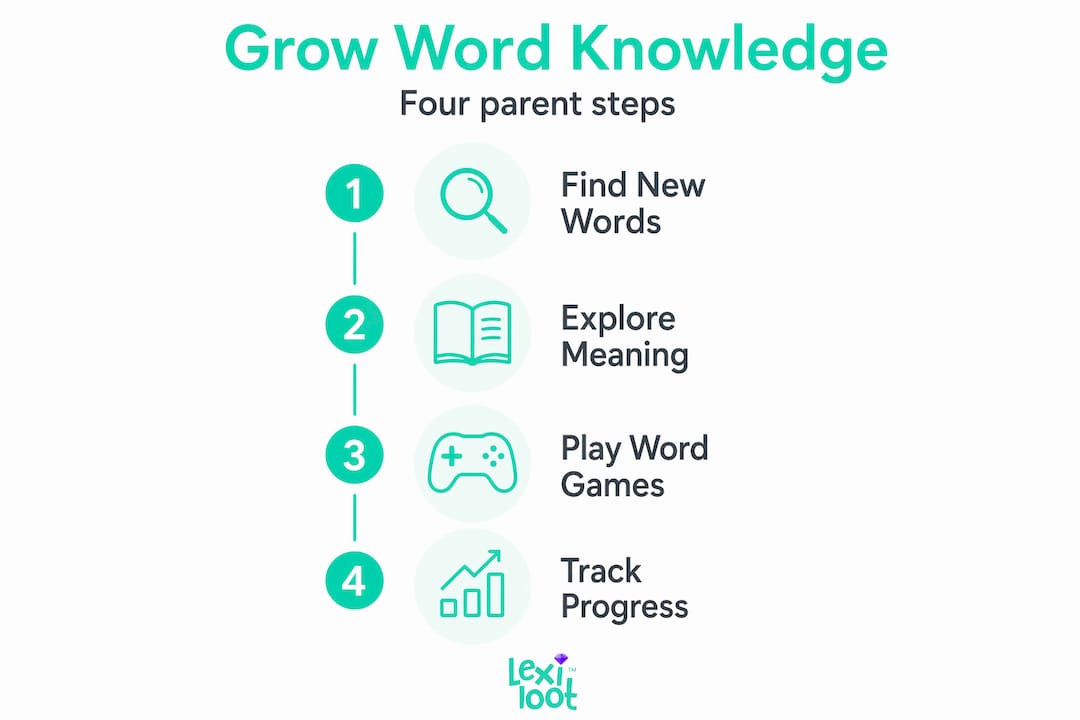
The parents and educators who see the fastest vocabulary growth in children are not always the ones who teach the most words. They are the ones who teach fewer words more deeply and create conditions where children want to encounter new language. Shifting from drills to discovery through interactive word games is the single most effective move you can make. Explore the benefits of gamifying vocabulary to see why this approach works across age groups and learning styles.
Enhance your child’s vocabulary with engaging word games from Lexiloot
Now that you understand the best practices and why they work, explore how Lexiloot can support your child’s vocabulary journey.
Lexiloot brings together everything that research says works, meaning-first exposure, morphological awareness, repeated contextual encounters, and active application, inside a game format children actually want to play. The categories game for kids challenges players to sort words into meaningful groups, building category thinking and vocabulary recall simultaneously.
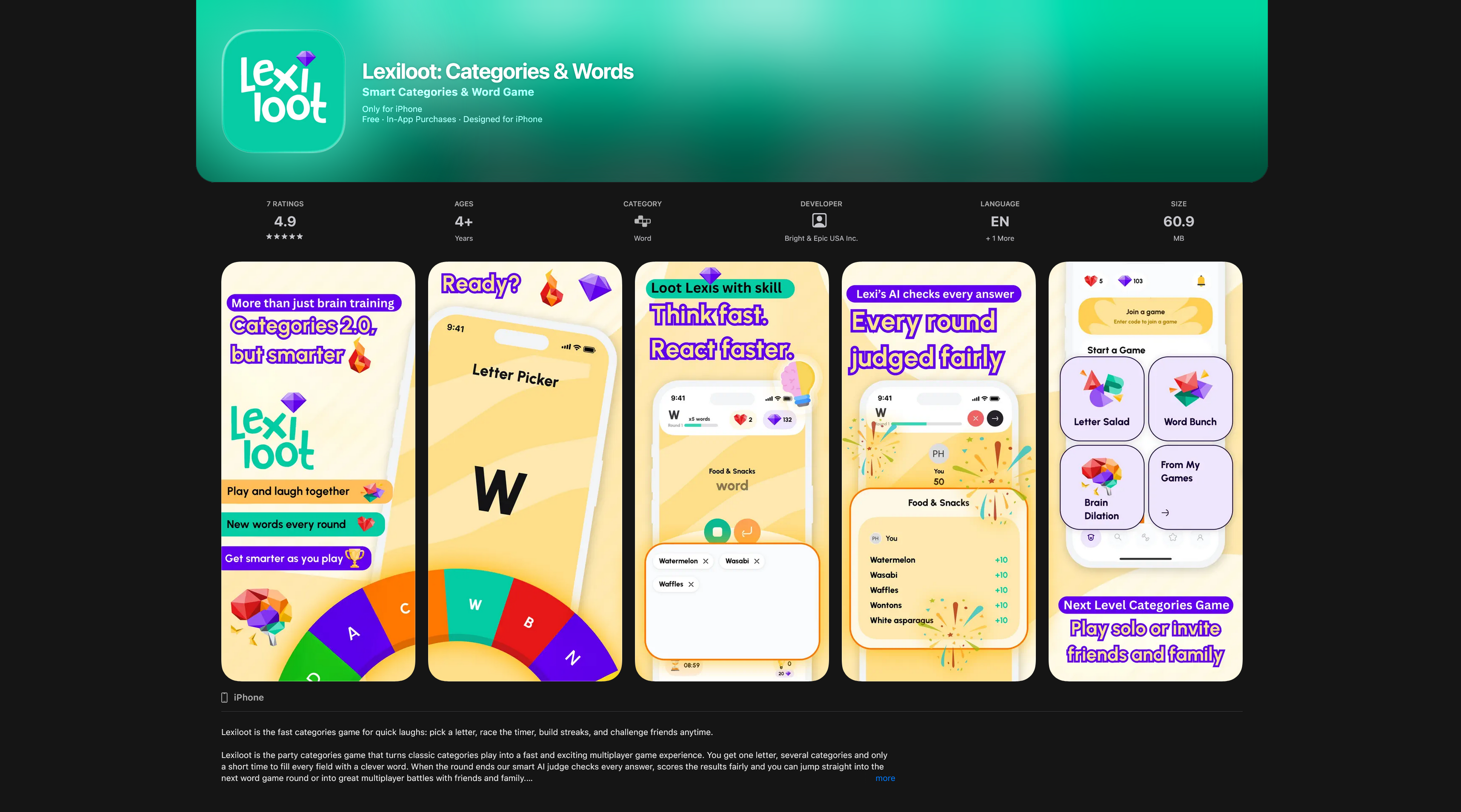
The app’s multiplayer features let kids compete with friends or family, adding the social motivation that keeps learning going beyond a single session. Teachers can use it in classrooms to track which words students have mastered and which need more exposure. Parents get a tool that fits naturally into family time without feeling like extra homework. With a vocabulary and brainpower boost built into every game mode, Lexiloot supports both language development and cognitive growth in one place. No subscriptions, just one purchase and full access to a growing library of word challenges designed for real learning outcomes.
Frequently asked questions
What is the best way to help children remember new vocabulary?
Meaning-first instruction using context-rich examples helps children retain and use words better than memorizing definitions alone. Pairing new words with visuals, stories, and repeated game play deepens recall over time.
How do word games improve vocabulary learning?
Word games actively engage children by requiring repeated exposure, application in context, and exploration of word parts, which builds deeper word knowledge and reading skills. Word games increase motivation and support the kind of deep learning that lasts beyond the next test.
Why is teaching word parts like roots and prefixes important?
Understanding morphological components helps children decode unfamiliar words and grow vocabulary more efficiently over time. Embedding morphological instruction supports both vocabulary growth and reading comprehension across subjects.
Can bilingual children benefit from meaning-first vocabulary instruction?
Yes, meaning-first approaches reduce cognitive overload and significantly improve vocabulary retention among bilingual learners. Meaning-first instruction produces better retention in bilingual learners by prioritizing understanding over form.
How can parents support vocabulary growth outside of school?
Parents can play interactive word games with their children, discuss word meanings during everyday activities, and encourage using new vocabulary in conversation and writing. Playing alongside children in interactive word games boosts active application and prevents passive screen time from replacing genuine learning.

