


Most people assume brain games fall into one of two camps: dry, repetitive drills that kids dread, or mindless entertainment that wastes screen time. Neither picture is accurate. A new wave of family-friendly brain games blends genuine cognitive training with the kind of fun that keeps kids asking for one more round. These apps and games build vocabulary recall, sharpen attention, and strengthen logic skills, all while the whole family plays together. Whether you’re a parent looking for screen time that actually counts or a teacher searching for engaging classroom tools, this guide walks you through what to look for, what the research says, and how to get started.
Table of Contents
- What makes a brain game family-friendly?
- Popular types of family-friendly brain games
- How brain games impact family learning and cognitive growth
- Tips for choosing and using family-friendly brain games
- Discover more family-friendly brain games and skill boosters
- Frequently asked questions
Key Takeaways
| Point | Details |
|---|---|
| Age-appropriate design | Family-friendly brain games cater to ages 2–13 with adaptive challenges and safe content. |
| Measurable cognitive gains | Games such as MentalUP and strategic play improve executive functions and vocabulary according to research. |
| Choosing quality games | Look for no-ads, offline options, high ratings, and skill-based features to maximize learning and fun. |
| Family engagement | Playing together boosts social, emotional, and cognitive skills for kids and adults alike. |
What makes a brain game family-friendly?
Now that you know brain games can be both fun and educational, let’s dig into what sets family-friendly options apart. Not every puzzle app earns that label. A truly family-friendly brain game is designed for ages 4 and up, prioritizes safety, and builds real skills through interactive play.
Here are the core features to look for:
- No ads or minimal interruptions: Ads break focus and frustrate younger players. Top-rated family apps prioritize ad-free experiences and offline play so learning stays uninterrupted.
- Adaptive difficulty: The game adjusts to your child’s skill level, keeping it challenging without being discouraging.
- High app ratings and educator endorsements: Look for apps with strong reviews from parents and teachers, plus any family or education awards.
- Offline options: Great for travel, car rides, or areas with limited connectivity.
- Skill variety: The best games cover vocabulary, math, logic, attention, and social learning, not just one narrow area.
Exploring the full range of types of brain games helps you match each game to your child’s current needs. You can also browse abc game categories for letter-based options that build spelling fluency early.
Pro Tip: When evaluating a new app, play it yourself for five minutes before handing it to your child. You’ll quickly spot whether the difficulty feels right and whether the interface is intuitive enough for younger players.
Popular types of family-friendly brain games
Knowing what makes a game family-friendly, let’s explore the top types and how they’re delivered through modern tech and classic play.
App-based brain games lead the market right now. MentalUP features personalized daily workouts across memory, logic, math, and vocabulary, adapting to each child’s performance over time. Thinkrolls offers 3,000+ logic puzzles and coding-style activities for ages 2 to 8, making it one of the most highly rated STEM-focused apps available. Both apps give kids a structured brain workout that feels more like play than practice.
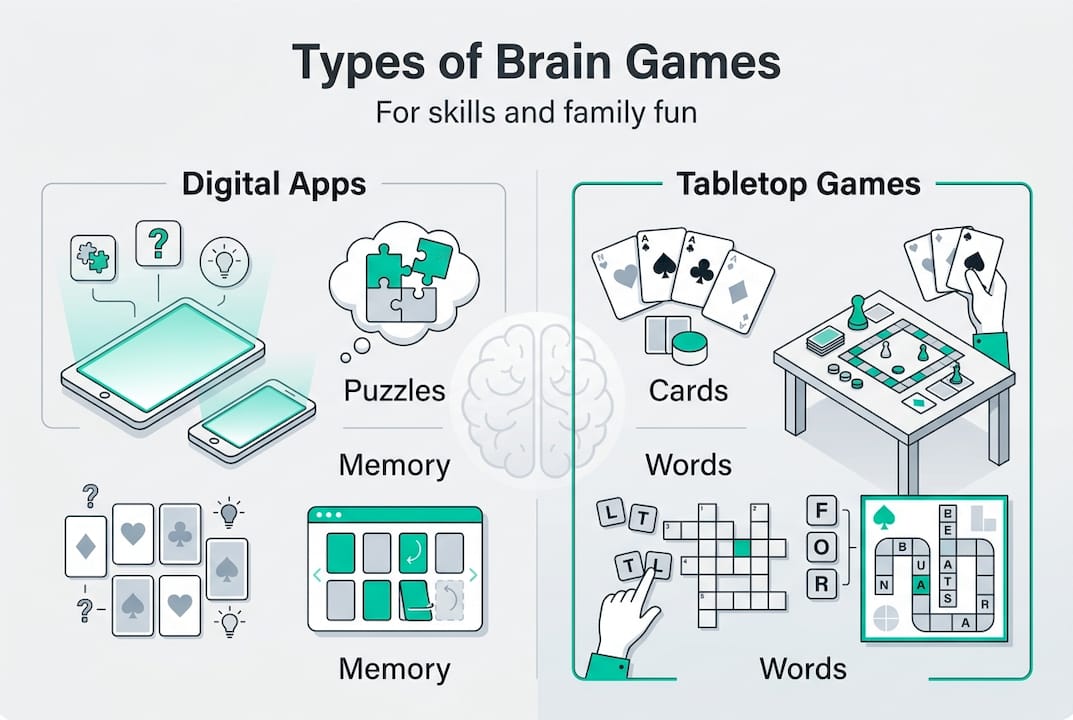
Tabletop and analog games still hold their own. Word Fluxx, for example, keeps players on their toes with constantly changing rules and word-building challenges. It’s a strong pick for families who want screen-free vocabulary practice.
Mobile and digital platforms round out the category with drag-and-drop puzzle builders, arcade-style logic games, and multiplayer word challenges. These formats work especially well for older kids and teens who want a social element.
Here’s a quick comparison to help you choose:
| Game type | Skill focus | Best age range | Player engagement |
|---|---|---|---|
| App-based (MentalUP) | Memory, logic, vocabulary | 4 to 13 | Solo or family |
| App-based (Thinkrolls) | STEM, logic, coding concepts | 2 to 8 | Solo |
| Tabletop (Word Fluxx) | Vocabulary, creative thinking | 8 and up | Group |
| Mobile word platforms | Vocabulary, spelling fluency | 6 and up | Solo or multiplayer |
For a deeper look at how casual play builds real skills, check out casual brain gaming and explore the word game benefits that research consistently supports. You can also find a helpful breakdown of brain training vocabulary to understand the language behind the learning.
How brain games impact family learning and cognitive growth
After exploring the types of games, it’s critical to understand the research behind their impact on your family’s learning. The evidence is encouraging and specific.
Studies using randomized controlled trials show that short social play boosts executive functions in children, with effect sizes ranging from 0.23 to 0.38 standard deviations. Executive functions include skills like working memory, cognitive flexibility, and impulse control. These are the same skills kids use when they switch between tasks at school or manage frustration during a tough homework session.
Chess and strategy-based games show particularly strong results. The same research confirms that chess and strategy games improve visuospatial reasoning and logic in children, outperforming passive activities like watching educational videos.
“Strategic play and social game formats consistently produce measurable gains in attention, problem-solving, and vocabulary recall, making them among the most effective tools for family-based cognitive development.”
Vocabulary growth is another clear benefit. When kids encounter new words in a game context, the brain connects meaning to memory more efficiently than it does through rote memorization. Category thinking, where players sort words into groups like animals, foods, or actions, activates vocabulary recall in a way that sticks.

For more on how language-based play supports development, visit language games for cognition. Teachers will also find practical classroom strategies at teaching word games.
Tips for choosing and using family-friendly brain games
With research-backed benefits established, here are some practical strategies for finding and using brain games for your family.
- Check app ratings and reviews first. Look for apps with 4.5 stars or higher and read comments from parents and educators specifically. High ratings from a large user base signal consistent quality.
- Start at an easier difficulty level. Even if your child is advanced, starting easy builds confidence and helps them learn the game mechanics without frustration.
- Set a screen time structure. Twenty to thirty minutes of focused brain game play is more effective than an hour of distracted play. Use a timer and stick to it.
- Play together when you can. Family play sessions add a social layer that solo play can’t replicate. Kids learn from watching how adults approach problems.
- Rotate game types. Mixing vocabulary games, logic puzzles, and category challenges keeps the brain engaged and prevents boredom.
- Avoid games with heavy ad interruptions. Ads break the cognitive flow and reduce the educational value of the session. Word Fluxx is recommended for word lovers precisely because it keeps the focus on language without distractions.
- Track progress over time. Many apps include progress dashboards. Review them monthly to see which skills are growing and which need more attention.
Pro Tip: Look for games with adaptive puzzles that personalize to your child’s skill level. These adjust automatically, so you don’t have to manually change settings every few weeks as your child improves.
For structured options that combine category thinking with brain training, explore category games for brain training. Classroom teachers will find ready-to-use ideas at categories game for kids.
Discover more family-friendly brain games and skill boosters
Ready to find games that match your family’s learning goals? Lexiloot brings together categories games, word challenges, and vocabulary-building tools in one mobile platform designed for families, students, and educators alike.
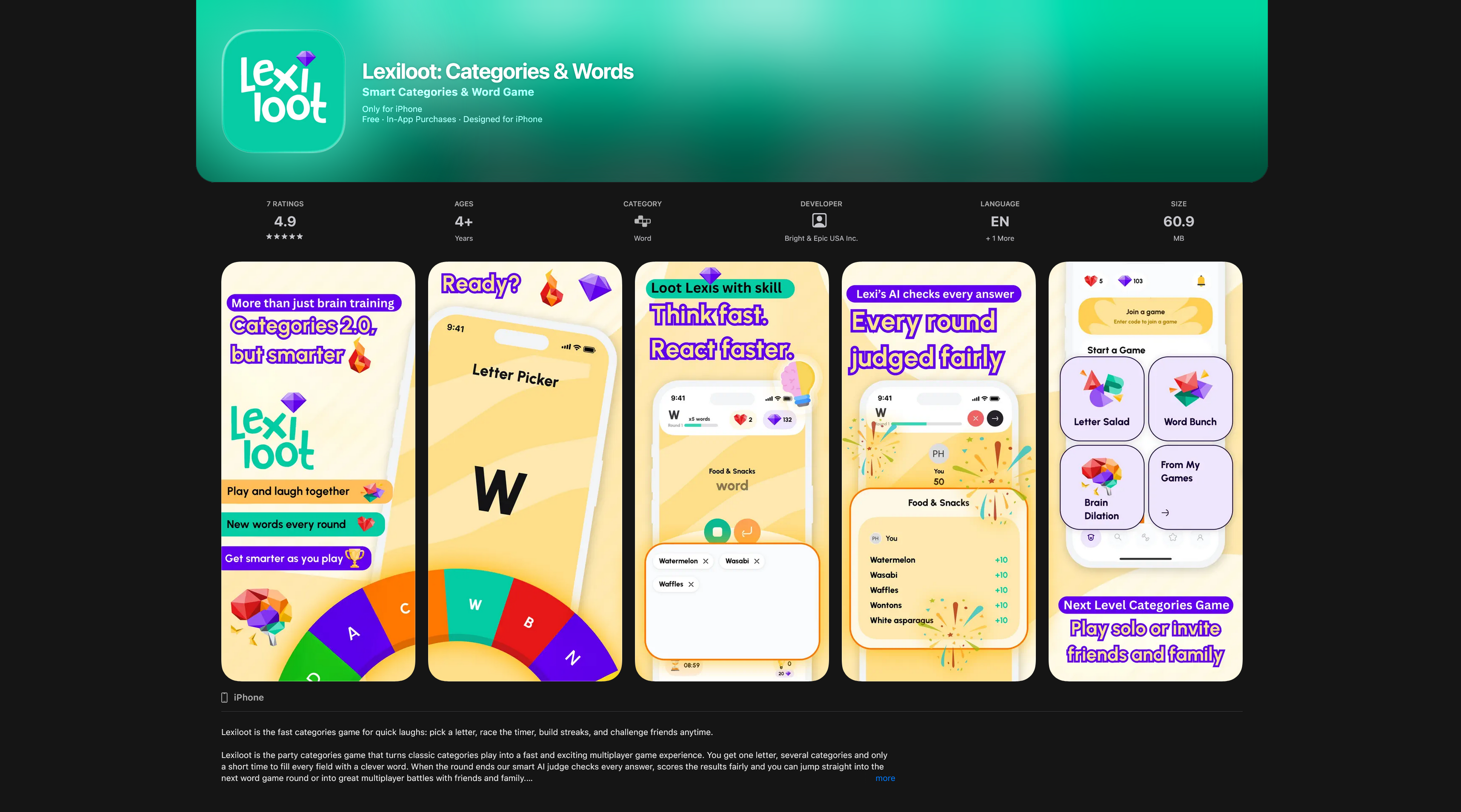
Whether you want to sharpen spelling fluency, build category thinking, or compete in multiplayer word battles, Lexiloot has a game mode for it. Explore word game strategies to get more out of every session, or browse word game types to find the format your family enjoys most. You can also discover how language games for social growth support both cognitive and emotional development. With a pay-once model and no subscriptions, Lexiloot makes it easy to commit to long-term learning without ongoing costs.
Frequently asked questions
What age range are family-friendly brain games suitable for?
Family-friendly brain games are mostly designed for ages 2 to 13, with adaptive levels so younger and older kids can participate at their own pace. Apps like Thinkrolls start as young as age 2 with STEM-focused puzzles.
How do family-friendly brain games benefit kids’ cognitive skills?
These games improve attention, executive functions, logic, and vocabulary, with research showing measurable cognitive gains from short, regular play sessions involving strategy and social interaction.
Are there offline, ad-free options for family brain games?
Yes. Many top-rated apps offer offline modes and ad-free experiences, especially those built for younger children where uninterrupted focus is essential for learning.
What features should I look for in educational brain games?
Prioritize adaptive difficulty, skill variety covering math, vocabulary, and logic, safety certifications, and strong reviews from educators. Award benchmarks and high app ratings are reliable quality signals.
Do family-friendly brain games include group or multiplayer features?
Many do. Social and strategic game formats encourage cooperative play, teamwork, and healthy competition, which adds emotional and social learning on top of the cognitive benefits.

