


Choosing the right word puzzle can transform your vocabulary practice from boring drills into engaging mental workouts. With dozens of puzzle formats available in 2026, each offering unique cognitive challenges and learning benefits, how do you pick the ones that best suit your goals? This guide presents a practical framework to evaluate popular word puzzle varieties, compare their strengths, and help you select puzzles that maximize vocabulary growth and cognitive development for yourself and your family.
Table of Contents
- How To Evaluate Word Puzzle Varieties For Vocabulary And Cognitive Benefits
- Popular Word Puzzle Varieties To Try In 2026
- Comparing Word Puzzle Varieties: Features, Benefits, And Difficulty
- Choosing The Right Word Puzzles For You And Your Family
- Discover Fun Word Games And Puzzles With Lexiloot
- Frequently Asked Questions
Key takeaways
| Point | Details |
|---|---|
| Word puzzles build vocabulary and cognitive skills | Different types of word puzzles offer varying educational and mental benefits tailored to diverse learning goals. |
| Puzzle variety enhances engagement | Crosswords, cryptic crosswords, word ladders, and dropquotes each provide distinct challenges that keep learning fresh and interesting. |
| Collaborative puzzles boost spelling | Collaborative gaming significantly enhances spelling skills in young learners through group problem-solving. |
| Cognitive benefits extend beyond vocabulary | Regular crossword training can slow mild cognitive impairment and Alzheimer’s progression in older adults. |
| Selection criteria guide better choices | Matching puzzle type to age, skill level, and learning objectives ensures maximum educational value and sustained interest. |
How to evaluate word puzzle varieties for vocabulary and cognitive benefits
Before diving into specific puzzle types, establish clear criteria for evaluation. The right framework helps you choose puzzles that align with your educational goals, engagement preferences, and skill development needs.
Educational value sits at the core of any word puzzle assessment. Look for puzzles that actively build vocabulary through context clues, spelling reinforcement, and repeated exposure to new words. Different types of word puzzles target specific cognitive skills like pattern recognition, deductive reasoning, and memory retention. Some puzzles emphasize breadth of vocabulary, while others focus on depth of word knowledge through definitions and usage.
Engagement factor determines whether a puzzle becomes a regular practice tool or a one-time attempt. Consider the fun quotient, challenge level, and whether the puzzle supports solo or social play. Puzzles that offer gradual difficulty progression maintain interest as skills improve. Social puzzle options create opportunities for collaborative learning, which research shows enhances retention and motivation.
Accessibility ensures puzzles serve diverse audiences effectively. Evaluate whether a puzzle type suits beginners, advanced players, or both. Some formats work brilliantly for children building foundational spelling skills, while others challenge experienced word enthusiasts. The best puzzle collections include options across the difficulty spectrum.
Variety and creativity prevent learning fatigue. Puzzles with innovative mechanics, visual elements, or unconventional rule sets keep minds engaged and curious. Rotating between how to create word puzzles families educators formats prevents monotony and exercises different cognitive pathways.
Pro Tip: Test three different puzzle types in one week to discover which formats naturally hold your attention and which feel like work. Your sustained interest is the strongest indicator of long-term learning success.
Popular word puzzle varieties to try in 2026
Crossword puzzles remain the classic word game format, combining vocabulary knowledge with general trivia. Solvers fill a grid by answering clues, with intersecting words providing helpful letter hints. Beyond their entertainment value, crosswords offer remarkable therapeutic benefits. Studies demonstrate that regular crossword training can slow cognitive decline in older adults, making them valuable tools for brain health maintenance.
Cryptic crosswords elevate the challenge by using misleading wordplay that requires solvers to identify definitions, wordplay indicators, and length indicators simultaneously. According to the beginner guide to cryptics, these puzzles utilize specific wordplay categories:
- Reversals: words spelled backward
- Anagrams: letters rearranged with indicator words like “mixed” or “confused”
- Hidden words: answers concealed within clue text
- Homophones: words that sound like other words
- Charades: answers split into smaller word parts
Cryptic crosswords train your brain to think laterally and recognize linguistic patterns, building advanced vocabulary and problem-solving skills simultaneously.
Word ladders challenge solvers to transform one word into another by changing a single letter at each step, with each intermediate step forming a valid word. For example, changing COLD to WARM might follow this sequence:
- COLD
- CORD
- CARD
- WARD
- WARM
This format builds vocabulary by forcing consideration of words sharing similar letter patterns. It also develops strategic thinking as solvers plan efficient transformation paths.
Dropquotes present a unique visual challenge where solvers place letters from columns into a grid below to form a famous quote or saying. Each column contains the letters that belong in positions directly below, but in scrambled order. This format combines spatial reasoning with vocabulary knowledge, offering a fresh puzzle experience that differs significantly from traditional word searches or crosswords.
These varied formats ensure that word game trends 2026 fun learning continue to evolve, offering fresh challenges for enthusiasts at every skill level.
Comparing word puzzle varieties: features, benefits, and difficulty
Understanding the distinct characteristics of each puzzle type helps you select formats that match your learning objectives and enjoyment preferences.
| Puzzle Type | Format | Primary Skills | Best For | Challenge Level |
|---|---|---|---|---|
| Crosswords | Grid with clues | Vocabulary, trivia, spelling | All ages, cognitive health | Beginner to advanced |
| Cryptic Crosswords | Wordplay-based clues | Lateral thinking, wordplay recognition | Advanced solvers | Advanced to expert |
| Word Ladders | Letter transformation chains | Vocabulary breadth, pattern recognition | Families, students | Beginner to intermediate |
| Dropquotes | Column letter placement | Spatial reasoning, vocabulary | Visual learners, quote fans | Intermediate |
Crosswords excel at reinforcing existing vocabulary while introducing new words through contextual clues. Their widespread availability and variable difficulty make them accessible entry points for puzzle newcomers. The intersecting word structure provides helpful scaffolding, allowing solvers to deduce difficult answers from known letters.
Cryptic crosswords demand deeper linguistic knowledge and creative thinking. Each clue functions as a miniature puzzle requiring solvers to separate definition from wordplay. This dual-layer challenge builds meta-cognitive skills as you learn to recognize clue construction patterns. While initially frustrating, cryptics become deeply rewarding as pattern recognition improves.
Word ladders emphasize vocabulary breadth over depth. Success requires knowing many short words sharing similar structures rather than mastering complex definitions. This format particularly benefits young learners building foundational word knowledge and recognizing letter patterns. The stepwise progression creates natural difficulty scaling.

Dropquotes combine vocabulary with visual-spatial reasoning, making them ideal for learners who prefer puzzles with clear logical constraints. The quote format adds cultural literacy benefits, exposing solvers to famous sayings and historical references.
Research confirms that collaborative gaming significantly enhances spelling skills in young learners. Puzzles supporting group problem-solving multiply educational benefits through discussion, shared knowledge, and collective strategy development.
Pro Tip: Rotate between puzzle types weekly to exercise different cognitive muscles. Crosswords on Monday, word ladders Wednesday, and cryptics Friday creates balanced mental workouts that prevent skill plateaus.
Exploring types of word games for skill building reveals even more options for targeted learning and entertainment.
Choosing the right word puzzles for you and your family
Selecting appropriate puzzles requires matching format characteristics to participant goals, ages, and preferences. A strategic approach maximizes both educational outcomes and sustained engagement.
Match puzzle complexity to current skill levels while providing growth opportunities. Young children benefit from simple word ladders and basic crosswords with pictorial clues. Teenagers and adults can tackle standard crosswords and experiment with cryptic varieties. Mixed-age families should choose puzzles offering multiple entry points, where easier clues allow beginners to contribute while harder sections challenge experienced solvers.
Use collaborative formats to leverage group learning benefits. Collaborative gaming offers effective approaches to spelling skill enhancement through shared problem-solving. Family puzzle nights where members work together on challenging crosswords or dropquotes create positive learning associations while building vocabulary collectively. Discussions about word meanings and clue interpretations deepen understanding beyond simple answer-finding.
Blend easy and challenging puzzles to sustain interest across skill development stages. Completing simpler puzzles builds confidence and momentum, while tackling harder formats prevents complacency. A balanced rotation keeps practice sessions rewarding rather than frustrating. Track which puzzle types generate the most engagement and adjust your mix accordingly.
Incorporate puzzles into daily routines for consistent skill building. Morning crossword sessions with coffee, lunchtime word ladder challenges, or evening family dropquote competitions create regular vocabulary practice without feeling like formal study. Consistency matters more than duration for long-term retention.
Leverage digital tools and apps for diverse puzzle access. Mobile applications provide unlimited puzzle varieties, difficulty adjustments, hints systems, and progress tracking. The categories game kids classrooms format demonstrates how technology enhances traditional word game concepts with interactive features and immediate feedback.
Set specific learning goals beyond entertainment. Decide whether you prioritize vocabulary expansion, spelling improvement, cognitive health, or general knowledge. Different puzzle types serve different objectives, and conscious goal-setting helps you select formats delivering desired outcomes.
Discover fun word games and puzzles with Lexiloot
Ready to put these word puzzle insights into practice? Lexiloot delivers engaging word games and category challenges designed to build vocabulary and sharpen cognitive skills for players of all ages.
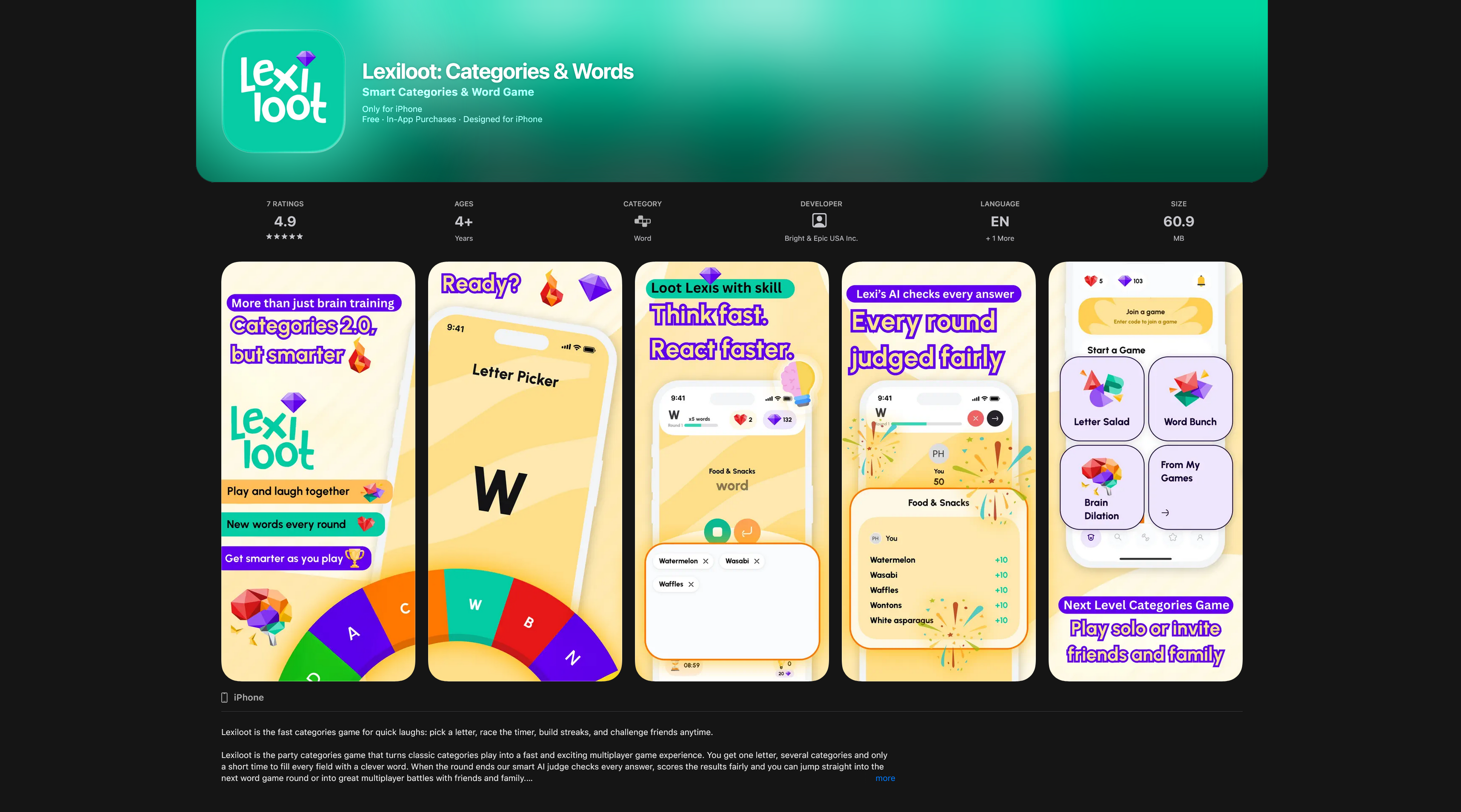
Our platform combines the educational benefits discussed throughout this guide with modern gaming features that keep learning fun and social. Whether you’re exploring categories game kids classrooms formats for educational settings, discovering types of word games for skill building, or learning how to create word puzzles families educators can customize, Lexiloot provides tools that transform vocabulary practice into genuine entertainment. Join families, students, and word enthusiasts already enhancing their language skills through purposeful play.
Frequently asked questions
What cognitive benefits do different word puzzles provide?
Word puzzles enhance multiple cognitive functions depending on their format. Crosswords improve vocabulary retention, general knowledge recall, and may slow cognitive decline in older adults. Cryptic crosswords develop lateral thinking and pattern recognition through complex wordplay. Word ladders strengthen vocabulary breadth and strategic planning by requiring multi-step word transformations. All formats exercise working memory and concentration.
How do collaborative word puzzles improve learning outcomes?
Collaborative puzzle-solving significantly enhances spelling skills and vocabulary retention through shared discussion and collective problem-solving. When learners work together, they verbalize reasoning processes, explain word meanings to peers, and encounter diverse vocabulary from multiple knowledge sources. This social dimension creates stronger memory associations and increases engagement compared to solo practice.
Which word puzzle types work best for children?
Simple crosswords with pictorial clues, word ladders, and basic word searches suit young learners building foundational vocabulary. These formats offer clear rules, visible progress, and achievable challenges that build confidence. Collaborative family puzzles allow children to contribute while learning from adults. Digital puzzle apps with hint systems and progressive difficulty provide scaffolding that supports independent skill development.
What makes cryptic crosswords more difficult than standard crosswords?
Cryptic crosswords require solvers to decode two-layered clues containing both a definition and wordplay element. Unlike standard crosswords where clues directly describe answers, cryptic clues use anagrams, reversals, homophones, and hidden words that demand pattern recognition and linguistic creativity. This dual-challenge format requires learning specialized clue construction conventions before puzzles become solvable.
How often should I practice word puzzles for vocabulary improvement?
Daily practice delivers optimal vocabulary retention and cognitive benefits. Even 10 to 15 minutes of consistent puzzle-solving builds word knowledge more effectively than occasional marathon sessions. Varying puzzle types throughout the week exercises different mental skills and prevents monotony. Track which formats you naturally return to, as sustained engagement indicates formats best suited to your learning style and goals.

