


TL;DR:
- Creative word games blend novelty, challenge, accessibility, and social engagement for sustained fun.
- Games like Wordsters, Boggle, and Codenames promote vocabulary, cognitive skills, and group bonding.
- Balancing rules and social mechanics ensures long-term engagement and actual vocabulary improvement.
Finding a word game that’s genuinely fun, replayable, and actually builds your vocabulary is harder than it sounds. Most options feel repetitive after a few rounds, or they sacrifice social energy for solo grinding. The good news: a new wave of creative word game formats blends cognitive challenge with group play, and the results are measurable. This guide walks through six standout examples, explains exactly how each one works, and gives you a clear framework for choosing the right fit for your group. Whether you play solo or with a crowd, you’ll leave with fresh, practical options.
Table of Contents
- How to choose great creative word games
- Wordsters: The power of embedded word play
- Boggle: Classic fast-play with a creative twist
- Codenames and quickfire team games
- Choosing the right word game for you (and your group)
- Our unique take: What most guides miss about creative word games
- Try brain-boosting word games with Lexiloot
- Frequently asked questions
Key Takeaways
| Point | Details |
|---|---|
| Creative rules matter | Games with novel rule twists and flexible formats fuel fun and skill-building. |
| Social interaction boosts gains | Playing with others increases vocabulary and memory benefits versus solo play alone. |
| Choose for replay value | The best word games balance fresh challenges, learning, and long-term enjoyment. |
| Customize for your group | Adapting house rules adds engagement and stretches cognitive skills further. |
How to choose great creative word games
Now that you know what to expect, let’s clarify what actually makes a word game stand out. Not every word game earns the label “creative.” The best ones share four key qualities: novelty, challenge, accessibility, and group engagement. Novelty means the game introduces a mechanic you haven’t seen before, like embedding letters or giving one-word clues to a team. Challenge means there’s always a harder path to take, even for experienced players.
Accessibility matters because a game that takes 45 minutes to explain never gets played twice. And group engagement means the game rewards interaction, not just individual performance. Social gameplay enhances benefits, with research showing that games combining novelty and social interaction deliver stronger cognitive and social outcomes than solo play.
Here’s what to look for when evaluating any creative word game:
- Replayable variety: Does the game feel different each session, or does it get stale after round three?
- Task switching: Does it require players to shift between generating, evaluating, and defending words?
- Scoring twists: Unique scoring systems, like rewarding rare words over common ones, push deeper cognition benefits of word games.
- Social mechanics: Voting, announcing, and protecting words all add layers that keep everyone at the table engaged.
- Rule flexibility: The best games invite house rules without breaking the core experience.
One thing worth knowing: gamification and memory research shows that novelty effects fade over time. A game that wows you in week one may bore you by week four if it lacks variety. That’s why replayable challenge matters more than first-impression flash. You’ll also find a wide range of types of word games worth exploring as you build your collection.
Stat to know: Games with both novelty and social interaction consistently outperform solo or repetitive formats for cognitive and vocabulary gains.
Pro Tip: Crowdsource simple house rules from your group before the first game. Ask everyone to suggest one small twist, then vote on which to try. This builds ownership and keeps the game fresh longer.
Wordsters: The power of embedded word play
With those criteria in mind, let’s dive into real-world examples. First up: a modern twist on vocabulary skill.
Wordsters is one of the most inventive word games to emerge in recent years. The core mechanic is deceptively simple but mentally demanding. Each player draws a card featuring a three-letter sequence called a “Wordster,” for example, CAP. Your job is to embed that sequence, in order but not necessarily adjacent, into a word of four or more letters within three minutes. You can score up to ten words per round.
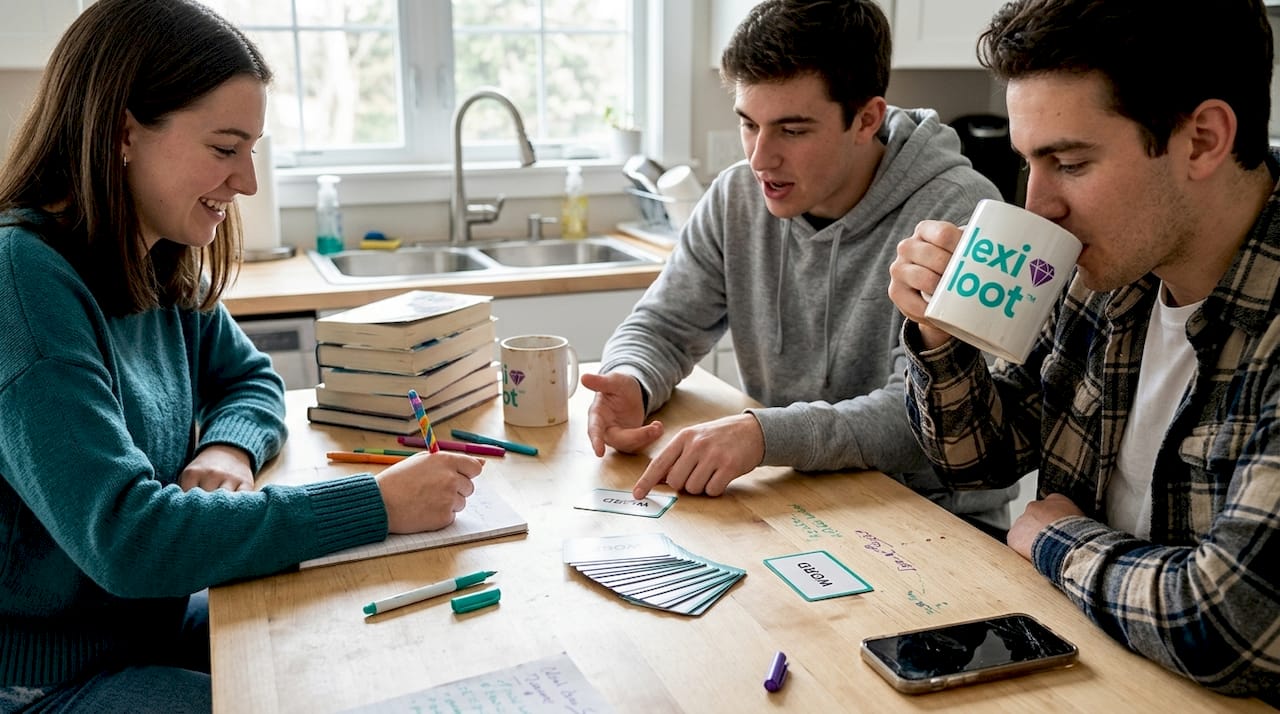
According to the Wordsters game rules, players earn points based on word uniqueness: common words score lower, while rare or surprising words earn up to five points. After time is up, each player announces their words aloud, and the group votes on edge cases. This voting mechanic is where the real social magic happens.
Here’s how a typical Wordsters round plays out:
- Draw a card and note your three-letter Wordster sequence.
- Set a three-minute timer and write as many qualifying words as you can.
- Announce each word aloud when time is up.
- Group votes on any disputed words.
- Score based on uniqueness: shared words score less, rare words score more.
The embedded-letter mechanic forces your brain to scan its vocabulary in a non-linear way. Instead of thinking “what words start with C?” you’re thinking “where does CAP hide inside longer words?” That shift in search strategy is what makes Wordsters genuinely different from most word games.
“The announcing and protecting mechanic in Wordsters adds a layer of social accountability that most word games skip entirely.”
Wordsters also offers four rounds per card, giving each session strong replay value. Pair it with vocabulary game ideas to keep your sessions varied and skill-focused.
Pro Tip: Use a shared house dictionary and set a 10-second window for peer voting. This keeps the pace brisk and prevents debates from derailing the fun.
Boggle: Classic fast-play with a creative twist
Looking for a familiar yet adaptable creative word game? Boggle reimagines the classic find-the-word formula.
Boggle has been around for decades, but its core mechanic still holds up as one of the most cognitively demanding formats in casual play. The setup is straightforward: shake 16 letter cubes into a 4×4 grid, then find as many words as you can in three minutes. The rule is that each letter must connect to the next through adjacency, horizontally, vertically, or diagonally, and you can’t reuse the same cube in a single word.
As detailed in the Boggle game rules, scoring rewards longer words heavily. A three-letter word earns one point, while a word of eight or more letters earns eleven. Proper nouns are not allowed, and any word found by more than one player is canceled out. That last rule is what makes Boggle genuinely creative: you’re rewarded for finding words others miss.
Here’s a quick look at how Boggle compares to Wordsters:
| Feature | Boggle | Wordsters |
|---|---|---|
| Core mechanic | Adjacent letter paths | Embedded letter sequences |
| Time limit | 3 minutes | 3 minutes |
| Scoring | Length-based | Uniqueness-based |
| Social element | Shared cancellation | Voting and announcing |
| Cognitive focus | Spatial pattern recognition | Non-linear vocabulary recall |
| Best for | Fast-paced groups | Creative thinkers |
Boggle’s spatial element, physically tracing paths across the grid, activates a different kind of thinking than most word games. It’s also highly adaptable. You can add themed rounds, restrict words to a single category, or play in teams where members pool their word lists. Explore a full family word game workflow to see how Boggle fits into a broader game night plan.
“Boggle’s cancellation rule turns individual play into a subtle social strategy: finding rare words is just as important as finding many words.”
Codenames and quickfire team games
Not all creative word games are solo or every-person-for-themselves. Group and team games unlock another dimension.
Codenames is the gold standard for team-based word games. One player on each team acts as the clue-giver, offering a single word and a number to guide teammates toward target words on a shared grid. The challenge is giving clues that connect multiple words without accidentally pointing to the opposing team’s cards or the instant-loss assassin card.
What makes Codenames genuinely creative is the association mechanic. Clue-givers must think across categories, sounds, meanings, and cultural references simultaneously. Teammates must interpret those clues through shared context, which builds what researchers call tacit group understanding, the ability to predict how others think.
Social gameplay research confirms that team-based word games like Codenames improve attention, working memory, and group cohesion more effectively than individual play. The game also adapts well to educational settings. Teachers use it for vocabulary review, and ESL instructors find it especially effective, as noted in resources on ESL classroom word games.
Key benefits of team-based creative word games:
- Working memory boost: Tracking clues, guesses, and remaining cards taxes memory in a productive way.
- Vocabulary recall under pressure: Time limits and team stakes push players to retrieve words faster.
- Social bonding: Shared wins and losses create memorable moments that bring groups back to the table.
- Flexible difficulty: Adjust the grid size or clue complexity to match your group’s skill level.
For more on building social play into your word game sessions, check out these social word game tips.
Pro Tip: Rotate the clue-giver role every round, even mid-game if you’re playing casually. Players who give clues learn to think about words differently than those who guess, and both skills build vocabulary recall.
Choosing the right word game for you (and your group)
With so many creative, skill-building options, it’s smart to compare before you choose.
Game selection should match your group’s desired social engagement and cognitive challenge level. A competitive group of word enthusiasts will thrive with Boggle or Wordsters. A mixed-age family might prefer Codenames for its team structure and adjustable complexity.
Here’s a side-by-side summary to help you decide:
| Game | Best for | Social score | Cognitive focus | Replay value |
|---|---|---|---|---|
| Wordsters | Creative thinkers | High | Vocabulary recall | High |
| Boggle | Fast-paced groups | Medium | Spatial + spelling | High |
| Codenames | Teams and families | Very high | Association + memory | Very high |
Action steps for finding your best fit:
- Try before you commit: Play a short demo round of each game before deciding on a regular rotation.
- Blend rules: Take Boggle’s grid and add Wordsters-style uniqueness scoring for a hybrid challenge.
- Adapt for your group: Lower the time limit for beginners, or add category restrictions for advanced players.
Research on evidence for game benefits confirms that the most effective word games are the ones your group actually plays consistently, not the ones with the most impressive mechanics on paper. You’ll also find practical word game teaching tips to help you introduce new formats smoothly.
Pro Tip: After your first session with a new game, ask everyone to rate it on fun and challenge separately. Use that feedback to decide whether to keep it, tweak it, or swap it out.
Our unique take: What most guides miss about creative word games
While the comparison table and examples offer practical picks, let’s look at a deeper, less-discussed truth.
Most word game guides chase novelty. They spotlight the newest mechanic, the flashiest design, or the game with the most social media buzz. But novelty alone does not create lasting engagement. What actually keeps a group coming back is the combination of approachable rules, replayable challenge, and genuine social stakes.
We’ve seen it happen repeatedly: a group tries a wildly innovative game, loves it for two sessions, then abandons it because the rules feel arbitrary once the novelty wears off. The games that stick are the ones where the rules serve the social experience, not the other way around.
Real vocabulary and cognitive gains come from consistent play over time, not one-off experiments. That means the best creative word game for your group is the one that balances fun with just enough friction to keep players thinking. Forget the tech bells and whistles. Focus on whether the game makes your group laugh, argue, and want to play again next week.
For a deeper look at why this matters, explore the case for gamifying vocabulary learning and how sustained play drives real results.
Try brain-boosting word games with Lexiloot
Ready to try some of these innovative word games and boost your skills?
Lexiloot brings together the best of creative word play, vocabulary building, and social competition in one mobile app. Whether you want to sharpen your vocabulary recall solo or challenge friends in a live multiplayer battle, Lexiloot has a game mode built for it.
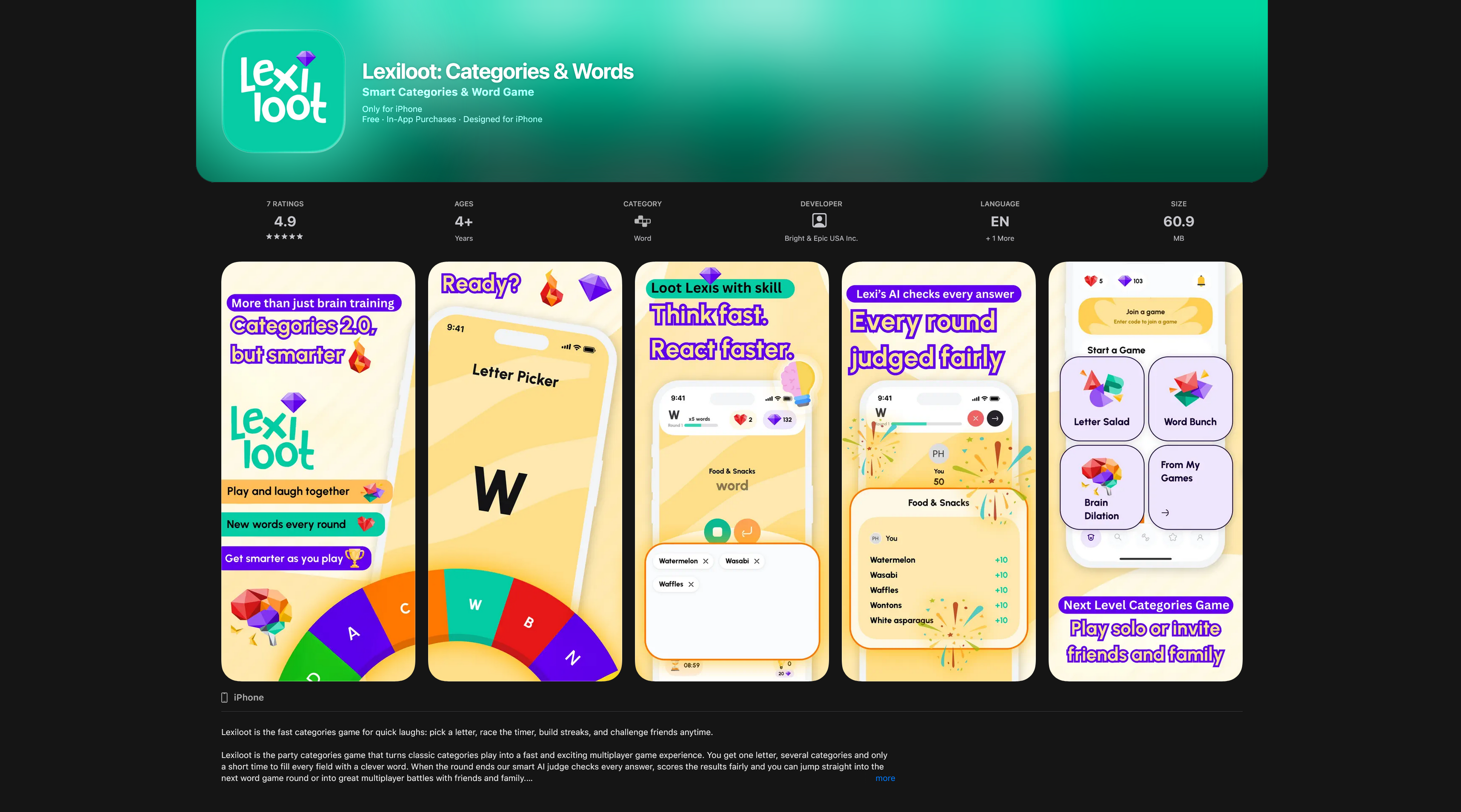
Explore the full range of word game brain benefits and discover how consistent play translates into real cognitive gains. You’ll also find curated word game strategies to help you get the most out of every session. Download Lexiloot, invite your friends, and start building your word skills in a way that’s actually fun to stick with.
Frequently asked questions
What makes a word game genuinely creative?
Unique rules, like embedding letters or team guessing mechanics, and a focus on social or cognitive challenge set creative games apart from standard crosswords or Scrabble.
Do creative word games really build vocabulary?
Yes; gamification boosts memory and attention, and research links word games played in varied social formats to measurable vocabulary and recall growth over time.
What are the best word games for groups?
Codenames, Wordsters, and Boggle are top picks because their collaborative or competitive structures and high replay value keep groups engaged across many sessions.
How do I make a word game more creative for my family?
Add house rules like speed rounds, category restrictions, or team scoring twists to classic games to keep every session fresh and tailored to your group’s skill level.

