


TL;DR:
- Having a clear workflow enhances the educational and social benefits of word puzzle games.
- Short, focused sessions of around 8-10 minutes improve engagement and vocabulary growth.
- Consistent play with familiar routines and shared puzzles fosters better learning and family connection.
Word puzzle games are one of the most popular ways to relax, sharpen your mind, and connect with people you care about. Yet many players tap through level after level without getting the full benefit these games offer. The problem is not the game itself. It is the lack of a simple, repeatable approach that turns casual play into something genuinely rewarding. Whether you are a solo gamer unwinding after work, a parent playing alongside your kids, or a teacher looking for a fun classroom activity, a clear workflow makes every session more enjoyable, more educational, and more connected.
Table of Contents
- Understanding casual word puzzle mechanics
- Setting up your ideal word puzzle session
- Step-by-step workflow for solving and learning
- Troubleshooting and optimizing your puzzle workflow
- Our perspective: Why workflow matters more than game choice
- Ready to boost your word puzzle journey?
- Frequently asked questions
Key Takeaways
| Point | Details |
|---|---|
| Know your mechanics | Understanding puzzle structures makes every session more enjoyable and productive. |
| Prep sets the tone | A calm space and right session length maximize fun and learning outcomes. |
| Step-by-step wins | Using a proven workflow helps you progress, learn, and enjoy puzzles more. |
| Embrace challenges | Obstacles and tough words are great opportunities to learn and connect with others. |
Understanding casual word puzzle mechanics
With the motivation set, let’s break down what makes up a typical word puzzle experience. Most casual word puzzle games share a handful of core mechanics that are easy to learn but surprisingly deep once you understand them.
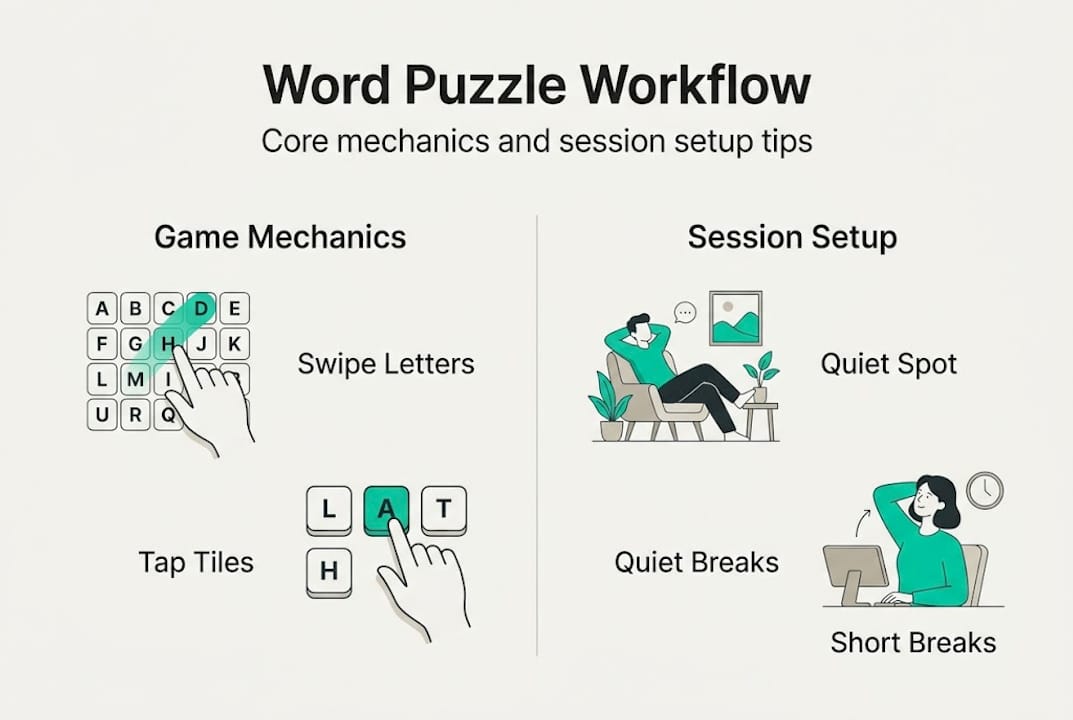
Popular mechanics include swiping letters across a grid, tapping tiles in sequence, or typing words from a shuffled letter set. These actions feel intuitive on a touchscreen, which is exactly why mobile word games have grown so fast. The goal is usually to fill a crossword-style grid, find all required words, or uncover bonus words hidden within the puzzle. Bonus words are extra credit. They reward curiosity and push your vocabulary recall without adding pressure.
Understanding the casual brain gaming benefits helps you appreciate why these mechanics work so well for both relaxation and learning. When your brain scans what it already knows to match letters to a pattern, it reinforces spelling fluency and category thinking at the same time.
Not all word puzzle games are built the same way. Here is a quick comparison of three popular formats:
| Game | Core mechanic | Level structure | Key feature |
|---|---|---|---|
| Wordscapes | Swipe letters to fill grid | 6,000+ levels | Relaxing nature themes |
| Wordle | Type 5-letter words, 6 guesses | Daily single puzzle | Color-coded feedback |
| Word Crush | Swipe words by theme | Hundreds of themed packs | Category-based challenges |
The daily challenge format, like Wordle, creates a shared social moment. Everyone plays the same puzzle, which sparks conversation and friendly competition. Infinite-play games like Wordscapes let you set your own pace and play as long or as briefly as you want. Both formats support modern word puzzles that build vocabulary in different ways.
Here is what most casual word puzzle games have in common:
- Letter grids or circles that you swipe or tap to form words
- Required words that unlock the next level
- Bonus words that reward deeper vocabulary exploration
- Hints or boosters for moments when you get stuck
- Progress tracking that motivates you to keep coming back
Knowing these elements means you are never confused when you pick up a new game. You already understand the rules of the road.
Setting up your ideal word puzzle session
Now that you know how these games work, set the stage for more rewarding sessions. The environment you play in matters more than most people realize.
Relaxing themes and short sessions of around ten minutes boost both enjoyment and the likelihood that you will return the next day. That is not just a design preference. Puzzle session data shows that average session lengths run eight to ten minutes, with day-one retention rates between 25 and 42 percent. Short, focused play works.
Here is a simple setup guide for different players:
| Player type | Best session length | Device tip | Environment tip |
|---|---|---|---|
| Solo adult | 8-10 minutes | Phone with sound on | Quiet room, notifications off |
| Family group | 10-15 minutes | Tablet for shared viewing | Living room, everyone visible |
| Kids (ages 6-12) | 5-8 minutes | Kid-safe mode enabled | Supervised, well-lit space |
| Classroom use | 10 minutes | Projected screen or shared device | Structured turn-taking |
For families, choosing games with relaxing color schemes and kid-safe modes removes worry and lets everyone focus on the fun. Many apps offer offline play, which is a great option for car trips, flights, or any time you want uninterrupted focus without ads or pop-ups breaking the flow.
Here are the key setup steps before every session:
- Turn off unrelated notifications on your device
- Enable sound or haptic feedback for a more satisfying experience
- Choose a game theme that matches your mood or family’s interest
- Set a soft time limit so sessions stay energizing, not draining
- For kids, confirm the app’s content settings are age-appropriate
Pro Tip: If you are playing with younger children, pick a game with large tiles and simple themes like animals or food. These visual cues help kids connect words to meaning faster, which supports vocabulary building beyond the game itself.
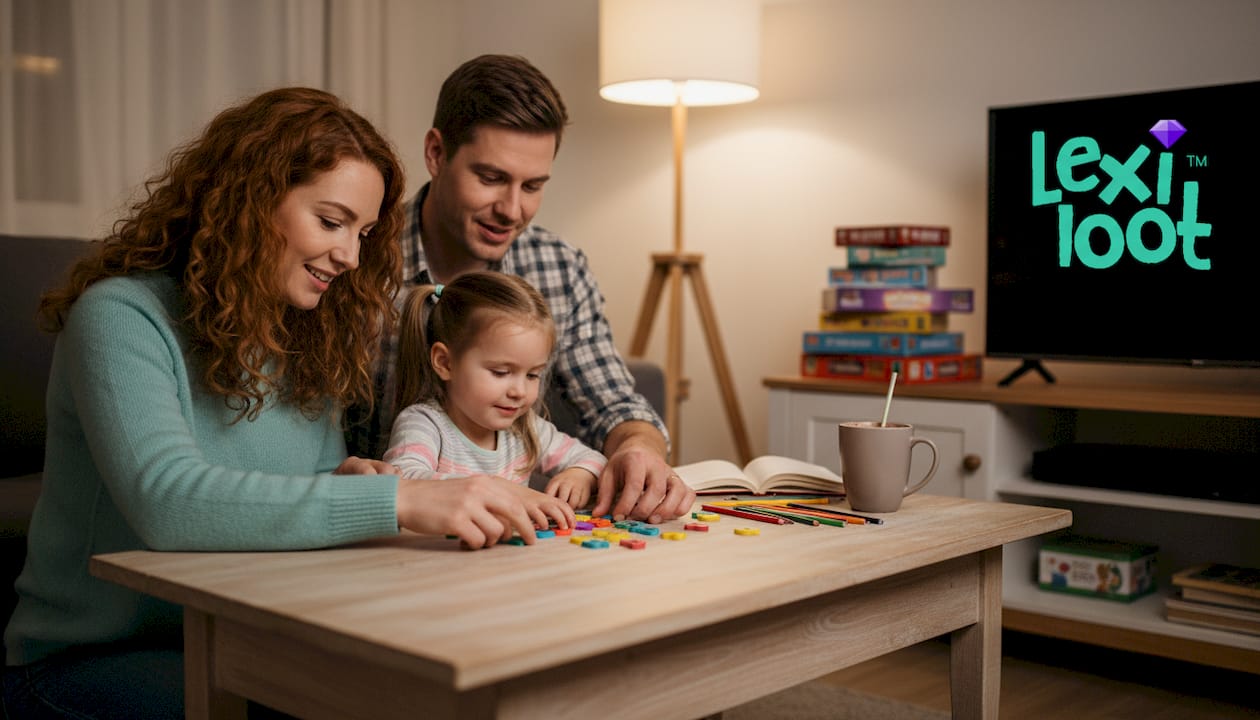
A well-prepared session is the foundation of the family word games workflow that turns casual play into a genuine brain training with puzzles habit.
Step-by-step workflow for solving and learning
With your session prepared, you will get more out of every play by following this proven workflow. Structure does not take the fun away. It actually makes the fun last longer.
Good puzzle design starts with easy wins and builds difficulty gradually, which is exactly how your solving approach should work too. Here is the workflow we recommend:
- Read the instructions once. Even if you know the game type, a quick scan of the level goal prevents wasted moves.
- Scan for visual clues. Look at the grid shape, the number of letters in each word slot, and any theme hints before you start swiping.
- Start with the shortest words. Two and three-letter words often unlock part of the grid and reveal letters for longer answers.
- Work outward from what you know. Use confirmed letters as anchors and build from there.
- Save hints and boosters for genuine blocks. Using them too early removes the learning opportunity.
- Invite a friend or family member when stuck. Talking through possibilities out loud builds vocabulary recall for everyone involved.
- After the level, review any words you did not know. Many apps show definitions as a post-game bonus. Use them.
“The best puzzle experiences feel like a fair challenge, not a guessing game. When you start easy and build up, every hard word you crack feels earned.”
Daily puzzles create a sense of urgency and shared experience that unlimited play cannot replicate. But unlimited play lets you practice specific skills at your own pace. Both have a place in a good workflow. You can explore creating your own puzzles once you feel comfortable with the basics, which is a fantastic activity for families and classrooms alike.
Pro Tip: Pay close attention to repeated letters in the available set. Words with double letters like “moon” or “teeth” are often the bonus answers hiding in plain sight. Scanning for repeats before you start can reveal answers faster.
For players who want to go further, advanced puzzle strategies cover pattern recognition and category thinking in more depth.
Troubleshooting and optimizing your puzzle workflow
Even with a solid process, tough spots happen. Here is how to push through and keep improving.
Challenge spikes often occur around levels 20 to 30, where obscure words and repeated letters start appearing more frequently. This is normal. It is not a sign that you are bad at the game. It is the game doing its job.
“Frustration in a puzzle game is a signal, not a stop sign. It means you are right at the edge of what you know, which is exactly where learning happens.”
Here is how to handle the most common sticking points:
- Obscure words: Do not guess randomly. Instead, look at crossing letters and think about word families. If you see “Q,” think about “QU” combinations.
- Repeated letters: These trip up many players. Remember that a letter shown once in the available set can sometimes be used multiple times in bonus words.
- Long dry spells: If you have been on the same level for several sessions, switch to a different game format for a day. A fresh format resets your pattern recognition and often gives you new ideas when you return.
- Kids getting frustrated: Shift to a game with a lower difficulty curve or use the hint feature together. Frame it as teamwork, not giving up.
- Feeling bored at easy levels: Skip ahead or look for games with adaptive difficulty that matches your growing skill level.
Too much ambiguity frustrates casual players fast. If a game consistently feels unfair rather than challenging, it may simply not be the right fit. Explore puzzle variety tips to find formats that match your style. And always check whether the app shows word definitions after a level ends. That single feature turns a missed answer into a lasting vocabulary lesson, which is worth more than any booster. Research on word puzzle difficulty confirms that exposure to unfamiliar words in context is one of the most effective ways to expand vocabulary naturally.
Our perspective: Why workflow matters more than game choice
With all the actionable strategies above, it is worth considering a big-picture perspective. Most players spend time searching for the perfect game when the real gains come from how they play, not what they play.
Switching between puzzle apps constantly is one of the most common habits we see, and it rarely leads to better results. Each new game resets your familiarity with its mechanics, which means you spend more time learning controls and less time actually building cognition and vocabulary with word games.
A repeatable, family-friendly process delivers more brain training and social connection than any single app can. When you play the same game regularly with the same people, you build shared vocabulary, inside jokes around tricky words, and a genuine routine that kids and adults look forward to. That consistency is what produces lasting results.
What we have learned is simple. Routines matter. Facing challenges together matters. Celebrating a hard word that finally clicks matters. The game is just the vehicle. Your workflow is the engine.
Ready to boost your word puzzle journey?
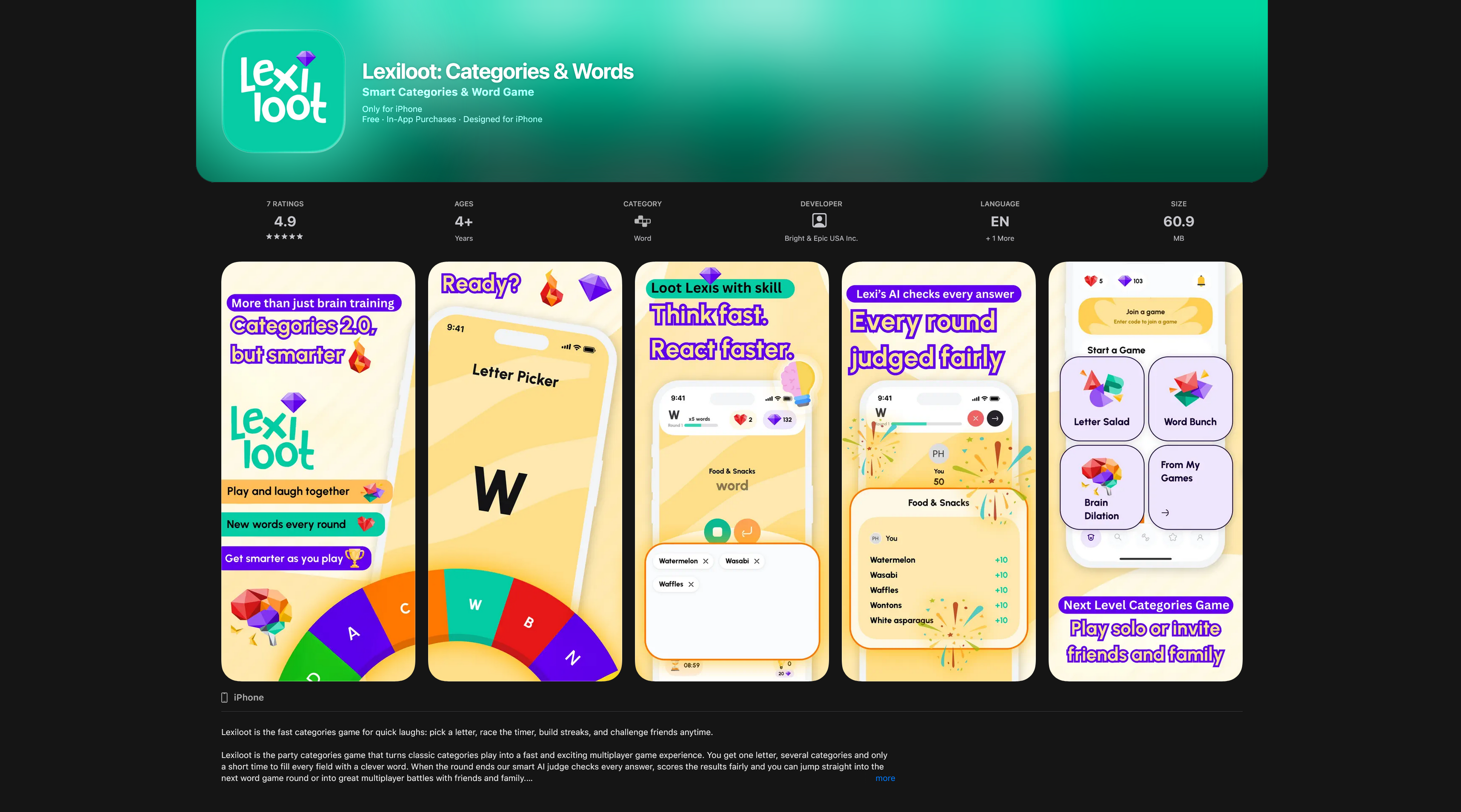
If you are ready to turn great workflow into even bigger wins, here is where to go next. Lexiloot brings together the best of word games, vocabulary building, and social play in one place, designed for families, enthusiasts, and anyone who wants their screen time to actually mean something.
Explore creative word game examples that make every session feel fresh, or check out our guide to boost vocabulary with word games for practical strategies you can use today. When you are ready to compete, our word game strategies guide will help you sharpen your skills and climb the leaderboard. Your next great puzzle session starts here.
Frequently asked questions
How do casual word puzzle workflows help boost vocabulary?
A repeatable process exposes players to bonus words and new vocabulary through hints and post-level reviews, building word knowledge naturally over time. Consistent play within a structured routine reinforces spelling fluency and vocabulary recall session after session.
What is the ideal session length for family word puzzle play?
Eight to ten minutes is the sweet spot for focus, fun, and return rates based on real puzzle game benchmarks. Keeping sessions short helps kids stay engaged and makes it easier to build a daily habit.
How can I avoid getting stuck on difficult words in puzzles?
Try switching to a different game format temporarily, use built-in hints, or solve collaboratively with a friend or family member. Edge cases and obscure words respond well to peer input and a short break from the same puzzle.
Are some puzzle games better for kids or families?
Games with relaxing themes, kid-safe modes and short sessions are the best fit for families and offer the strongest vocabulary and social benefits. Look for apps that show word definitions after each level to turn every session into a learning moment.
Recommended
- Boost family fun and vocabulary: word games workflow guide
- Advanced word puzzle strategies for mobile gamers in 2026
- Modern word puzzles: boost vocabulary with engaging games
- Optimize Your Word Game Competition Workflow
- Spark Curiosity with Math: Interactive Puzzles for Kids – ToylandEU
- Chess Puzzles — Daily Tactical Training | Democratic Chess

