


Picking a mobile game that genuinely sharpens your memory, builds vocabulary, and keeps the whole family engaged is harder than it sounds. The app stores are packed with brain training options, each promising remarkable results, but the science behind them varies widely. Some apps deliver real cognitive gains backed by solid research. Others simply make you better at the game itself without improving anything else. This guide cuts through the noise, giving you clear criteria, honest comparisons, and practical recommendations so you can choose games that are both fun and genuinely effective.
Table of Contents
- How to choose brain training games that actually work
- Top brain training games for families and individuals
- Comparing brain training games: Which delivers the most benefits?
- Choosing games for your needs: Age, learning goals, and fun
- Discover Lexiloot: Social and competitive word games for family fun and skill growth
- Frequently asked questions
Key Takeaways
| Point | Details |
|---|---|
| Science-backed improvements | RCTs confirm moderate gains in memory, attention, and processing speed from brain training games. |
| Game selection matters | Choose apps with evidence, engaging features, and social play for meaningful benefits. |
| Practice vs. real transfer | Games improve skills practiced directly, but only some transfer those gains to real-life tasks. |
| Age moderates effects | Older adults and those with cognitive challenges see greater improvements from training. |
| Family and group play | Combining solo challenges and competitive group play delivers more balanced brain gains. |
How to choose brain training games that actually work
Not every brain training app earns its claims. The first thing to look for is scientific backing. Games built on peer-reviewed research are far more likely to produce real improvements in memory, attention, and vocabulary recall than those relying on marketing language alone. Understanding brain training terms like “working memory,” “cognitive transfer,” and “processing speed” helps you read those claims more critically.
There is an important distinction between practice effects and true cognitive transfer. Practice effects mean you get better at the specific tasks inside the game. True transfer means those improvements carry over into everyday skills like reading comprehension, problem-solving, or learning new words faster. Computerised working memory training shows moderate behavioral benefits, with a Hedges’ g of 0.503 for memory and attention improvements, which is a meaningful effect size in cognitive research.
Here are the core criteria to evaluate any brain training game:
- Scientific backing: Look for games linked to peer-reviewed studies or developed with researchers.
- Engaging gameplay: If it feels like a chore, you will stop playing. Fun drives consistency.
- Social and competitive features: Leaderboards, multiplayer modes, and friend challenges increase motivation and long-term engagement.
- Age-appropriate design: Benefits are stronger for older adults and those with cognitive challenges, but well-designed games work across all ages.
- Vocabulary focus: Games that build category thinking and spelling fluency add an extra layer of real-world value.
“The strongest cognitive gains from training apps appear in older adults and individuals with existing cognitive impairment, though well-designed programs show measurable benefits across healthy populations too.”
Pro Tip: Search for games that cite peer-reviewed evidence of memory and attention improvement in their app description or website. If a developer cannot point to any research, treat their claims with caution.
Exploring the types of brain games available, from word puzzles to category challenges to speed tasks, helps you match the right format to your learning goals before you download anything.
Top brain training games for families and individuals
With selection criteria in mind, let’s look at games that tick all the boxes for cognitive fun and family engagement. The best options combine evidence-based design with gameplay that people actually want to return to every day.

Brain training games improve working memory and processing speed for healthy individuals, with 16 randomized controlled trials (RCTs) documenting statistically significant results (p less than 0.05). That is a strong foundation for recommending specific apps.
Here are the top picks worth your time:
- Lexiloot targets vocabulary recall, category thinking, and spelling fluency through multiplayer word battles and category challenges. It is designed for families, students, and word game fans who want social play alongside real learning.
- Peak offers a wide range of cognitive tasks covering memory, attention, mental agility, and problem-solving. It tracks your progress over time and adapts difficulty to your performance.
- Lumosity is one of the most recognized names in brain training, with a large library of games targeting memory, attention, flexibility, speed, and problem-solving.
- Elevate focuses heavily on language skills, including reading comprehension, writing precision, and vocabulary expansion, making it a strong choice for anyone prioritizing communication skills.
- Wordle and similar daily word puzzles build spelling fluency and vocabulary recall through short, satisfying daily challenges that are easy to share with family.
Key features to compare across these games:
- Memory tasks: Does the game challenge you to hold and manipulate information?
- Attention training: Does it require sustained focus or quick switching between tasks?
- Vocabulary building: Does it introduce new words, categories, or spelling patterns?
- Social play: Can you compete with friends or family in real time?
Exploring family brain games gives you a broader view of how these apps fit into shared family routines, from after-dinner challenges to weekend competitions.
Pro Tip: Rotate between two or three different games each week. Variety forces your brain to adapt to new task types, which supports broader skill gains compared to repeating the same game daily.
If you want to understand how word games and brainpower connect at a deeper level, the research is genuinely encouraging for anyone who enjoys language-based challenges.
Comparing brain training games: Which delivers the most benefits?
Now let’s see how these games stack up in a head-to-head, evidence-backed comparison. Not every game excels in every area, so matching the right app to your specific goals matters.
| Game | Memory | Attention | Processing speed | Vocabulary | Family-friendly | Evidence level |
|---|---|---|---|---|---|---|
| Lexiloot | Moderate | Moderate | Moderate | High | Yes | Growing |
| Peak | High | High | High | Low | Partial | Moderate |
| Lumosity | High | High | High | Low | Partial | Moderate |
| Elevate | Moderate | Moderate | Moderate | High | Partial | Moderate |
| Daily word puzzles | Low | Low | Low | High | Yes | Limited |
One important nuance: Peak shows practice effects but limited transfer to untrained tasks, especially for healthy older adults. This means your scores inside the app will improve, but those gains may not automatically translate to sharper everyday thinking without additional variety in your training.
For individuals managing neurological conditions, the picture is more encouraging. Cognitive training in neurological disorders yields moderate cognitive improvements with measurable activation increases in relevant brain regions.
“Practice effects are common, but transferring benefits to everyday skills requires rigorous controls and age-appropriate games that challenge users beyond familiar task formats.”
Here is a quick breakdown of which games suit which users best:
- Best for families: Lexiloot, daily word puzzles. Both support group play and vocabulary growth.
- Best for adults focused on memory and speed: Peak, Lumosity. Strong cognitive task variety.
- Best for language learners and students: Lexiloot, Elevate. Both prioritize vocabulary and communication skills.
- Best for kids: Lexiloot, daily word puzzles. Accessible formats with clear vocabulary rewards.
Learning word game strategies can help you get more out of any vocabulary-focused game, turning casual play into a more intentional skill-building session. Teachers will also find value in resources on teaching word games to bring these tools into classroom settings effectively.
Understanding gamified learning explains why game-based formats are so effective at keeping kids motivated compared to traditional study methods.
Choosing games for your needs: Age, learning goals, and fun
Having compared the options, here is how to choose the right game for your goals and context. The best game for a 10-year-old building vocabulary is not the same as the best game for a 65-year-old working on memory retention.
Age and baseline cognitive abilities influence results significantly, with stronger effects observed in older adults and those with existing cognitive challenges. For healthy younger users, the key is choosing games that stay challenging and introduce genuinely new material rather than repeating familiar patterns.
Here is a numbered guide to matching game types to your specific needs:
- Solo adult improvement: Choose Peak or Lumosity for structured memory and attention training. Add Elevate if language skills are a priority.
- Family competition and bonding: Lexiloot is the strongest option here, with multiplayer modes, leaderboards, and category challenges that work for mixed age groups.
- Vocabulary growth for kids: Lexiloot and daily word puzzles both build spelling fluency and vocabulary recall in formats kids enjoy without feeling like homework.
- Classroom or group learning: Lexiloot’s social features make it easy for teachers to organize group challenges and track engagement.
- Cognitive maintenance for older adults: Peak and Lumosity offer the most structured cognitive task variety, though combining them with vocabulary games adds real-world language benefits.
Exploring the full range of types of brain games helps you see where each format fits into a broader cognitive training routine. For anyone who enjoys word challenges, word puzzle strategies can help you level up your performance quickly.
Pro Tip: Mix individual play sessions with group or family challenges. Solo play builds personal skills at your own pace, while competitive group play adds motivation, social connection, and the kind of pressure that wakes up attention and sharpens recall.
If you are building a family routine around brain games, family-friendly brain games offers practical ideas for making game time both fun and genuinely educational without turning it into a structured lesson.
Discover Lexiloot: Social and competitive word games for family fun and skill growth
Putting these insights into action is easier when you have a game designed specifically for vocabulary growth, cognitive engagement, and social fun all in one place. Lexiloot brings together category challenges, word battles, and multiplayer competitions in a format that works for families, students, and word game fans of all ages.
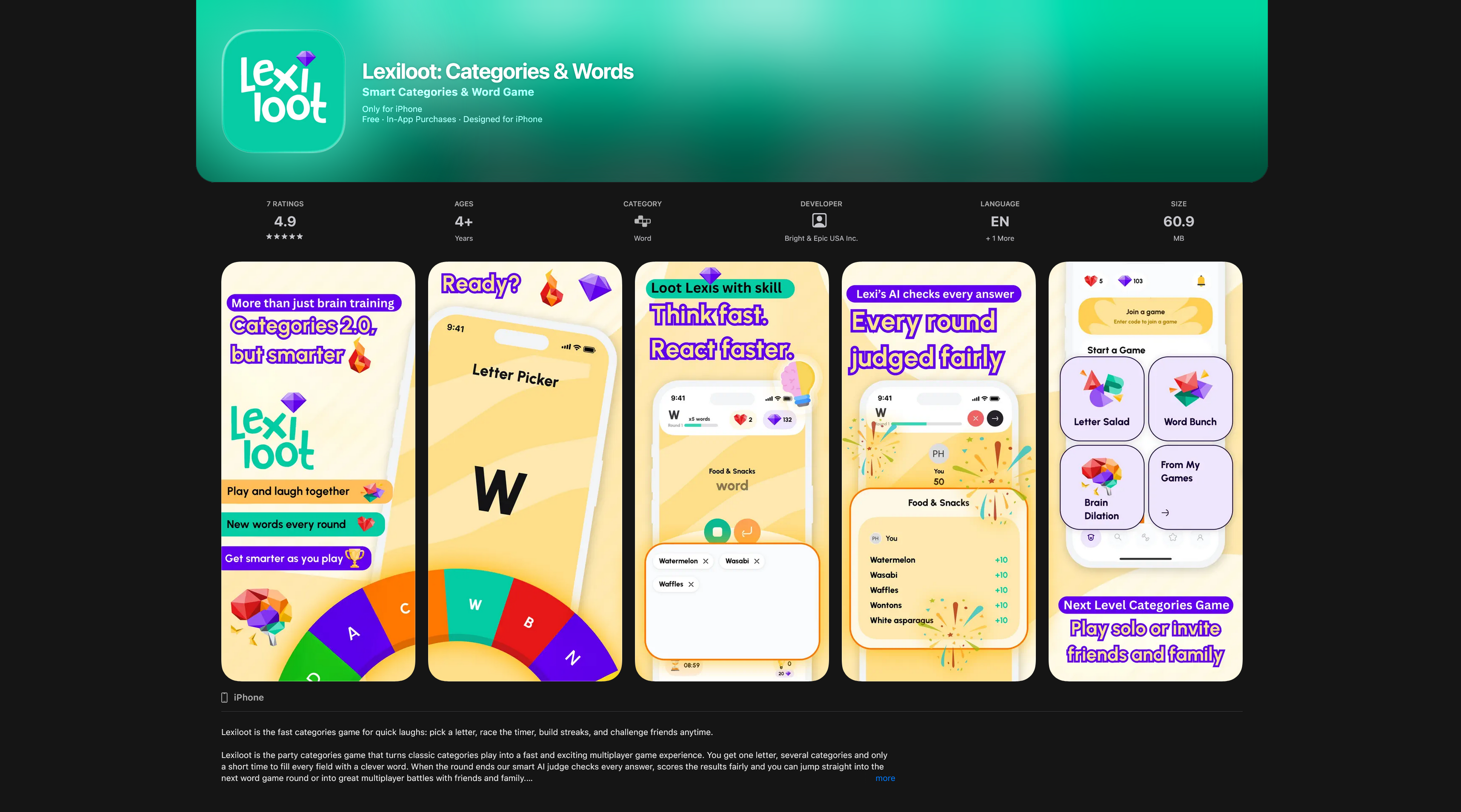
Lexiloot is built around the idea that the best learning happens when you are having too much fun to notice. You can explore how word games and brainpower connect through real gameplay, follow the family word game guide to set up your first family challenge, or sharpen your competitive edge with proven game strategies. With a pay-once model and no subscriptions, Lexiloot makes it easy to commit to long-term vocabulary and cognitive growth without ongoing costs.
Frequently asked questions
Do brain training games really improve memory and attention?
Yes. RCTs show moderate improvements in working memory and attention when games are evidence-based, and cognitive training in neurological disorders shows moderate effects with measurable brain activation increases. Effects are strongest for older adults or those with cognitive challenges.
Are mobile brain training games effective for children?
Yes, when games focus on vocabulary and cognitive skills with engaging, age-appropriate modes. Brain training games improve cognitive functioning and vocabulary, so look for family-oriented games with peer-reviewed support for the best results.
Do all brain training apps transfer benefits to real-life skills?
Not always. Many apps produce practice effects on trained tasks but limited general transfer, especially for healthy users. Apps like Peak show practice effects on trained tasks but no transfer to untrained cognitive tasks in healthy populations.
How should families pick the right brain training game?
Choose games that blend fun, vocabulary learning, and evidence-backed cognitive tasks, then mix solo play with group challenges for the best results. Age moderates benefits, so matching game difficulty to each family member’s level makes a real difference in outcomes.

