


TL;DR:
- Effective brain games focus on core skills like memory, attention, language, and flexible thinking.
- Fun, social, and adaptable games encourage consistent play and lasting cognitive benefits.
- Short, regular sessions with mixed analog and digital games maximize cognitive improvement and family engagement.
Finding games that are genuinely fun AND good for your brain is harder than it sounds. Most “brain training” apps feel like homework after a few sessions, and the repetition gets old fast. But brain games for social play target key cognitive skills including working memory, attention, cognitive flexibility, inhibition, and vocabulary, which means the right game does real work while everyone laughs around the table. This checklist gives you a clear, practical way to pick games that grow skills and keep every player coming back for more.
Table of Contents
- What makes a great brain training game?
- Top checklist picks: Family-friendly brain training games
- Quick comparison: Which game builds which skills?
- Make brain gains last: Building habits and tracking progress
- Checklist boosters: Social play, vocabulary games, and expert tips
- Why the best brain training game is the one you love to play
- Turn your checklist into real gains with Lexiloot
- Frequently asked questions
Key Takeaways
| Point | Details |
|---|---|
| Fun beats drill | Games that spark laughter and interaction deliver bigger cognitive gains than repetitive apps. |
| Checklist matters | Using a thoughtful game checklist ensures families hit all key skill areas during play. |
| Mix play modes | Combining analog and digital games gives better results than either alone. |
| Consistency counts | Short, regular sessions make progress stick for players of all ages. |
What makes a great brain training game?
Not every game with “brain” in the title delivers real cognitive benefits. The difference between a game that sharpens skills and one that just kills time usually comes down to a handful of well-defined traits.
Great brain training games are built around core skill targets. These include memory, sustained attention, cognitive flexibility (switching between ideas quickly), inhibition (stopping the wrong response), and language. When a game asks players to recall a sequence, spot a pattern, or name a word in a category, it is actively exercising one or more of these skills.
According to brain game criteria, the best games also feature structure that supports learning: clear goals so players know what they are working toward, quick rounds between 1 and 3 minutes so attention stays sharp, scalable difficulty so the game grows with the player, and visible feedback so everyone can see improvement happening.
Here is what to look for on your checklist:
- Clear win conditions: Players should always know what success looks like.
- Short rounds: Sessions of 1 to 3 minutes prevent mental fatigue.
- Adjustable difficulty: Look for levels, timers, or scoring that can change as skills improve.
- Immediate feedback: Correct answers, scores, or reactions that land right away.
- Fun themes and delight factors: Humor, colorful design, or surprise keeps players engaged.
- Group or cooperative modes: These prevent boredom and turn learning into connection.
Expert perspectives on casual play suggest that enjoyment is not a bonus feature. It is actually part of what makes training stick. When players feel good, they return. When they return, they improve.
Pro Tip: Before adding any game to your checklist, play one quick round yourself. If it feels like a chore after 60 seconds, your family will feel the same way within a week.
“Effective brain training games feature clear goals, quick rounds, scalable difficulty, visible feedback, and delight factors like fun themes for enjoyable social play.”

Top checklist picks: Family-friendly brain training games
Once you know what makes a great game, choosing gets much easier. These family-friendly brain games are evidence-backed, easy to learn, and enjoyable for mixed ages.
“Recommended family-friendly games include Odd-One-Out, Digit Span, Story Chain, Codenames, and vocabulary games like I Spy.”
Here are the top picks organized by the primary skill they train:
Memory and attention
- Digit Span: One player reads a string of numbers and the others repeat them back, forwards and then backwards. It directly trains working memory and is easy to set up anywhere.
- Odd-One-Out: Players see four objects or words and identify which does not belong. This builds category thinking and flexible reasoning.
- Story Chain: Each player adds one sentence to an ongoing story, remembering everything said before. It trains sequential memory and creative vocabulary recall.
Language and vocabulary
4. Codenames: Teams give one-word clues that connect multiple words on a grid. It demands category thinking, vocabulary fluency, and strategic reasoning simultaneously.
5. I Spy: A classic that builds observation, vocabulary, and descriptive language. Younger players love it; adults can make it harder with abstract clues.
6. Scavenger Hunt (themed): Assign word or category-based themes. Players find items matching descriptors like “something soft and round” which stretches vocabulary and perceptual flexibility.
For deeper options, five fun picks for sharper skills and vocabulary games for kids offer excellent starting points. You can also explore vocabulary-building strategies from educators who have tested these approaches in real classrooms.
Every game on this list supports a mix of memory, language, and flexible thinking, which means you are covering multiple skills without needing a complicated rotation.
Quick comparison: Which game builds which skills?
With plenty of fun options, a side-by-side comparison clarifies which games offer what benefits. Use this table when planning your types of brain games rotation.
Brain training games target key cognitive skills for families and casual gamers across all age ranges.
| Game | Primary skill | Session length | Best age range | Group size |
|---|---|---|---|---|
| Digit Span | Working memory | 2 to 5 min | 7 and up | 2 to 6 |
| Odd-One-Out | Category thinking | 3 to 5 min | 6 and up | 2 to 10 |
| Story Chain | Sequential memory, vocabulary | 5 to 10 min | 8 and up | 3 to 8 |
| Codenames | Vocabulary, reasoning | 15 to 20 min | 10 and up | 4 to 8 |
| I Spy | Vocabulary, attention | 2 to 5 min | 4 and up | 2 to 6 |
| Scavenger Hunt | Vocabulary, flexibility | 10 to 20 min | 5 and up | 2 to 12 |
Younger players (ages 4 to 7) thrive with I Spy and Odd-One-Out. Mixed age groups enjoy Codenames and Story Chain because the challenge naturally scales with verbal skill. Scavenger Hunt and Digit Span work for large family gatherings where you need something with room for everyone.
Use this table as a quick-reference checklist. If your goal is vocabulary, lean toward Codenames, I Spy, or Scavenger Hunt. If you need memory work, Digit Span and Story Chain are your go-to picks. For flexible thinking, Odd-One-Out and Codenames cover it well.
Make brain gains last: Building habits and tracking progress
Choosing the right games is just the start. Making cognitive improvements stick requires smart, sustainable routines.
Best brain training routines suggest keeping sessions between 10 and 20 minutes, 3 to 5 times per week. That might sound modest, but short and consistent beats long and occasional every time. A 15-minute family game session before dinner three nights a week adds up to over 2,000 minutes of cognitive practice in a year.
Consistent brain training improves cognitive functioning, working memory, and processing speed, with meta-analyses reporting a moderate effect size (Hedges’ g = 0.45 to 0.50). That is real, measurable improvement from regular play.
Here is a simple habit framework to follow:
- Anchor sessions to existing routines: After dinner, before school, or on a weekend morning works well.
- Alternate analog and digital games: Analog games add social engagement and fine motor interaction; adaptive apps personalize difficulty automatically.
- Track progress visually: Use a simple log or tiered level chart. Even a handwritten chart on the fridge builds motivation.
- Rotate games every 2 to 3 weeks: This prevents the brain from automating responses and keeps the challenge fresh.
| Week | Game focus | Session goal | Tracking method |
|---|---|---|---|
| 1 to 2 | Memory (Digit Span) | 3 sessions x 15 min | Record best digit span score |
| 3 to 4 | Vocabulary (I Spy, Codenames) | 4 sessions x 15 min | Count new words used |
| 5 to 6 | Flexibility (Odd-One-Out) | 3 sessions x 20 min | Track correct streak |
The benefits of word games extend beyond vocabulary. Regular play also supports focus, reasoning, and confidence in language.
Pro Tip: Cooperative modes where players work together rather than compete are especially good for families with wide age gaps. Everyone contributes, no one feels left behind, and the brain still gets a solid workout.
Checklist boosters: Social play, vocabulary games, and expert tips
Finally, let’s go beyond mechanics and tap the full power of social, language-led brain gains.
Group play adds something individual apps cannot replicate: real-time social feedback. When a player makes a connection or names a tricky word, the reactions of others reinforce that memory. That social reward loop makes engaging vocabulary learning far stickier than silent solo drills.
Vocabulary games like Word Detective, Auction House, and Codenames increase retention and transfer by 23 to 34% and support real-world use of new words. The key mechanism is elaborative processing: players do not just see a word, they use it, connect it to other ideas, and hear it in context.
Here are expert-backed boosters to add to your checklist:
- Use theme nights: Pick a category (animals, travel, food) and only use words from that theme during the session. This deepens category thinking.
- Add a “word of the day” challenge: Before the game starts, introduce one new word. Award points when players use it naturally during play.
- Debrief after each round: Ask players what was hard and why. Reflection doubles retention.
- Extend into daily life: Play “I Spy” in the grocery store. Use Codenames-style clues during car rides. Consistency outside of dedicated sessions accelerates vocabulary and cognition boost.
Experts note a real transfer debate around whether brain training generalizes to everyday life. The answer often depends on whether the game is fun, social, and adaptive. Games that feel forced rarely produce lasting gains.
“Prioritize fun, social, adaptive games for sustained engagement and best real-world results.”
Pro Tip: Rotate who picks the game each session. Giving kids or other players ownership over the choice dramatically increases buy-in and consistency.
Why the best brain training game is the one you love to play
Here is something most brain training guides skip entirely: the science of optimal difficulty and social connection matters far less than whether your family actually wants to play.
We have seen households with carefully built routines and perfectly chosen games abandon them in three weeks because the games felt like obligations. Meanwhile, families who play Codenames every Friday purely because it makes everyone laugh are consistently building stronger vocabulary recall and flexible thinking, session after session.
Casual play and cognitive benefits are deeply linked to well-being and sustained engagement. Play for its own sake produces real cognitive benefits, and that is not a minor footnote. It is the whole point.
So yes, use this checklist. Use the comparison table. Build a routine. But when it comes down to choosing between the “optimal” game and the one that draws laughter and brings everyone to the table, always choose the one people love. That is the game that becomes a habit. That is the game that builds fun social brain training into something lasting.
The brain grows best when it is having a good time.
Turn your checklist into real gains with Lexiloot
Ready to put this checklist into action? Lexiloot brings together the best of vocabulary games, category challenges, and social brain training in one place.
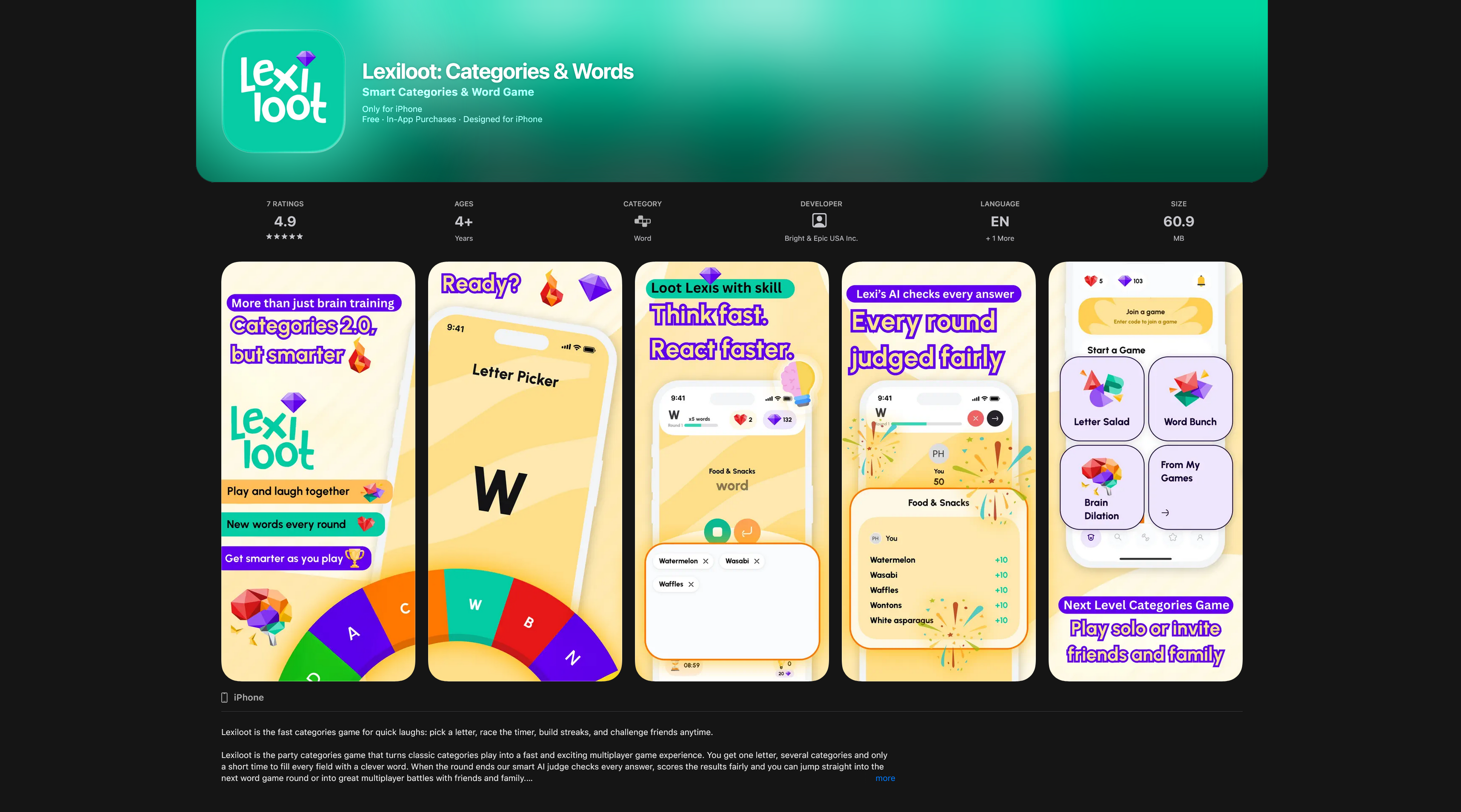
With Lexiloot, you can explore evidence-based game strategies that make every session count for families and casual players alike. Discover creative word game examples that keep everyone engaged, or browse word game strategies for families to sharpen skills at every level. Lexiloot offers a pay-once model with no subscriptions, so you invest once and play as long as you like. It is brain training that actually feels like fun.
Frequently asked questions
What is the most important factor for effective brain training at home?
Choose games that are fun, social, and match your skill level. Effective games feature quick rounds, scalable challenge, and visible progress, which matter more than sheer repetition.
How often should you play brain training games for results?
Aim for short, enjoyable sessions of 10 to 20 minutes, 3 to 5 times per week for the best cognitive improvement over time.
Are digital brain training apps better than analog games?
Mixing both gives the best results. Mix analog and digital to combine social and motor engagement from analog games with the personalized difficulty of adaptive apps.
Can vocabulary games really improve language skills?
Yes. Vocabulary games boost retention by 23 to 34% and improve real-world use of words, especially when played in social, context-rich settings.
What if family members have different ages or skill levels?
Choose cooperative modes and games with adjustable difficulty so players of all ages can contribute, succeed, and enjoy the session together.
Recommended
- Family-friendly brain games: fun learning & skill growth
- Brain training games: 5 fun picks for sharper skills
- Top types of brain games to boost skills and fun in 2026
- Boost family fun and vocabulary: word games workflow guide
- De beste leerzame games voor kinderen: top 5 selectie
- Altersgerechte Escape Games: Pädagogisch wertvoll für Familien

