


TL;DR:
- Choosing age-appropriate and skill-focused word games enhances learning and family engagement effectively.
- Rotating between digital and traditional formats with active parental involvement maximizes vocabulary and social development benefits.
Finding a word game that keeps a seven-year-old, a twelve-year-old, and two adults equally engaged on the same Friday night is harder than it sounds. Many games are either too simple for older players or too complex for young ones, leaving someone bored within minutes. The good news is that well-chosen word games do more than fill time. They build vocabulary, sharpen spelling fluency, and create the kind of shared laughter that brings families closer. This guide walks you through selection criteria, top picks, head-to-head comparisons, and clear recommendations so your next family game night becomes genuinely memorable.
Table of Contents
- How to choose the perfect word game for your family
- Top family-friendly word games for every age
- How word games power up learning and social skills
- Quick comparison: Which word games fit your family best?
- What most families miss about word games and how to unlock deeper benefits
- Ready to spark your next family game night?
- Frequently asked questions
Key Takeaways
| Point | Details |
|---|---|
| Choose age-appropriate games | Selecting games that fit all ages ensures everyone participates and benefits. |
| Mix digital and traditional play | Combining board and app-based games maximizes learning and keeps things fresh. |
| Rotate new games regularly | Trying new games monthly maintains excitement and promotes a range of skills. |
| Prioritize positive family interaction | Games that encourage teamwork and laughter strengthen family bonds and social skills. |
How to choose the perfect word game for your family
With the stakes for learning and engagement clear, it helps to know what to look for before you buy or play your next game. Not every word game is created equal, and a little planning up front saves you from a box that collects dust after one play.
Age-appropriateness matters more than you think. A game labeled “for ages 8 and up” may still frustrate a struggling reader or bore a sharp teenager. Look at the actual vocabulary level required, not just the age label. Some games, like categories-style challenges, can be adjusted on the fly by changing topics or adding time limits.
Focus on learning outcomes. The best games for families build more than one skill at a time. You want games that strengthen vocabulary recall and decoding, encourage category thinking, and reward communication rather than just fast spelling. Research backs this up: a 5-hour tablet intervention using word games increased scores on untrained word lists with effect sizes between 0.36 and 0.48, and those gains held at a five-week follow-up.
Check replay value and setup time. Games with modular boards, rotating word lists, or app updates tend to stay fresh longer. A game that takes 20 minutes to set up will rarely get played on a school night. Aim for games with five minutes or less of setup so spontaneous play stays possible.
Screen-free versus digital options. Both have real advantages. Board and card games shine for face-to-face social interaction, while digital apps often offer personalized difficulty and instant feedback. A balanced approach to vocabulary-building game strategies usually means having one or two of each type ready to rotate.
Here are the key factors to review before choosing a game:
- Age range: Does it truly work for the youngest and oldest player in your home?
- Skill focus: Does it build vocabulary, spelling fluency, or category thinking?
- Setup time: Under five minutes is ideal for spontaneous family nights.
- Replay value: Does the game change enough between sessions to stay interesting?
- Format: Board, card, app, or a hybrid? Each has a place in family play.
- Social structure: Does it encourage teamwork, or is it purely competitive?
Pro Tip: Let kids help choose the next game. When children have a voice in the selection process, their motivation to play and learn increases noticeably. Even letting a younger child flip through options and pick the box art they like most creates buy-in before the first card is dealt.
Top family-friendly word games for every age
Now that families know what to consider in a great game, here are the top titles that truly deliver fun and learning across different ages and formats.
Codenames Family Edition is one of the strongest options available for families with school-age children. In this game, teams use one-word clues from a spymaster to identify secret agent words on a 5×5 grid, while avoiding opponents’ words and a single assassin card that ends the game immediately. This structure demands that players think carefully about word relationships and categories, which is exactly the kind of vocabulary exercise that sticks. It works especially well for ages 8 and up, and the teamwork element means younger children can participate alongside adults without feeling outpaced.
Disappearing Ice Cream Sundae is a welcome alternative to the classic Hangman. Instead of drawing a figure on a gallows, “Disappearing Ice Cream Sundae” erases parts of a sundae illustration with each wrong guess. This change may seem small, but it removes the negative imagery that can make Hangman feel punishing for children who are still building their spelling confidence. The game keeps the same core mechanics, guessing letters to complete a hidden word, but the emotional tone stays playful and positive throughout.
Word Tag app takes a research-informed approach to vocabulary learning. The app uses spaced repetition and minigames including Word Jumble, Word Pairs, Words in Context, and Pop Quiz to teach new words in a way that actually transfers to everyday use. Spaced repetition means the app shows you a word again just before you would normally forget it, which is a technique backed by decades of memory research. It is designed with input from literacy experts and works well for children who enjoy a little independent challenge alongside family play sessions.
Classic options like Boggle, Scrabble Junior, and customized Pictionary rounds also earn their place in a family game collection. Boggle sharpens spelling fluency and pattern recognition. Scrabble Junior introduces younger children to letter placement and basic word building without the complexity of the full adult version. Customized Pictionary, where families write their own category cards, builds category thinking and vocabulary in a creative, active format that even reluctant players tend to enjoy.
“Board games like Codenames and Boggle excel for family nights due to screen-free social interaction, adaptable for ages 8 and up with strategy and laughter.”
Here is a quick summary of recommended formats by skill area:
- Vocabulary breadth: Codenames Family Edition, Word Tag app
- Spelling fluency: Boggle, Disappearing Ice Cream Sundae
- Category thinking: Categories games, Pictionary with custom cards
- Reading and decoding: Word Tag app, Scrabble Junior
- Teamwork and communication: Codenames, cooperative Pictionary
Pro Tip: Mix board games, card games, and apps across different family game nights. Rotating formats keeps things fresh and, more importantly, exercises different cognitive skills. Vocabulary recall works differently in a timed Boggle round versus a collaborative Codenames session, and both matter for language development. You can explore engaging word games for different ages to find more variety for your rotation.
How word games power up learning and social skills
So what is it exactly that makes word games so effective for personal growth and togetherness? The science is clear.
Vocabulary gains from both digital and traditional word games are measurable and meaningful. In one well-designed study, Kahoot-based word games produced a 26-point vocabulary gain in elementary students compared to only a 6-point gain in the control group, with a Cohen’s d effect size of 0.89, which researchers classify as a large effect. That is a substantial difference from adding game-based learning to a regular routine.
A separate study found that just five hours of tablet-based word game play improved children’s ability to decode words they had never encountered in the game. Effect sizes ranged from 0.36 to 0.48, and the gains held at a follow-up five weeks later. These are not just short-term memory bumps. The learning transferred to new words and lasted over time.
Word games also build social skills in ways that purely academic activities often miss. Players practice turn-taking, communicate under mild time pressure, negotiate word meanings, and celebrate one another’s successes. These are real-world skills. Families who play brain games together regularly often notice improvements in children’s ability to listen, wait, and express themselves clearly during everyday conversations, not just during game time.

| Benefit | Traditional games | Digital games |
|---|---|---|
| Vocabulary gains | Moderate to strong | Strong to very strong |
| Decoding skills | Strong | Strong |
| Social interaction | Very strong | Moderate |
| Personalized difficulty | Limited | Very strong |
| Replay variety | Moderate | Very strong |
| Parental guidance needed | Low | Moderate to high |
Three ways to get the most out of family word games:
- Combine formats. Use both apps and board games to exercise different types of vocabulary recall and social communication.
- Match the game to the child’s current reading level. A game that is slightly challenging without being frustrating sits in the ideal learning zone.
- Set a weekly family game night. Even one regular session per week builds consistent vocabulary exposure and keeps family connection strong.
You can learn more about how word games boost vocabulary with deeper breakdowns of the research behind these results.
Quick comparison: Which word games fit your family best?
Faced with strong choices, a clear comparison can help families decide which game to try first.
| Game | Ideal ages | Setup time | Format | Core skills | Replay value | Parental involvement |
|---|---|---|---|---|---|---|
| Codenames Family Edition | 8 and up | 5 min | Board | Vocabulary, teamwork, deduction | High | Moderate |
| Disappearing Ice Cream Sundae | 5 and up | 1 min | Pencil and paper | Spelling fluency | Moderate | Low |
| Word Tag app | 7 and up | Instant | Digital | Vocabulary, decoding, recall | Very high | Moderate |
| Categories games | 6 and up | 1 min | Verbal or card | Category thinking, recall speed | High | Low |
| Boggle | 8 and up | 2 min | Board | Spelling, pattern recognition | Moderate | Low |
A few things stand out in this comparison. Codenames Family Edition tops the list for teamwork and rich vocabulary practice, but it does require children who can read comfortably. The Word Tag app’s spaced repetition system makes it the strongest option for building lasting vocabulary gains over time, especially when paired with occasional screen-free play.
Here are three simple steps to pick your family’s next game:
- Identify your priorities. Decide whether your family most needs spelling practice, vocabulary expansion, teamwork, or just a quick and joyful activity after dinner.
- Get input from your kids. Show them two or three options and let them weigh in. A game kids helped choose gets played far more often.
- Try one new game per month. Rather than overhauling your whole collection, add one new title monthly and see how it fits. This keeps game nights fresh without overwhelming anyone.
You can find a ready-to-use framework for planning your family word game night that makes the whole process feel easy and sustainable.
What most families miss about word games and how to unlock deeper benefits
After all the options and evidence, it helps to know what truly maximizes your family’s results. Here is what most guides forget to mention.
The biggest mistake families make is searching for the single best word game and sticking with it forever. One great game played on repeat loses its power quickly. Children stop being challenged. Vocabulary exposure narrows. What actually drives long-term growth is variety combined with consistency. Rotating between an app, a board game, and a simple verbal categories round across different sessions keeps the brain encountering words from new angles, which is exactly how vocabulary recall deepens.
There is also a common assumption that digital games are somehow less valuable than board games for family connection. The research challenges that. Digital games can show larger gains than traditional formats, but those gains come with a condition: parental monitoring matters. When adults sit alongside children during app-based play, ask questions about new words, and connect game vocabulary to real-life examples, the learning effect multiplies. The app alone is useful. The app plus active parenting is genuinely powerful.
One insight we find consistently valuable is that children learn more from word games when they feel ownership over the experience. When a child chooses the categories in a verbal game, selects the difficulty setting in an app, or even makes up a new house rule, they are not just playing. They are practicing teaching and rotating word games in their own small way, which cements understanding more deeply than passive participation ever could.
Another underappreciated factor is feedback speed. Tools that give immediate, clear feedback after each round, like the kind built into well-designed apps, help kids self-correct faster. Spaced repetition systems in particular, where a word reappears just as memory fades, are far more effective than flashcard drilling. If your family explores modern word puzzles alongside traditional games, you will find that the two formats reinforce each other in surprising ways. Together, they cover more learning ground than either could alone.
Ready to spark your next family game night?
Your family already has everything it needs to make word games a regular, rewarding part of the week. Whether you start with a board game this Friday or download a vocabulary app for a quiet Sunday morning, every session builds real skills and real connection.
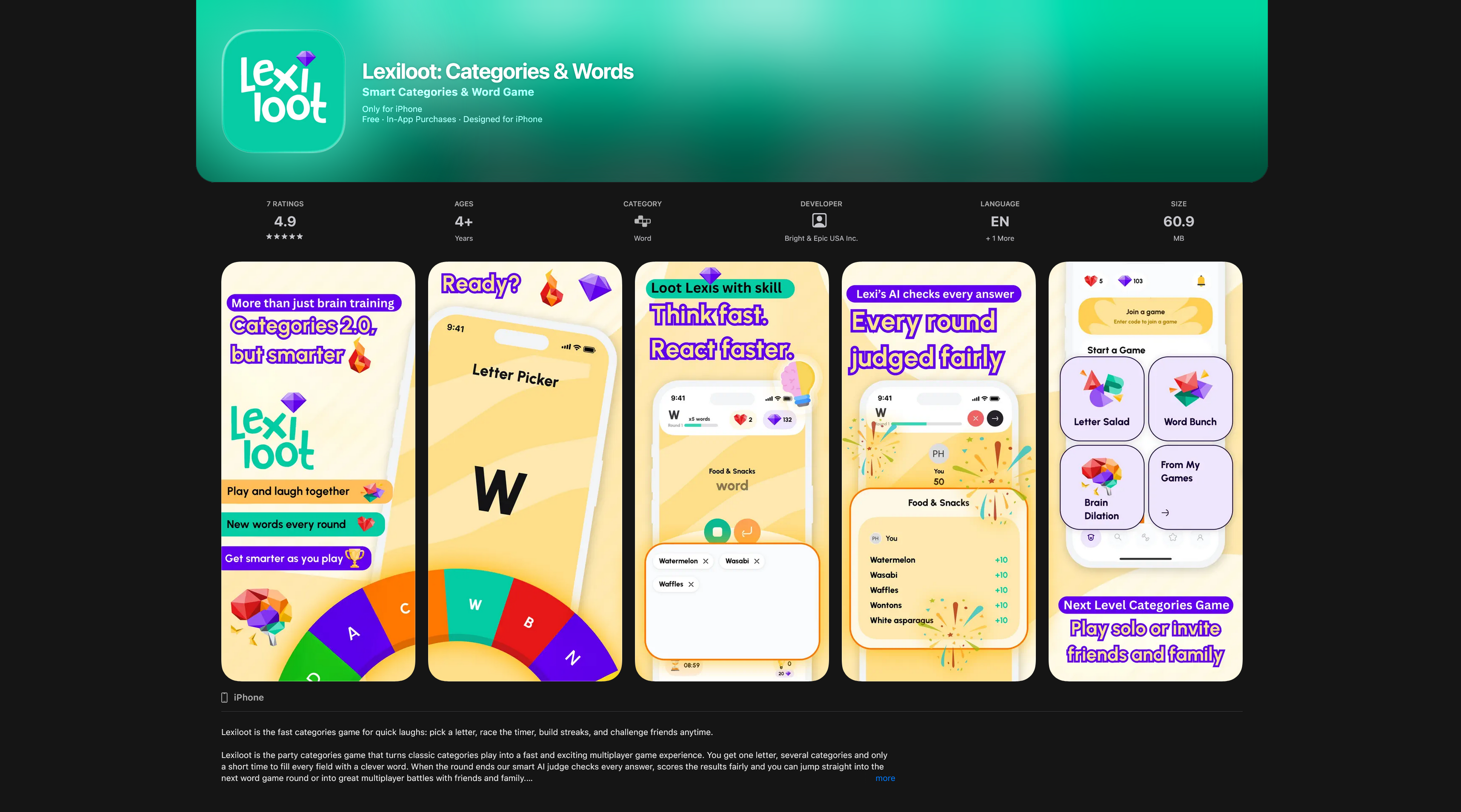
Lexiloot is designed exactly for families like yours, combining vocabulary challenges, category games, multiplayer competitions, and cognitive training in one place. You can invite family members, compete on leaderboards, and access ad-free play with a single pay-once upgrade rather than a monthly subscription. If you want a clear starting point, the word games workflow guide shows you how to build a sustainable game night routine that grows with your kids. Try Lexiloot today and bring evidence-based, social word play into your home in a way that feels effortless and genuinely fun.
Frequently asked questions
What age groups can play family-friendly word games together?
Most games can be adapted for ages 6 and up, with options like Codenames and Boggle best suited for ages 8+ when children can read independently and enjoy light strategy alongside social fun.
Are digital word games as effective as board games?
Digital games can drive larger vocabulary gains, though Kahoot-style digital games deliver the strongest results when parents stay involved and children already have a solid phonics foundation to build on.
What if my child dislikes traditional spelling or Hangman?
Switch to a positive alternative like Disappearing Ice Cream Sundae, which keeps the guessing structure your child may already know but replaces any negative imagery with a playful, low-pressure format.
How much time should families spend on word games each week?
Practicing 20 to 30 minutes a few times per week delivers measurable vocabulary and social gains, and Word Tag’s personalized sessions are built around exactly that kind of short, consistent daily practice for optimal results.

