


Most people treat word puzzles as a way to pass time. But the research tells a very different story. Word puzzles enhance vocabulary, verbal fluency, memory, and problem-solving skills across all ages, making them one of the most accessible brain training tools available. Whether you’re a student trying to build spelling fluency, a parent looking for family-friendly learning activities, or an older adult wanting to stay mentally sharp, word puzzles offer real, measurable benefits. This guide walks you through the science, the practical applications, and the smart strategies that help you get the most out of every puzzle session.
Table of Contents
- Why word puzzles matter: Science and cognitive gains
- Vocabulary, language, and learning: How word puzzles help
- Nuances and limits: What puzzles can (and can’t) do for your brain
- Maximizing the benefits: How to get the most from word puzzles
- Our take: What most word puzzle articles miss
- Ready to boost your brain? Explore puzzle-powered learning
- Frequently asked questions
Key Takeaways
| Point | Details |
|---|---|
| Cognitive boost | Word puzzles improve memory, focus, and processing speed for all age groups. |
| Vocabulary growth | Regular puzzle play expands word knowledge and language skills. |
| Optimal with variety | Mix different puzzle types and challenge levels for the best results. |
| Know the limits | Puzzles strengthen your brain but are not a magic cure-all for cognitive decline. |
| Consistency matters | Frequent, engaging sessions maximize both fun and mental benefits. |
Why word puzzles matter: Science and cognitive gains
Word puzzles work because they engage multiple parts of the brain at once. When you search for a word, your brain scans what it already knows, retrieves stored vocabulary, and checks spelling patterns in real time. That process builds stronger neural connections over time.
A major meta-analysis on brain training found that brain training including word puzzles improves cognitive functioning, working memory, and processing speed. These aren’t small gains either. Across dozens of studies, participants who regularly engaged in word-based brain training showed consistent improvements in how quickly and accurately they processed information.
Here’s a quick look at the core cognitive benefits word puzzles deliver across different age groups:
- Children: Stronger vocabulary recall, improved spelling fluency, and better category thinking
- Adults: Sharper working memory, faster verbal processing, and improved focus during complex tasks
- Seniors: Maintained verbal fluency, slower cognitive decline, and enhanced short-term memory retention
These benefits connect directly to the vocabulary and brainpower benefits that make word games so valuable in educational settings.
Research consistently shows that structured word puzzle engagement improves processing speed and working memory, two of the most important markers of overall cognitive health.
It’s also worth noting that not all puzzles are equal. Puzzles that require you to think in categories, build word associations, or recall vocabulary under mild time pressure tend to produce stronger cognitive gains than passive reading or simple fill-in-the-blank tasks. If you want to understand the full range of brain training terms used in cognitive research, exploring that vocabulary helps you choose the right puzzle types for your goals.
The key takeaway here is simple. Word puzzles are not just entertainment. They are structured cognitive workouts that strengthen the brain’s language and memory systems with every session.
Vocabulary, language, and learning: How word puzzles help
Beyond general brain health, word puzzles have a direct and specific impact on language development. Word puzzles enhance vocabulary, verbal fluency, and verbal memory across all ages, which means the benefits show up whether you’re six or sixty.

Here’s how the impact breaks down across different groups:
| Age group | Primary language benefit | Secondary benefit |
|---|---|---|
| Children (6 to 12) | Vocabulary expansion and spelling fluency | Category thinking and word association |
| Teens and young adults | Verbal reasoning and reading comprehension | Academic vocabulary and writing clarity |
| Adults | Word retrieval speed and verbal memory | Professional communication and focus |
| Seniors | Verbal fluency maintenance | Short-term memory support |
The specific literacy and language skills that word puzzles strengthen include:
- Spelling fluency: Repeated exposure to correct word forms builds automatic spelling recognition
- Vocabulary recall: Retrieving words under mild pressure trains faster, more accurate word retrieval
- Category thinking: Grouping words by theme or meaning strengthens conceptual organization
- Reading comprehension: A broader vocabulary directly supports better understanding of written text
Pro Tip: Mix puzzle types for the best vocabulary results. Combine crosswords for spelling, category games for conceptual grouping, and anagram challenges for flexible word thinking. Rotating formats keeps your brain engaged and prevents the plateau that comes from repeating the same puzzle style.
For students, integrating word puzzles into a daily study routine can accelerate vocabulary growth faster than flashcard drilling alone. For families, puzzle time doubles as quality time with real learning built in. You can explore a wide range of puzzle varieties to find formats that fit your household or classroom.
Here’s a simple routine to get started:
- Choose one puzzle type to focus on for the week (crossword, word search, category game)
- Set aside 15 to 20 minutes at a consistent time each day
- After each session, write down three new words you encountered
- On day seven, review your word list and try using each word in a sentence
- The following week, switch to a different puzzle format to keep things fresh
This kind of structured approach works especially well for students and families who want to turn modern word puzzles into a genuine learning habit rather than a one-off activity.
Nuances and limits: What puzzles can (and can’t) do for your brain
Word puzzles are powerful, but they’re not magic. Understanding their limits helps you use them wisely and set realistic expectations.
Cognitive activities like puzzles build cognitive reserve, but evidence for preventing broad cognitive decline is limited. Cognitive reserve refers to the brain’s ability to manage damage or aging by drawing on existing mental resources. Puzzles contribute to that reserve, but they can’t fully stop the aging process on their own.
Here’s a clear breakdown of what the research supports and where the limits are:
| Cognitive effect | Supported by research | Limited evidence |
|---|---|---|
| Improved working memory | Yes | Broad memory protection |
| Faster verbal processing | Yes | General intelligence gains |
| Vocabulary growth | Yes | Preventing dementia directly |
| Spelling fluency | Yes | Reversing existing decline |
Doing the same crossword every day is like lifting the same light weight. Your brain adapts quickly, and the challenge disappears. Novelty is what drives real growth.
This is a point that research on crossword puzzles and brain health reinforces clearly. Repetitive puzzle play produces diminishing returns. The brain needs new challenges to keep building stronger connections.
Some of the most common misconceptions about word puzzles include:
- Myth: Any puzzle, done often enough, will prevent dementia. Reality: Puzzles build reserve but are not a guaranteed prevention strategy.
- Myth: Harder is always better. Reality: Puzzles that are too difficult cause frustration, not growth. The right level of challenge matters.
- Myth: Digital puzzles are less effective than paper ones. Reality: Format matters less than engagement level and variety.
- Myth: You need hours of practice daily. Reality: Consistent shorter sessions outperform rare marathon sessions.
Understanding what casual brain gaming actually does for cognition helps you build a realistic and sustainable puzzle habit. And when you combine puzzles with other healthy habits like sleep, exercise, and social connection, the cognition boost becomes much more meaningful.
Maximizing the benefits: How to get the most from word puzzles
Knowing that word puzzles work is one thing. Knowing how to structure your engagement so you actually see results is another. Here are evidence-backed strategies that make a real difference.
Frequency matters more than most people realize. High-dose engagement, such as four or more sessions per week, yields the greatest cognitive effects. That doesn’t mean you need to spend hours on puzzles. Even 15 to 20 focused minutes four times a week produces measurable gains.
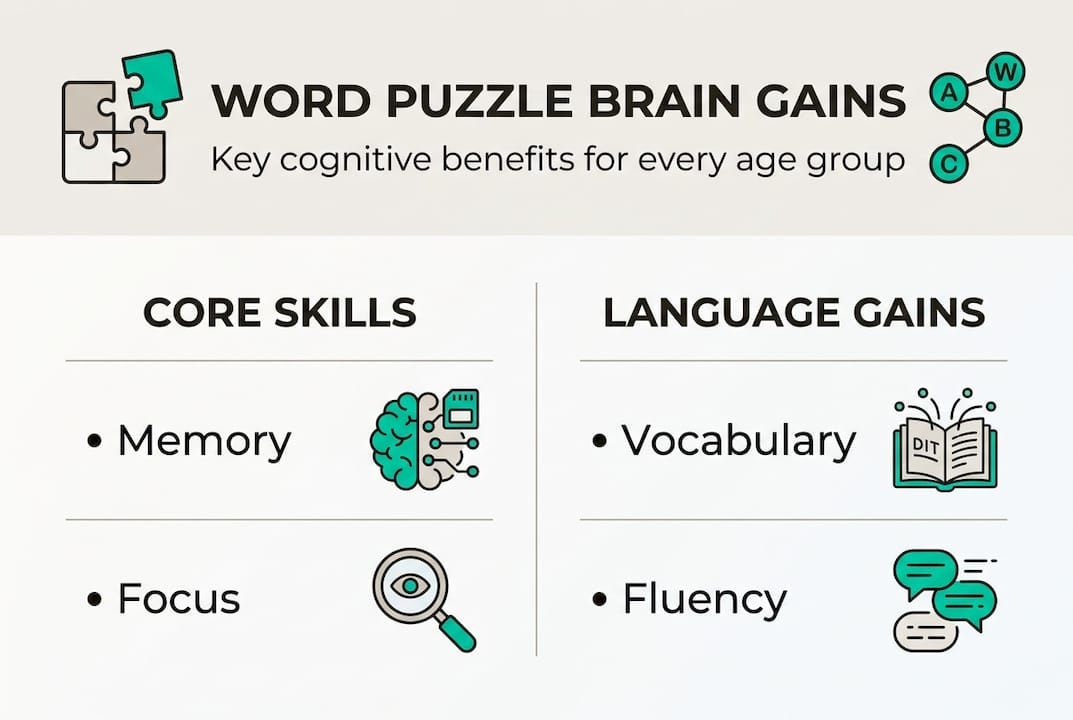
Pro Tip: Variety is more valuable than volume. Doing five different puzzle types across the week trains more cognitive pathways than doing the same puzzle fifty times. Think of it as cross-training for your brain.
Here’s how to build a word puzzle routine that actually sticks:
- Start with a format you enjoy. Motivation matters, and you’ll quit quickly if the puzzle feels like homework.
- Gradually increase difficulty every two to three weeks to keep the challenge level appropriate.
- Add a social element. Invite a friend, family member, or classmate to compete or collaborate.
- Track your progress. Note new words learned, scores improved, or categories mastered.
- Celebrate small wins. Finishing a tough puzzle or learning five new words in a week is worth acknowledging.
For families, making word puzzles a group activity multiplies the benefits. Kids who puzzle with adults pick up vocabulary faster because they hear words used in context. Teachers can find practical ideas for teaching word games in classroom settings.
Here are the best puzzle formats to rotate through for balanced brain training:
- Crosswords: Build spelling fluency and vocabulary recall
- Word searches: Strengthen visual scanning and pattern recognition
- Category games: Develop conceptual grouping and category thinking
- Anagrams: Boost flexible word thinking and letter pattern recognition
- Multiplayer word battles: Add social engagement and friendly competition
If you enjoy creating your own challenges, you can also explore resources for creating word puzzles that work for families and educators alike.
Our take: What most word puzzle articles miss
Most articles on word puzzles focus entirely on the solo experience. Do this puzzle, improve that skill. But that framing misses something important. The biggest gains we see come from people who combine puzzles with social play, real conversation, and genuine curiosity about language.
When you play a category word game with a friend and argue about whether a word fits, you’re doing something no solo crossword can replicate. You’re using language actively, defending your thinking, and learning from disagreement. That kind of engagement goes far deeper than passive puzzle solving.
Our honest take is this: don’t just do more puzzles. Do more interesting puzzles, with other people, in formats that surprise you. Mix competitive play with reflective solo sessions. Try a puzzle type that feels unfamiliar. That combination of novelty, social connection, and consistent practice is what actually drives long-term vocabulary growth and cognitive health. The research supports frequency and challenge, but the joy of discovery is what keeps you coming back.
Ready to boost your brain? Explore puzzle-powered learning
If this article has you motivated to take your word puzzle habit seriously, Lexiloot is built exactly for that. Whether you’re looking to grow your vocabulary, challenge your brain, or share the fun with friends and family, Lexiloot brings it all together in one engaging platform.
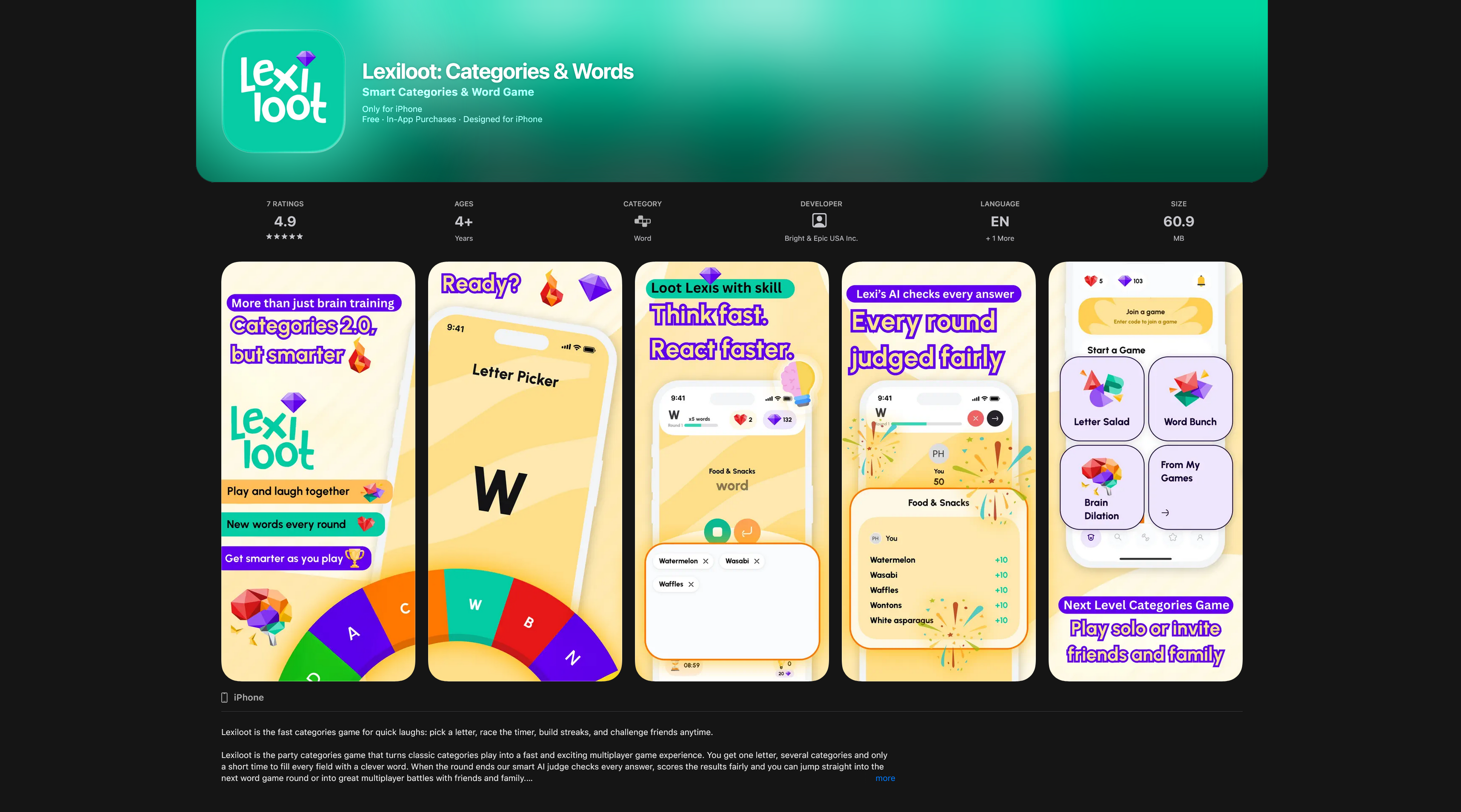
Explore how word games boost vocabulary and sharpen your thinking at any age. Discover the full range of word games benefits backed by research, or go deeper with advanced puzzle strategies designed for players who want more than just casual play. Lexiloot offers category challenges, multiplayer battles, and vocabulary-building game modes that make every session count.
Frequently asked questions
Do word puzzles really improve your memory?
Yes. Regular puzzle practice strengthens short-term memory and improves focus, particularly when puzzles involve active word retrieval and category thinking rather than passive recognition.
How often should I do word puzzles for the best results?
Four or more sessions per week produce the greatest cognitive benefit, especially when paired with increasing difficulty and varied puzzle formats.
Are word puzzles effective for all age groups?
Yes. Word puzzles help different cognitive skills at every stage of life, from vocabulary and spelling fluency in children to verbal memory maintenance in older adults.
Can puzzles prevent Alzheimer’s or dementia?
Word puzzles build cognitive reserve, which supports brain health, but evidence for preventing broad cognitive decline is limited. They’re one helpful tool among many, not a guaranteed prevention strategy.
Is there such a thing as doing too many puzzles?
Repeating the same puzzle type too often leads to diminishing returns. Repetitive play stops challenging your brain once it adapts, so rotating formats and increasing difficulty is essential for continued growth.

