


Most people searching for vocabulary and language learning apps struggle to find options that offer ad-free gameplay and meaningful practice without hidden subscription fees. Many popular platforms rely on repetitive drills or paywalls that disrupt learning and discourage consistent use, especially for families and classrooms. After reading you will be able to compare four language and vocabulary game apps on distraction-free play, pricing, social features, and learning benefits to decide which best supports your learning goals.
Table of Contents
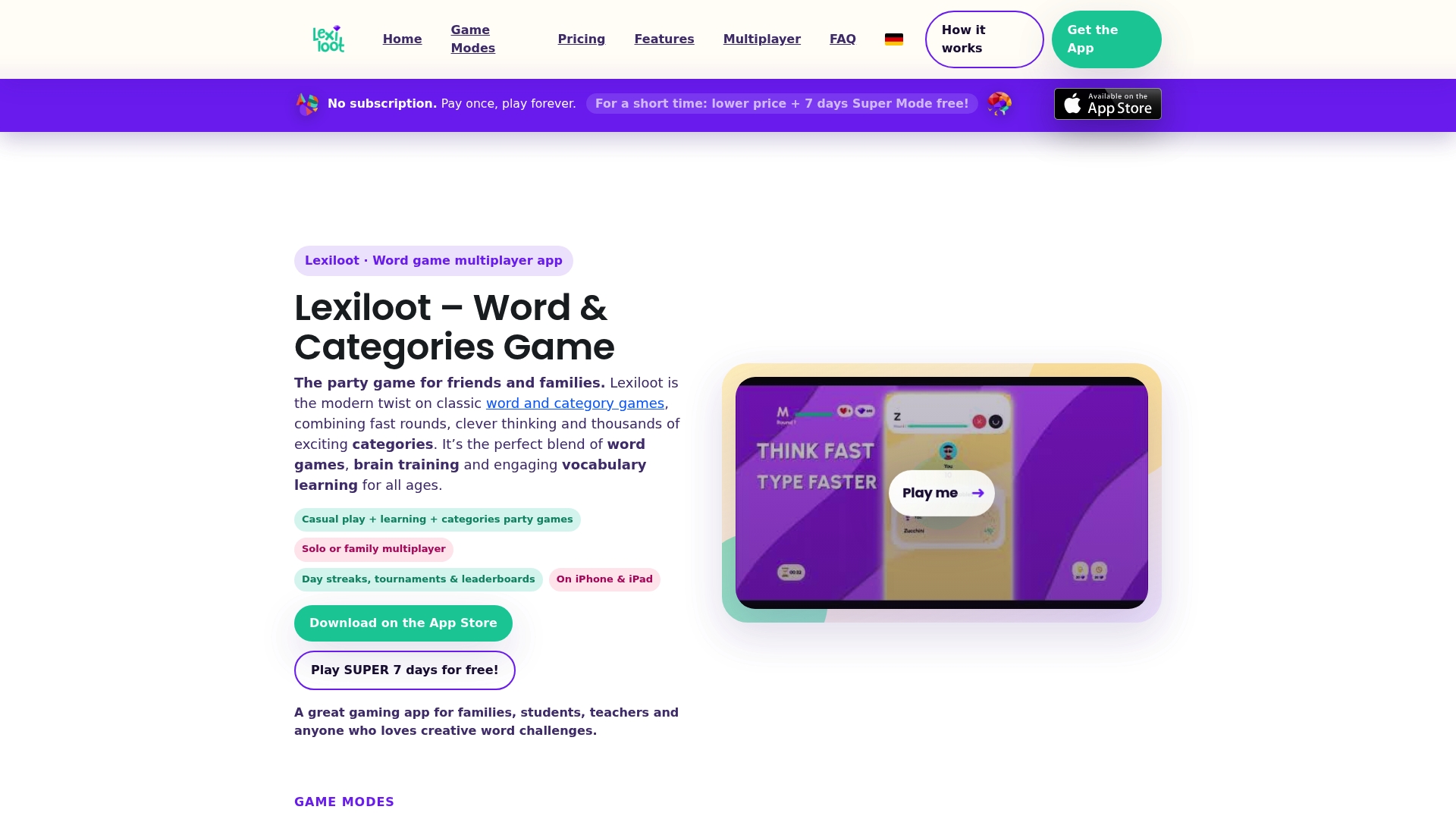
Lexiloot App
At a Glance
One-time pay model with no subscriptions or ongoing costs. The app centers on ad-free, distraction-free play and includes multiplayer battles and leaderboards to keep families and students engaged.
Lexiloot’s marketing materials state the design uses spaced repetition and active retrieval to support long-term vocabulary gains.
Core Features
- Ad-free gameplay for distraction-free sessions, useful in classrooms and focused study time.
- Multiple game modes: casual word puzzles, category challenges, and multiplayer competitions that let you invite friends and host battles.
- Built-in spaced repetition and retrieval practice to reinforce vocabulary across sessions.
- Progress tracking and skill benchmarking across cognitive areas like memory and attention.
- Optional premium upgrades unlock deeper vocabulary practice and advanced brain training modes without recurring subscriptions.
Key Differentiator
Ad-free core play paired with classroom-ready spaced repetition mechanics. Lexiloot’s marketing materials state the app optimizes cognitive flow through contextual language use and repeated active recall rather than short, isolated drills.
Pros
- Long-term learning focus. According to the company, gameplay is structured around spaced repetition and active retrieval, which supports retention better than one-off quizzes.
- Distraction-free environment. Removing ads and interruptions makes short practice bursts more effective for younger learners and attention-challenged students.
- Broad appeal across ages. Game modes range from casual puzzles for family game night to competitive multiplayer that motivates teens and adults.
- Predictable cost structure. A pay-once model removes subscription churn and makes school or family purchases simpler to budget.
- Social and classroom-friendly. Invite friends, host battles, and compete on leaderboards to boost motivation and peer learning.
Cons
- Requires cookies enabled for full functionality, which may be inconvenient in some school-managed devices or strict privacy settings.
Notable Integrations
- App Store (iOS) for download. The product data lists the iOS App Store as the distribution channel; no other integrations are provided in the scraped content.
Who It’s For
Parents, teachers, and learners who want distraction-free vocabulary work wrapped in playful challenges. Ideal for family game nights, classroom warmups, and students building vocabulary alongside other language study.
Unique Value Proposition
One-time pay model with ad-free core gameplay and optional premium upgrades for deeper practice. The combination of category-based challenges, multiplayer social play, and spaced repetition creates repeatable short sessions that fit a school period or a ten-minute family break, according to the company.
Real World Use Case
A teacher assigns five-minute Lexiloot drills at the start of class to warm up vocabulary. The class uses progress benchmarks to spot students who need targeted review. The vendor advertises that this approach improves retention and attention over regular practice.
Pricing
Lexiloot uses a one-time pay model and emphasizes no subscriptions or ongoing costs. Specific price points were not included in the scraped content, so check the App Store listing for current pricing and any premium upgrade fees.
Website: https://lexiloot.app
Zynga
At a Glance
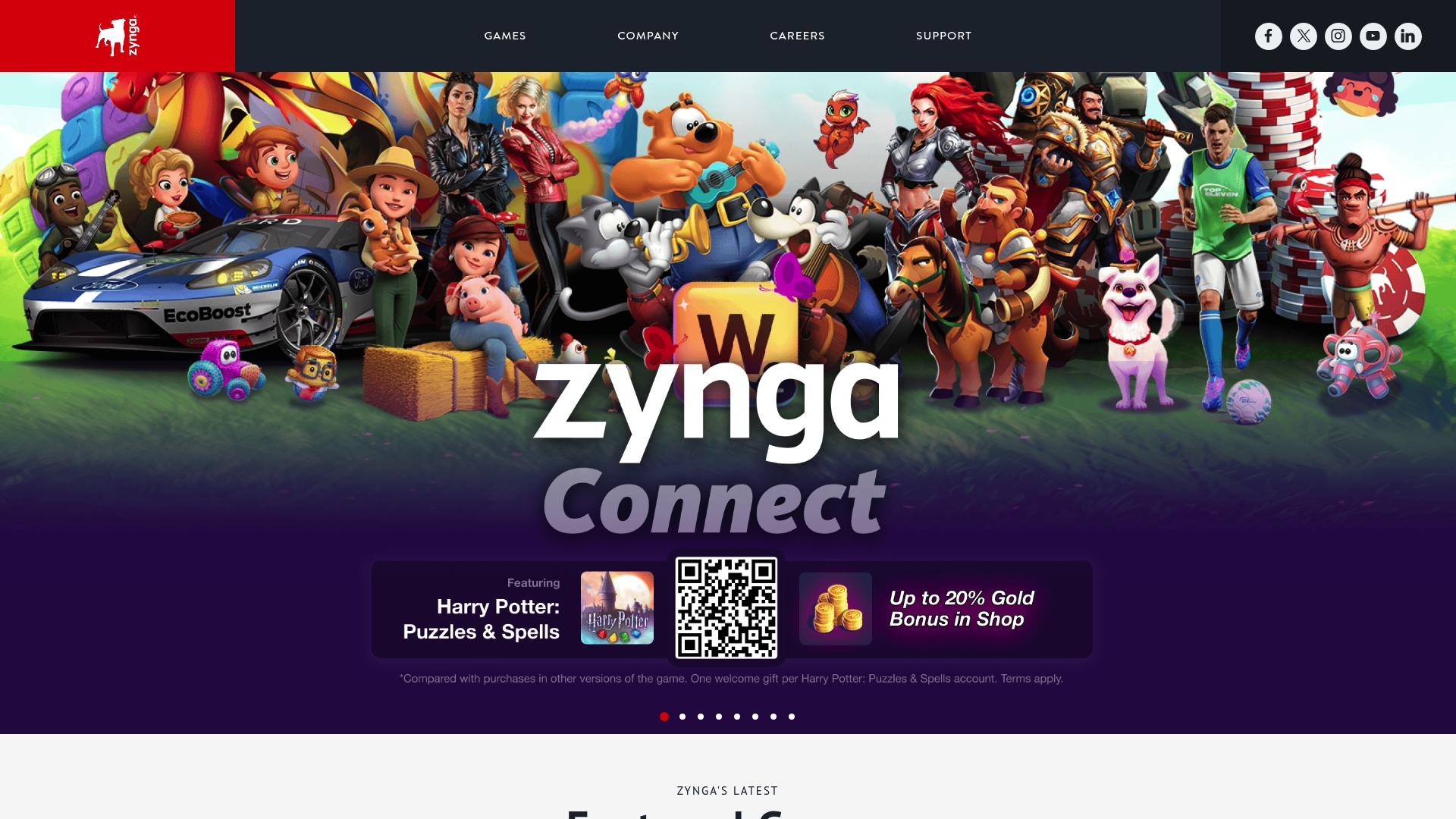
Zynga reports its franchises have been downloaded over 10 billion times since 2007, a scale that places its casual and social titles in front of massive audiences. The company is a subsidiary of Take-Two Interactive and advertises broad mobile and social reach, though user reviews flag bugs and pay-to-win frustrations.
Core Features
Zynga offers a large portfolio of casual social games across genres, with titles for puzzle, strategy, and social casino play. Games run on iOS and Android and connect to social platforms for friend lists and leaderboards.
Multiplayer features and social connectivity are central. Frequent updates and event-driven content keep players returning, and the company maintains community forums alongside support channels.
Key Differentiator
Zynga’s scale is its defining asset. The vendor advertises vast distribution and multiple genre entries, which helps players find niche communities within a single publisher. That breadth drives cross-promotion and large multiplayer pools.
Pros
- Wide genre coverage. Players can jump from word and puzzle games to social casino experiences without leaving the Zynga ecosystem, which makes switching between play styles fast.
- Strong global reach. Zynga’s marketing and distribution place new releases in front of big audiences, increasing the chance of active multiplayer matches.
- Mobile-first accessibility. Games load on common devices and let you play short sessions while commuting or waiting between classes.
- Active update cadence. Regular events and fresh content sustain engagement for months after launch.
- Community presence. Forums and in-game social features let you join clubs, chat with friends, and compete on leaderboards.
Cons
- Frequent reports of bugs and glitches. Many players describe technical issues that disrupt progression and reduce enjoyment.
- Perceived pay-to-win mechanics. Reviews commonly claim that spending strongly affects competitive outcomes, creating imbalance in multiplayer modes.
- Customer support complaints. Users report slow or unresolved transaction problems, sometimes involving charges without delivery.
When It May Not Fit
If you prioritize fair, low-spend competitive play or need fast, reliable support for purchases, Zynga may not match your expectations. Players who avoid pay-to-win pressure will likely prefer smaller studios with clearer monetization.
Notable Integrations
- Facebook for social sign-in and friend invites
- Apple Game Center for iOS leaderboards and achievements
- Google Play Games for Android authentication and cloud saves
Who It’s For
Casual mobile gamers who enjoy social and multiplayer sessions and who value a huge catalogue to explore. Families and students looking for quick play sessions will find plenty to try, provided they accept typical free-to-play trade-offs.
Unique Value Proposition
Zynga reports massive distribution across mobile and social channels, giving players fast access to large multiplayer pools and genre variety under one roof. That reach powers event matchmaking and sustained community activity more reliably than most independent studios.
Real World Use Case
A casual player flits between puzzle and social casino games on their commute, joining friends for quick multiplayer rounds. They appreciate variety and frequent events but occasionally stop playing after frustrating bugs or expensive in-app offers.
Pricing
Most Zynga games are free-to-play with in-app purchases for virtual currency, premium items, or event boosts. Premium content varies by title and may involve additional costs.
Website: https://zynga.com
MAG Interactive
At a Glance
The company reports over 350 million downloads across its portfolio, a concrete scale signal that underpins its publishing muscle and marketing reach. MAG Interactive operates from Stockholm and Brighton and is listed on Nasdaq First North Premier Growth Market.
Core Features
MAG Interactive focuses on casual titles in word, puzzle, and trivia genres, with a portfolio engineered for repeat play and social engagement. The studio pairs game design with post-launch optimization to keep retention and monetization tuned.
The company highlights strong distribution ties and award recognition such as Best of Google Play and Best of App Store, which it credits for global visibility during launch windows.
Key Differentiator
MAG Interactive combines a scientific, scalable development process with established relationships to major distributors, aiming to reproduce high-chart placements across markets. According to the company, that repeatable method accelerates testing, iteration, and global rollouts.
Pros
-
Large reach and scale. The company reports a broad global footprint, which helps new titles get exposure quickly and test multiple markets.
-
Portfolio depth across casual genres that matter to families and students. Word and trivia formats align well with vocabulary practice and light social play.
-
Publisher expertise. MAG offers end-to-end publishing support, from ASO to distribution partnerships, reducing legwork for smaller studios.
-
Award recognition and chart traction. The vendor advertises industry awards and repeated top rankings, useful signals when pitching a game to partners or advertisers.
Cons
-
Company-level overview dominates publicly available material. There is less detail about specific user-facing mechanics, in-game progression, or feature sets per title.
-
Monetization specifics are not published. Pricing and IAP strategies for individual games are not clearly documented in the available summary.
-
Limited transparency on user reviews or granular performance metrics. Many performance claims are vendor reported rather than independently verified.
When It May Not Fit
MAG Interactive mainly produces casual, broadly accessible titles, so studios building complex, hardcore, or niche multiplayer systems will find the fit weak. Likewise, teams seeking detailed public case studies on monetization tactics may be frustrated by the lack of granular disclosure.
Notable Integrations
- Apple App Store
- Google Play Store
Both integrations are central to the company’s distribution approach and are explicitly listed by the vendor as core partners for global reach.
Who It’s For
Mobile game developers and small publishers seeking a partner to handle distribution, marketing, and iterative optimization. The profile suits studios aiming for broad, casual audiences like families, students, and casual word game players.
Unique Value Proposition
MAG Interactive reports repeat top-chart performance and pairs that with formalized, data-driven development and publishing workflows. For teams that want a partner capable of scaling launches across multiple app stores, that combination shortens the path from prototype to global exposure.
Real World Use Case
A mobile startup co-develops a word puzzle with MAG Interactive. The studio handles ASO, launch marketing, and post-launch A B testing. According to the company, the title reaches multiple regional charts faster than an independent self-publish attempt.
Pricing
Not specified by the vendor. Public materials suggest a free-to-play model with in-app purchases for individual titles, but MAG Interactive does not publish standardized developer pricing or revenue share terms in the available summary.
Website: https://maginteractive.com
Duolingo
At a Glance
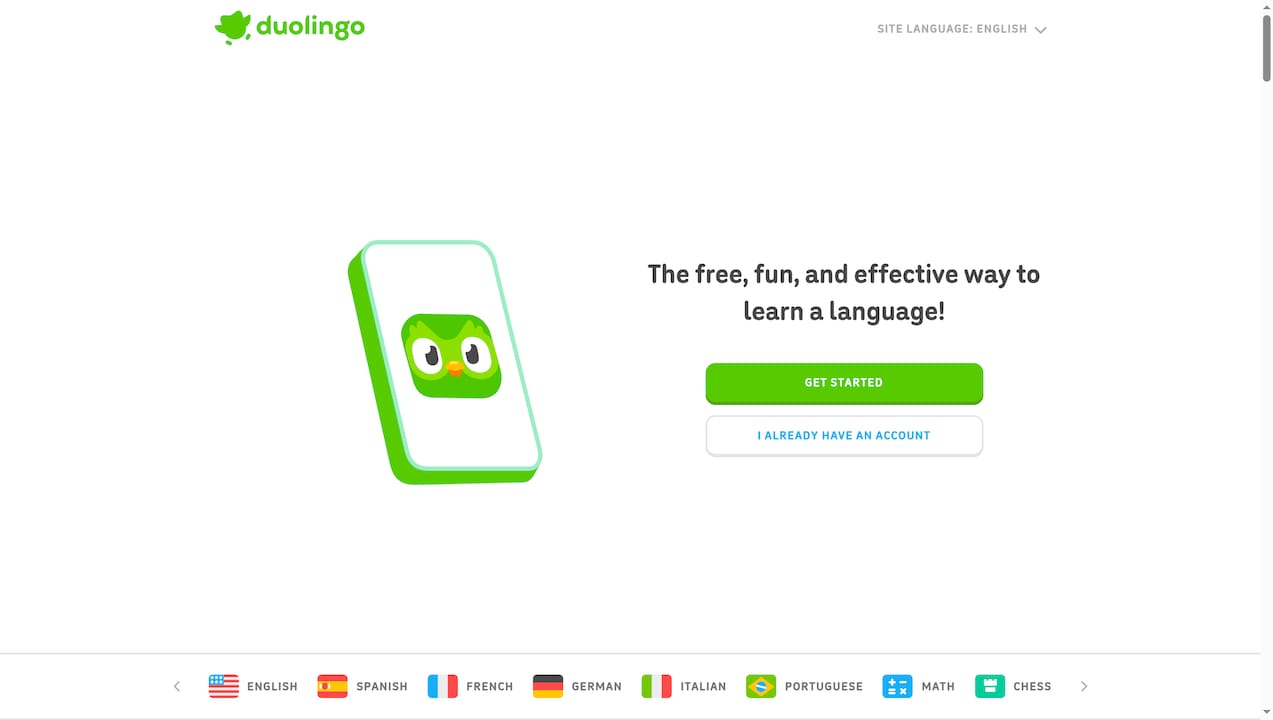
Duolingo supports over 50 languages, including constructed examples like High Valyrian and Klingon, according to the company. Its bite sized lessons are designed for quick daily practice, which fits busy schedules and short commutes.
Core Features
Duolingo uses gamified lessons with streaks, badges, and short drills to encourage daily use. Lessons cover reading, writing, listening, and limited speaking exercises tailored to level.
The vendor advertises a personalized, AI-driven curriculum that adapts lesson difficulty to your pace. Mobile apps for iOS and Android let you practice anywhere, offline practice included for short sessions.
Key Differentiator
According to the company, Duolingo pairs game mechanics with research-backed teaching methods to build habit and retention. That mix is tuned toward beginners and vocabulary growth rather than deep grammar mastery.
Pros
-
Motivating daily structure. The streaks and short rewards make practicing a routine for families and students who need small, consistent sessions.
-
Great for vocabulary and quick recall. Lessons reinforce words through spaced repetition, which helps retention between study sessions.
-
Duolingo for Schools maps classroom activity so teachers can assign practice and monitor progress without heavy setup.
-
Low barrier to start. The free tier and mobile apps let newcomers begin immediately with no onboarding friction.
Cons
-
Navigation and repetition. Some users report the interface loops repetitive exercises and can feel nagging rather than instructive.
-
Limited speaking practice. Real conversation training and nuanced grammar explanation are thin compared with tutor led courses.
-
Monetization frustration. Users sometimes complain about unexpected charges and difficulty cancelling in-app subscriptions.
When It May Not Fit
If you need advanced grammar drills, immersion level speaking practice, or live tutor feedback, Duolingo will feel incomplete. Serious students training for advanced exams should layer Duolingo with targeted grammar resources or conversation partners.
Notable Integrations
- Duolingo English Test for credentialing and remote assessment.
- Duolingo for Schools to assign work and view classroom progress.
- Integration with educational platforms and mobile app stores for distribution and classroom deployment.
Who It’s For
Casual learners, commuters, and families who want a motivating, low friction way to practice vocabulary and basic conversational phrases. Teachers seeking supplemental digital practice for classroom homework will find the tools useful.
Unique Value Proposition
Duolingo offers a habit-first path to language basics. According to the company, the combination of short, gamelike exercises and adaptive pacing helps learners keep a daily routine, which is often the single biggest factor in steady vocabulary gains.
Real World Use Case
A busy student uses 10 minutes on the train each day to keep a Spanish streak alive. Vocabulary retention improves and confidence for basic conversations rises, though the student still supplements with conversation practice for fluency.
Pricing
Free for individual learners with ads. Optional subscription tiers such as Super Duolingo remove ads, add features, and are available via in-app purchase. Schools and organizations can buy institutional plans for group deployment.
Website: https://www.duolingo.com
Comparative Analysis of Vocabulary and Game Apps
When examining applications designed for vocabulary enhancement and casual gaming, one product stands out due to its emphasis on an ad-free, cost-predictable experience complemented by specialized features like spaced repetition—Lexiloot App sets itself apart significantly in this domain.
User Engagement Through Gameplay Mechanics
Lexiloot App focuses on distraction-free play, which enhances engagement during short, focused study sessions. Its implementation of spaced repetition and active recall supports retention, especially in educational or structured environments. On the other hand, Zynga excels in multiplayer connectivity and event-based updates, which create recurring incentives for social play but may lead to interruptions due to its pay-to-play mechanics. Meanwhile, MAG Interactive combines large-scale casual formats with high distribution efficiency, making it a strong contender for globally appealing entries.
Pricing and Monetization Structures
Lexiloot App provides a one-time purchase pricing approach, ensuring no ongoing costs for users. This model suits classrooms or family setups prioritizing structured and transparent financial planning. In contrast, both Zynga and MAG Interactive adopt free-to-play models with integrated in-app purchases, which deliver flexibility for casual exploration but can introduce variable costs over time. Duolingo, while free at the base level, does include optional subscriptions and additional charges, potentially complicating cost predictability.
Best Fit by Consumer Scenario
- Lexiloot App: Perfect for educators and parents looking for distraction-free, educational gameplay that integrates reliable learning mechanics.
- Zynga: Great for casual gamers interested in socially driven interactions and a wide range of game genres within a single platform.
- MAG Interactive: Suited for developers requiring large-scale, casual-game publishing expertise with strong distribution partnerships.
- Duolingo: Targeting learners seeking lightweight daily vocabulary practice using a free, habit-forming format.
Our Recommendation
Lexiloot App excels due to its ad-free, educationally focused gameplay model, combined with spaced repetition as a retention-enhancing feature. However, users prioritizing social connectivity and game variety might find Zynga’s offerings more suitable. For players wanting globally recognized free games, MAG Interactive fulfills this niche. Nevertheless, for families, individuals, or institutions seeking a reliable, focused application free from ongoing financial commitments, Lexiloot App remains a superior choice for vocabulary enrichment.
Language Learning Apps Comparison
Below is a comparison of language learning apps focusing on their use cases, features, and user benefits to guide your selection.
| Application | Key Features | Target Audience | Pricing | Notable Limitation |
|---|---|---|---|---|
| Lexiloot App | Ad-free play, spaced repetition, multiplayer features | Families, students, and teachers | Not disclosed | Requires cookies enabled for full functionality |
| Zynga | Wide range of casual games, social multiplayer elements | Casual gamers seeking varied play options | Free-to-play | Perceived pay-to-win mechanics and technical issues reported |
| MAG Interactive | Word and puzzle games, award-winning design | Families and trivia enthusiasts | Not disclosed | Limited details on user-facing features and progression |
| Duolingo | Gamified lessons, adaptive AI-driven practices | Casual learners seeking vocabulary reinforcement | Free with in-app upgrades | Limited speaking practice and ads in free tier |
Discover Effective Vocabulary Building Beyond the Top Apps
Finding an educational app that truly supports long-term vocabulary growth without distractions can feel challenging. Many apps offer free-to-play models that lead to interruptions and unclear costs, making focused learning difficult. Lexiloot addresses these issues with an ad-free environment, a pay-once model, and engaging multiplayer modes that motivate users of all ages to improve their language skills naturally.
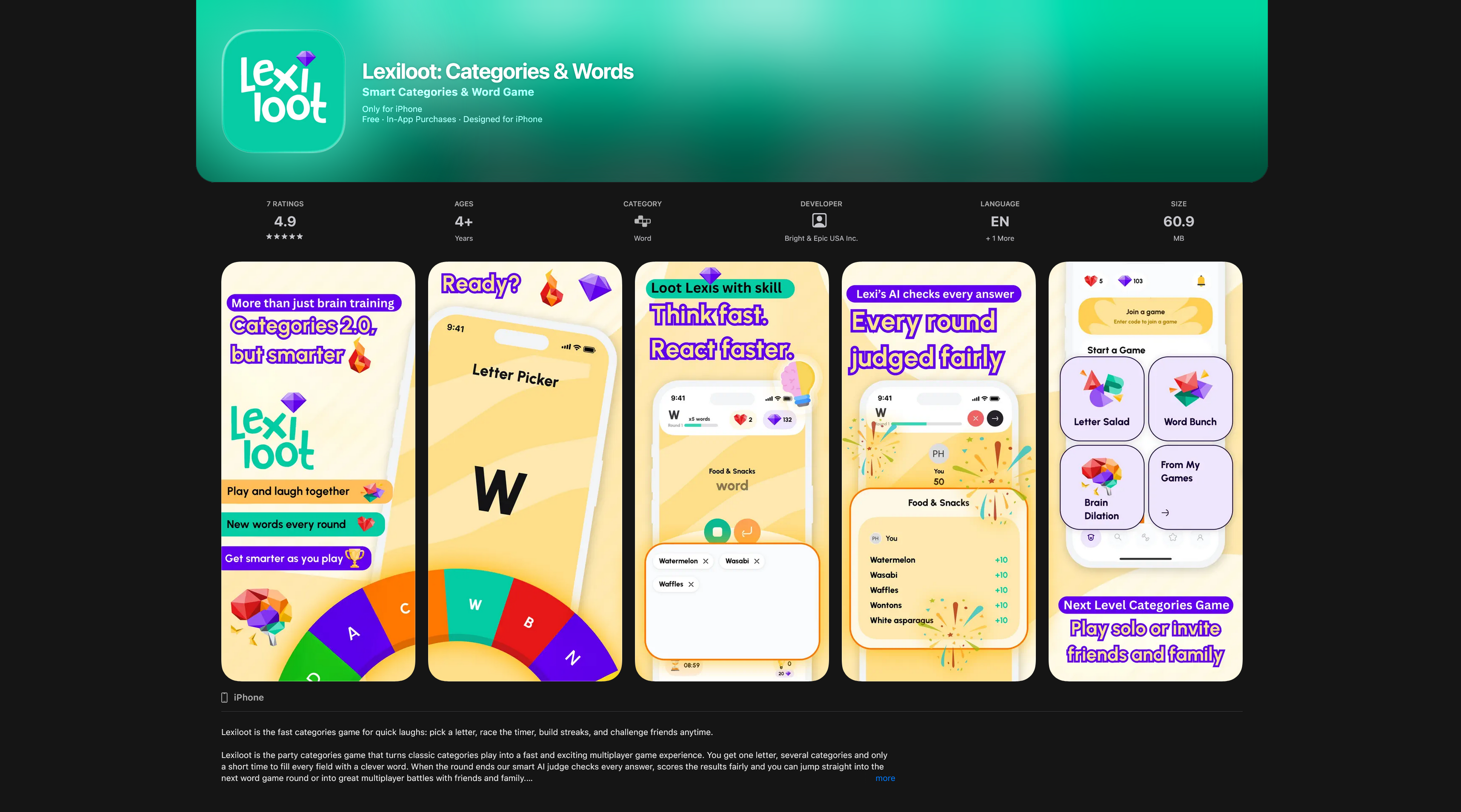
Experience distraction-free word puzzles, category challenges, and multiplayer battles designed to boost retention through scientifically backed methods like spaced repetition and active recall. Visit Lexiloot now to enjoy fun vocabulary sessions that fit your schedule and challenge your brain. Start inviting friends and track your progress today with this unique blend of learning and social play.
Frequently Asked Questions
How does the Lexiloot App support vocabulary retention?
Lexiloot App utilizes built-in spaced repetition and active retrieval techniques to enhance long-term vocabulary gains. This approach helps reinforce vocabulary through repeated active recall rather than short, isolated drills, making it an ideal choice for meaningful learning within classrooms or family study time.
Can I track my progress with Lexiloot App?
Yes, Lexiloot App features progress tracking and skill benchmarking across cognitive areas such as memory and attention. This ensures that users can easily monitor their vocabulary improvements and identify areas that need more focus during practice sessions.
What is the difference between Lexiloot App and Zynga’s games in terms of educational value?
While Zynga’s games offer a wide range of casual social gaming experiences, Lexiloot App focuses specifically on educational vocabulary growth through structured gameplay. Lexiloot’s ad-free environment and use of spaced repetition make it better suited for serious learning, especially for families and students.
Does Lexiloot App require any subscriptions or ongoing fees?
Lexiloot App uses a one-time pay model, meaning users won’t face recurring subscription fees or ongoing costs. This predictable pricing structure makes it easier for families and schools to budget for vocabulary learning tools.
Can I invite friends to compete on Lexiloot App?
Yes, Lexiloot App allows you to invite friends and host multiplayer battles. This feature not only adds a competitive element to vocabulary learning but also fosters social interaction while engaging in educational activities.

