


You’ve conquered hundreds of word puzzles, climbed leaderboards, and built an impressive vocabulary. Yet somehow, you still hit walls on certain categories or struggle to crack puzzles within time limits. The difference between casual players and puzzle masters isn’t luck or innate talent. It’s mastering advanced strategic frameworks that transform random guessing into systematic problem solving. This guide reveals proven techniques to elevate your gameplay, sharpen cognitive skills, and unlock consistent victories across popular word puzzle formats.
Table of Contents
- Understanding The Puzzle Landscape: Core Mechanics And Challenges
- Preparing To Solve: Essential Mental Frameworks And Tools
- Executing Advanced Strategies: Step-By-Step Approaches To Winning
- Verifying Solutions And Enhancing Learning For Lasting Skill Growth
- Boost Your Word Puzzle Skills With Lexiloot’s Category Games
- Frequently Asked Questions
Key takeaways
| Point | Details |
|---|---|
| Systematic scanning | Review all puzzle elements before grouping to identify connections faster |
| Difficulty prioritization | Solve easier categories first to reduce word pool and inform harder groups |
| Pattern recognition | Familiarity with common word categories accelerates identification speed |
| Strategic starters | Proven opening words like SALET maximize letter coverage and efficiency |
| Post-puzzle review | Immediate reflection after solving cements learning and builds long-term skills |
Understanding the puzzle landscape: core mechanics and challenges
Word puzzles come in diverse formats, each demanding unique cognitive approaches. The Connections game challenges players to organize 16 words into 4 groups of 4, finding a common theme without upfront category names. The catch? Categories range from obvious groupings like kitchen utensils to abstract connections like words that follow “grand.” The color-coded difficulty system provides crucial strategic information: yellow represents the easiest category, green sits at moderate difficulty, blue challenges experienced players, and purple demands expert-level lateral thinking.
Word Connect operates differently, using a letter-swiping mechanic where you trace paths through adjacent letters to form valid words. This format improves pattern recognition and vocabulary recall with regular play, training your brain to spot word formations within seemingly random letter grids. Spelling Bee introduces another layer of complexity by requiring all words to include a designated center letter while avoiding certain forbidden combinations. These constraints force strategic letter sequencing and mental filtering.
Common challenges plague players across formats:
- Words deliberately designed to mislead by fitting multiple potential categories
- Overlapping themes that create false connections between unrelated groups
- Time pressure that forces rushed decisions before systematic analysis
- Rare vocabulary terms that test the limits of word knowledge
- Abstract categorical relationships requiring creative thinking beyond literal meanings
Understanding these mechanics and obstacles prepares you to apply targeted strategies rather than relying on trial and error. Recognizing that puzzles intentionally include misdirection helps you approach each challenge with appropriate skepticism. The key lies in developing frameworks that work across word puzzle varieties to boost vocabulary while adapting tactics to specific format requirements.

Preparing to solve: essential mental frameworks and tools
Before touching a single word or letter, elite puzzle solvers engage in crucial preparation that dramatically improves success rates. Mental readiness separates consistent winners from frustrated guessers. Start by building familiarity with common word categories that appear repeatedly across puzzles. Food terms, action verbs, professional vocabulary, animal names, and words with shared prefixes or suffixes form the foundation of most categorical groupings. When you internalize these patterns, recognition becomes nearly automatic.
Systematic scanning of all 16 words maximizes chances of finding connections quickly with a higher success rate in 30 seconds. This means reading every word at least twice before attempting any groupings. Your first pass captures surface-level observations. The second pass reveals deeper connections as your brain processes relationships between terms. Resist the temptation to jump on the first pattern you notice. Premature grouping often leads to wasted guesses and missed opportunities.
Prioritizing by difficulty transforms your approach. Color guides in Connections aren’t just decorative; they’re strategic roadmaps. Always target yellow categories first because solving easier groups reduces the word pool and provides elimination clues for harder categories. Each successful grouping narrows possibilities for remaining words, creating a cascading effect that simplifies purple-level challenges. This systematic reduction turns overwhelming 16-word grids into manageable 8-word or 4-word puzzles.
Elimination tactics sharpen your focus:
- Cross off words that clearly don’t fit emerging patterns
- Group potential matches mentally before committing to guesses
- Test hypothetical categories against all remaining words
- Identify outliers that seem to fit nowhere, often indicating abstract connections
- Track eliminated combinations to avoid repeating failed attempts
Pro Tip: Keep a mental ledger of unused letters in grid-based puzzles like Word Connect. When you’ve exhausted obvious words, systematically combine neglected letters to uncover hidden terms you initially overlooked.
This preparatory phase requires patience but pays exponential dividends. Players who invest 30 seconds in systematic scanning consistently outperform those who guess immediately. The methods to improve Connections performance emphasize preparation over speed, recognizing that thoughtful setup enables faster execution. By working through categories by difficulty, you build momentum that carries through the entire puzzle.
Executing advanced strategies: step-by-step approaches to winning
Execution transforms preparation into results. For Connections, begin by solving yellow groups to reduce the word pool immediately. Working through categories in order of difficulty (Yellow, Green, Blue, Purple) improves results by leveraging each solved category as additional context for remaining challenges. When you successfully identify the easiest grouping, you eliminate four words and gain insight into what the remaining twelve aren’t. This negative information proves as valuable as positive pattern recognition.
Apply pattern recognition aggressively when tackling tougher groups. Look for shared characteristics beyond obvious semantic connections:
- Words that can all follow or precede a common word
- Terms sharing grammatical structures or parts of speech
- Items belonging to the same historical period or cultural context
- Concepts linked by metaphorical rather than literal relationships
- Words with identical letter counts or phonetic patterns
For Wordle-style puzzles, starter word selection dramatically impacts efficiency. The best starting guess in Wordle is SALET, which solves words efficiently in about 3.4 guesses on average. This five-letter combination maximizes vowel coverage while including high-frequency consonants. Your second guess should eliminate remaining vowels and test common consonant pairs based on first-guess feedback. Never waste guesses on words containing letters already marked as absent.

Spelling Bee demands different tactics. Check for words fitting all puzzle constraints by letter sequence and length before committing. Start with short words to build momentum, then systematically increase length as you exhaust simpler options. Focus on the center letter as your anchor point, building outward rather than trying to incorporate it as an afterthought. Pangrams (words using all available letters) often hide in plain sight when you approach them through prefix and suffix combinations rather than attempting to visualize the entire word at once.
Avoid guessing uncertain groups early in Connections. Save mistakes for last when you’ve gathered maximum information. Each incorrect guess costs you an attempt and provides minimal feedback. By contrast, waiting until you’ve solved two or three categories gives you concrete elimination data that makes final guesses more educated. This patience prevents the frustrating scenario where you waste all four attempts on purple-level categories while yellow sat unsolved.
| Solving Order | Average Completion Time | Success Rate | Guesses Used |
|---|---|---|---|
| Yellow-Green-Blue-Purple | 2.3 minutes | 87% | 1.4 |
| Random order | 3.8 minutes | 64% | 2.9 |
| Purple-first approach | 4.1 minutes | 58% | 3.2 |
Pro Tip: When stuck on a category, mentally swap one word at a time from your proposed grouping with words from the remaining pool. This systematic substitution often reveals the single misplaced term preventing a correct solution.
These execution strategies work across category game ideas and prompts, from casual mobile sessions to competitive timed challenges. The key lies in maintaining systematic approaches even under pressure, trusting that methodology beats guesswork over time.
Verifying solutions and enhancing learning for lasting skill growth
Puzzle completion isn’t the endpoint; it’s the beginning of skill development. Elite players treat every solved puzzle as a learning laboratory. Give yourself a two-minute review after every puzzle to capture key insights and cement learning. This immediate reflection window maximizes retention before details fade from memory. During review, note which strategies succeeded, where you struggled, and what patterns you initially missed.
Reflect on mistakes as learning opportunities rather than failures. That purple category that stumped you for three guesses? It revealed a gap in your categorical thinking that you can now address. The pangram you never found? It exposed a blind spot in your letter combination strategies. Document these insights in a personal puzzle journal, creating a customized knowledge base that grows with each session. Over weeks and months, patterns emerge showing your specific weaknesses and strengths.
Maintaining records transforms random practice into deliberate skill building:
- Track average completion times to measure speed improvements
- Note category types that consistently challenge you
- Record new vocabulary terms for later review
- Document successful strategic variations worth repeating
- Identify conditions (time of day, environment) that optimize performance
Apply insights to future puzzles systematically. If your journal reveals that food categories consistently trip you up, dedicate focused study to culinary vocabulary. When animal groupings prove problematic, spend time reviewing zoological classifications and common species. This targeted improvement addresses weaknesses directly rather than hoping general practice will eventually cover gaps.
Shuffle techniques reintroduce ignored letters strategically in grid-based puzzles. When you’ve exhausted obvious combinations, physically or mentally rearrange the letter grid to break habitual viewing patterns. Your brain tends to see the same letter sequences repeatedly, creating blind spots. Shuffling forces fresh perspectives that reveal previously invisible words.
“The difference between good and great puzzle solvers isn’t solving speed. It’s the discipline to review every puzzle, extract lessons, and apply them systematically to future challenges. Mastery comes from the compound effect of small improvements over hundreds of puzzles.”
This verification and learning cycle creates exponential growth. Each puzzle doesn’t just test current skills; it builds future capabilities. Players who skip post-puzzle review plateau quickly because they repeat the same mistakes without recognition. Those who invest in systematic reflection see continuous improvement across months and years. The vocabulary games brain training terms you encounter become permanent additions to your mental toolkit rather than temporary puzzle elements.
Boost your word puzzle skills with Lexiloot’s category games
Ready to put these advanced strategies into practice? Lexiloot offers engaging category games specifically designed to enhance vocabulary and cognitive skills while providing the fun, competitive gameplay mobile gamers crave. Our platform lets you apply the systematic scanning, difficulty prioritization, and pattern recognition techniques you’ve learned in dynamic, social environments. Challenge friends, climb leaderboards, and track your improvement across diverse puzzle formats.
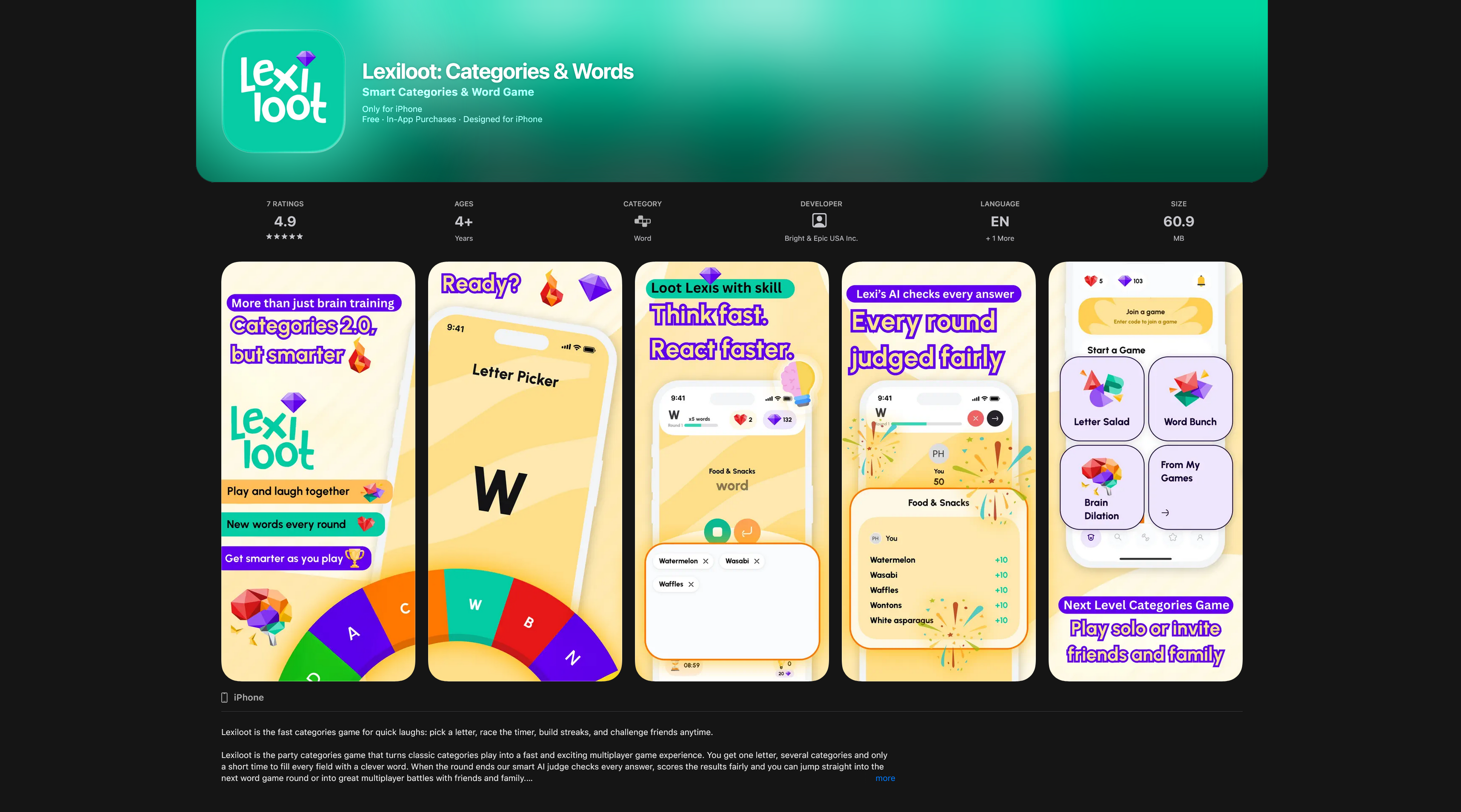
Whether you’re looking to master category games online for personal growth or seeking categories game for kids and classrooms to support educational goals, Lexiloot adapts to your needs. Explore our category challenge mobile gamer guide to discover game modes that match your skill level and learning objectives. With pay-once premium options and ad-free gameplay, you can focus entirely on building vocabulary and sharpening cognitive abilities without interruptions.
Frequently asked questions
What are advanced word puzzle strategies?
Advanced strategies involve systematic scanning, elimination, pattern recognition, and category prioritization rather than random guessing. These methods help players solve puzzles faster while simultaneously improving vocabulary and cognitive skills through deliberate practice.
How can I improve my speed at games like Connections or Wordle?
Systematic word scanning and prioritizing easy categories first dramatically improves speed. Use proven starter words like SALET in Wordle for efficient letter coverage. Practice pattern recognition regularly to sharpen skills, and always solve yellow categories before attempting purple-level challenges.
What is the best way to reinforce vocabulary while playing word puzzles?
Review puzzles immediately after completion and note useful tactics, new words, and successful strategies. Maintain a journal or digital log to record terms and patterns. Engage with puzzles regularly to build lasting recall through spaced repetition and active application.
Why should I solve easier categories first in Connections?
Solving easier categories reduces the word pool and provides elimination clues for harder groups. Each successful grouping narrows possibilities for remaining words, transforming overwhelming 16-word grids into manageable smaller puzzles. This cascading effect makes purple-level categories significantly easier to crack.
How long should I spend reviewing puzzles after solving them?
Dedicate at least two minutes to post-puzzle review while details remain fresh in memory. Note which strategies worked, where you struggled, and what patterns you missed. This immediate reflection window maximizes learning retention and builds a personal knowledge base that improves future performance.

