


TL;DR:
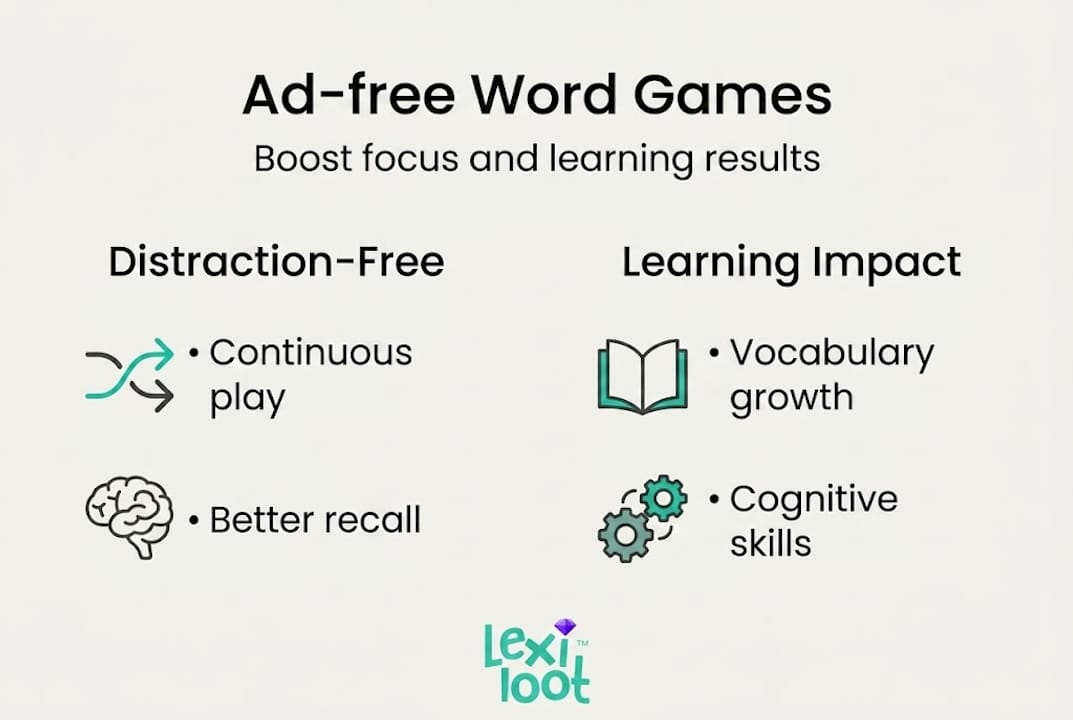
- Ad-free word games eliminate interruptions, supporting sustained attention and better vocabulary retention.
- Technical cleanliness and privacy are enhanced in fully ad-free apps, promoting focused learning environments.
- Choosing truly ad-free platforms is essential for maximizing cognitive flow, vocabulary growth, and learning outcomes.
Most mobile word games claim to support learning, but the constant buzz of a video ad or a banner popping up mid-round can shatter a player’s focus in seconds. Ad-free gameplay refers to mobile gaming experiences without any advertisements interrupting play. For educators, parents, and mobile gamers who care about real vocabulary growth and cognitive gains, this distinction is not minor. It is fundamental. This article covers what ad-free gameplay actually means, how different ad-free models work, why the educational benefits are significant, and what trade-offs you should weigh before choosing your next word game.
Table of Contents
- What is ad-free gameplay?
- How ad-free mechanics shape the gaming experience
- Ad-free gameplay and its educational impact
- Ad-free isn’t always perfect: trade-offs and edge cases
- A fresh perspective: why ad-free word games matter more than ever
- Ready to experience ad-free gameplay?
- Frequently asked questions
Key Takeaways
| Point | Details |
|---|---|
| Ad-free means distraction-free | True ad-free gaming removes all involuntary ads, creating uninterrupted play sessions. |
| Boosts learning retention | Ad-free word games help learners focus, improving vocabulary and cognitive gains over time. |
| Models vary by cost | Ad-free can mean one-time payments, subscriptions, or limited free access—each has trade-offs. |
| Ideal for intentional use | Educators and parents benefit most when choosing ad-free models for intentional vocabulary practice. |
What is ad-free gameplay?
With curiosity piqued, let’s clarify exactly what we mean by ad-free gameplay and why it matters for word gamers.
At its core, ad-free gaming definition means no banners, interstitial videos, or forced rewarded ads breaking your session. You open the app, start playing, and nothing pulls you away from the challenge at hand. That sounds simple, but the reality in mobile gaming is layered.
Here are the most common ad types you will find in standard mobile games:
- Banner ads: Persistent strips at the top or bottom of the screen
- Interstitial ads: Full-screen videos that appear between levels or rounds
- Forced rewarded ads: Videos you must watch to continue playing
- Native ads: Ads styled to look like game content
- Pop-up ads: Sudden overlays triggered by certain in-game actions
Each of these interrupts the mental state players need for vocabulary recall and category thinking. In a word game, that interruption can break a chain of thought entirely.
| Feature | Ad-supported games | Ad-free games |
|---|---|---|
| Cost to start | Free | One-time or subscription |
| Interruptions | Frequent | None |
| Focus quality | Low to moderate | High |
| Learning continuity | Fragmented | Sustained |
| Privacy risk | Higher (ad SDKs) | Lower |
The data tells a clear story. Research shows that 52% of players quit after experiencing repeated disruptive ads. That is more than half of your potential learners leaving before they build any real vocabulary or spelling fluency.
It is worth noting one exception: optional rewarded ads. These are ads a player chooses to watch in exchange for in-game currency or extra turns. They are not the same as forced interruptions. A truly ad-free experience, however, removes even this option and replaces it with a cleaner, more respectful design. Understanding how ad-free boosts learning starts right here, with this clean and uninterrupted environment.
How ad-free mechanics shape the gaming experience
Now that we know what ad-free means, it’s crucial to see how different ad-free models impact player experience and learning outcomes.
There are several ways developers deliver an ad-free experience, and not all of them are equal. Mechanics include premium models, subscriptions, play limits, and zero SDKs, each shaping how users interact with the game and how much learning continuity they actually get.
| Platform | Model | Ad-free type | Cost |
|---|---|---|---|
| Apple Arcade | Subscription | Full, zero ads | Monthly fee |
| Netflix Games | Subscription | Full, zero ads | Bundled |
| NYT Games | Freemium/subscription | Partial free, full paid | Free tier or subscription |
| Lexiloot | Pay-once | Full premium ad-free | One-time purchase |
Here is what a typical ad-free user journey looks like when the model is done right:
- Download the app or access the platform
- Complete a quick setup or account creation
- Choose your game mode (word puzzle, category challenge, multiplayer)
- Play without any interruption through multiple rounds
- Review your score and vocabulary progress after a session
- Return the next day with your streak and progress intact
This unbroken sequence matters enormously in teaching ad-free word games, because cognitive engagement depends on sustained attention, not stop-and-start play.
From a technical standpoint, truly ad-free apps often remove advertising SDKs (software development kits) entirely from their code. This is important because SDKs can collect data and occasionally introduce latency, even if no visible ad plays.

Pro Tip: Before trusting an “ad-free” label, check the app’s permissions in your device settings. If it requests access to your advertising ID or network activity beyond gameplay needs, ad-related code may still be running in the background.
For word and category games aimed at learners, this technical cleanliness directly supports the focused mental state kids and adults need to absorb new vocabulary and reinforce spelling fluency.
Ad-free gameplay and its educational impact
Understanding the technical setups is important, but the real-world educational impact of ad-free gameplay is where the benefits shine.
Every time an ad fires mid-game, the brain has to reorient. It shifts from active problem-solving to passive reception, breaking the mental thread of whatever vocabulary or category challenge was in progress. This is not a small inconvenience. It actively damages learning retention.
Top ad-free word games in education show that ad-free environments enable focus and deeper learning, particularly in word and category-based formats where sustained attention is key to progress.
Here are the key educational benefits you can expect from ad-free word games:
- Improved vocabulary recall: Uninterrupted play strengthens memory pathways for new words
- Better category thinking: Players sort and connect words without mental resets from ads
- Higher spelling fluency: Consistent practice builds pattern recognition over time
- Longer play sessions: Without frustration from ads, learners stay engaged longer
- Reduced anxiety: Clean interfaces lower stress for younger or struggling learners
- Stronger cognitive flow: The brain reaches a productive state and stays there
Research confirms that ads cause churn, and in educational settings, churn means a student stops practicing before any meaningful retention has occurred.
“Sustained, uninterrupted cognitive engagement is where real vocabulary growth happens. A session broken by ads resets the brain’s learning momentum, making it harder to build the long-term retention that educators rely on.”
Apps like NYT Games and vocabulary and cognitive boost platforms like Lexiloot are built with this principle in mind. The design keeps players in the zone, not bouncing between game content and marketing messages.
Pro Tip: When choosing a word game for your classroom or household, look for apps that describe themselves as “distraction-free” in their product listings. Then verify by playing a full session yourself before recommending it to students or kids. Apps that support engaging vocabulary games for children should have zero involuntary interruptions.
Ad-free isn’t always perfect: trade-offs and edge cases
No solution is perfect. Let’s be candid about the trade-offs and realities of ad-free gameplay so you can make informed choices.
Ad-free sounds ideal, and in most ways it is. But there are real limitations and edge cases worth knowing before you commit your students or your own screen time to a specific platform.
Common trade-offs educators and parents must weigh:
- Cost barriers: Premium or subscription models may not be accessible for every family or school budget
- Play limits: Some free-tier ad-free options restrict daily rounds (for example, three plays per day)
- Feature gaps: Certain social or multiplayer features may require an online connection that defeats offline privacy goals
- Hidden tracking: Some apps labeled “ad-free” still use tracking SDKs that collect behavioral data even without showing ads
- Content lock: Premium vocabulary packs or advanced modes may sit behind additional paywalls
- Offline limitations: Playing offline blocks ads automatically but may disable leaderboards, progress sync, or multiplayer
Edge cases exist in ad-free gaming: offline play blocks ads but may limit features that learners actually need for social engagement and progress tracking.
“I switched to an app marked ‘ad-free’ and still noticed my kid’s session data being referenced in other apps. Reading the privacy policy closely revealed third-party analytics SDKs were still active. Always check, not just trust the label.”
Market data also shows a complicated picture. Research on monetization models in gaming confirms that the majority of players still prefer free-with-ads models, largely because of upfront cost sensitivity. However, for immersive educational use, true ad-free remains the optimal format.
The vocabulary and cognition benefits of uninterrupted play are well documented. The challenge is finding platforms that deliver genuinely clean experiences without hiding costs or data collection behind a reassuring label.
A fresh perspective: why ad-free word games matter more than ever
With all sides of the issue explored, here is our hard-won perspective on what truly sets ad-free gameplay apart in the word game world.
Conventional freemium models were never designed with learners in mind. They were designed to monetize attention, and attention is precisely what vocabulary development and cognitive training require most. Paying for focus is not a luxury. It is the real investment.
The idea of “free with ads” sounds fair until you measure what you are actually trading away: learning momentum, spelling fluency development, and the cognitive flow state that sustains deep learning in word game contexts. For educators, that trade is simply too costly.
We believe distraction-free flow is the new standard for measuring whether a cognitive game is genuinely useful. An app that breaks your session every three minutes cannot call itself a learning tool with a straight face. Brainpower boosts come from consistent, focused practice. Period.
For parents and teachers, ad-free is not just about comfort. It is a teaching edge that separates real vocabulary growth from passive screen time dressed up as education.
Ready to experience ad-free gameplay?
You’ve seen why ad-free is not just a luxury. It is the foundation of real digital learning. If you want your students, kids, or own sessions to count toward genuine vocabulary and cognitive growth, the next step is straightforward.
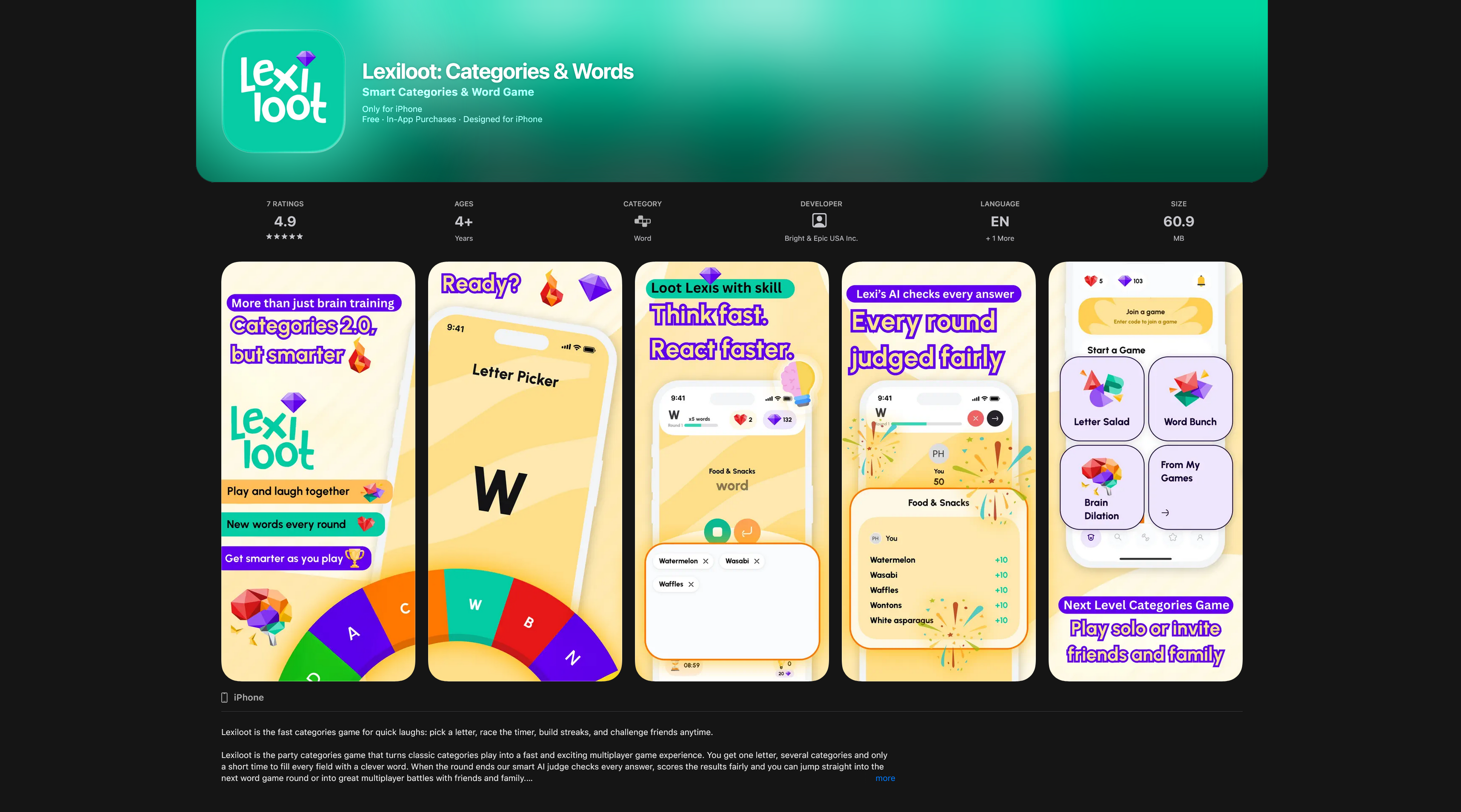
Lexiloot offers ad-free categories games designed for classrooms, families, and serious word game fans. With a pay-once model, no subscriptions, and zero involuntary interruptions, every session stays focused on what matters: building vocabulary, sharpening category thinking, and training the brain. Explore word games with zero ads and start a session that actually sticks.
Frequently asked questions
How is ad-free gameplay different from games with rewarded ads?
True ad-free means zero interruptions or required ad-watching. Rewarded ads are optional and let you choose to view one in exchange for in-game benefits, but they still exist within the session.
Why do educators prefer ad-free word and category games?
Ad-free enables focused vocabulary building and cognitive training by removing the interruptions that cause learners to lose their train of thought and disengage before real retention occurs.
Are all ad-free games completely private and offline?
Not always. Tracking SDKs can be present even in ad-free games, so always check the app’s privacy policy and device permissions before trusting the ad-free label completely.
Do ad-free word games cost money?
Many require a one-time payment or subscription, though some offer a limited free tier. For example, WordDrop and NYT Games both offer partial free access with ad-free play up to a daily limit.

